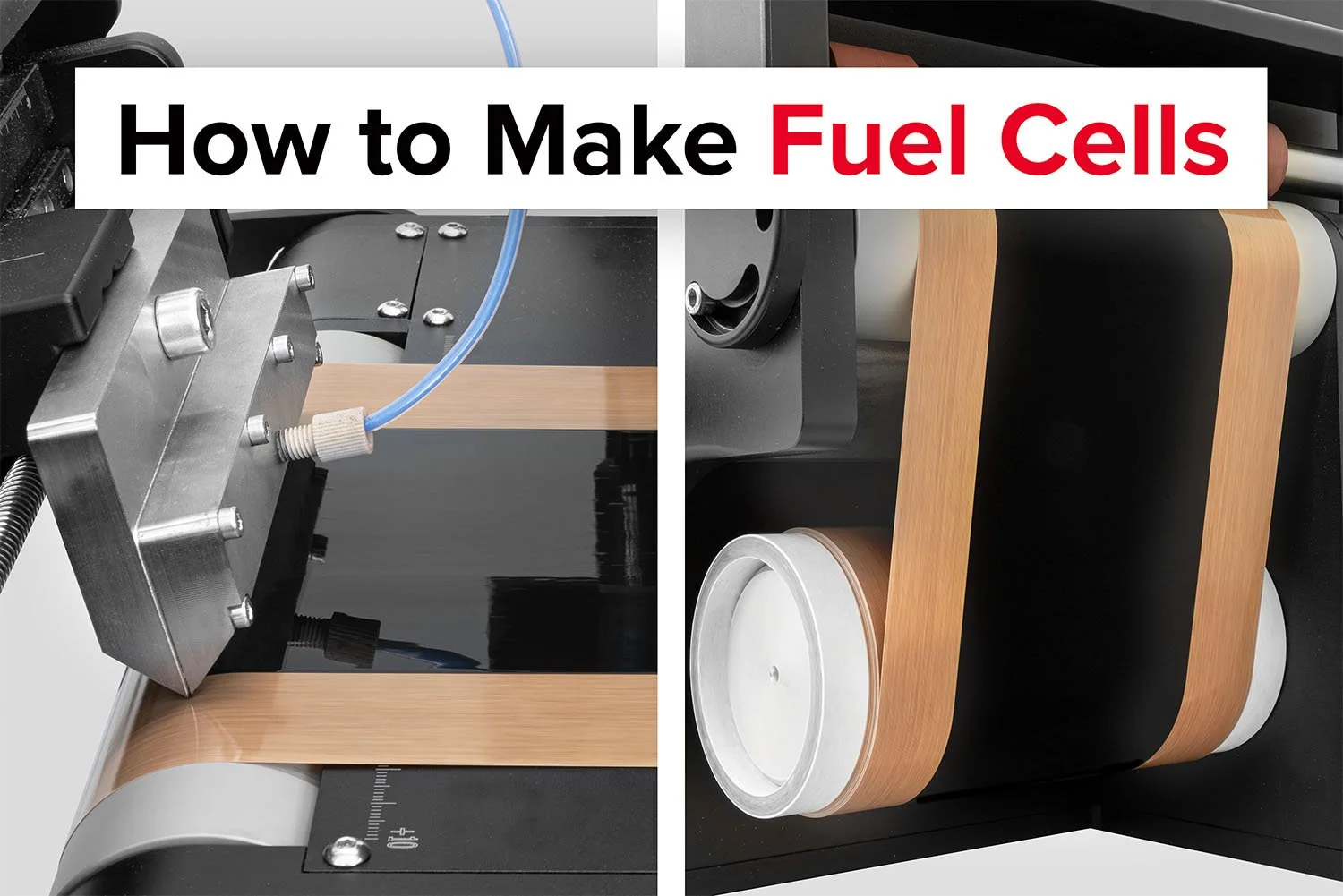
Ready to Start Slot-die Coating Fuel Cells?
Slot-die coating and roll-to-roll processing enable highly uniform, precise coatings for fuel cell materials. Ideal for catalyst layer fabrication, membrane coatings, gas diffusion layers, membrane electrode assemblies (MEAs), and other advanced hydrogen energy application
Why Use Slot-die Coating for Fuel Cells?
Slot-die coating is a highly controlled deposition technique that is widely used in fuel cell research and manufacturing. Its ability to produce uniform, precise, and reproducible thin layers makes it ideal for coating catalyst inks, membranes, gas diffusion layers, and other functional fuel cell components.
Unlike many traditional coating methods, slot-die coating allows functional materials such as catalyst slurries and ionomer-based layers to be applied with accurate thickness control. This ensures consistent component quality while supporting a scalable process that can move smoothly from laboratory development to pilot and full-scale fuel cell production.
Advantages of Slot-Die Coating in Fuel Cell Manufacturing
Uniform, High-Quality Functional Layers
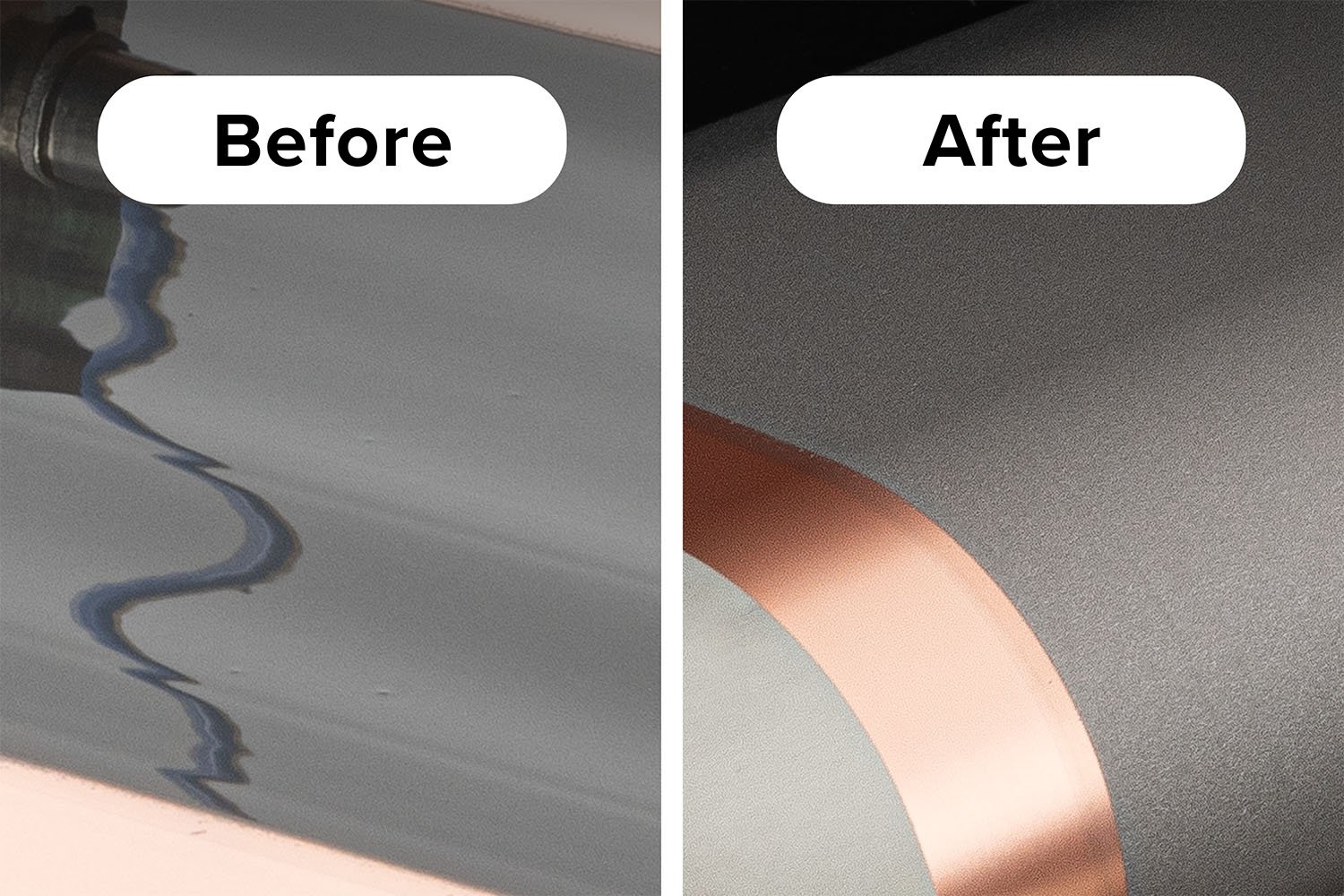
Slot-die coating enables precise control over coating thickness and layer uniformity when applying catalyst inks, membrane coatings, and other functional materials. This helps ensure consistent fuel cell performance, which is essential for efficiency, durability, and reliable electrochemical operation.
Efficient Use of Materials
Because the coating material is accurately metered through the die, slot-die coating minimizes waste and improves material utilization. This is especially important when working with costly catalyst materials such as platinum and advanced ionomer formulations commonly used in fuel cells.
Supports Multilayer and Advanced Fuel Cell Designs
The technology can also be used to apply multiple functional layers in a controlled and reproducible way. This supports the development of advanced fuel cell architectures, including multilayer membrane electrode assemblies (MEAs), catalyst-coated membranes, and next-generation fuel cell components.
Scalable from Lab to Production
Slot-die coating works well in both laboratory research and large-scale manufacturing environments. The same controlled coating principles can be applied from small-scale development to pilot lines and full roll-to-roll fuel cell production.
Proven in Peer-Reviewed Fuel Cells Research
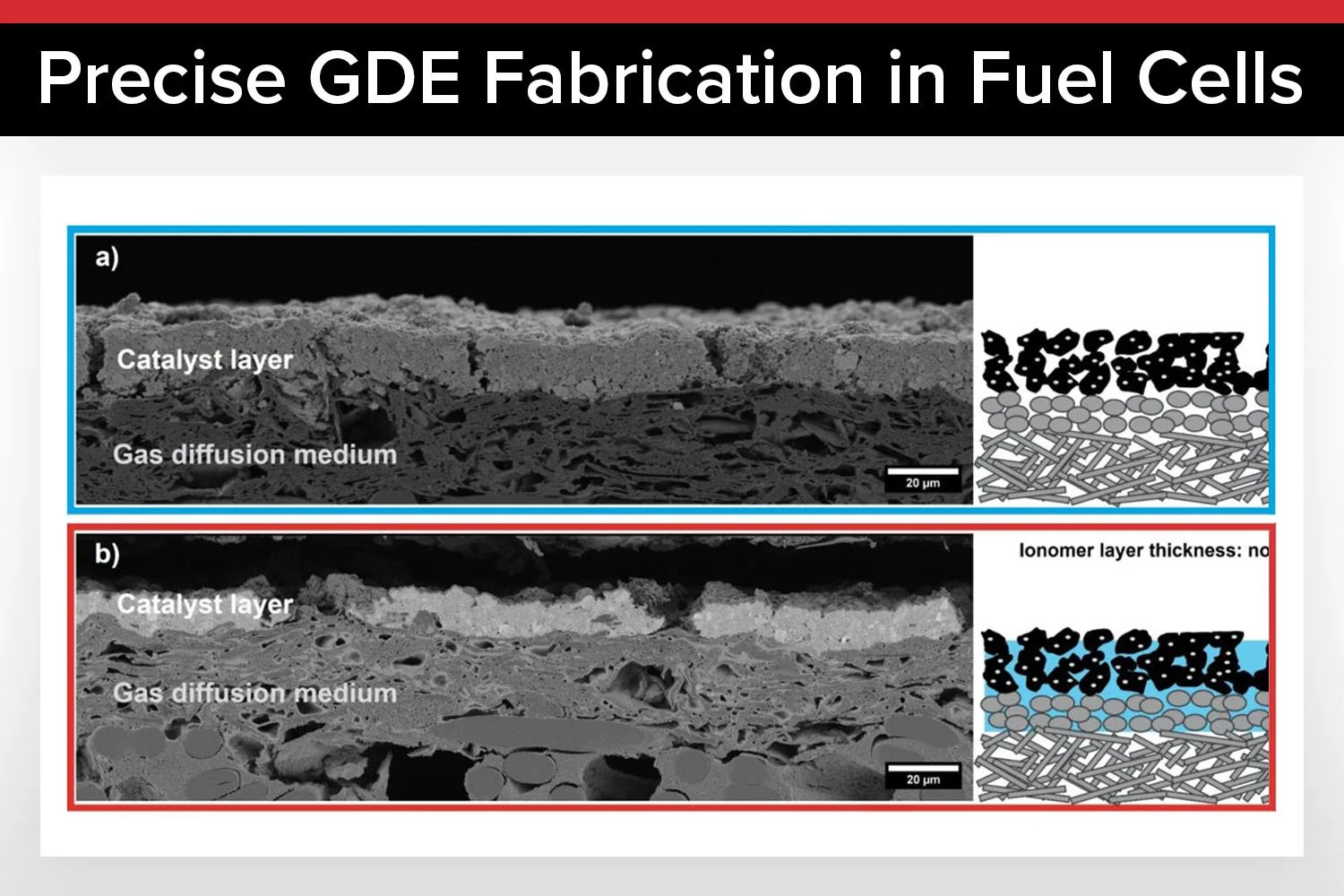
Slot-die coating has already been demonstrated in multiple peer-reviewed studies within fuel cell research. These publications show successful application for uniform catalyst layers, membrane coatings, multilayer fuel cell structures, and other functional coatings, highlighting both the precision and scalability of the technology.
Researchers have reported reproducible layer thickness, improved material utilization, and the ability to produce complex fuel cell architectures under controlled conditions, confirming that slot-die coating is a reliable and well-validated approach for modern fuel cell development.
Who Benefits From Slot-die Coating?
Fuel Cell Manufacturers: Slot-die coating enables uniform deposition of catalyst inks, membrane layers, and other functional materials, helping manufacturers achieve consistent component quality, improved fuel cell performance, and scalable production.
Fuel Cell Research & Development Labs: Research teams use slot-die coating to prototype and test new catalyst formulations, membrane materials, gas diffusion layers, and advanced fuel cell architectures with high reproducibility.
Advanced Fuel Cell Technologies: Emerging fuel cell concepts such as proton exchange membrane (PEM) fuel cells, solid oxide fuel cells (SOFCs), and next-generation catalyst systems benefit from the precise and controlled layer deposition slot-die coating provides.
Membrane & Catalyst Material Developers: Companies developing new catalysts, ionomers, membranes, or conductive materials rely on slot-die coating to evaluate performance under realistic coating conditions and optimize layer thickness, loading, and composition.
Pilot Lines & Scale-Up Facilities: Slot-die coating supports the transition from lab-scale experimentation to pilot and full roll-to-roll production, enabling reliable process development and scalable fuel cell manufacturing.
Industries That Use Slot-die Coating in Fuel Cells
Hydrogen Mobility & Transportation: Fuel cells for passenger vehicles, buses, trucks, trains, and other hydrogen-powered transportation systems.
Stationary Energy Systems: Fuel cells used for distributed power generation, backup power systems, and combined heat and power (CHP) applications.
Aerospace & Aviation: Lightweight and high-efficiency fuel cell systems for aerospace, drones, and aviation applications.
Portable & Industrial Power: Portable fuel cell systems and industrial power solutions for remote, off-grid, and specialized applications.
Advanced Research & Materials: R&D labs and material developers working on next-generation membranes, catalysts, and hydrogen energy technologies.
Hey. We get it.
Navigating slot-die and roll-to-roll coating for fuel cell materials can feel complex, especially if you’re new to the technology.
That’s why our team is here to guide you at every step, helping you select the right coating approach, optimize functional layer quality, and achieve consistent, scalable results for fuel cell development and manufacturing.
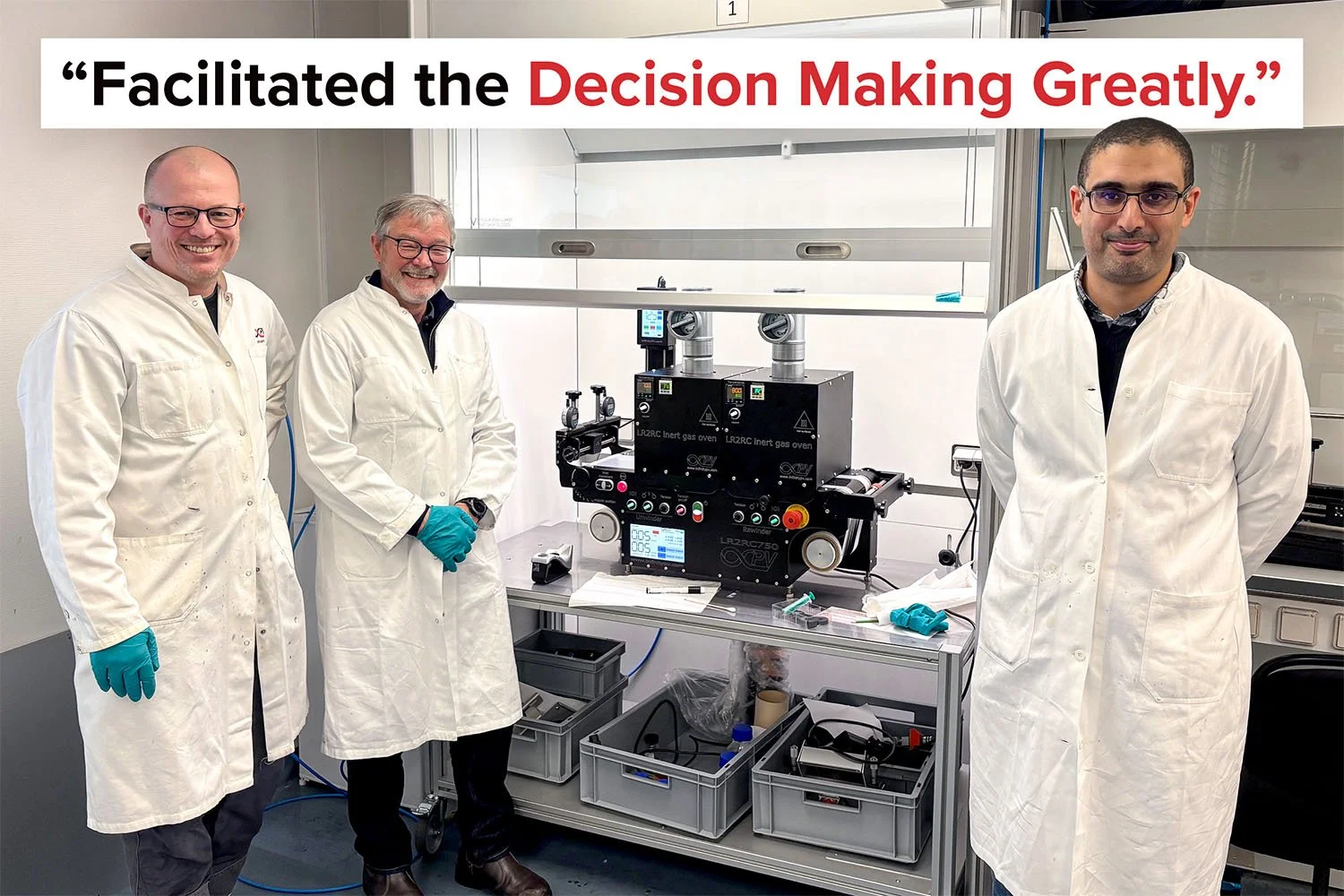
Why IRD Fuel Cells Chose to Test First
“Before purchasing the coating equipment we asked for a test coating to make sure that the materials we use for our production would operate with the coater from infinityPV. During our trial coating, infinityPV has been very helpful in every way and we have greatly appreciated their hospitality during our visit.” — Peter Lund, Senior Scientist at IRD Fuel Cells
Recommended Equipment for Fuel Cell Coating
Choosing the right slot-die or roll-to-roll coating system for your fuel cell application can feel complex. Whether you are working with catalyst layers, membranes, gas diffusion layers, membrane electrode assemblies (MEAs), or other fuel cell materials, we are ready to guide you and help identify the system that delivers precise, reproducible, and scalable results.
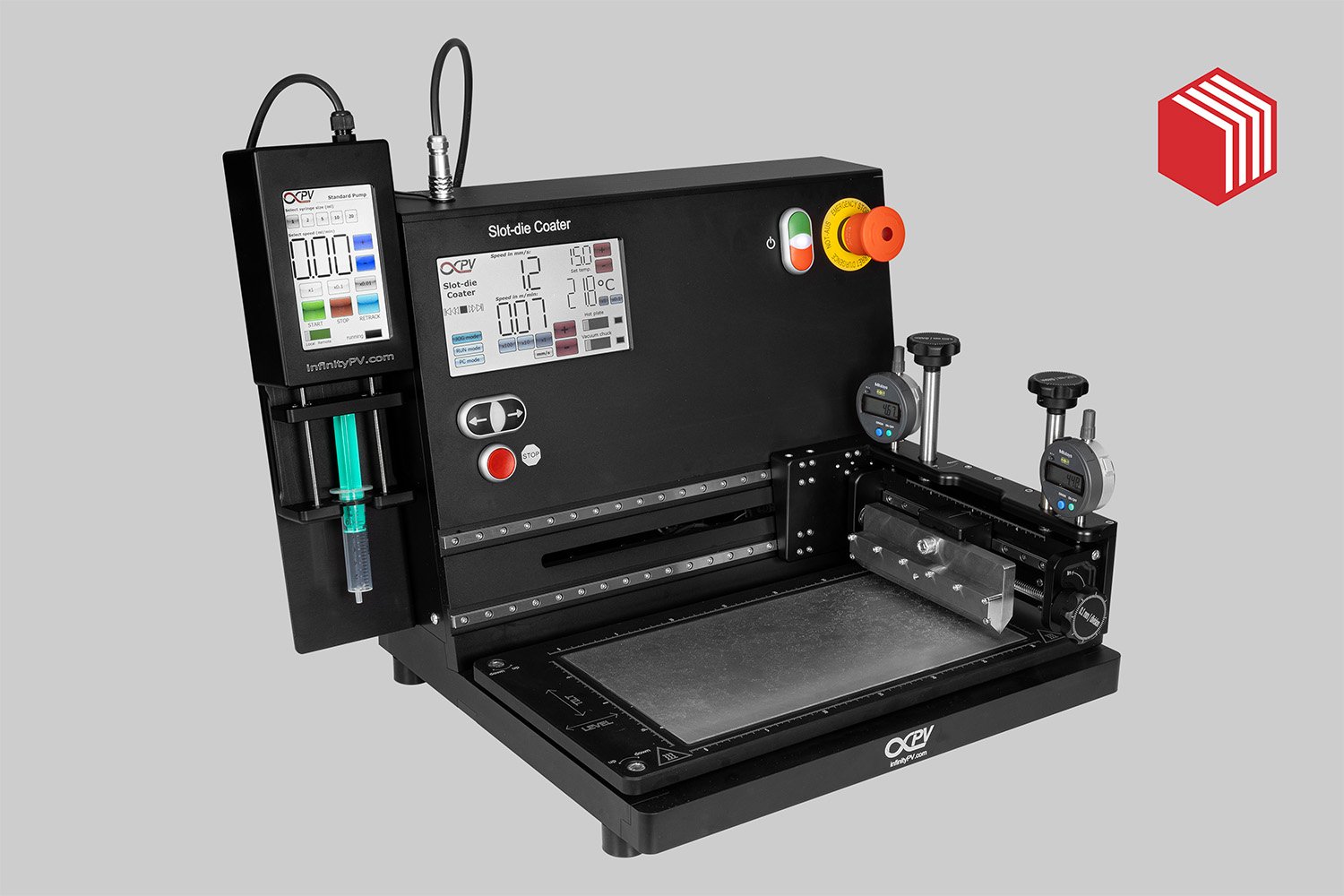
SDC Fuel Cell Coater Pro
Streamline your fuel cell research with an intuitive design, making development and optimization effortless. It helps researchers turn innovative ideas into market-ready solutions.
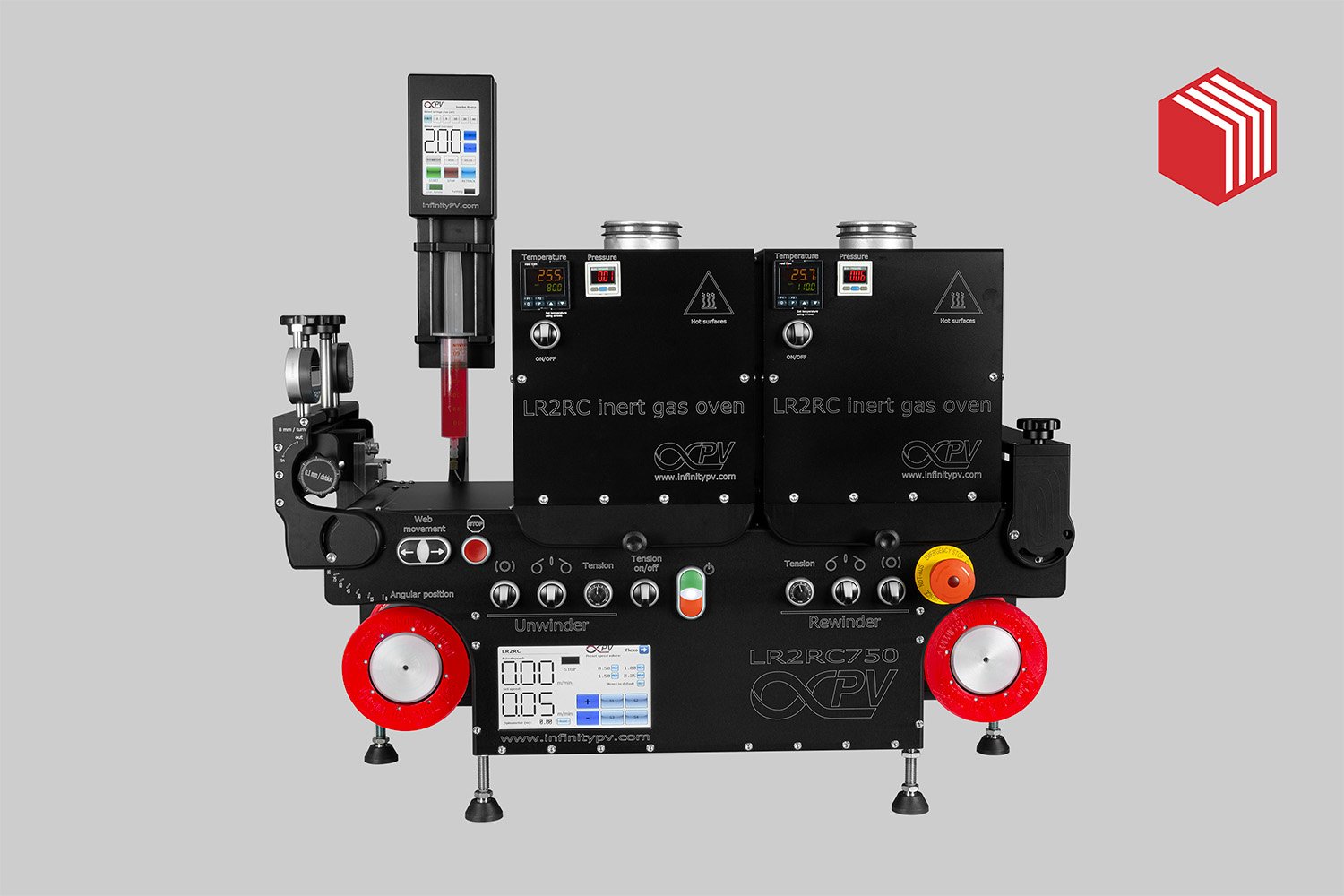
LR2RC750 Fuel Cell Coater
Tailored for lab-scale research and development, this system enables the efficient lab scale application of slot-die coating fuel cell using roll-to-roll (R2R) processing.

LR2RC1000 Fuel Cell Coater
With a substrate processing width of up to 305 mm, you are well-prepared to advance the R&D processing of fuel cells, enabling efficient pilot-scale production of fuel cell technology.
Reduce Waste and Boost Consistency with R2R Wet Processing
Roll-to-Roll Wet Processing for Fuel Cells
Roll-to-roll (R2R) wet processing allows flexible substrates, such as membranes, gas diffusion layers, catalyst-coated films, or other functional fuel cell materials, to be treated continuously through coating, functionalization, or chemical processing steps. This ensures uniform, reproducible layers and supports advanced fuel cell architectures, multilayer structures, and high-performance hydrogen energy devices.
Integrated and Precise
R2R processing can be combined with slot-die coating or other functional treatments, integrating multiple steps into a single workflow. This provides precise control at every stage and enables consistent catalyst layers, membrane coatings, and specialized multilayer fuel cell components.
Applications and Benefits
It’s ideal for catalyst layer coating, membrane functionalization, surface treatment, and multilayer structure formation. Continuous processing reduces variability, improves material utilization, and supports scalable production from lab-scale research to pilot and full-scale fuel cell manufacturing. Controlled environments, such as gloveboxes or cleanrooms, can also be used for sensitive fuel cell materials.
Guidance for Your Process
We can help you determine the best R2R wet processing approach for your fuel cell application. From lab-scale experiments to pilot or full-scale production, our team provides guidance to achieve reproducible, scalable results efficiently.

Controlled Environments for Reliable Fuel Cell Processing
Need Controlled Conditions for Sensitive Fuel Cell Materials?
Many fuel cell materials are sensitive to moisture, contamination, or environmental variations. Gloveboxes, cleanrooms, and controlled environments provide stable conditions for coating, processing, and testing fuel cell components such as catalyst layers, membranes, gas diffusion layers, and membrane electrode assemblies (MEAs).
Integrated and Safe
Controlled environments allow operations such as coating, drying, lamination, and material handling to be performed without exposing sensitive materials to contaminants or unstable conditions. This ensures reproducibility while protecting both the materials and the process, which is essential for advanced fuel cell technologies and high-performance hydrogen energy systems.
Applications and Benefits
Controlled environments are ideal when working with catalyst inks, proton exchange membranes, ionomer materials, or other sensitive fuel cell components. They help reduce defects, improve coating quality, and maintain consistent results from lab-scale experiments to pilot and production development.
Guidance for Your Process
We can help determine the best controlled environment setup for your fuel cell application. From laboratory research to pilot lines, our team can advise on safe, reproducible workflows for processing sensitive fuel cell materials.

Learn More About Fuel Cells Coating