
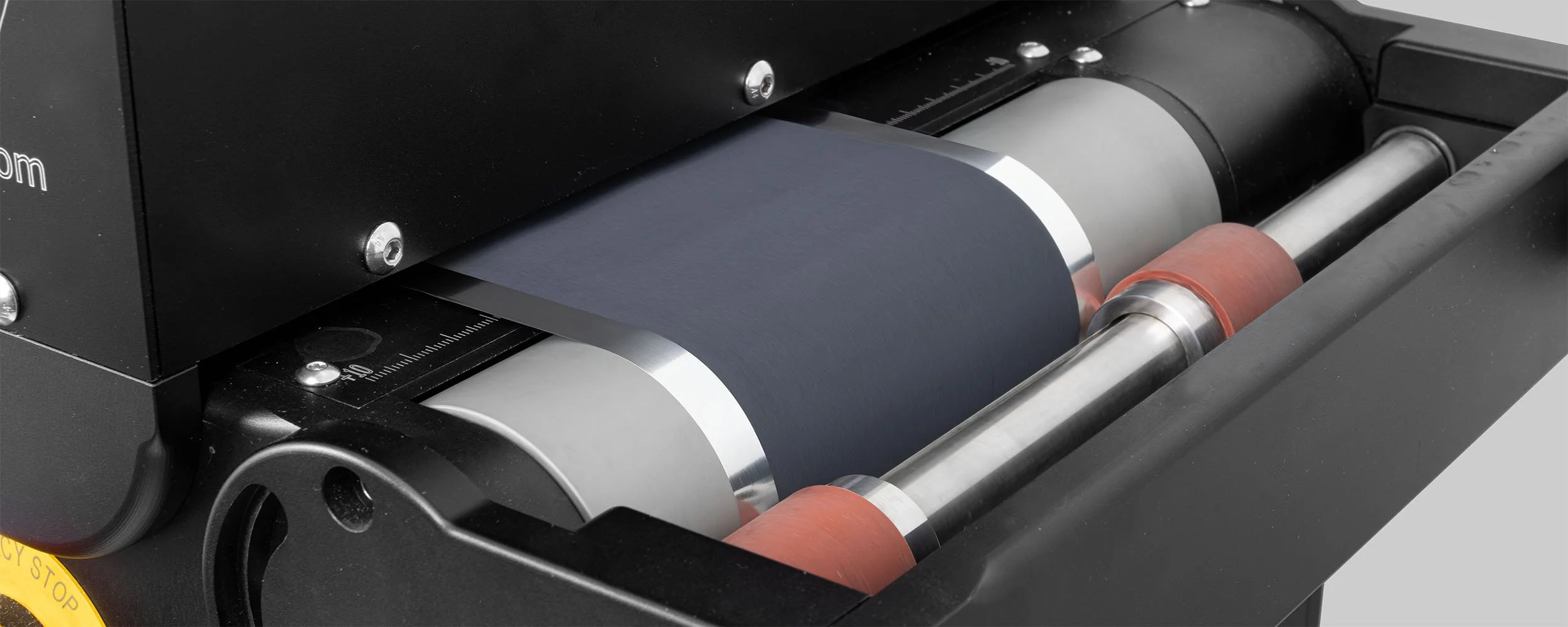
Accelerate Battery Manufacturing Using Slot-die Coating
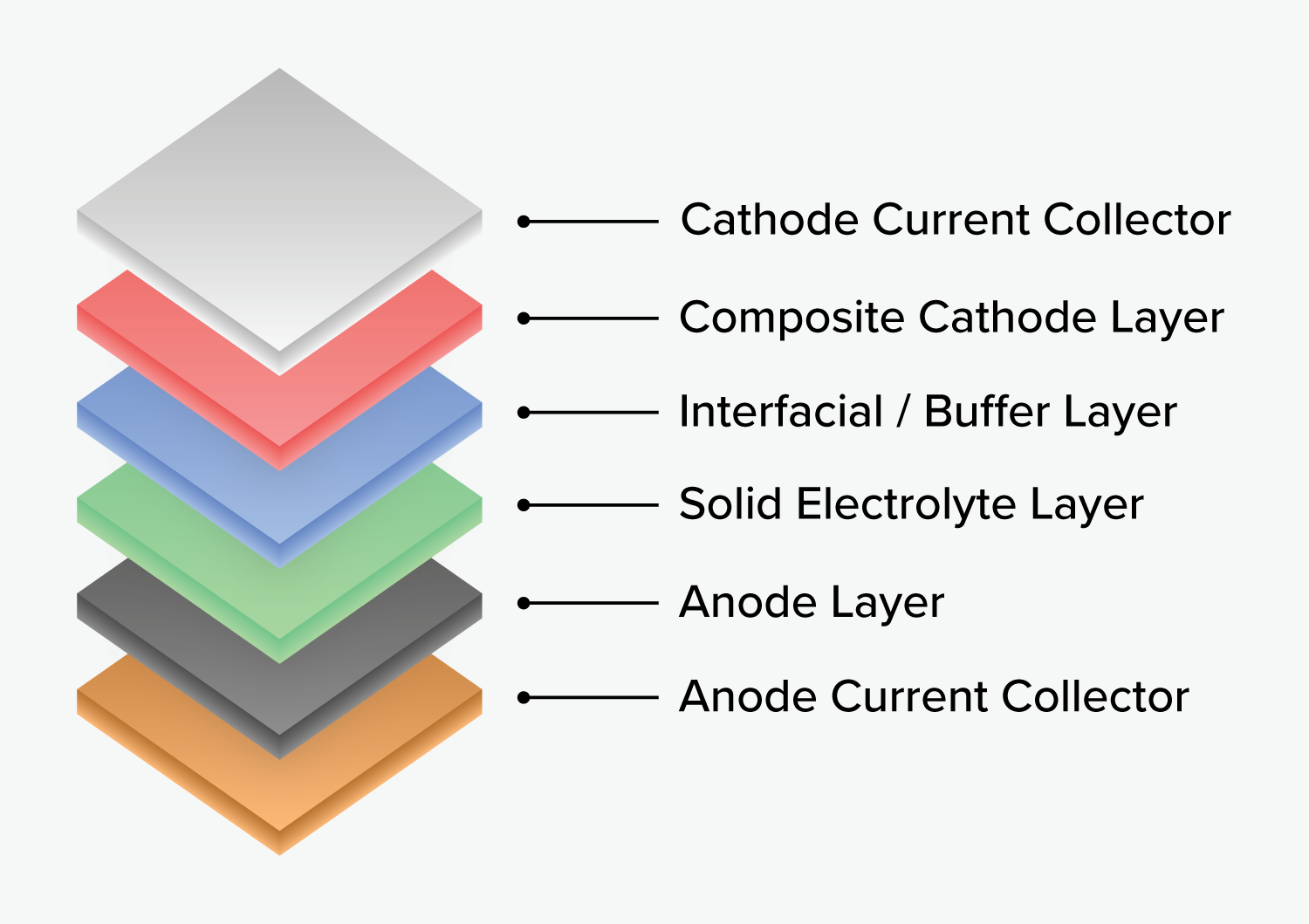
Example of thin-film battery multilayer architecture.
Why Use Slot-die Coating for Thin-film Batteries?
Slot-die coating is a powerful technique for thin-film battery research because it enables precise, uniform, and reproducible deposition of battery materials over a defined area. This makes it possible to control coating thickness and material distribution while using relatively small amounts of material, which is particularly valuable when developing and optimizing new battery materials and electrode formulations.
The process is also highly scalable and compatible with continuous roll-to-roll manufacturing, allowing researchers to move from laboratory-scale experiments toward larger-area battery production without fundamentally changing the coating principle. For multilayer thin-film batteries, slot-die coating can enable the controlled deposition of different functional layers, supporting the development of more consistent and precisely engineered battery architectures.
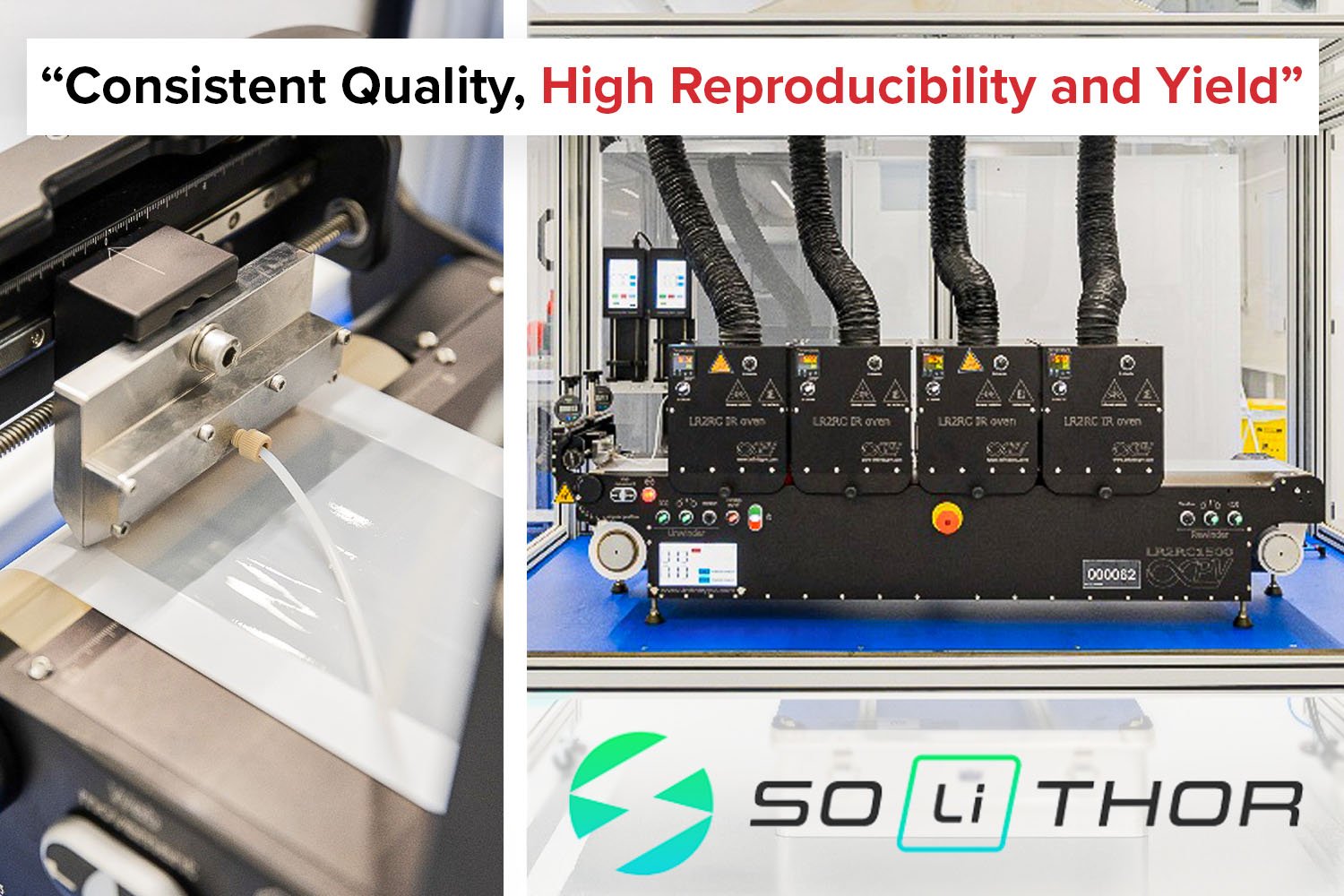
SOLiTHOR Develops Solid State Batteries Using Slot-die Coating
SOLiTHOR is developing high-energy-density solid-state batteries using a proprietary sol-gel-based solid composite electrolyte technology. To move from small-scale, hand-made samples toward scalable manufacturing, the company selected infinityPV’s Laboratory Roll-to-Roll Coater to optimize coating and drying processes for its composite cathode and solid electrolyte. Discover how the setup helped SOLiTHOR achieve consistent, reproducible wound rolls of several meters and accelerate the development of its roll-to-roll battery manufacturing process.
Why Use Slot-die Coating for Batteries?
Slot-die coating is a highly controlled deposition technique that is widely used in battery research and manufacturing. Its ability to produce uniform, precise, and reproducible thin layers makes it ideal for coating electrode materials and other functional battery components.
Unlike many traditional coating methods, slot-die coating allows functional materials such as slurries and active layers to be applied with accurate thickness control. This ensures consistent electrode quality while supporting a scalable process that can move smoothly from laboratory development to pilot and full-scale battery production.
Advantages of Slot-Die Coating in Battery Manufacturing
Uniform, High-Quality Electrode Layers
Slot-die coating enables precise control over coating thickness and layer uniformity when applying electrode slurries and functional materials. This helps ensure consistent electrode performance, which is essential for reliable battery capacity, stability, and cycle life.
Efficient Use of Materials
Because the coating material is accurately metered through the die, slot-die coating minimizes waste and improves material utilization. This is particularly important when working with costly active materials used in advanced battery chemistries.
Supports Multilayer and Advanced Battery Designs
The technology can also be used to apply multiple functional layers in a controlled and reproducible way. This supports the development of advanced battery architectures, including multilayer electrodes and solid-state battery components.
Scalable from Lab to Production
Slot-die coating works well in both laboratory research and large-scale manufacturing environments. The same controlled coating principles can be applied from small-scale development to pilot lines and full roll-to-roll battery production.
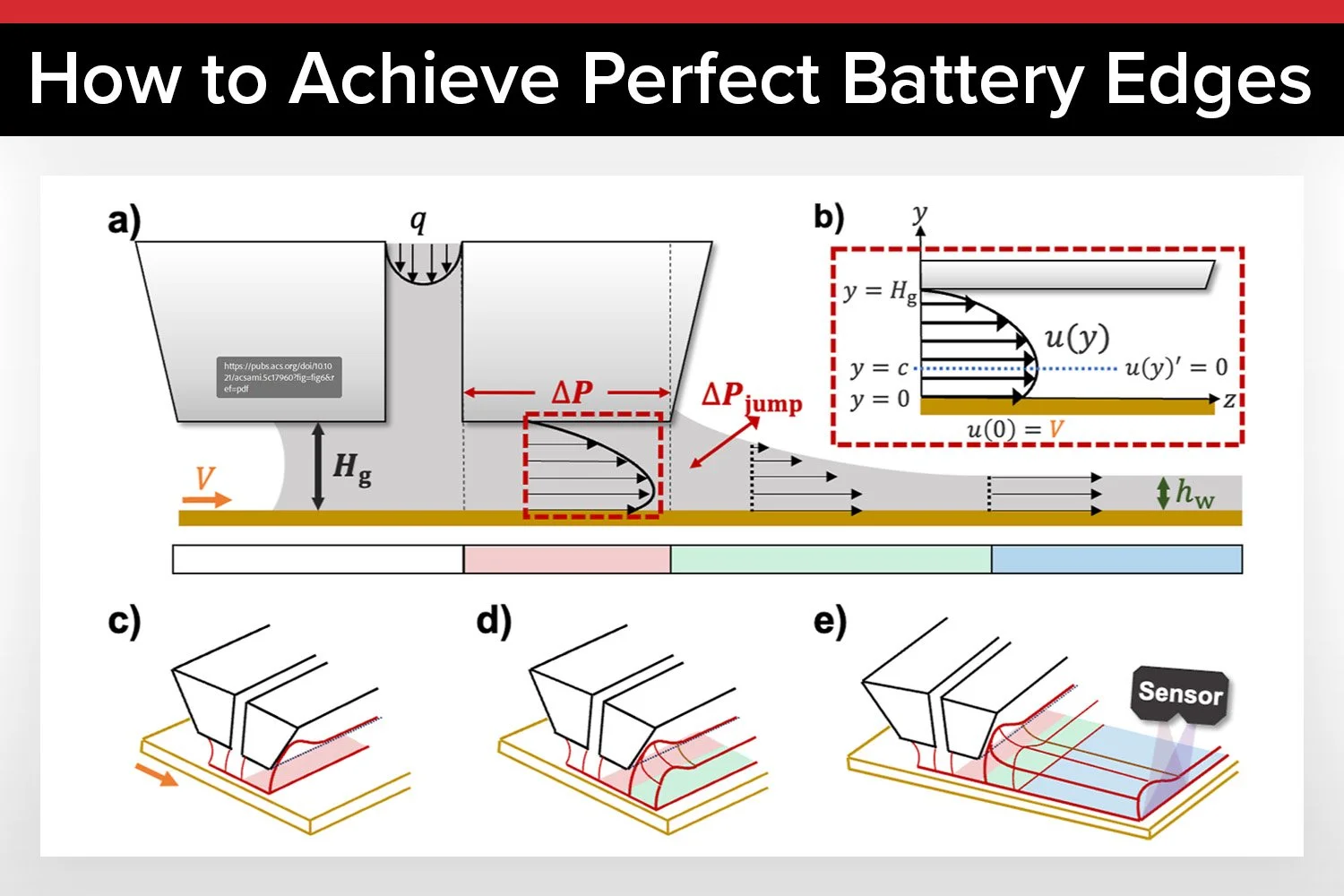
Proven in Peer-Reviewed Battery Research
Slot-die coating has already been demonstrated in multiple peer-reviewed studies within battery research. These publications show successful application for uniform electrode layers, multilayer battery structures, and functional coatings, highlighting both the precision and scalability of the technology.
Researchers have reported reproducible layer thickness, improved material utilization, and the ability to produce complex electrode architectures under controlled conditions, confirming that slot-die coating is a reliable and well-validated approach for modern battery development.
Who Benefits From Slot-die Coating?
Battery Manufacturers: Slot-die coating enables uniform deposition of electrode slurries and functional layers, helping manufacturers achieve consistent electrode quality, improved performance, and scalable production.
Battery Research & Development Labs: Research teams use slot-die coating to prototype and test new electrode materials, solid-state electrolytes, and advanced battery architectures with high reproducibility.
Advanced Battery Technologies: Emerging battery concepts such as solid-state batteries, lithium-sulfur systems, and next-generation electrode materials benefit from the precise and controlled layer deposition slot-die coating provides.
Electrode & Energy Material Developers: Companies developing new active materials, binders, or conductive additives rely on slot-die coating to evaluate performance under realistic coating conditions and optimize layer thickness and composition.
Pilot Lines & Scale-Up Facilities: Slot-die coating supports the transition from lab-scale experimentation to pilot and full roll-to-roll production, enabling reliable process development and scalable battery manufacturing.
Industries That Use Slot-die Coating in Batteries
Electric Vehicles (EVs) – lithium-ion and solid-state battery production
Consumer Electronics – smartphones, laptops, wearables
Grid & Energy Storage – large-scale batteries for renewable energy
Aerospace & Aviation – high-performance, lightweight energy storage
Advanced Research & Materials – R&D labs developing next-generation energy materials
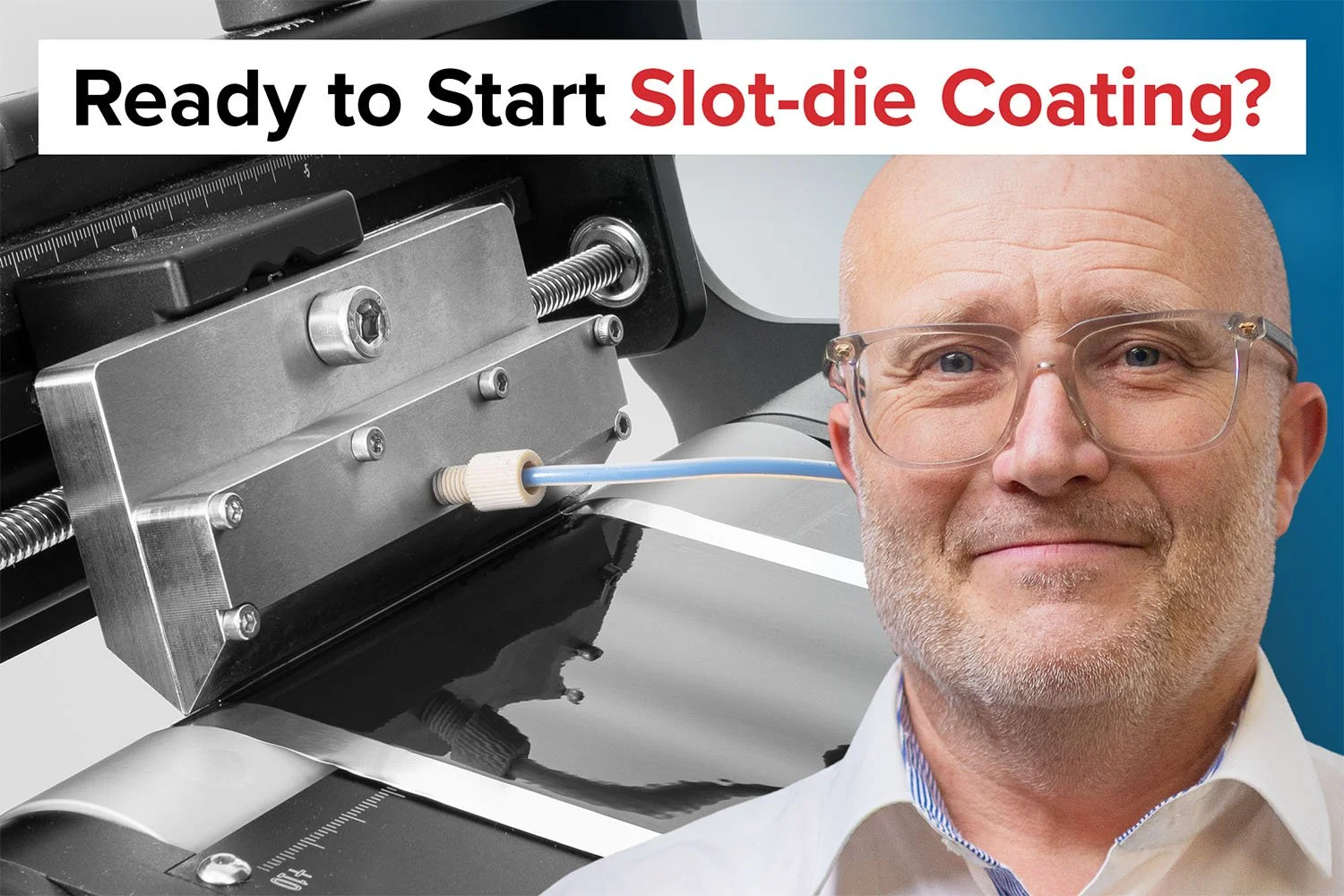
Wet get it. Navigating slot-die and roll-to-roll coating for battery materials can feel complex, especially if you’re new to the technology.
That’s why our team is here to guide you at every step, helping you select the right coating approach, optimize layer quality, and achieve consistent, scalable results.

E-magy Enhances Battery Performance with R2R Coater
“We chose the Laboratory Roll-to-Roll Coater from infinityPV because it nicely sits between sheet coating machines and the usually bigger lab scale equipment offered by other suppliers. The machine is also very modular in set-up, which makes it a lot easier to change things in the process without changing the whole machine.” — Jurgen Poen, Battery Process Engineer at E-magy
Recommended Equipment for Battery Coating
Choosing the right slot-die or roll-to-roll coating system for your battery application can feel complex. Whether you are working with electrode coatings, solid-state battery layers, separators, or other energy storage materials, we are ready to guide you and help identify the system that delivers precise, reproducible, and scalable results.
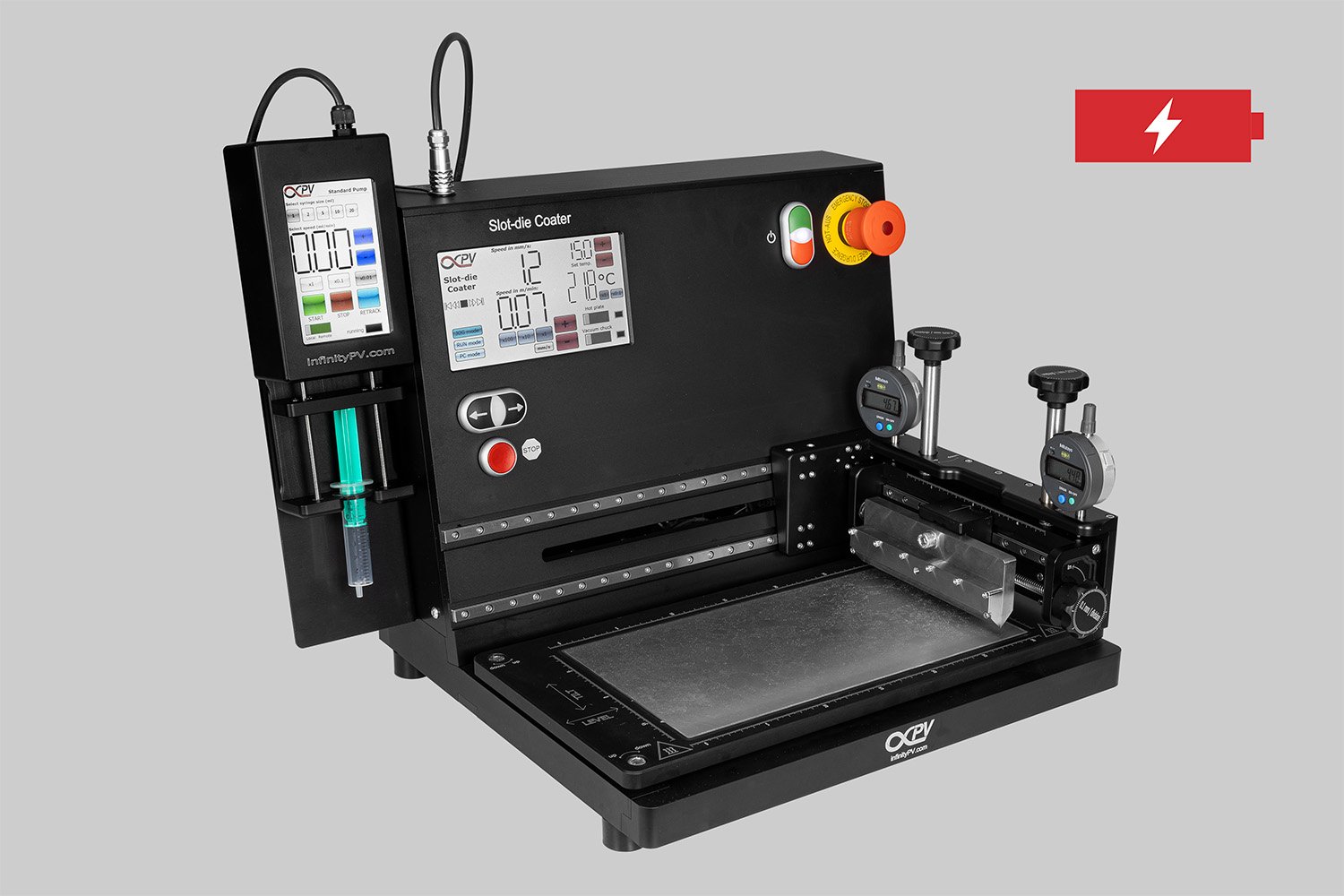
SDC Battery Coater Pro
The SDC Battery Coater Pro is specifically designed for researchers dedicated to developing and optimizing battery materials. It facilitates a seamless transition from research to commercialization.

LR2RC750 Battery Coater
Customized for lab-scale research and development, this system facilitates the efficient application of battery electrode coatings.

LR2RC1000 Battery Coater
With a substrate processing width of up to 305 mm, you are well-equipped to initiate pilot-scale production of your battery technology.
Finding the Right Coating Approach for Your Application
Both slot-die coating and knife coating are widely used methods for applying slurry layers in battery electrode manufacturing. Each approach has its own advantages depending on the stage of development, desired coating precision, and production scale. Understanding the differences between these techniques can help determine which method is best suited for a specific battery material, formulation, or manufacturing process.
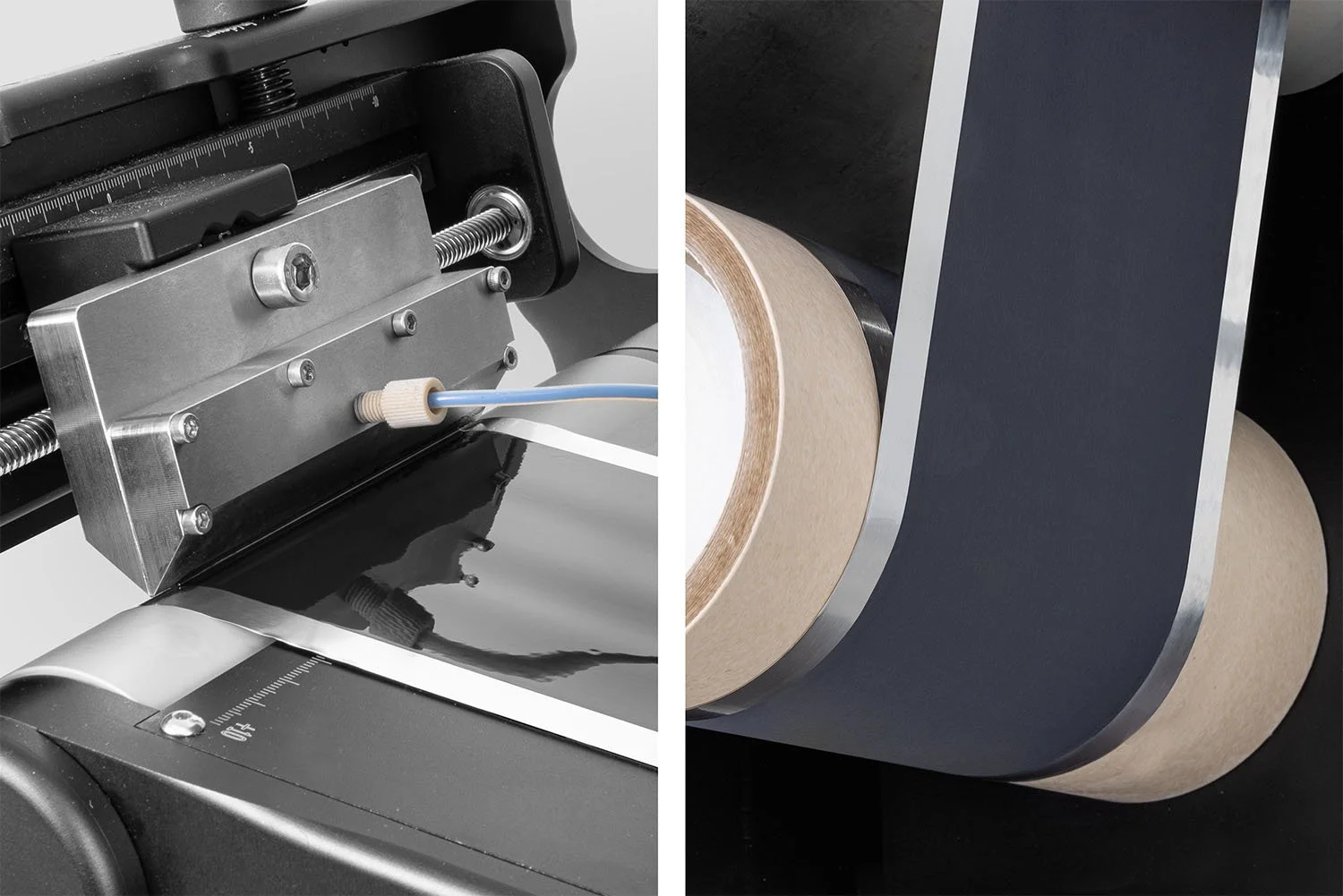
Slot-die Coating
Slot-die coating is a highly controlled coating method where slurry is pumped through a precisely machined slot-die head and deposited directly onto a moving substrate, such as a current collector foil.
The flow rate, coating gap, and substrate speed can be carefully controlled, allowing for very uniform layer thickness and excellent reproducibility.
This level of precision makes slot-die coating particularly well suited for battery research, process optimization, and scalable roll-to-roll manufacturing.
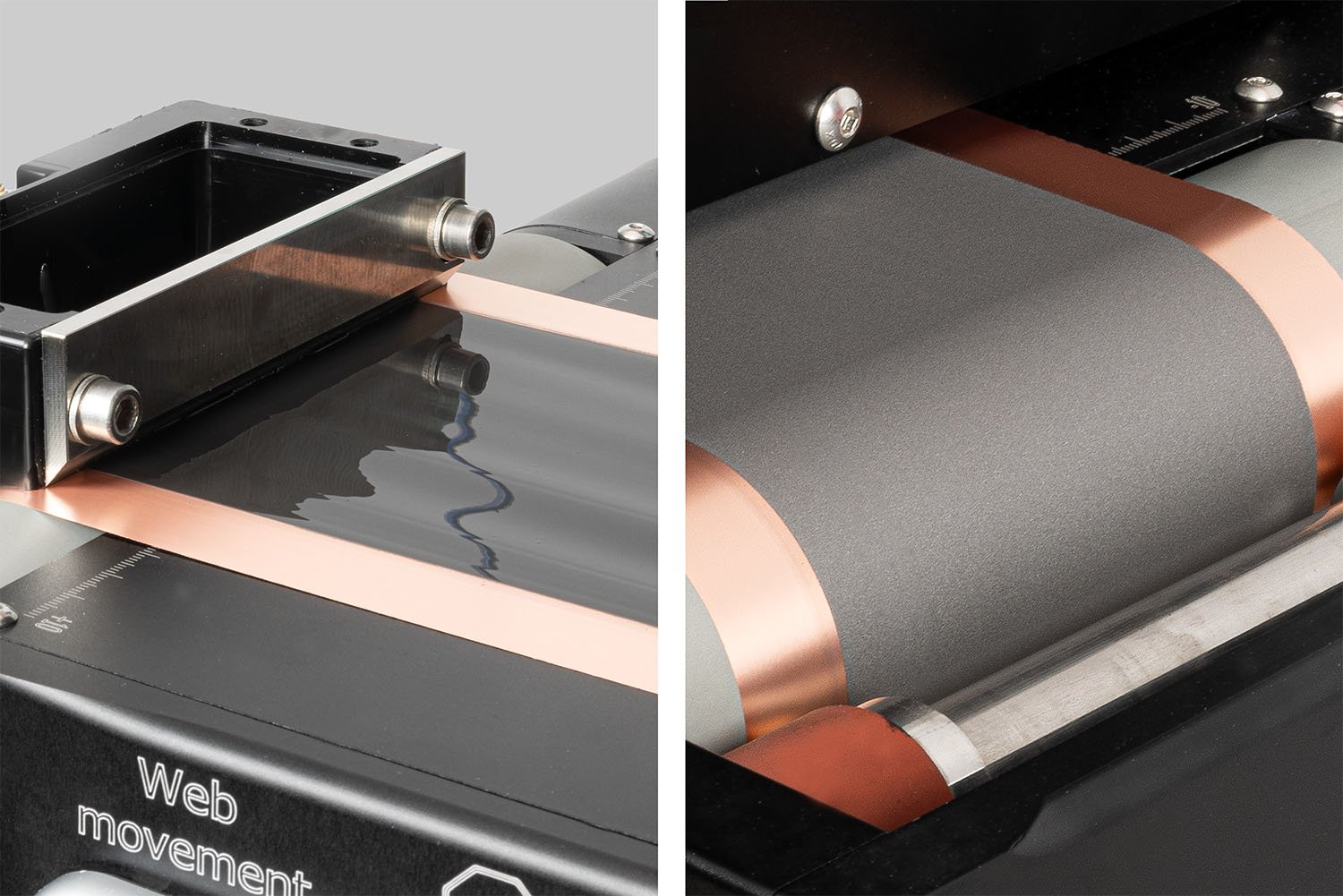
Knife Coating / Slurry Coating
Knife coating, often referred to as doctor blade coating, applies slurry by spreading it across a substrate using a blade positioned at a set height above the surface.
The coating thickness is controlled primarily by the blade gap and the amount of slurry present in front of the blade.
While knife coating is simple and widely used for laboratory experiments and quick material screening, it generally offers less control over uniformity and material usage compared to slot-die coating.
Reduce Waste and Boost Consistency with R2R Wet Processing
Roll-to-Roll Wet Processing for Batteries
Roll-to-roll (R2R) wet processing allows flexible substrates, such as electrode foils, separators, or solid-state layers, to be treated continuously through coating, functionalization, or chemical steps. This ensures uniform, reproducible layers and supports advanced battery architectures, multilayer electrodes, and high-performance energy storage devices.
Integrated and Precise
R2R processing can be combined with slot-die coating or other functional treatments, integrating multiple steps into a single workflow. This provides precise control at every stage and enables consistent multilayer electrodes or specialized coatings.
Applications and Benefits
It’s ideal for electrode coating, separator functionalization, surface treatment, and multilayer layer formation. Continuous processing reduces variability, improves material utilization, and supports scalable production from lab-scale research to pilot and full-scale battery manufacturing. Controlled environments, such as gloveboxes or cleanrooms, can be used for sensitive materials.
Guidance for Your Process
We can help you determine the best R2R wet processing approach for your battery application. From lab-scale experiments to pilot or full-scale production, our team provides guidance to achieve reproducible, scalable results efficiently.

Controlled Environments for Reliable Battery Processing
Need Controlled Conditions for Sensitive Battery Materials?
Many battery materials are sensitive to moisture, oxygen, or contamination. Gloveboxes, dry rooms, and clean environments provide controlled conditions for coating, processing, and testing battery components such as electrodes, solid-state layers, and separators.
Integrated and Safe
Controlled environments allow operations such as coating, drying, and material handling to be performed without exposing sensitive materials to air or contaminants. This ensures reproducibility while protecting both the materials and the process, which is essential for advanced battery chemistries and next-generation energy storage technologies.
Applications and Benefits
Controlled environments are ideal when working with lithium metal, solid-state electrolytes, moisture-sensitive electrode materials, or reactive battery components. They reduce defects, improve coating quality, and maintain consistent results from lab-scale experiments to pilot and production development.
Guidance for Your Process
We can help determine the best controlled environment setup for your battery application. From laboratory research to pilot lines, our team can advise on safe, reproducible workflows for processing sensitive battery materials.
