
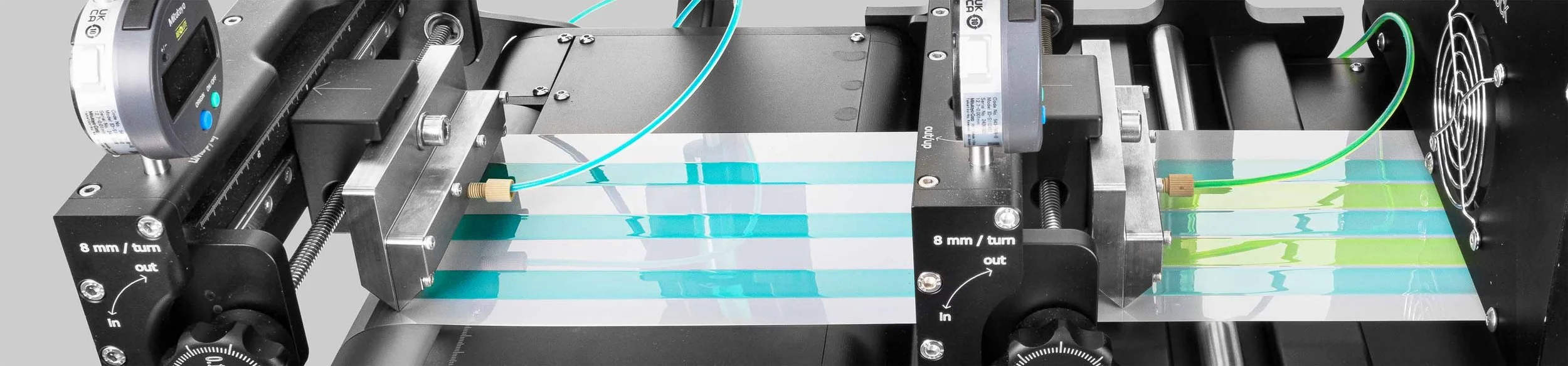
Accelerate Thin-Film Drug Delivery Research and Development
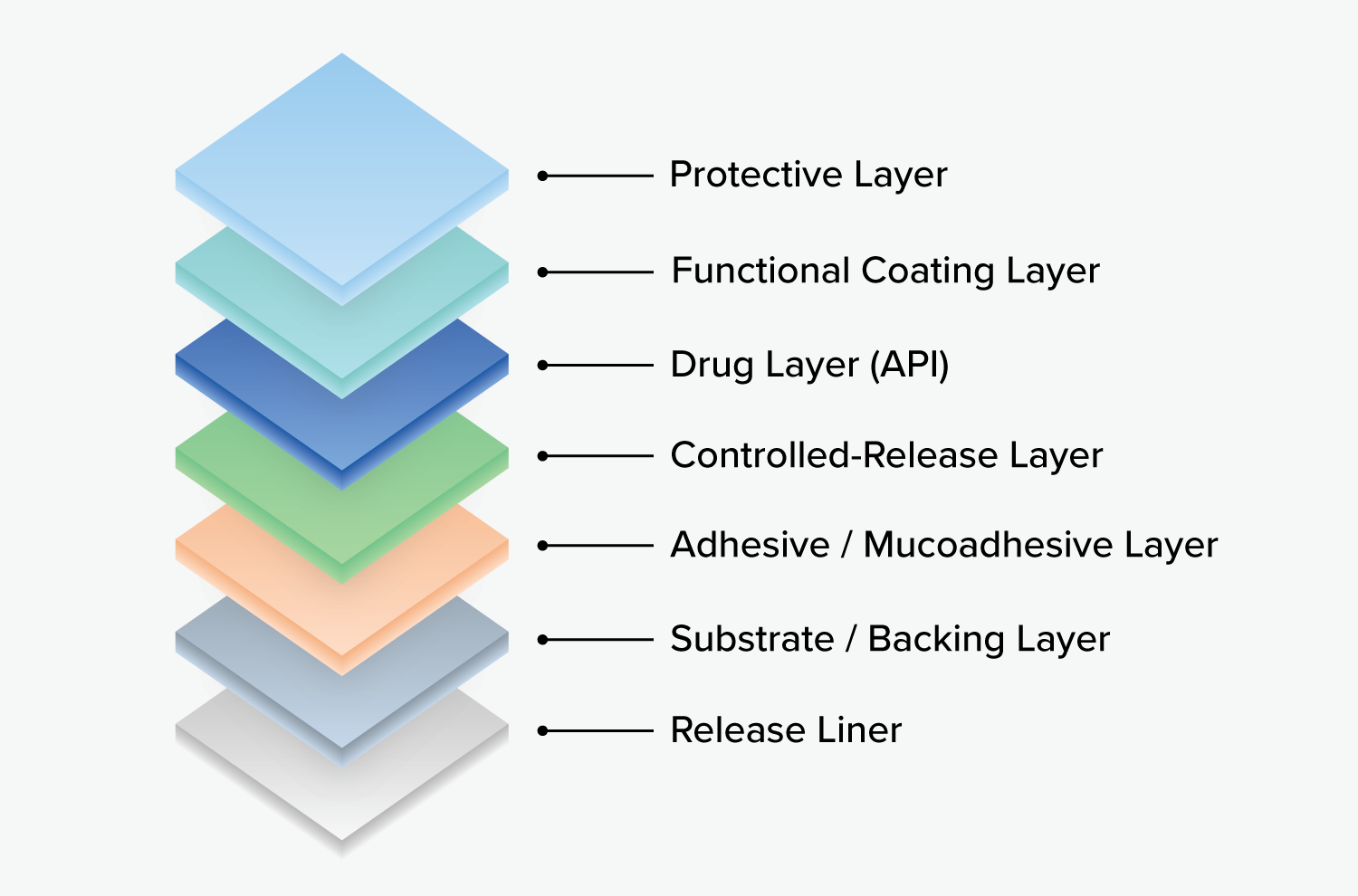
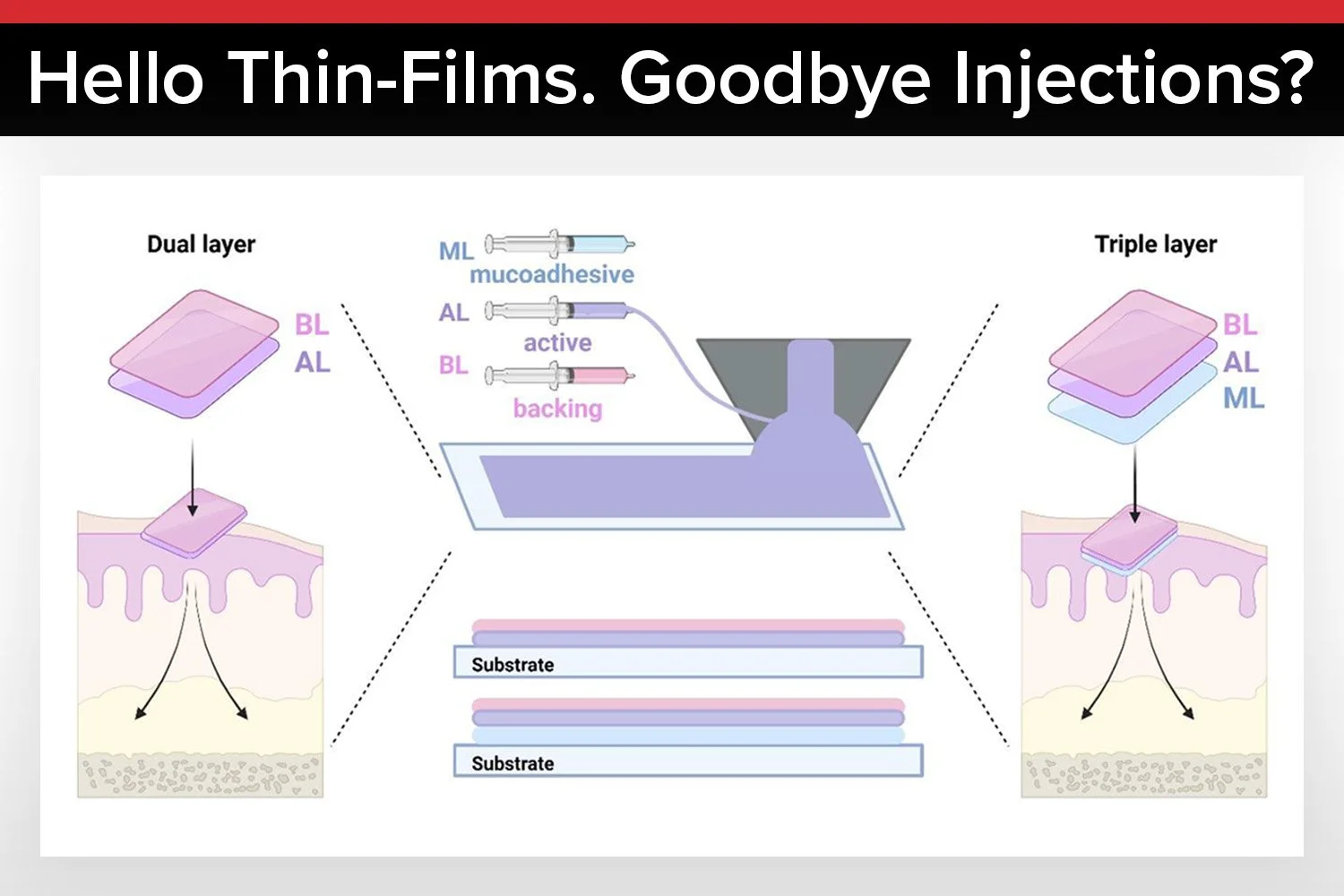
Example of pharmaceutical multilayer thin-film.
Why Use Slot-die Coating for Pharma & Medicine?
Slot-die coating is a powerful technique for thin-film drug delivery research because it enables precise, uniform, and reproducible deposition of formulations over a defined area. This makes it possible to control coating thickness and drug loading while working with small amounts of material, which is particularly valuable during early-stage formulation development.
The process is also highly scalable and compatible with continuous manufacturing, allowing researchers to move from small laboratory experiments toward larger-area and roll-to-roll production without fundamentally changing the coating principle. For multilayer drug delivery systems, slot-die coating can further enable controlled deposition of different functional layers, supporting the development of more complex and precisely engineered delivery platforms.
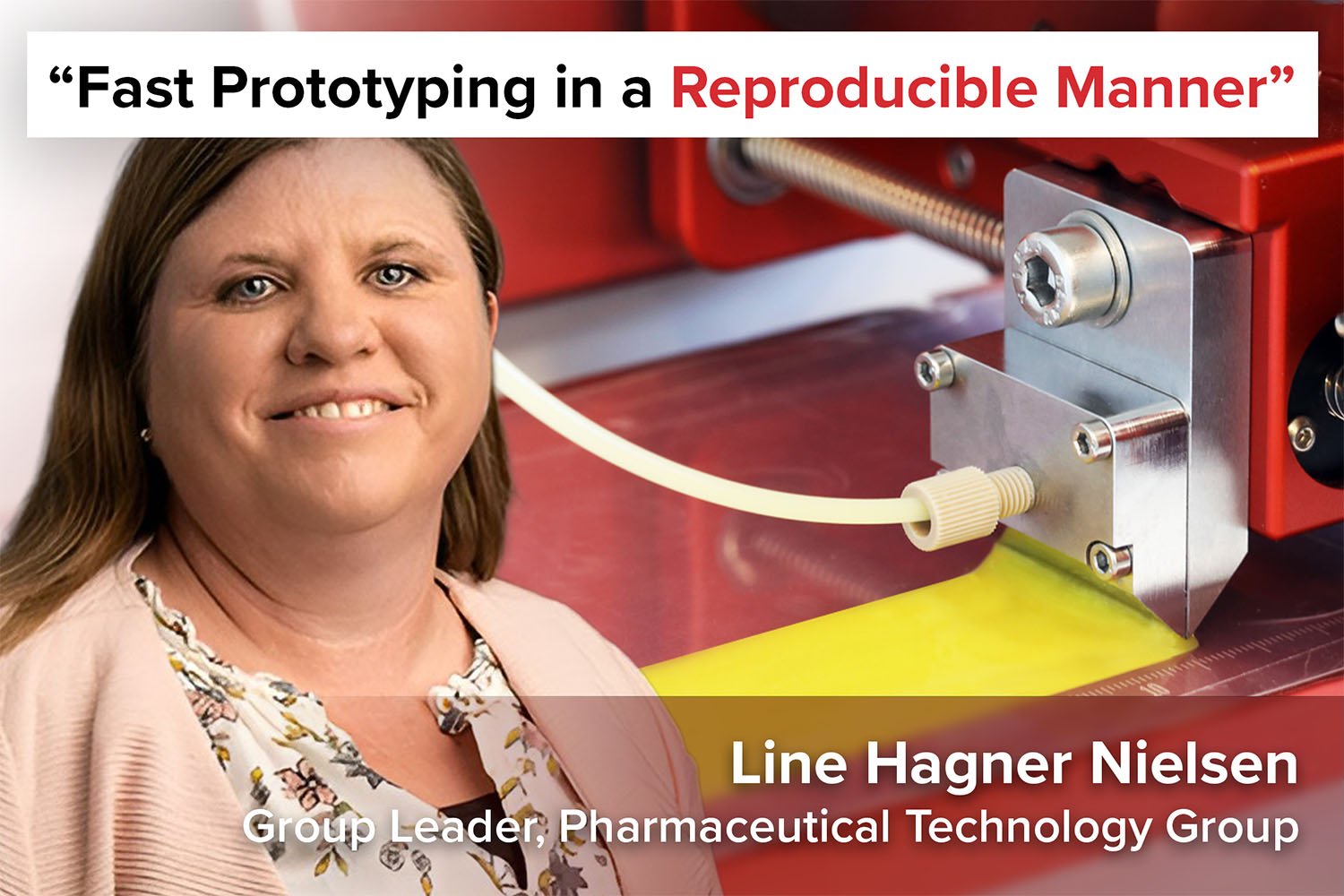
Technical University of Denmark Use Slot-die Coating
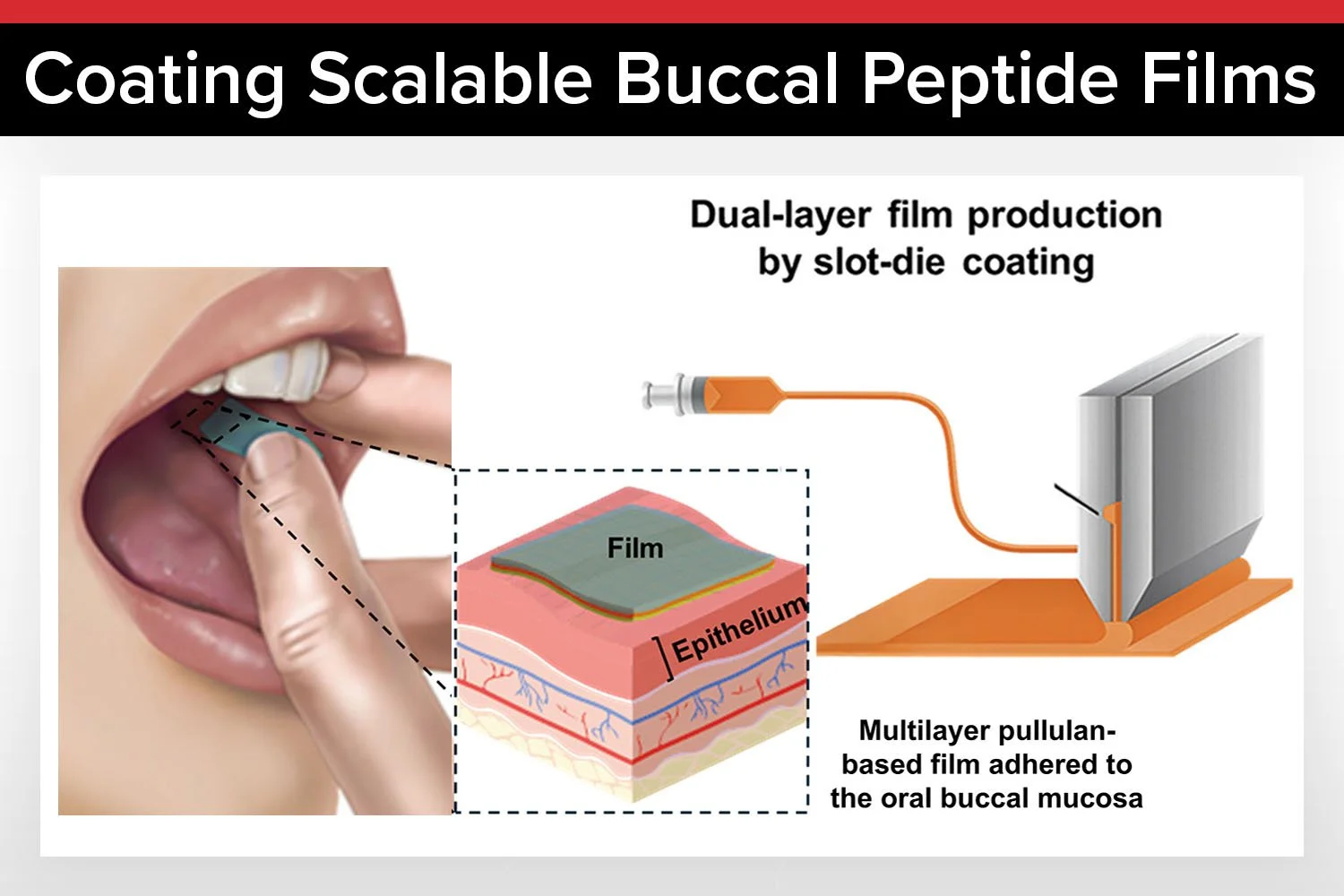
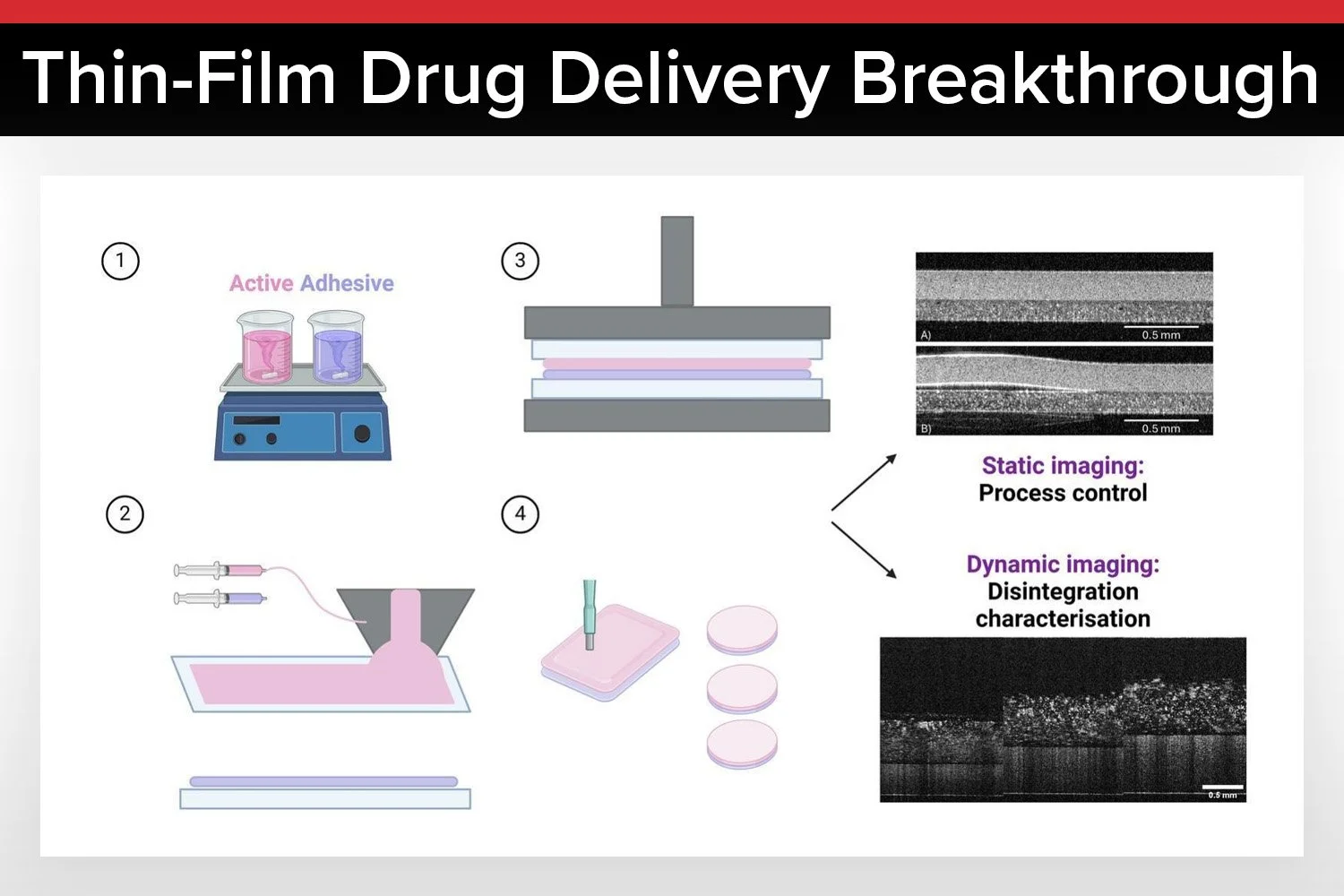
Researchers at the Technical University of Denmark use slot-die coating to develop thin polymeric films for buccal drug delivery, demonstrating how the technique can provide precise and reproducible control over film fabrication. This enabled:
Controlled drug release: Film formulations could be tuned to influence release rates.
Enhanced mucoadhesion: The films could be optimized for longer contact with mucosal surfaces.
Flexible fabrication: Different polymers and layer-by-layer structures could be explored, including formulations containing sensitive peptides.
Read the full case study to see how researchers applied slot-die coating to buccal drug delivery and what they achieved.
Slot-die Coating is Proven in Peer-Reviewed Pharmaceutical Studies
Who Benefits from Slot-die Coating?
Slot-die coating is suitable for research and development of numerous pharmaceutical thin-film applications, including:
Sublingual films
Mucoadhesive drug delivery systems
Dissolvable films
Controlled-release films
Multilayer pharmaceutical films
Vaccine delivery films
Microneedle coating formulations
Explore Slot-die Coating for Thin-Film Drug Delivery
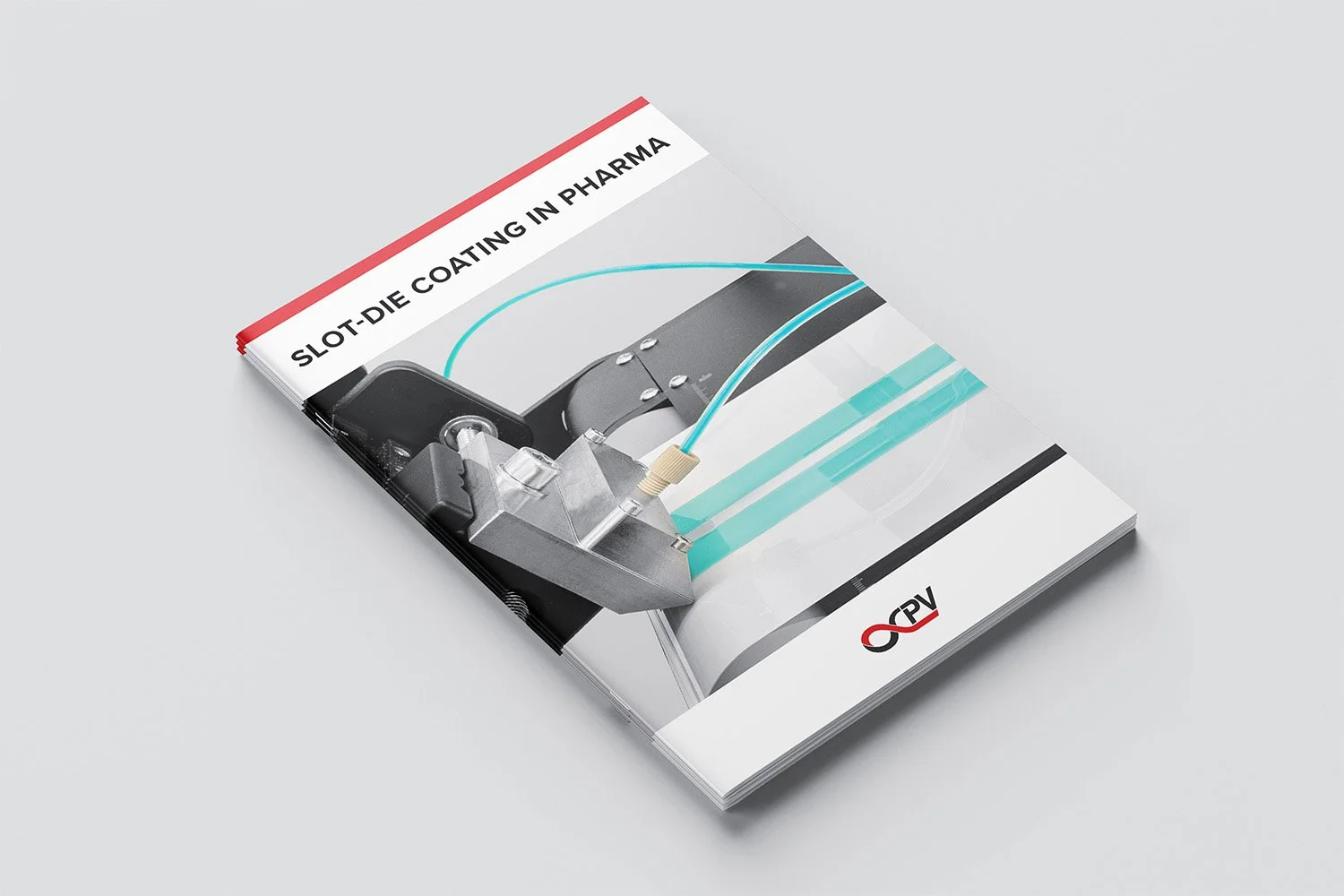
Discover how slot-die coating can support the development of precise, uniform, and reproducible thin films for drug delivery. Download our brochure to learn more about the technology, its applications in pharmaceutical research, and how it can be used to explore controlled drug release, mucoadhesive films, and other advanced thin-film delivery systems.
What is Slot-die Coating?
Slot-die coating is an advanced and highly controlled deposition technique that is particularly well-suited for pharmaceutical and medical applications. Its ability to produce uniform, precise, and reproducible thin films makes it an essential tool for research and development in drug delivery, diagnostic devices, and medical coatings.
Unlike traditional coating methods, slot-die coating enables the controlled deposition of functional materials onto various substrates, ensuring batch-to-batch consistency and scalability from laboratory-scale development to full-scale production.
Advantages of Slot-die Coating in Pharma & Medicine
Precise, Uniform Layers for Reliable Dosing
Slot-die coating enables precise control over coating thickness and content uniformity when applying drug-loaded formulations. This level of control helps ensure that each film delivers consistent dosing, which is essential for patient safety and regulatory requirements.
Efficient Use of Materials and APIs
Because the formulation is accurately metered during coating, materials and APIs are used efficiently. This reduces waste and minimizes the need for repeated trial-and-error experiments, making early-stage development more cost-effective, especially when working with potent or expensive active ingredients.
Supports Advanced Multilayer Designs
The technology also supports advanced multilayer film designs. By applying consecutive wet layers with multiple slot-die stations, it becomes possible to create dual- or triple-layer structures. These structures enable controlled or sequential drug release, combination therapies, or additional functional coatings within a single continuous process.
Compatible with Controlled Environments
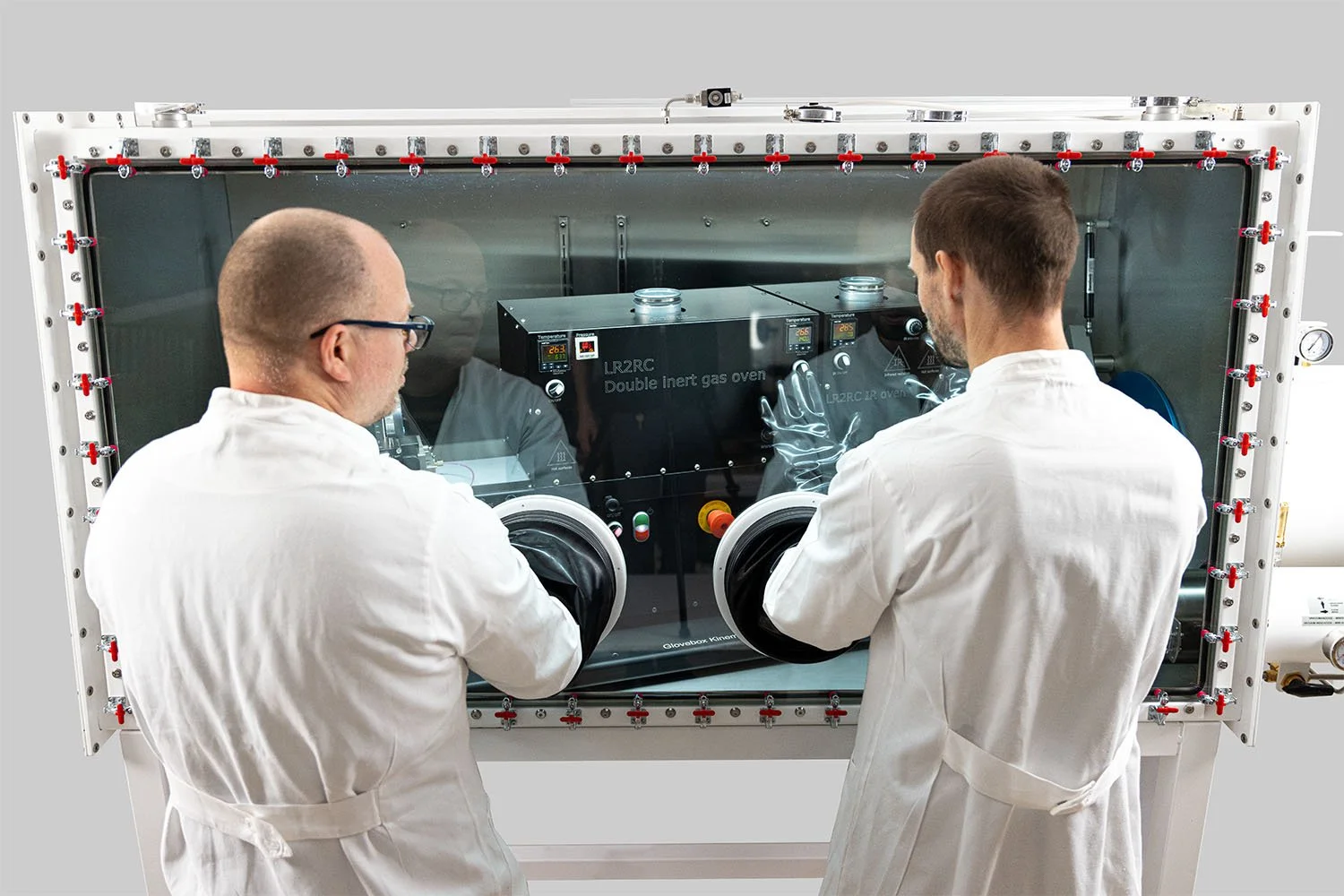
Slot-die coating systems can be operated within controlled environments such as fume hoods, cleanrooms, and gloveboxes. This makes them well suited for handling potent, moisture-sensitive, or oxygen-sensitive formulations while maintaining reproducible processes and supporting regulatory compliance.
How infinityPV Can Help With Your Research
Why Trust Us
With more than 25 years of hands-on experience in printed electronics, coating and thin-film technologies, we understand the challenges researchers face when developing new processes. Our equipment is developed by scientists, for scientists, and is used by leading research institutions and companies in more than 30 countries. From laboratory sheet coating to roll-to-roll processing, our systems are built around the need for precise, reproducible and adaptable processes. Backed by peer-reviewed research, in-house expertise and long-term customer support, we help researchers turn promising coating concepts into reliable processes.
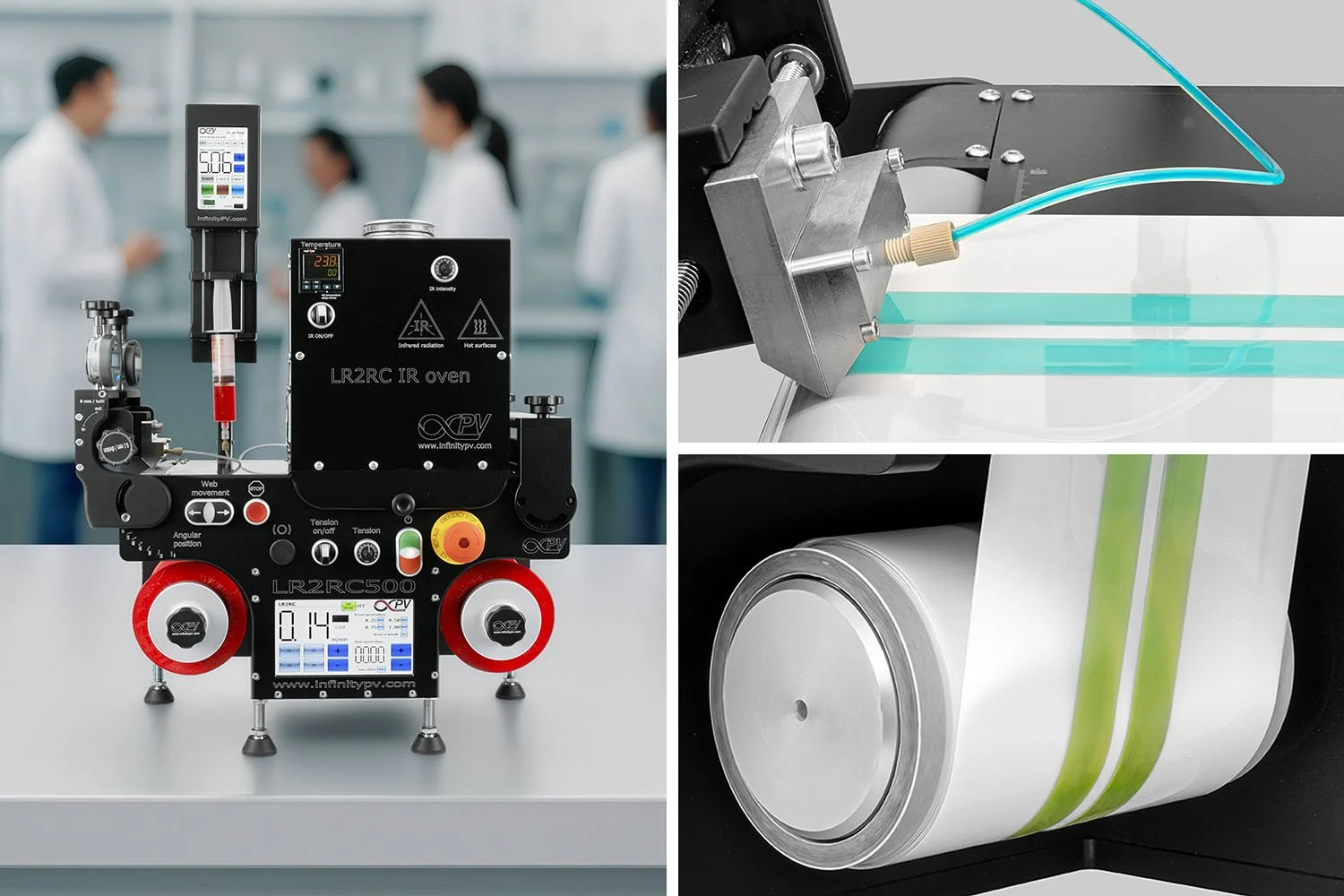
Equipment for Your Pharmaceutical Research
Our equipment is designed to support pharmaceutical research at different stages of development. Whether you need a sheet-to-sheet system for controlled laboratory experiments or a roll-to-roll platform for continuous processing and scale-up, we can provide a setup suited to your research.
Because we design and manufacture our equipment ourselves, we can help you configure the system around your specific formulation, substrate and process requirements. Our team can guide you in selecting the right coating width, slot-die head, pumping system, drying solution and other components, based on what you are trying to achieve.
From the first laboratory trials to more advanced process development, we aim to give you not just the equipment, but the knowledge and support to use it effectively.
Hands-On Support in Our Workshop
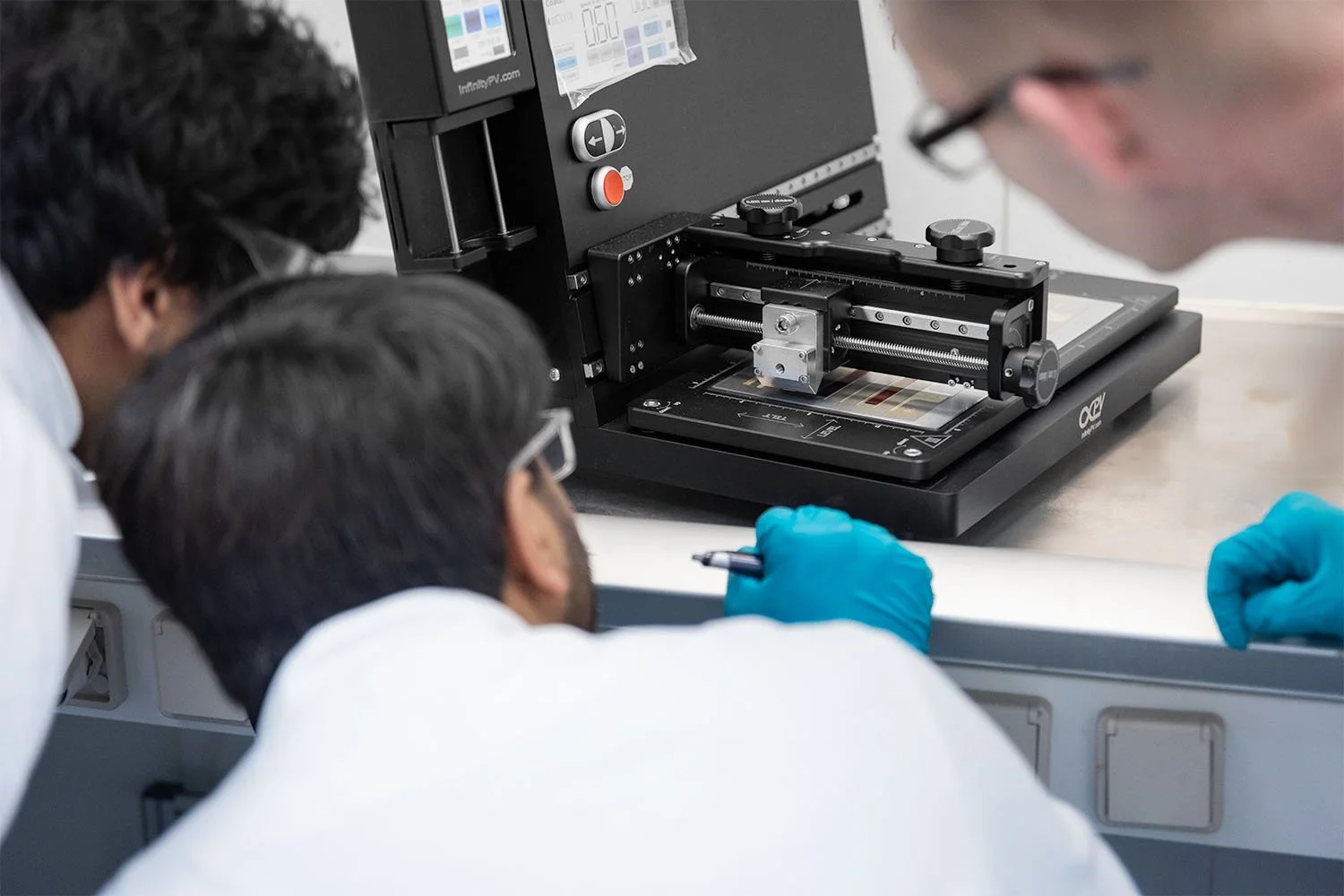
Developing a pharmaceutical coating process often requires more than selecting the right equipment. Our workshop gives you the opportunity to work directly with our team, test your materials and explore coating parameters in a controlled environment before committing to a system.
We can support you with hands-on trials, process development and technical guidance, helping you understand how your formulation behaves during coating and what equipment configuration may work best. Whether you are starting with your first experiments or looking to improve an established process, our team can work alongside you to troubleshoot challenges and find practical solutions.
In our workshop, you can:
Test your materials and formulations on our sheet-to-sheet and roll-to-roll equipment.
Work with our technical team to explore coating parameters and equipment configurations.
Evaluate coated samples before investing in your own equipment.
Develop and troubleshoot processes with hands-on support from experienced coating specialists.
See our equipment in operation and gain confidence in the setup that best fits your research.
Controlled Environments for Reliable Pharmaceutical Processing
Need Controlled Environments for Sensitive Pharma Applications?
Working with potent, moisture-sensitive, or oxygen-sensitive formulations requires precise environmental control. Gloveboxes, fume hoods, and cleanrooms provide safe, reproducible conditions for coating, processing, and testing pharmaceutical materials.
Integrated and Safe
These controlled environments allow multiple operations—coating, drying, functionalization, or patterning—to be performed without contamination. They ensure reproducibility while protecting both the product and the operator, making them essential for advanced drug delivery systems and sensitive biomedical devices.
Applications and Benefits
Controlled environments are ideal for working with biologics, vaccines, thin films, multilayer patches, or potent APIs. They minimize defects, improve adhesion and coating quality, and support regulatory compliance. Using gloveboxes, fume hoods, or cleanrooms also reduces material waste and maintains consistent results from lab-scale experiments to pilot and full-scale production.
Guidance for Your Process
We can help determine which controlled environment setup is best for a specific formulation, coating process, or application. Our team provides practical advice to maintain safety, reproducibility, and high-quality outcomes for sensitive pharmaceutical manufacturing.
