
Ready to Start Knife Coating?
Knife coating enables the production of high-quality, uniform films across a wide range of industries. Its versatility, scalability, and ability to handle diverse materials make it a key technology for applications in electronics, energy devices, displays, and beyond.
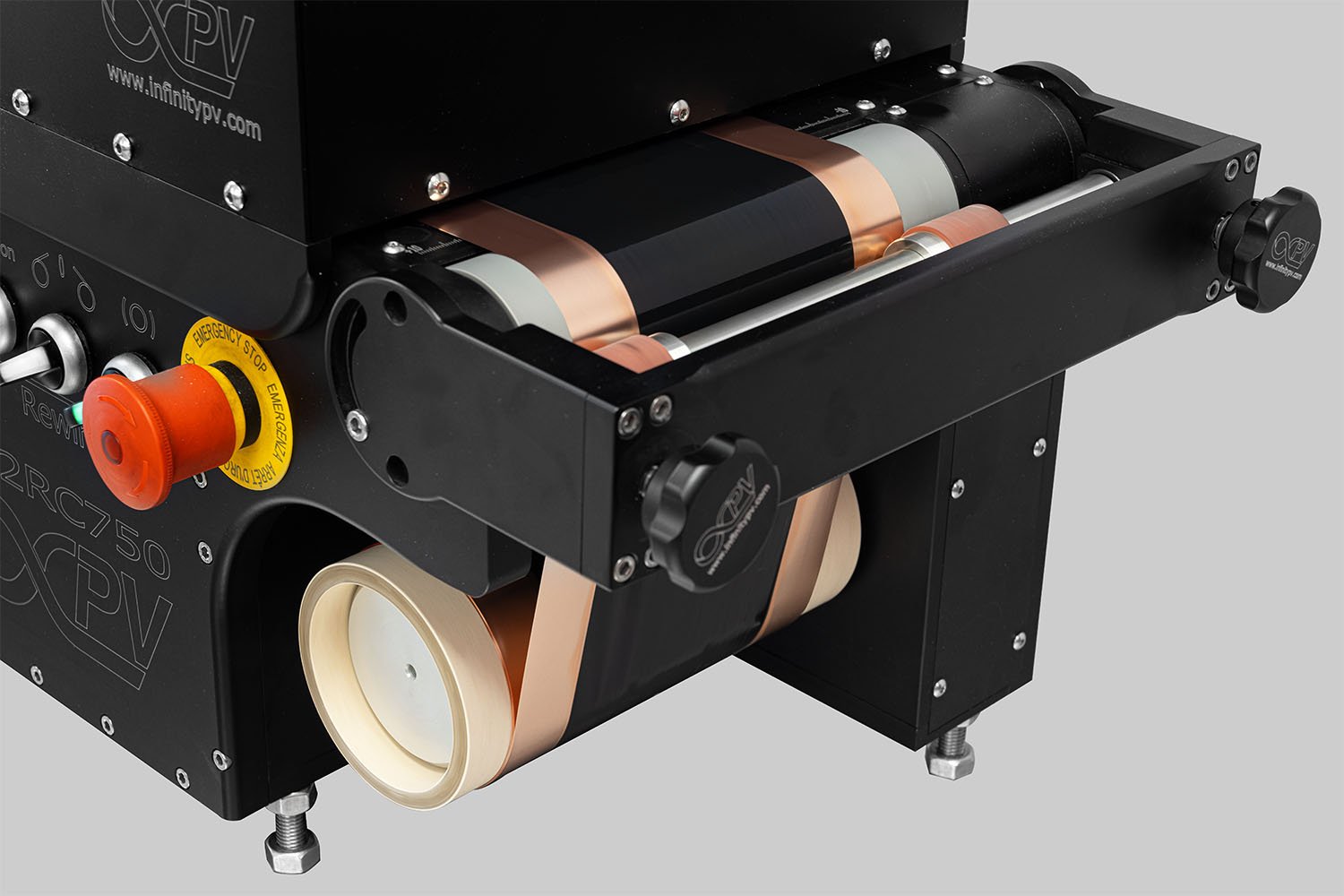
What is Knife Coating?
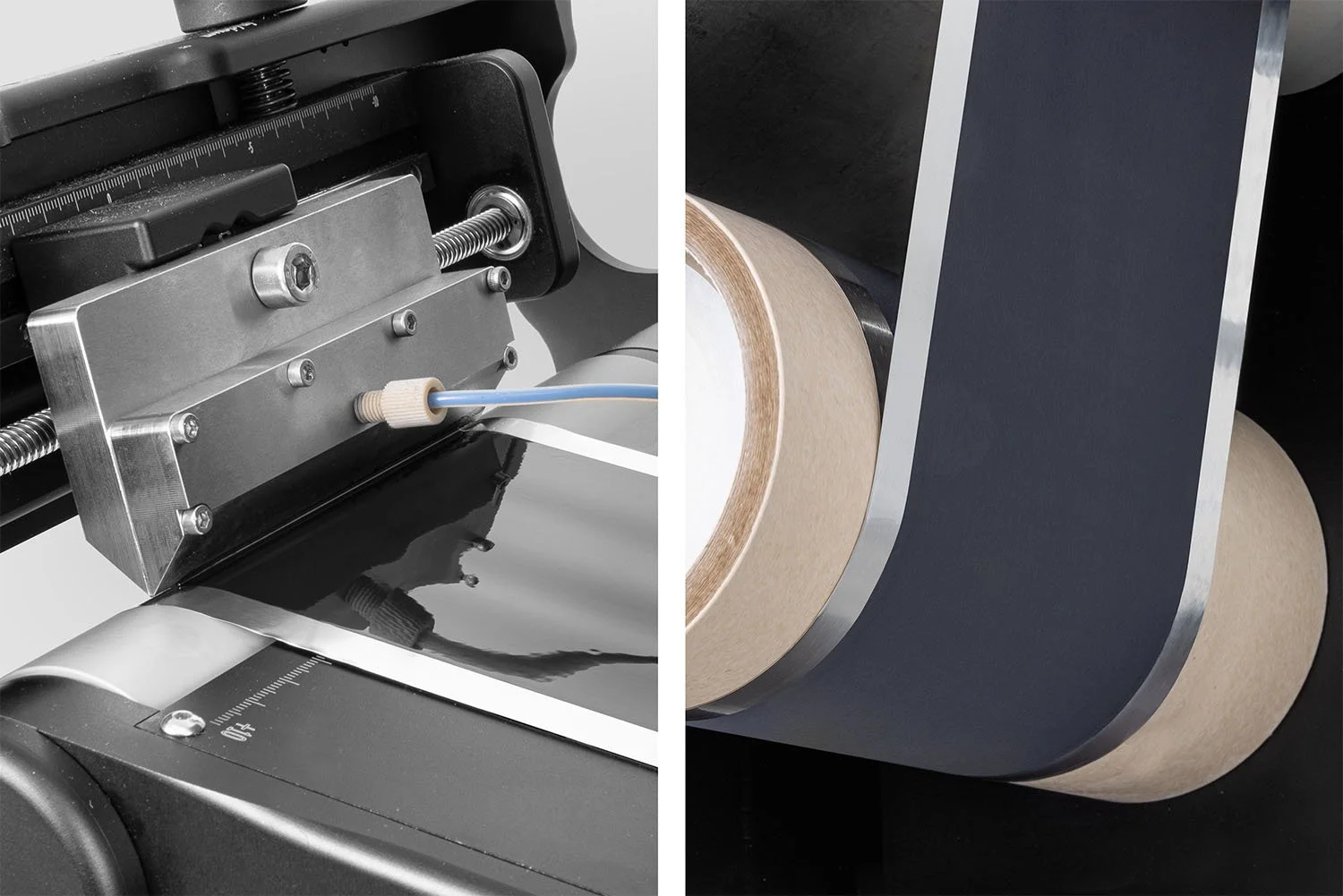
Knife coating is a versatile method for depositing liquid materials onto a substrate to create uniform thin films. The technique uses a precisely positioned blade, or "knife," to spread a controlled amount of material across the substrate surface. By adjusting parameters such as the blade gap, coating speed, and material properties, knife coating enables accurate control over film thickness and coating quality.
This approach is widely used because of its simplicity, flexibility, and cost-effectiveness. It can process a broad range of materials, including polymer solutions, inks, slurries, and nanoparticle suspensions, and is compatible with both rigid and flexible substrates.
Knife coating is particularly valuable in research, product development, and manufacturing applications where adjustable film thickness and reliable coating performance are important. It is commonly used in the production of batteries, solar cells, electronic devices, sensors, and advanced functional materials. Its ability to support both small-scale experimentation and larger-scale production makes knife coating an essential technique for achieving consistent, high-quality coatings across a wide variety of industries.


Why Use Knife Coating?
Knife coating is widely used across research and manufacturing environments because it offers flexibility, simplicity, and precise control over coating thickness. Its straightforward setup and adaptability make it an ideal choice for developing and producing high-quality thin films across a wide range of applications. The key advantages of using knife coating include:
Adjustable Film Thickness: Allows precise control over coating thickness by adjusting the blade gap, coating speed, and process parameters.
Simple and Cost-Effective Process: Requires relatively simple equipment and setup, making it an economical solution for both research and production environments.
Material Versatility: Compatible with a wide variety of materials, including polymer solutions, inks, slurries, nanoparticle suspensions, and functional coatings.
Suitable for Research and Development: Enables rapid testing and optimization of new materials, formulations, and coating processes.
Scalable Production: Can be used for laboratory-scale coating as well as larger-scale manufacturing, supporting the transition from development to production.
High-Quality Coatings: Produces uniform and reliable films when process parameters are properly controlled, helping to achieve consistent product performance.
Broad Application Range: Widely used in batteries, solar cells, printed electronics, sensors, optical films, and advanced material research.
Is Knife Coating for You?
Knife coating is a flexible and accessible coating method that can help researchers and manufacturers produce uniform thin films with controlled thickness. Whether you are developing new materials, optimizing formulations, or preparing for scale-up, it is important to determine whether knife coating is the right fit for your application and process requirements.
We can support you in exploring knife coating through:
Expert Consultation: Discuss your application with our team and evaluate whether knife coating aligns with your project goals and material requirements.
Visit Our Lab: See the coating process in action and gain a better understanding of its capabilities, flexibility, and potential applications. Learn more.
Hands-On Workshops: Participate in practical sessions to test materials, optimize coating parameters, learn best practices, and gain experience with knife coating techniques. Learn more.
Knife Coating vs. Slot-Die Coating
Thin-film coating technologies are essential in the development and manufacturing of batteries, solar cells, printed electronics, sensors, and advanced materials. Among the most widely used techniques are knife coating and slot-die coating. Both methods can produce high-quality coatings, but they differ significantly in terms of precision, material efficiency, scalability, and process complexity. Understanding the strengths and limitations of each technique can help researchers and manufacturers select the most suitable coating method for their application, whether for laboratory-scale development or industrial production.
What is Slot-Die Coating?
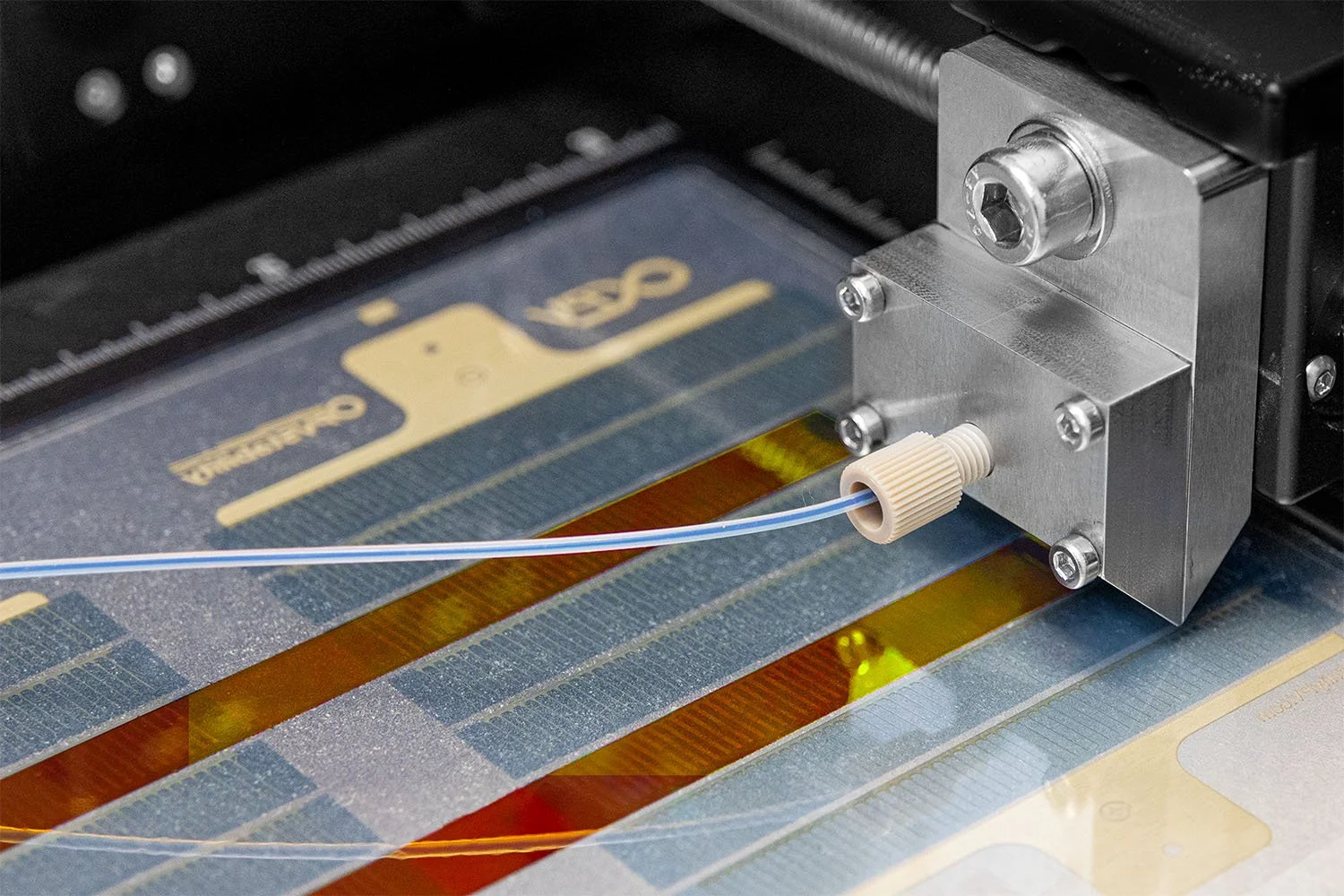
Slot-die coating is a highly precise coating technique that deposits liquid material onto a substrate through a specially designed die containing a narrow slot. The coating material is pumped through the die at a controlled flow rate and applied directly onto a moving substrate, resulting in highly uniform and reproducible thin films. The process provides exceptional control over coating thickness, width, and material distribution. Because the coating material is delivered directly to the substrate, slot-die coating minimizes waste while maintaining excellent coating quality.
Benefits of Slot-die Coating
Consistent and Reproducible Results: Offers precise control over film thickness, uniformity, and material distribution, ensuring reliable performance across batches.
Material Efficiency: Minimizes waste by applying only the required amount of material, improving production cost-effectiveness.
Versatility Across Industries: Suitable for electronics, displays, sensors, energy devices, biomedical coatings, and advanced material research.
Scalable Process: Supports both laboratory-scale experiments and industrial roll-to-roll production, allowing smooth transition from research to manufacturing.
Enhanced Product Quality: Reduces variability and defects, producing high-quality coatings that meet strict performance standards.
Supports Innovation: Enables reproducible prototyping and testing of new materials or multi-layer structures.
Which Is Right For You?
Both knife coating and slot-die coating are capable of producing high-quality thin films, but the ideal choice depends on your application requirements, production goals, and budget. Knife coating is often preferred for research, material screening, and early-stage development because it offers a simple setup, low equipment costs, and high flexibility when testing new formulations and process parameters. Slot-die coating, on the other hand, is better suited for applications where coating uniformity, reproducibility, material efficiency, and scalability are critical. As a pre-metered process, slot-die coating provides greater control over film thickness and is often the preferred solution when transitioning from laboratory development to pilot-scale or industrial manufacturing.
Choosing the right coating technology can be challenging, especially when balancing performance requirements, production scale, and material characteristics. Our team can help you evaluate whether knife coating or slot-die coating is the best fit for your project. Through expert consultation, laboratory demonstrations, and hands-on workshops, we help researchers and manufacturers understand the strengths of each technique, optimize coating processes, and confidently move from development to production.
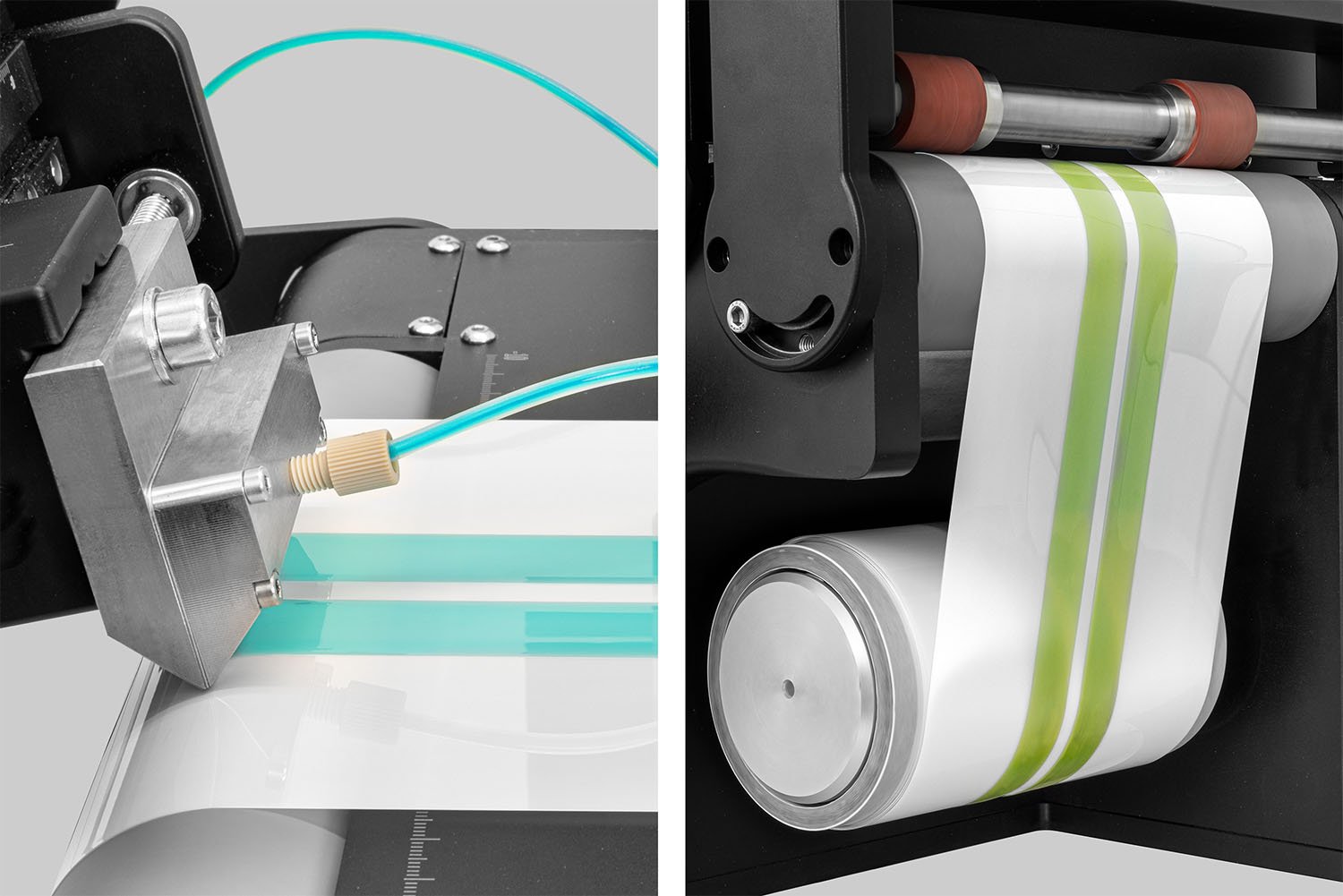
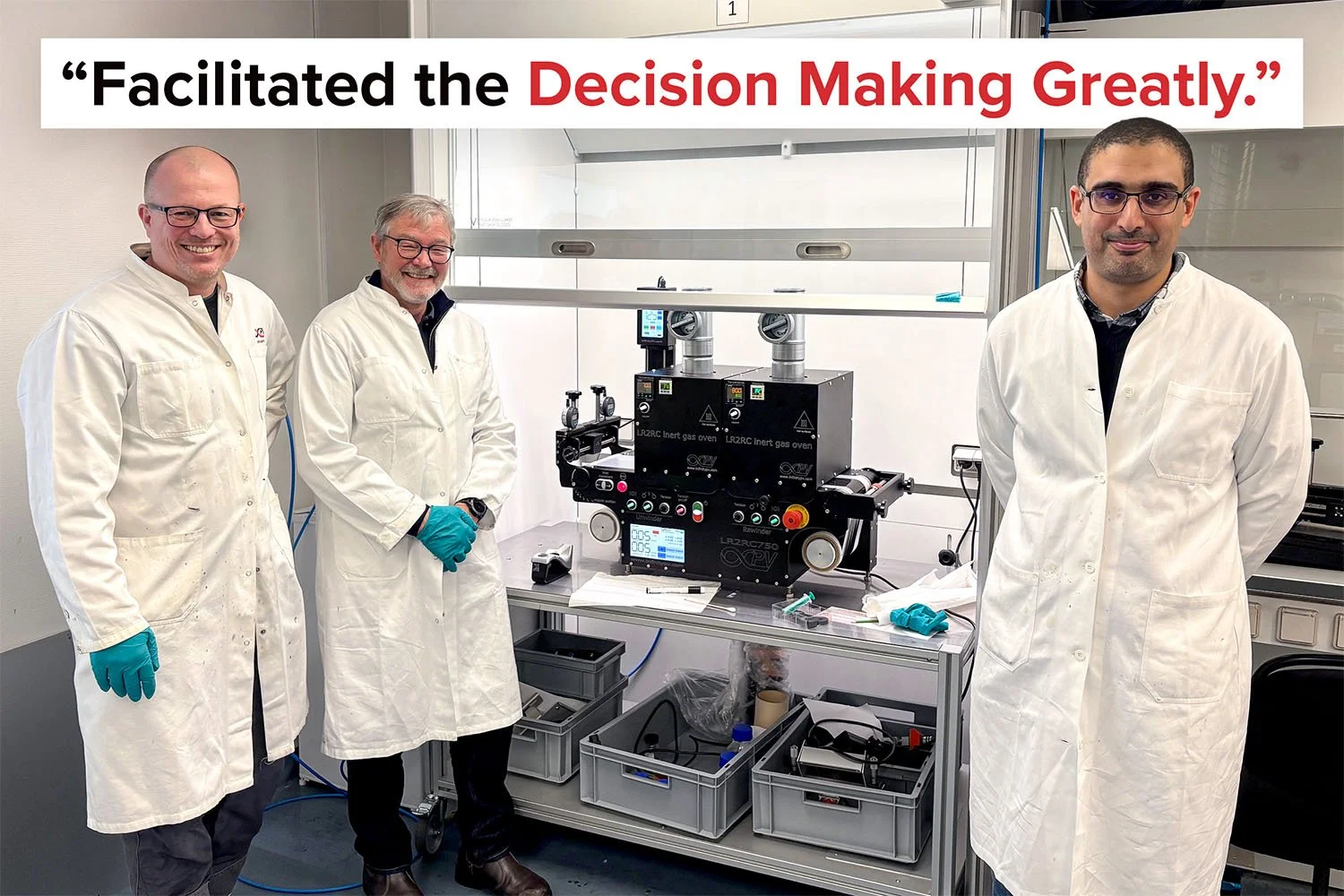
Why IRD Fuel Cells Chose to Test First
“Before purchasing the coating equipment we asked for a test coating to make sure that the materials we use for our production would operate with the coater from infinityPV. During our trial coating, infinityPV has been very helpful in every way and we have greatly appreciated their hospitality during our visit.” — Peter Lund, Senior Scientist at IRD Fuel Cells
We’re Here to Help You Find the Right System
Wet get it. Navigating between all knife coating systems can feel complex, especially if you’re new to the technology. That’s why our team is here to guide you at every step, helping you select the right coating approach, optimize layer quality, and achieve consistent, scalable results.

Slot-die Coater
Ideal for lab research, prototyping, and small-batch production. Sheet-based processing allows flexible testing, parameter adjustments, and precise coatings in limited quantities.

Laboratory Roll-to-Roll Coater
Best for scaling lab results to continuous, high-throughput production. Ensures uniform, consistent coatings on long substrates and supports transition to larger-scale manufacturing.

R2R Hybrid Coater
Combines sheet-based precision with roll-to-roll efficiency. Offers maximum flexibility for lab-scale thin film processing—from early formulation work to pilot-scale production.
Controlled Environments for Reliable Knife Coating
Why Use Controlled Environments?
Some materials are highly sensitive to moisture, oxygen, dust, or other contaminants. Gloveboxes, fume hoods, and cleanroom setups provide controlled conditions for knife coating, drying, and material handling, helping ensure that sensitive films and functional layers are deposited consistently and reliably.
Integrated and Safe
Performing knife coating within a controlled environment allows coating, drying, and material processing to take place without exposing sensitive materials to unwanted atmospheric conditions. This improves process reproducibility, reduces contamination risks, and supports the safe handling of reactive or hazardous materials, making it ideal for advanced research and development applications.
Applications and Benefits
Controlled environments are particularly beneficial when working with moisture-sensitive materials, battery slurries, reactive inks, functional membranes, electronic materials, and biomedical coatings. By minimizing contamination and environmental variation, they help improve coating quality, reduce defects, and produce more consistent results across research, pilot-scale development, and manufacturing processes.
Guidance for Your Process
Our team can help identify the most suitable controlled environment solution for your knife coating application. Whether you are conducting laboratory research, developing new materials, or preparing for scale-up, we provide guidance on equipment selection, workflow design, and process optimization to help achieve reliable, high-quality coatings for sensitive materials.
