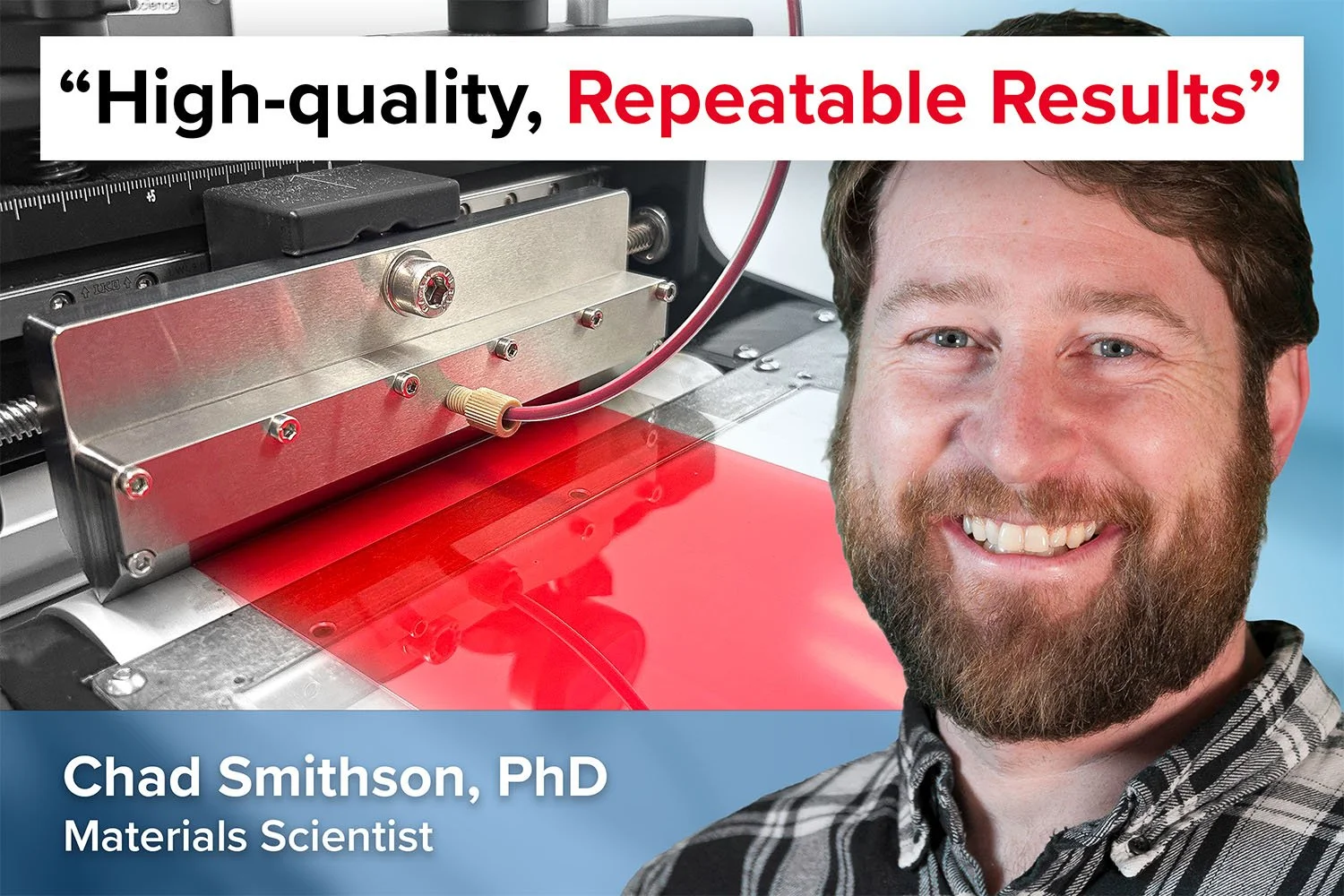
How Slot-die Coating Can Transform Solar Cell Manufacturing
Slot-die coating and roll-to-roll processing enable highly uniform, precise coatings for solar cell materials. Ideal for large-area deposition of perovskite layers, transport layers, transparent conductive coatings, and other advanced photovoltaic structures.
Why Use Slot-die Coating for Solar Cells?
Slot-die coating is a highly controlled deposition technique widely used in solar cell research and manufacturing. Its ability to produce uniform, precise, and reproducible thin layers makes it ideal for coating functional photovoltaic materials and multilayer device structures.
Unlike many traditional coating methods, slot-die coating allows functional materials such as perovskite inks, transport layers, and conductive coatings to be applied with accurate thickness control. This ensures consistent film quality while supporting a scalable process that can transition smoothly from laboratory development to pilot and full-scale solar cell production.
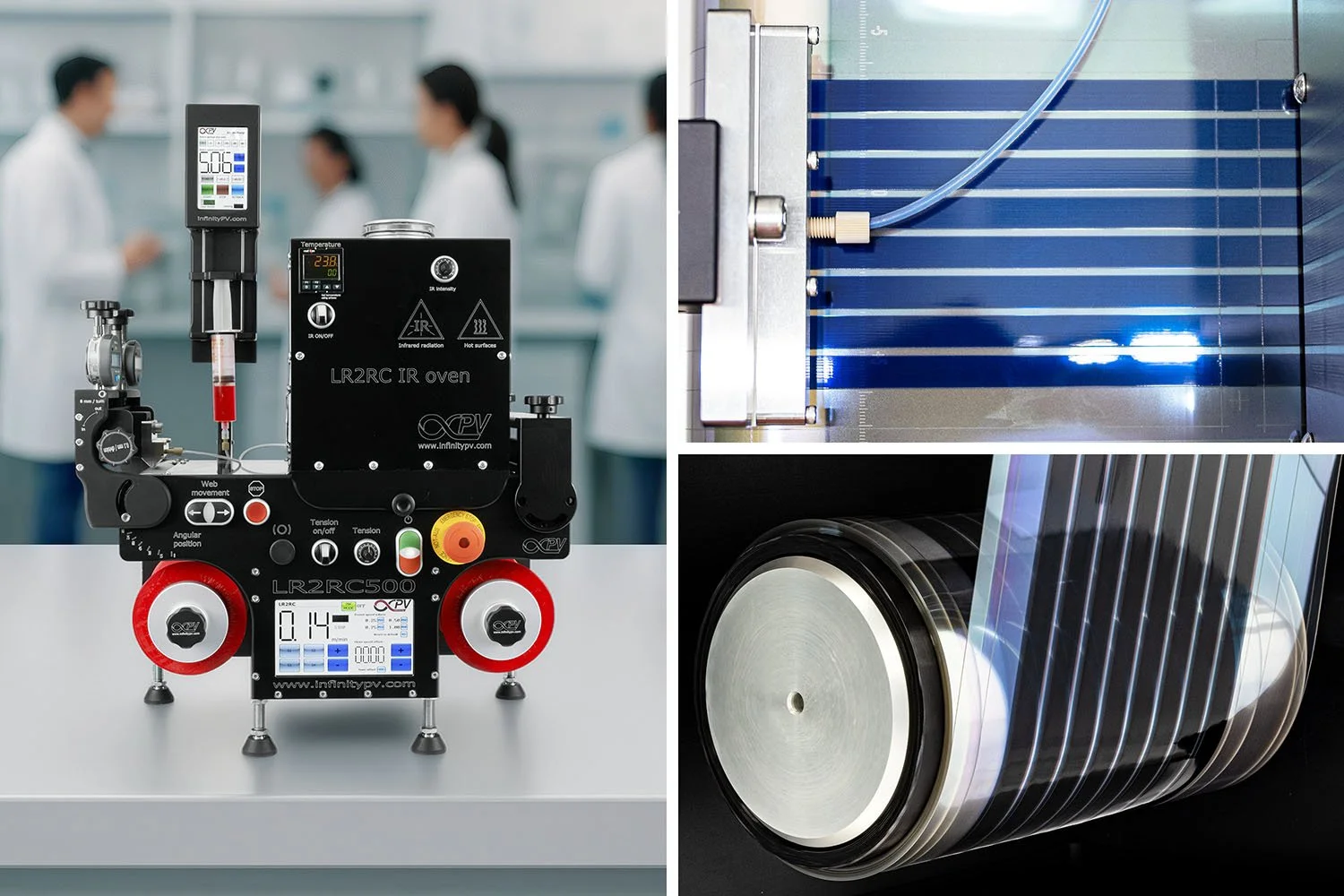
Advantages of Slot-die Coating in Solar Cell Manufacturing
Uniform, High-Quality Thin Films
Slot-die coating enables precise control over coating thickness and film uniformity when applying photovoltaic materials and functional layers. This helps ensure consistent device performance, which is essential for solar cell efficiency, stability, and long-term reliability.
Efficient Use of Materials
Because the coating material is accurately metered through the die, slot-die coating minimizes waste and improves material utilization. This is particularly important when working with advanced photovoltaic materials such as perovskites, conductive polymers, and other specialty inks.
Supports Multilayer and Advanced Solar Cell Designs
The technology can be used to deposit multiple functional layers in a controlled and reproducible manner. This supports the development of advanced photovoltaic architectures, including perovskite solar cells, organic solar cells, and tandem device structures.
Scalable from Lab to Production
Slot-die coating is well suited for both laboratory-scale research and large-scale manufacturing. The same controlled coating principles can be applied from small-area device development to pilot lines and full roll-to-roll solar cell production.
Proven in Peer-Reviewed Solar Cell Research
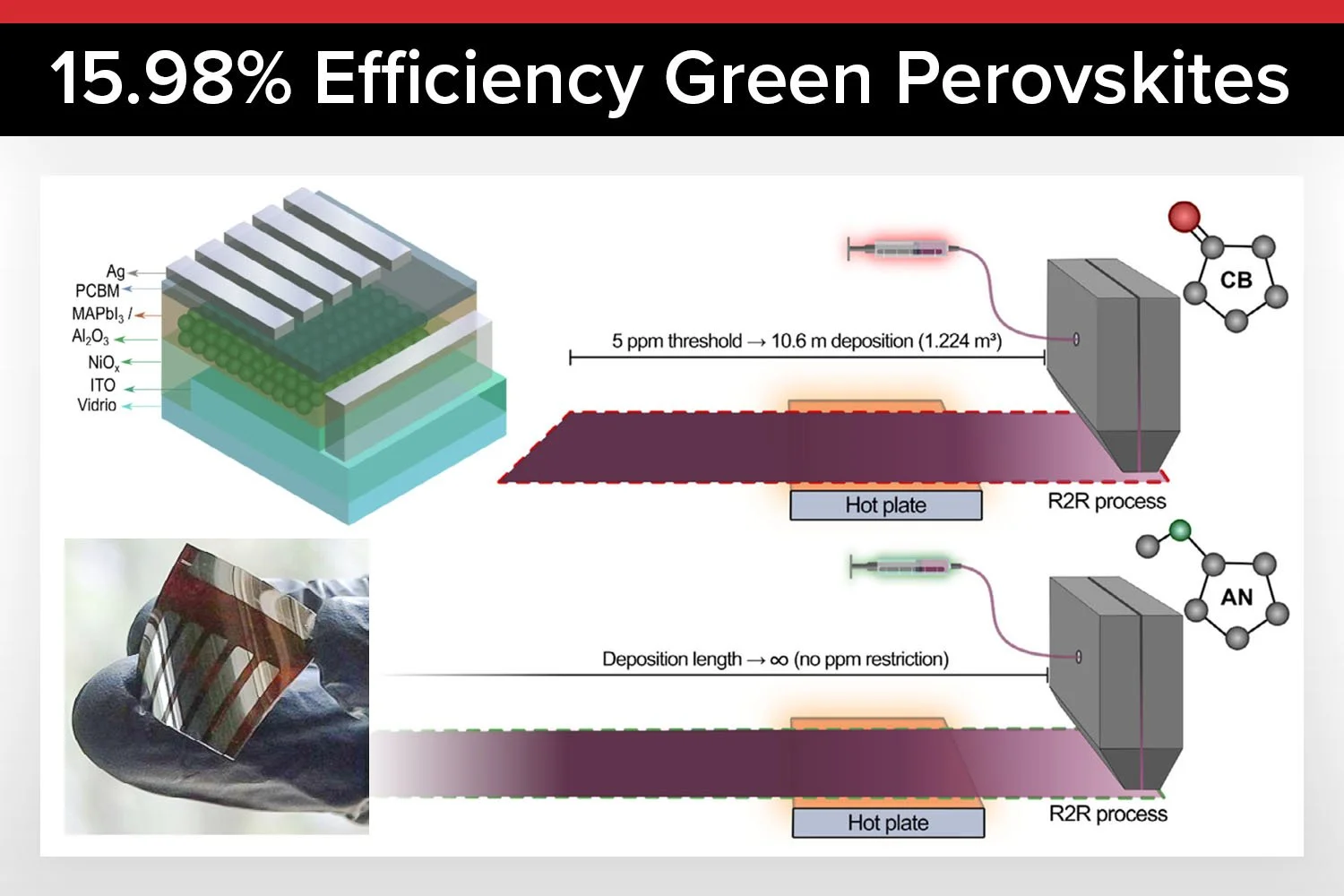
Slot-die coating has already been demonstrated in multiple peer-reviewed studies within solar cell research. These publications show successful application for uniform thin films, multilayer photovoltaic structures, and functional coatings, highlighting both the precision and scalability of the technology.
Researchers have reported reproducible film thickness, improved material utilization, and the ability to fabricate complex photovoltaic architectures under controlled conditions. These studies confirm that slot-die coating is a reliable and well-validated approach for modern solar cell development and scalable photovoltaic manufacturing.
Ensuring Uniformity and Efficiency in Solar Cell Layers
While slot-die coating enables precise and uniform deposition of photovoltaic materials, reliable characterization is essential to verify film quality and device performance. By combining controlled coating processes with advanced measurement techniques, researchers can evaluate how coating parameters influence solar cell efficiency, stability, and overall device behavior.
Key performance parameters such as power conversion efficiency, open-circuit voltage, short-circuit current, and fill factor are typically measured using a Source Measure Unit (SMU) under well-defined testing conditions.
To simulate real operating environments, Solar Simulators provide calibrated illumination that replicates sunlight, allowing reproducible evaluation of photovoltaic performance. In addition, Laser Beam Induced Current (LBIC) mapping can be used to visualize spatial variations in photocurrent across the device, helping identify defects, coating non-uniformities, or localized performance limitations.
By combining precise coating methods such as slot-die deposition with comprehensive electrical and spatial characterization, researchers can better understand how material properties, coating uniformity, and device architecture influence the overall efficiency and reliability of solar cells.
High-Quality Perovskite Solar Modules Produced Using R2R Coating at Halocell Energy
“At Halocell, the compact laboratory R2R equipment from infinityPV has become essential for validating our roll-to-roll coating processes. The system enables us to produce high-quality perovskite PV modules at lab scale. This directly supports our goal of high-throughput, low-cost PV production by effectively bridging R&D to scalable manufacturing.” — Marion Geltinger, Chief Operations Officer, Halocell Energy

Roll-to-Roll Coater Powers Scaled Printing of Organic and Perovskite Solar Cells at the University of Surrey
“infinityPV offers a versatile industrial roll-to-roll coater which is capable of depositing functional materials via the slot-die coating technique. It offers very good control over various fabrication parameters, such as coating speed and temperature in addition to the possibility of choosing from different drying options (hot air and IR drying).” — Dr. Dimitar Kutsarov, Research Fellow
Recommended Equipment for Solar Cell Coating
Choosing the right slot-die or roll-to-roll coating system for solar cell development can be challenging. Whether you are working with perovskite layers, transport layers, or other photovoltaic materials, the right equipment helps ensure precise, uniform, and reproducible coatings while supporting a scalable path from research to pilot and roll-to-roll production.
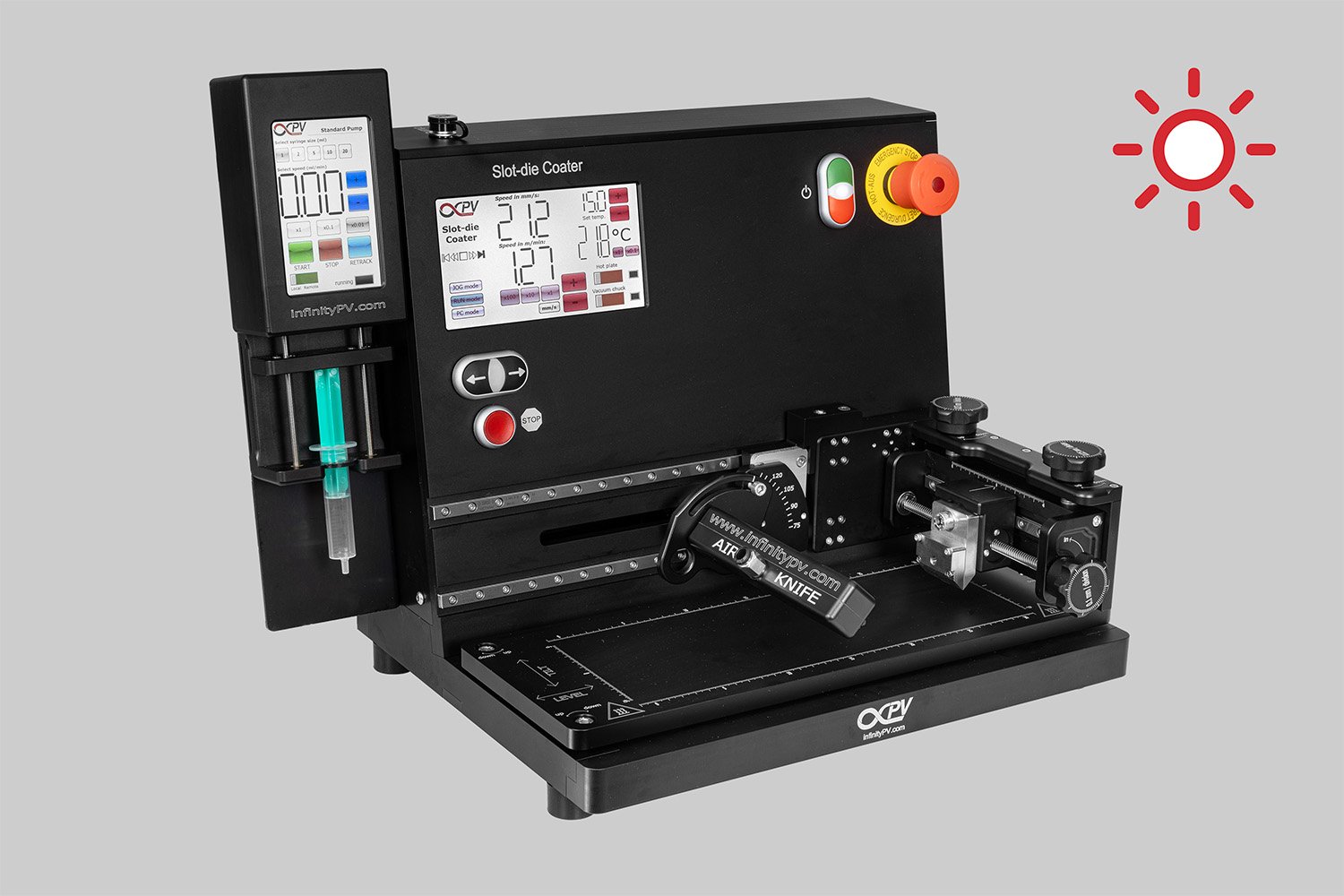
SDC Solar Coater Mini
Upscale from spin coating to slot-die coating and flexo printing. Integrate research, materials, and scalable processes into a unified platform perfect for R&D.
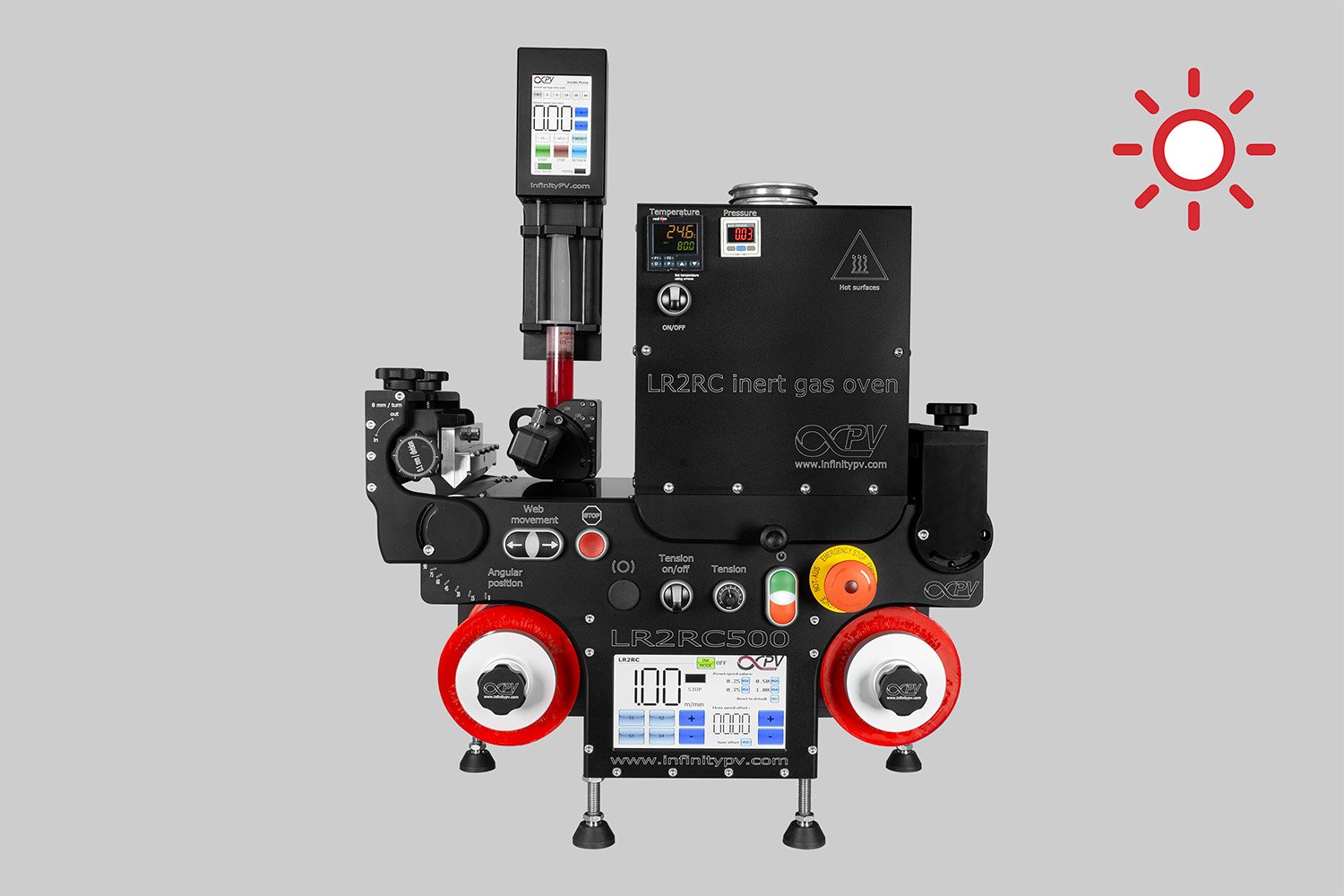
LR2RC500 Solar Coater
Upgrade from sheet to roll-to-roll coating to boost efficiency, ensure consistent quality, and scale production.
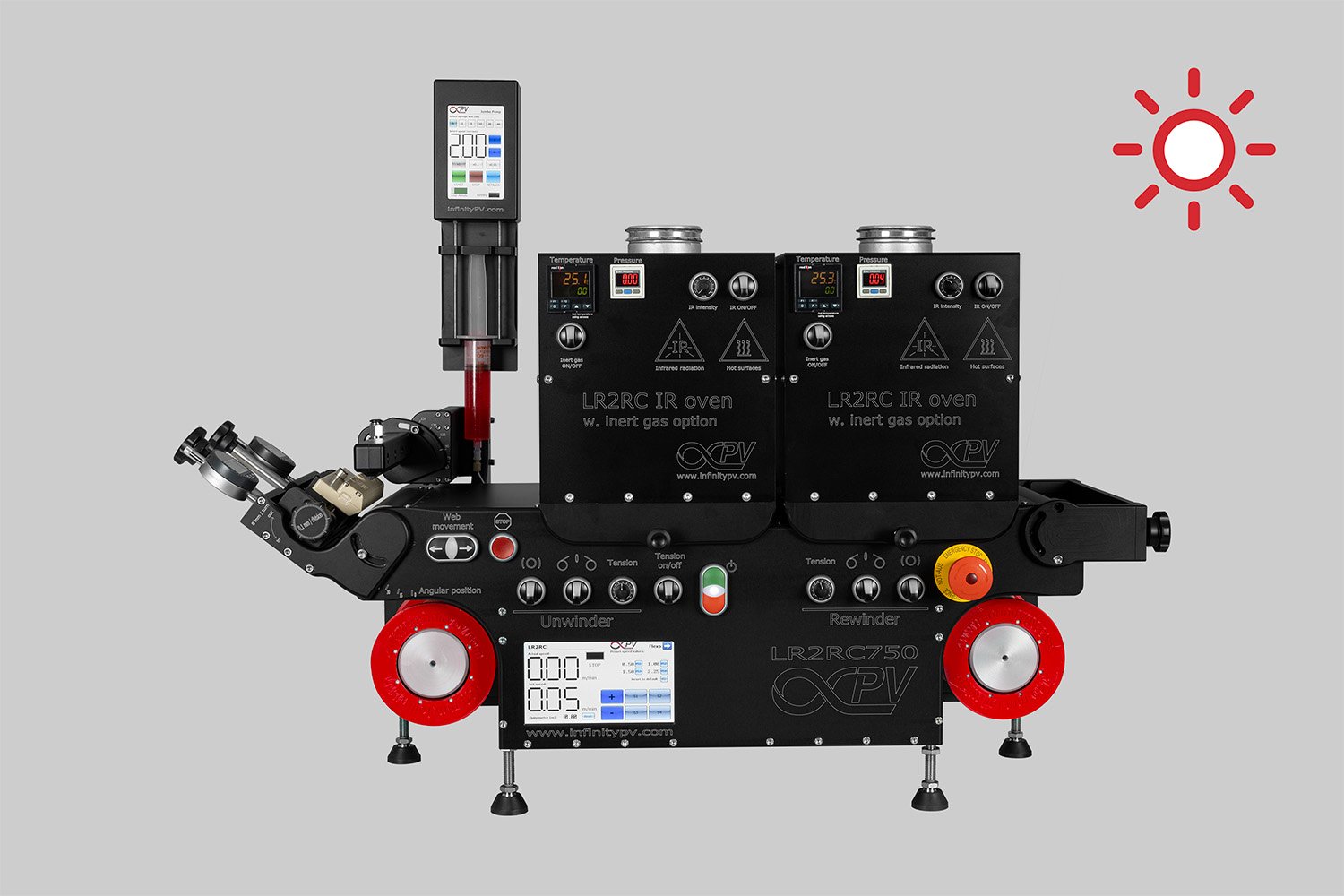
LR2RC750 Solar Coater
The LR2RC750 Coater is a complete system that facilitates the coating of all layers within the solar cell device stack, as well as the encapsulation of solar cells using various lamination options.
Scaling Perovskite Solar Cells with Roll-to-Roll Slot-die Coating
Roll-to-Roll Slot-die Coating for Perovskite Solar Cells
Roll-to-roll (R2R) slot-die coating is a scalable manufacturing approach for perovskite solar cells, enabling uniform thin-film deposition over large and continuous substrates. Compared to traditional laboratory techniques such as spin coating, it provides a clear pathway from research-scale development to production-ready photovoltaic processes.
Scalable and Precise Thin-Film Deposition
In an R2R system, perovskite precursor inks are precisely delivered through a slot-die head onto moving substrates such as flexible polymer films, coated foils, or flexible glass. Tight control over flow rate, coating gap, and substrate speed ensures highly uniform films with reproducible thickness, supporting both laboratory research and large-area solar module fabrication.
Multilayer Device Integration and Process Control
Slot-die coating is compatible with full solar cell stack fabrication, including transport layers, perovskite active layers, interlayers, and protective coatings. Successful implementation requires careful optimization of ink formulation, drying conditions, and crystallization parameters, as these directly influence film morphology, device efficiency, and long-term stability.
Learn the Full Process Through Our Video Series
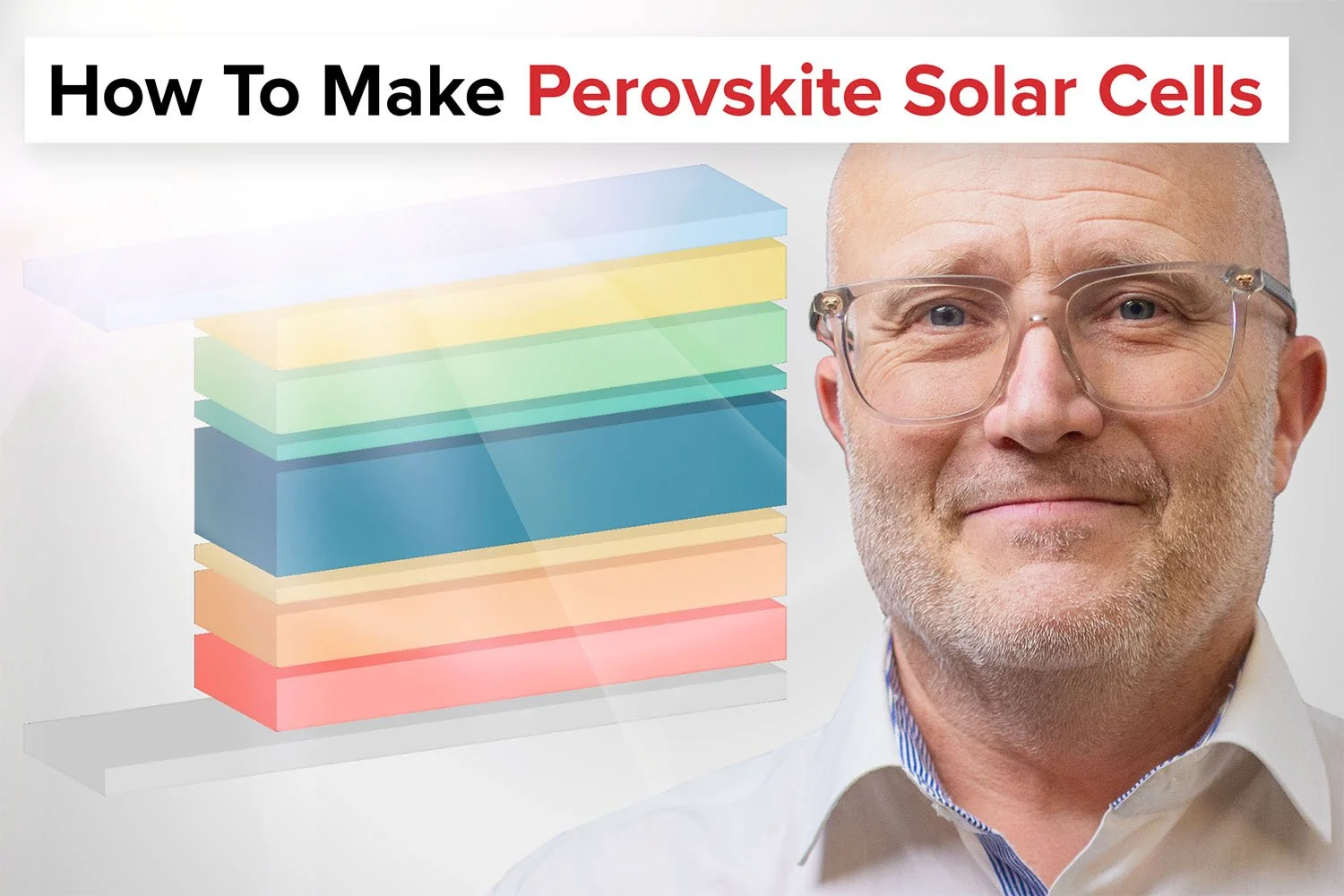
To support researchers and newcomers, we provide a dedicated video series that guides you through the complete roll-to-roll perovskite workflow—from substrate preparation to finished and tested solar modules—offering practical insights for reproducible and scalable results.
High-Resolution Mapping of Solar Cell Performance
Laser Beam Induced Current (LBIC) is a high-resolution technique that maps the local photocurrent of a solar cell using a focused laser beam. It reveals spatial variations in performance, helping identify defects, shunts, inactive regions, and coating non-uniformities—making it a powerful tool for improving device quality, reliability, and manufacturing control.
Recommended Equipment for Solar Cell Characterization
Choosing the right characterization equipment is essential for reliable solar cell development. Tools such as source measure units (SMUs), solar simulators, and LBIC systems enable accurate efficiency measurements, standardized performance testing, and detailed analysis of film and device uniformity. Supporting consistent results from research to advanced photovoltaic development.
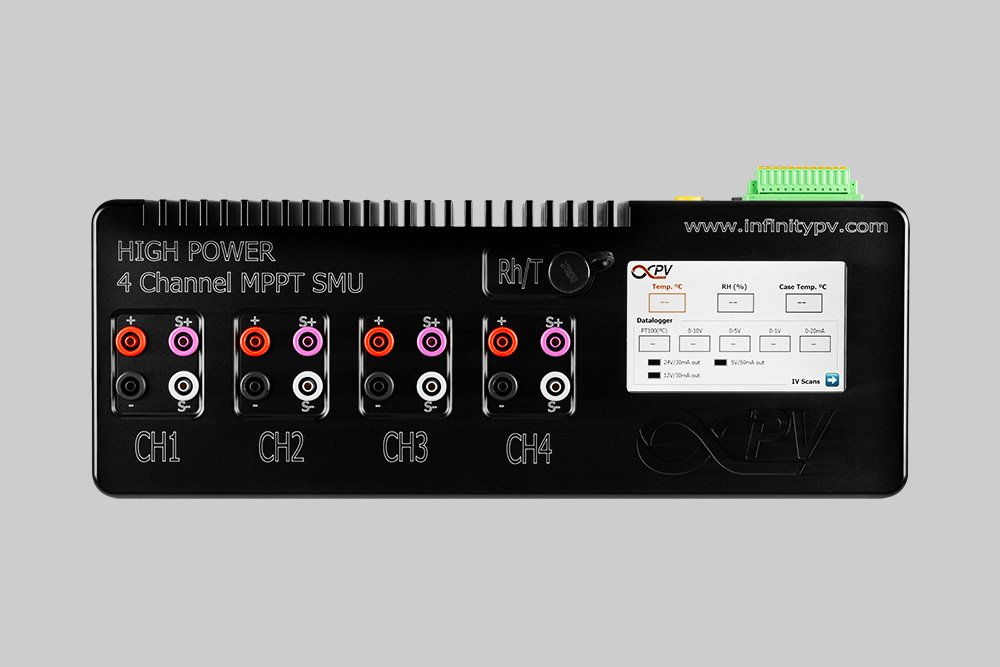
Source Measure Units
Source measure units for precise solar cell characterization and research, offering cutting-edge technology for enhanced testing efficiency.
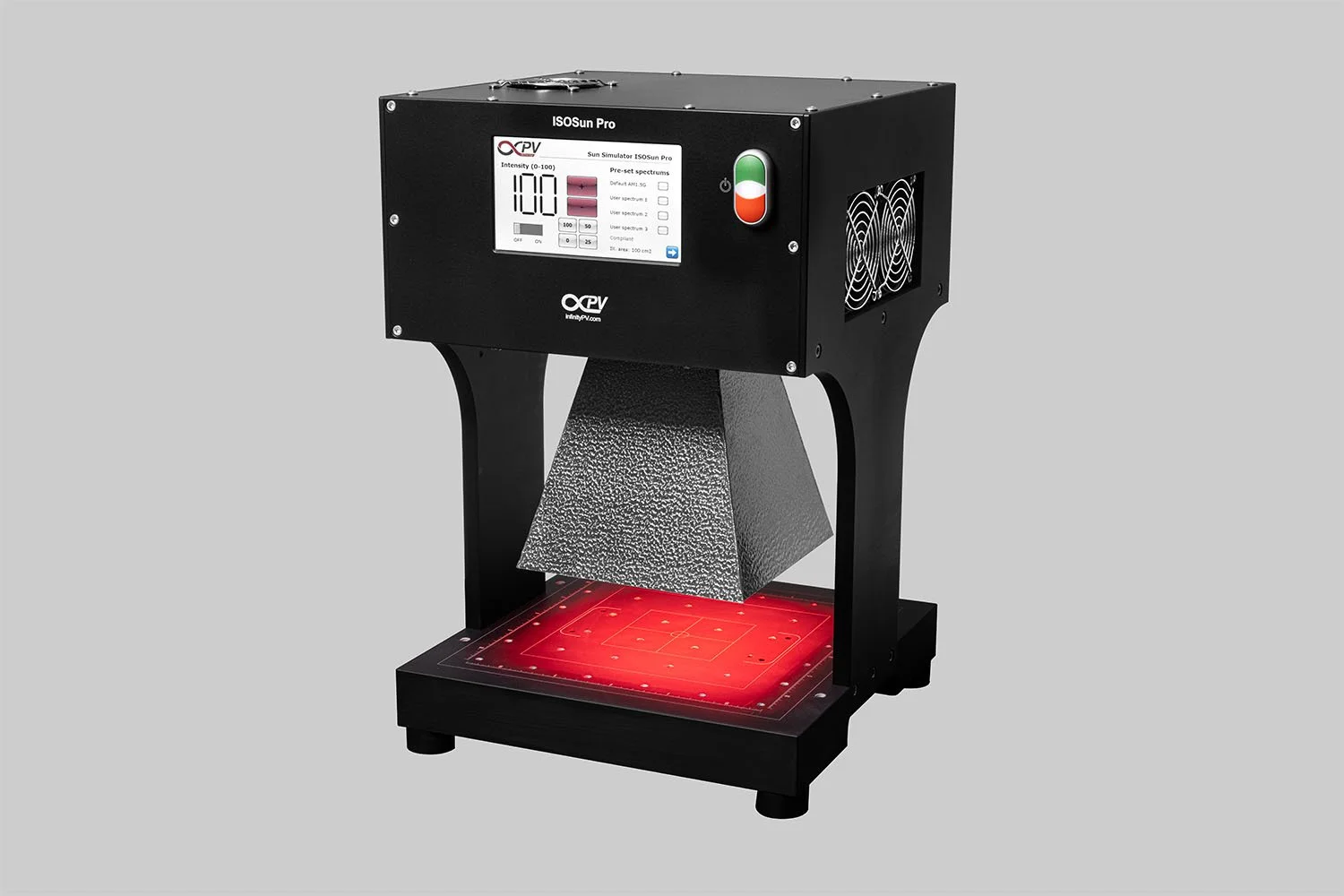
Solar Simulators
Solar simulators for precise light testing for compact visible-light work, extended-spectrum lab research and full-spectrum, high-power solar studies.

LBIC
Laser Beam Induced Current (LBIC) desktop system for fast high resolution mapping of the photovoltaic response over large areas.
Reduce Waste and Boost Consistency with R2R Wet Processing
Roll-to-Roll Wet Processing for Solar Cells
Roll-to-roll (R2R) wet processing enables continuous fabrication of solar cell layers on flexible substrates such as polymer films, coated glass, or metal foils. This approach is widely used for depositing photovoltaic materials, including perovskite layers, transport layers, and conductive coatings. Continuous processing ensures uniform, reproducible thin films while supporting advanced device architectures and large-area solar module production.
Integrated and Precise
R2R wet processing can be combined with slot-die coating and other deposition or treatment steps to create an integrated manufacturing workflow. This allows precise control over each layer in multilayer solar cell stacks, helping maintain film uniformity, interface quality, and overall device performance.
Applications and Benefits
It is ideal for perovskite deposition, transport layer coating, interlayer formation, and surface treatments in photovoltaic devices. Continuous processing reduces material waste, improves scalability, and supports the transition from laboratory research to pilot lines and full-scale solar module manufacturing. Controlled environments such as cleanrooms or inert atmospheres can be used for sensitive materials like perovskites.
Guidance for Your Process
We can help you determine the best R2R wet processing approach for your solar cell application. From lab-scale development to pilot production and scalable manufacturing, our team supports the implementation of reproducible and efficient photovoltaic coating processes.

Controlled Environments for Reliable Solar Cell Processing
Need Controlled Conditions for Sensitive Solar Materials?
Many advanced solar cell materials—especially perovskites and certain transport layers—are sensitive to moisture, oxygen, and contamination. Gloveboxes, dry rooms, and cleanroom environments provide controlled conditions for coating, drying, and testing photovoltaic layers to ensure high-quality film formation and device stability.
Integrated and Stable Processing
Controlled environments enable processes such as slot-die coating, drying, annealing, and device assembly to be performed without exposing sensitive layers to air. This improves reproducibility, protects material integrity, and supports the development of high-efficiency and long-term stable solar cells.
Applications and Benefits
Controlled environments are ideal for perovskite deposition, multilayer device fabrication, encapsulation development, and testing of air-sensitive materials. They help reduce defects, improve film uniformity, and maintain consistent results from laboratory research through pilot-scale and roll-to-roll photovoltaic production.
Guidance for Your Process
We can help determine the appropriate controlled environment setup for your solar cell application. From early-stage research to scalable manufacturing workflows, our team supports safe, reproducible processing of sensitive photovoltaic materials.

Learn More About Solar Cells

Peer-Reviewed Studies Within Solar Cells
We Are Trusted by the World’s Top Scientists