
Molecular Photoswitches Achieve Record 2.9% Solar Conversion Efficiency
A new study marks a significant advance in molecular solar thermal (MOST) energy storage.
Using an infinityPV ISOSun solar simulator, researchers demonstrated that a new class of molecular photoswitches can capture sunlight, store it as chemical energy, and release it as heat on demand. With record efficiency.
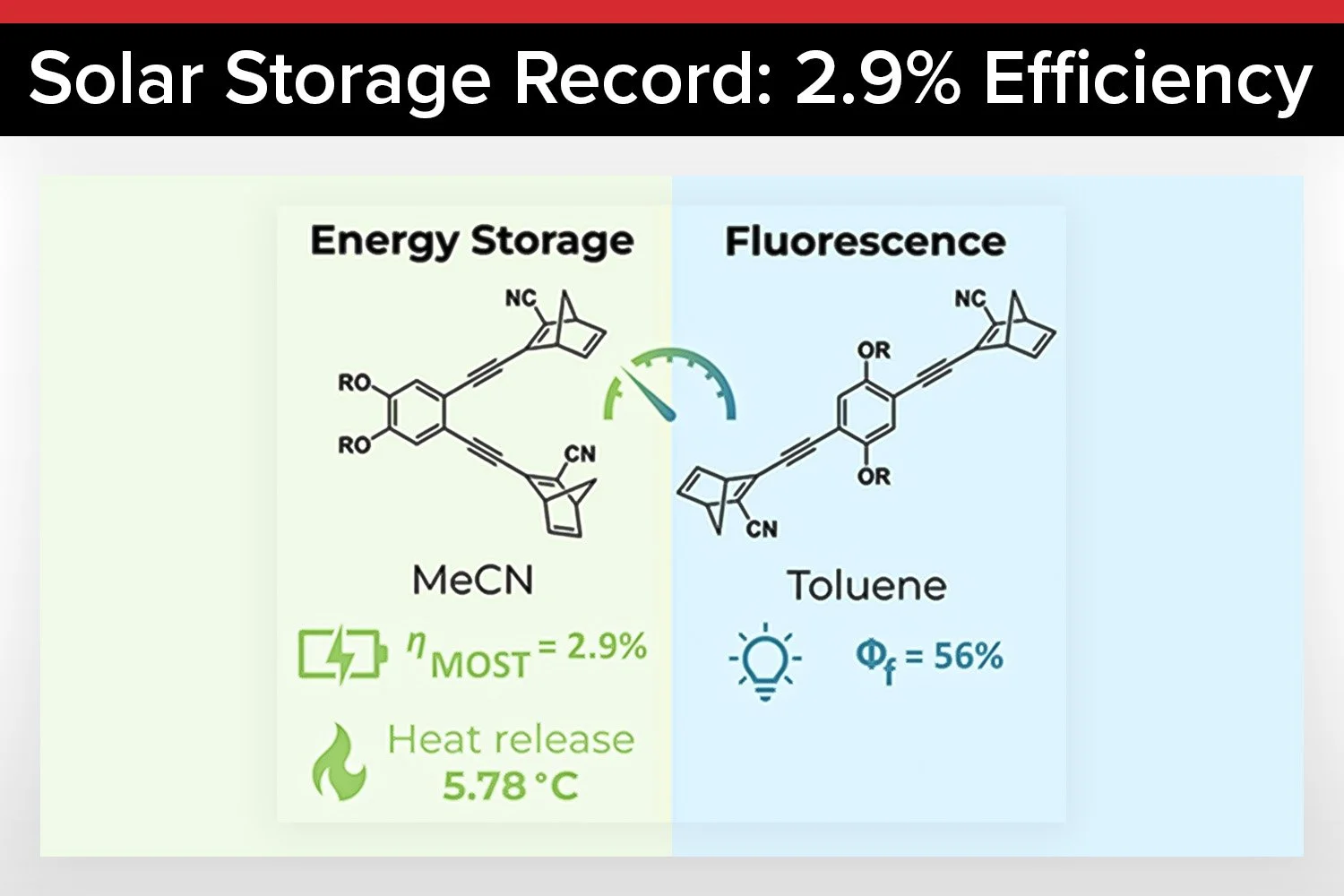
The study, titled “Modulation of Photoluminescence and Solar Thermal Energy Storage in Norbornadiene–Quadricyclane Dimers,” introduces norbornadiene-quadricyclane (NBD/QC) dimers that achieve a solar conversion efficiency of 2.9%, the highest yet for a multichromophoric system.
This breakthrough not only improves energy storage density but also proves the feasibility of scalable, emission-free solar thermal solutions.
What You Need to Know
Scientists created special molecules called norbornadiene-quadricyclane dimers that can absorb sunlight, store its energy, and release it as heat when needed.
Using an infinityPV ISOSun solar simulator, they tested these molecules and found they could store and release heat more efficiently than ever before.
This could lead to new ways to heat homes, power factories, or even create materials that store energy and glow.
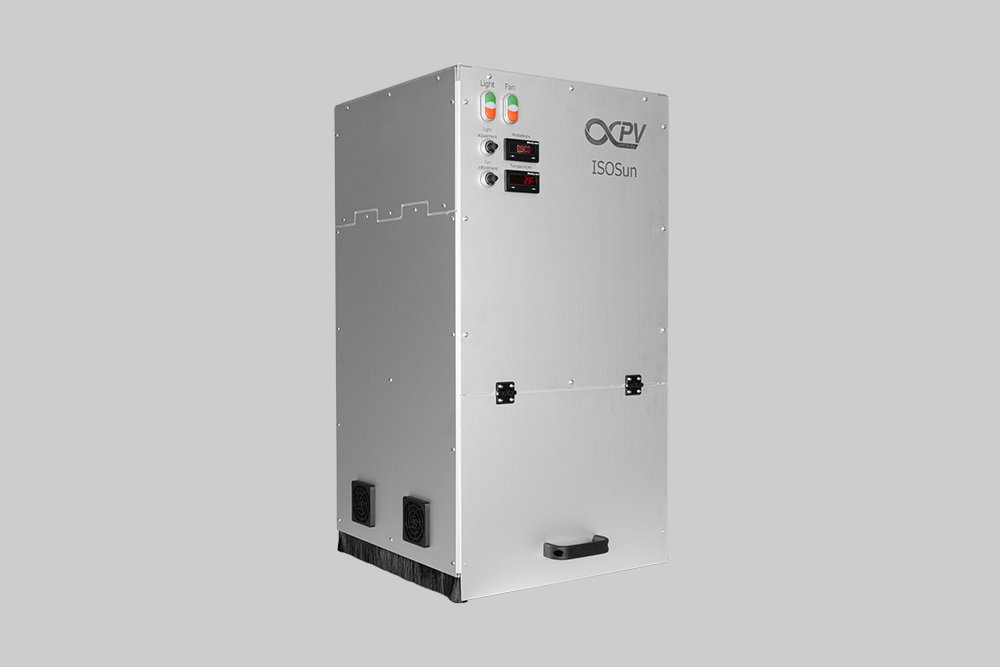
A infinityPV ISOSun Solar Simulator (since upgraded to the ISOSun Pro) was used in the study.
Understanding Norbornadiene-Quadricyclane Photoswitches
Norbornadiene (NBD) and quadricyclane (QC) are molecular isomers that can switch between forms when exposed to light or heat. NBD absorbs sunlight and converts into QC, a high-energy state that stores the energy until a catalyst or heat triggers its release. This closed-loop process produces no waste or emissions, making it an ideal candidate for clean energy storage.
Traditional NBD/QC systems, however, absorb only a narrow range of sunlight, limiting their efficiency. The new dimeric designs address this by linking two NBD units and optimizing their structure for better sunlight absorption, higher energy density, and more predictable heat release.
Why This Study Stands Out
This research marks a significant step forward for MOST technology. The dimers not only achieve record solar conversion efficiency but also demonstrate tunable properties. Ortho-dimers excel at energy storage, while para-dimers exhibit strong fluorescence, suggesting potential for dual-use applications like optical data storage.
The team also proved macroscopic heat release in a liquid-flow device, with a 0.1 M solution of the best-performing dimer raising its temperature by 5.78°C.
This real-world demonstration highlights the feasibility of scaling MOST systems for practical use.
With thermal half-lives of 1.9 to 2.9 hours, these dimers are suited for applications requiring rapid energy cycling, such as hybrid solar-heating systems or industrial processes.
How the Breakthrough Was Achieved
The researchers synthesized NBD dimers with methoxy, hexoxy, and cyano substituents to optimize their performance. Ortho- and para-substituted variants were tested to compare their energy storage and fluorescence properties.
Solvent choice played a crucial role: acetonitrile enhanced photoisomerization (energy storage), while toluene boosted fluorescence. Using UV-Vis spectroscopy, NMR, and differential scanning calorimetry (DSC), the team characterized absorption spectra, quantum yields, and energy storage densities. Density functional theory (DFT) modeling provided further insights into molecular behavior.
The dimers were tested in a liquid-flow chip under a solar simulator, with the best performer, NBD-O2, achieving a 2.9% solar conversion efficiency at 0.01 M concentration in acetonitrile—a milestone for multichromophoric MOST systems.
The Future of Solar Energy Storage
This study moves MOST technology closer to real-world applications. Potential uses include hybrid solar systems that generate both electricity and heat, scalable liquid energy storage for industries, and smart materials with tunable optical properties.
Future research will focus on suppressing photochemical back-conversion to improve efficiency further and exploring new molecular designs to push the boundaries of what’s possible.
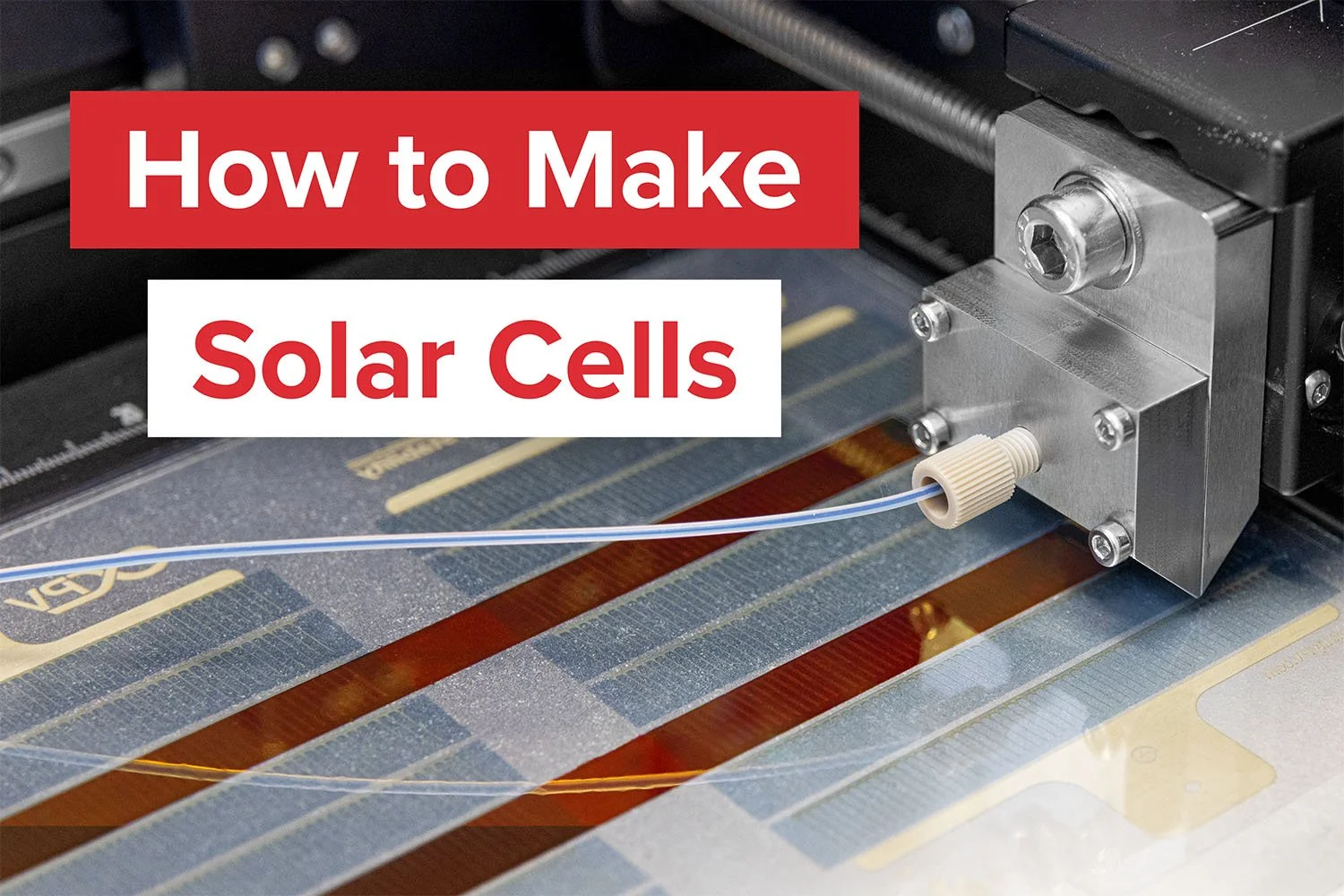
Learn how to fabricate solar cells using slot-die coating and flexo printing on a Slot-die Coater.
Conclusion
The study “Modulation of Photoluminescence and Solar Thermal Energy Storage in Norbornadiene–Quadricyclane Dimers” represents a major advance in solar energy storage. By achieving record solar conversion efficiency and demonstrating practical heat release, the researchers have brought MOST systems closer to commercial viability. As the world seeks cleaner, more flexible energy solutions, innovations like this offer a promising path forward.
For industries and policymakers, the message is clear: molecular solar thermal storage is now a tangible technology with the potential to reshape how we harness and use solar energy.
Authors
Rebecca J. Salthouse
Jacob L. Elholm
Irene Cortellazzi
Helen Holzel
Pedro Ferreira
Lorette Fernandez
Marc K. Etherington
Kasper Moth-Poulsen
Get Professional Support for Your Coating Needs
Need help with slot-die coating, coating machines, or any related applications?
Contact infinityPV’s experts today for professional guidance and support.
Related News



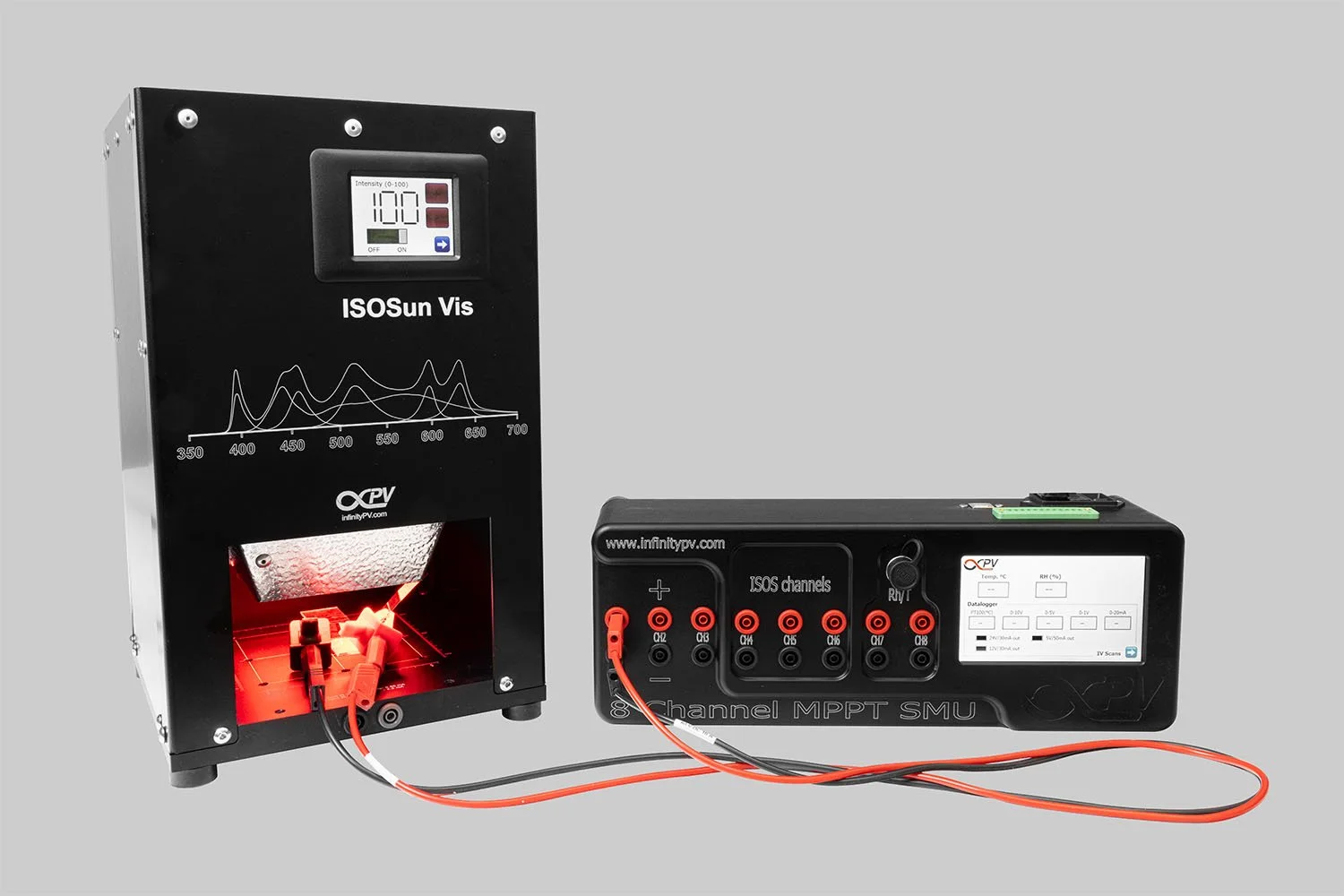
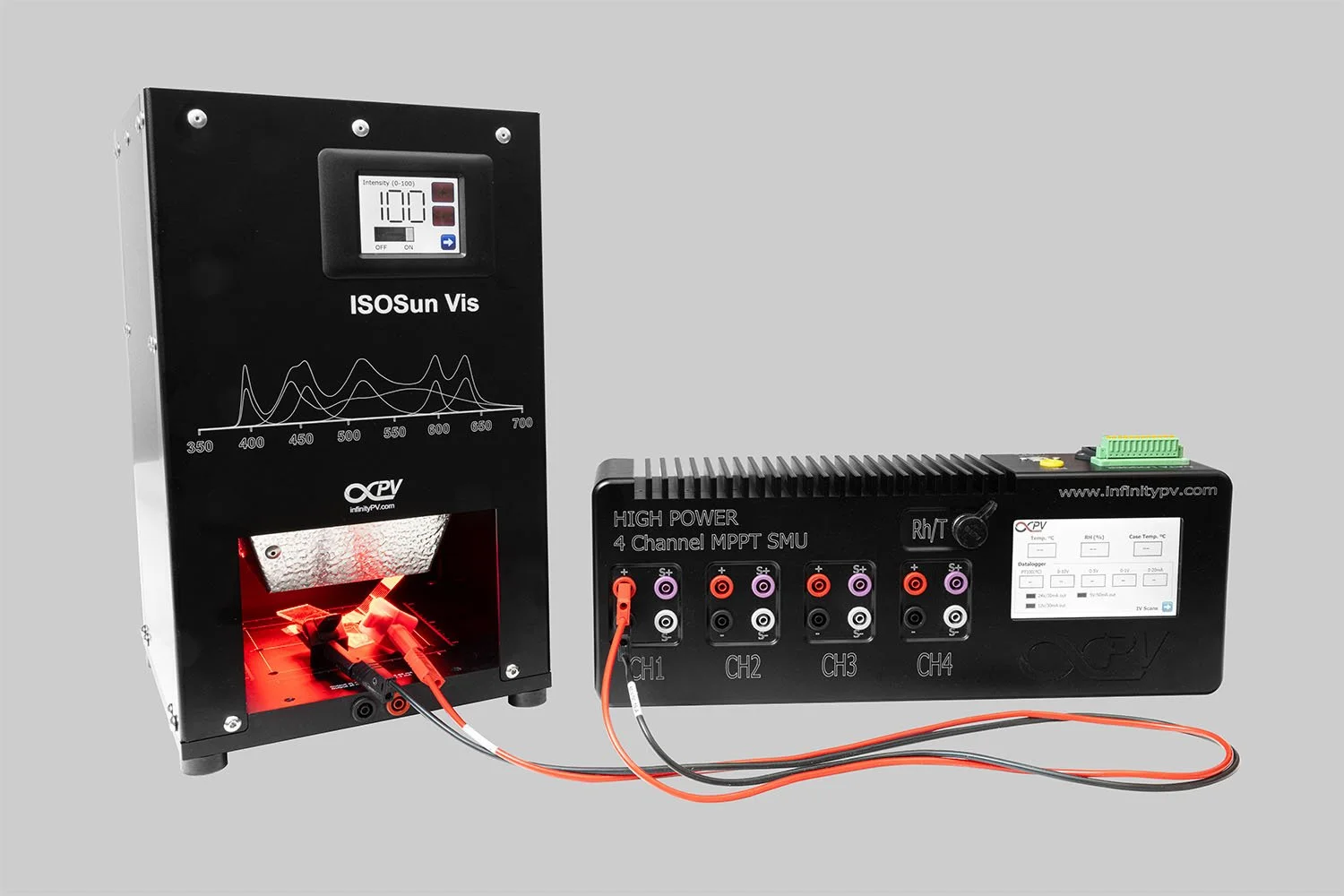
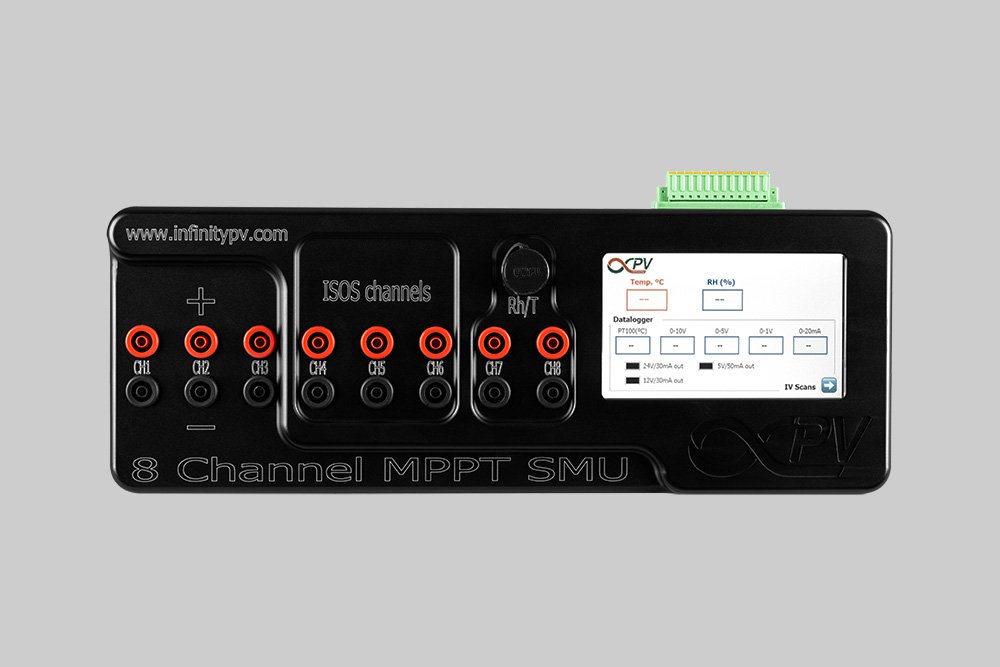
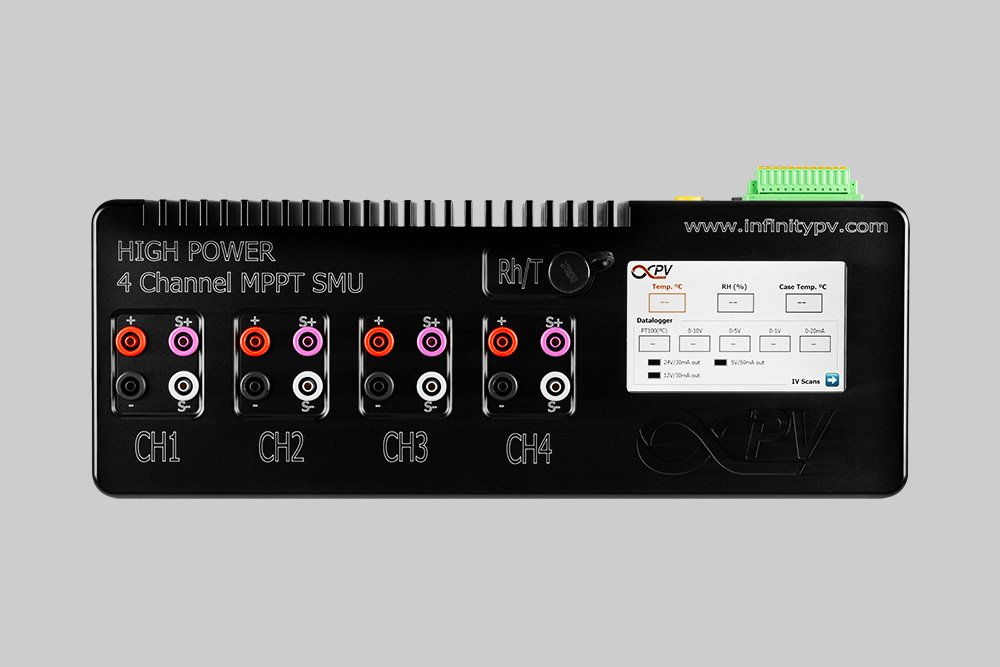


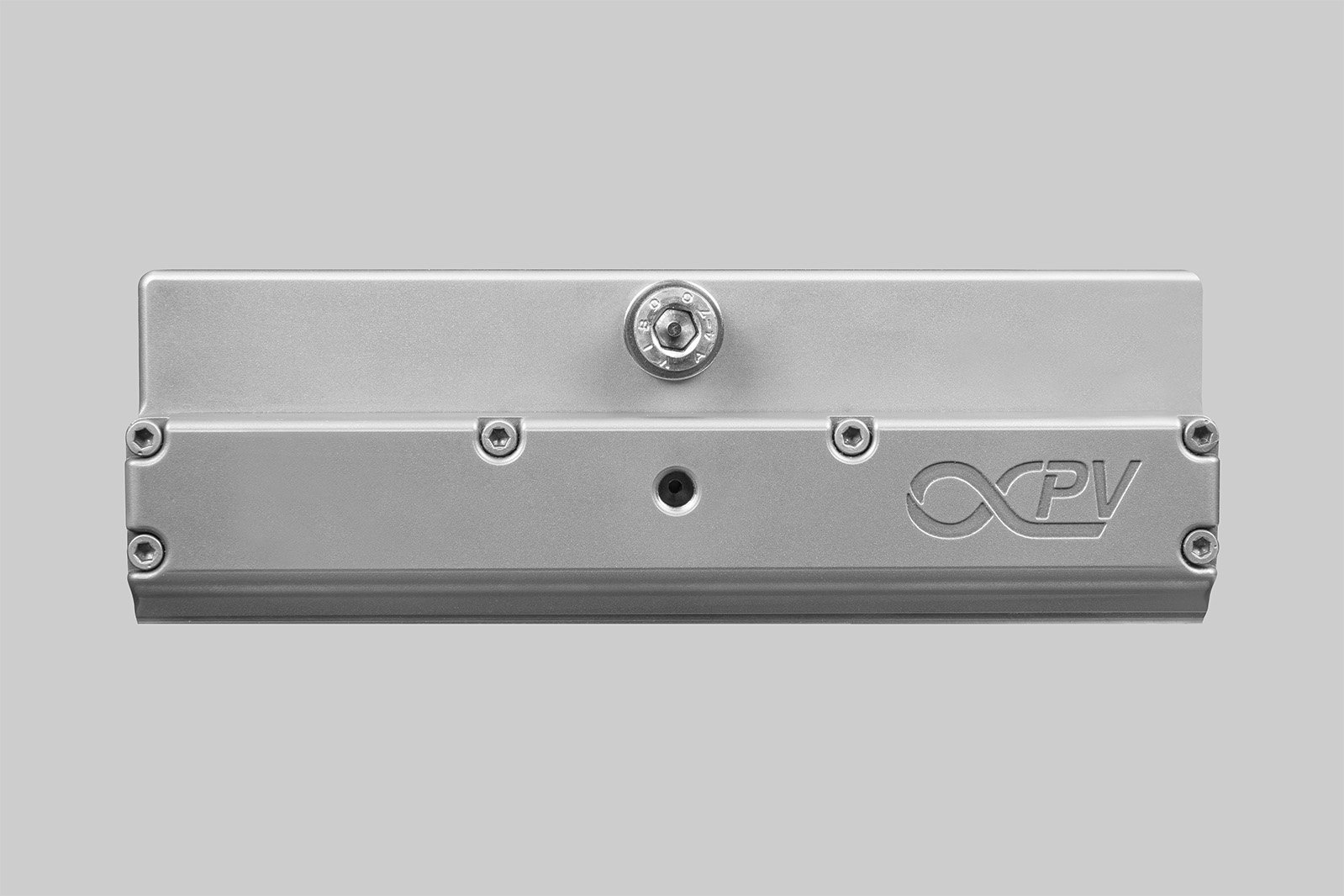

Compact solar simulator covering 385–1300 nm with 20 selectable wavelengths over areas up to 1000 cm². Delivers up to 7 suns intensity with up to class A+A+A+ uniformity. Fully compatible with the infinityPV MPPT SMU series and a range of optional environmental accessories, including sample holders, Rh/T probes, photodiodes, and spectrometers.