Ready to Move Beyond Spin Coating?
While spin coating remains a valuable research tool, many applications eventually require a process that is more scalable, repeatable, and cost-efficient. Slot-die coating delivers high-quality thin films with excellent control over coating thickness while reducing material consumption and supporting future production needs.
Why Consider Slot-die Coating Instead of Spin Coating?
Spin coating is one of the most widely used coating methods in research laboratories. It is simple, fast, and well suited for early-stage material development. However, as projects progress, many researchers encounter limitations related to material consumption, reproducibility, and scalability.
Slot-die coating offers an alternative approach that addresses these challenges while still enabling the deposition of high-quality thin films. Unlike spin coating, slot-die coating is a pre-metered process where the amount of material deposited onto the substrate is precisely controlled. This results in significantly lower material waste, predictable film thicknesses, and improved process control.
For researchers working with expensive materials, limited material quantities, or technologies that may eventually move toward commercial production, slot-die coating provides several important advantages.
Why Researchers Are Switching to Slot-die Coating
While spin coating remains an excellent tool for early-stage research, many projects eventually reach a point where material efficiency, process control, and scalability become increasingly important. Slot-die coating addresses these challenges by offering a coating method that is not only well suited for research, but also aligned with pilot-scale and industrial manufacturing.
Lower Material Consumption: Spin coating typically wastes a large percentage of the deposited material as excess solution is spun off the substrate. Slot-die coating delivers only the material required to form the coating, making it particularly attractive when working with costly or scarce materials.
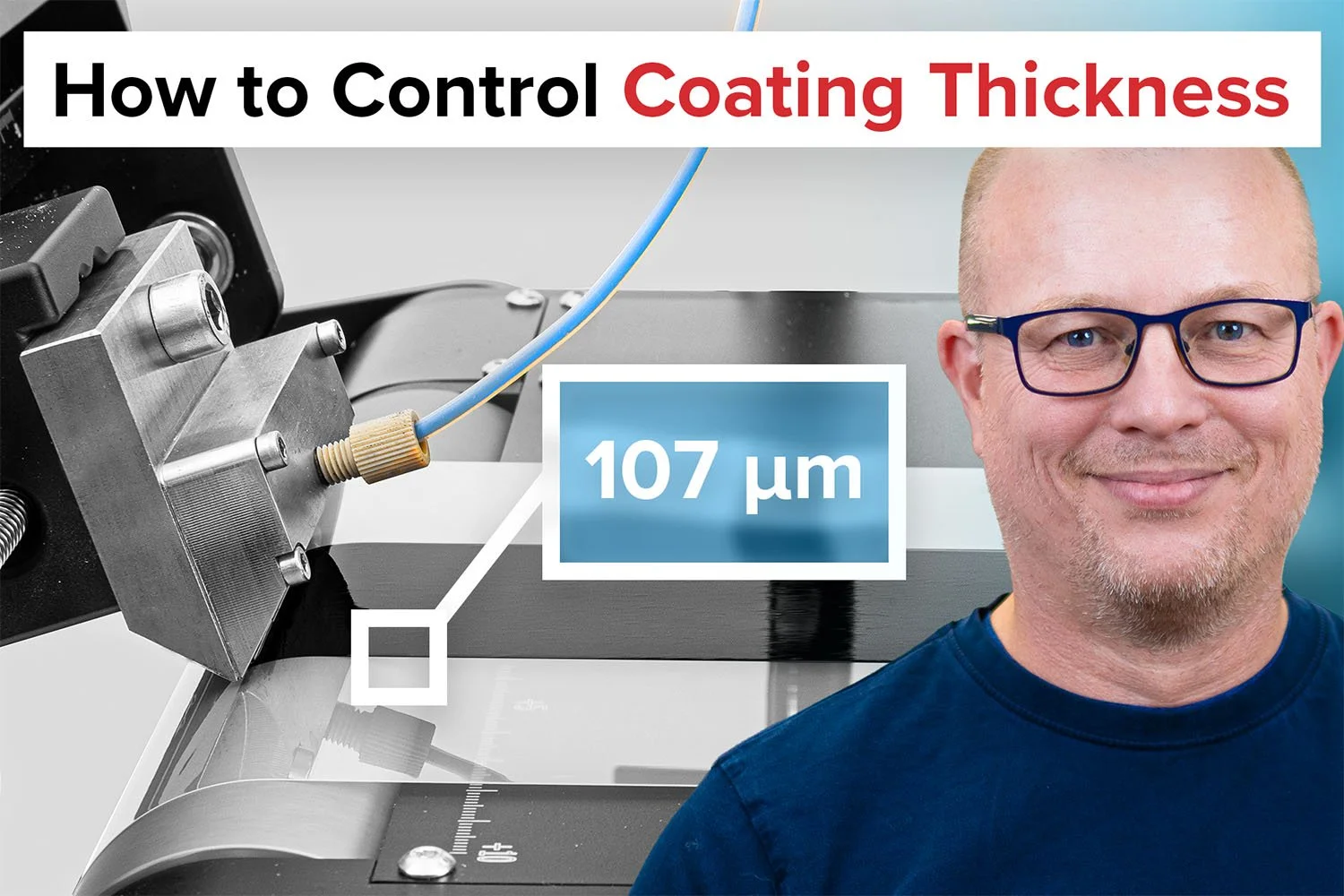
Better Process Control: Film thickness in slot-die coating is determined directly by coating parameters such as flow rate, coating speed, and coating width. This provides a predictable and controllable process that is less dependent on complex interactions between spinning speed, viscosity, and solvent evaporation.
Improved Reproducibility: Because the coating process is precisely controlled, slot-die coating can often provide more consistent results between operators, laboratories, and production environments.
A Clear Path to Scale-Up: Perhaps the greatest benefit of slot-die coating is that the same coating principle is used from laboratory-scale systems to large industrial production lines. This makes the transition from research to manufacturing significantly easier than with spin coating.
For researchers who are beginning to think about pilot production, manufacturing relevance, or commercialization, slot-die coating can provide a much smoother development pathway.
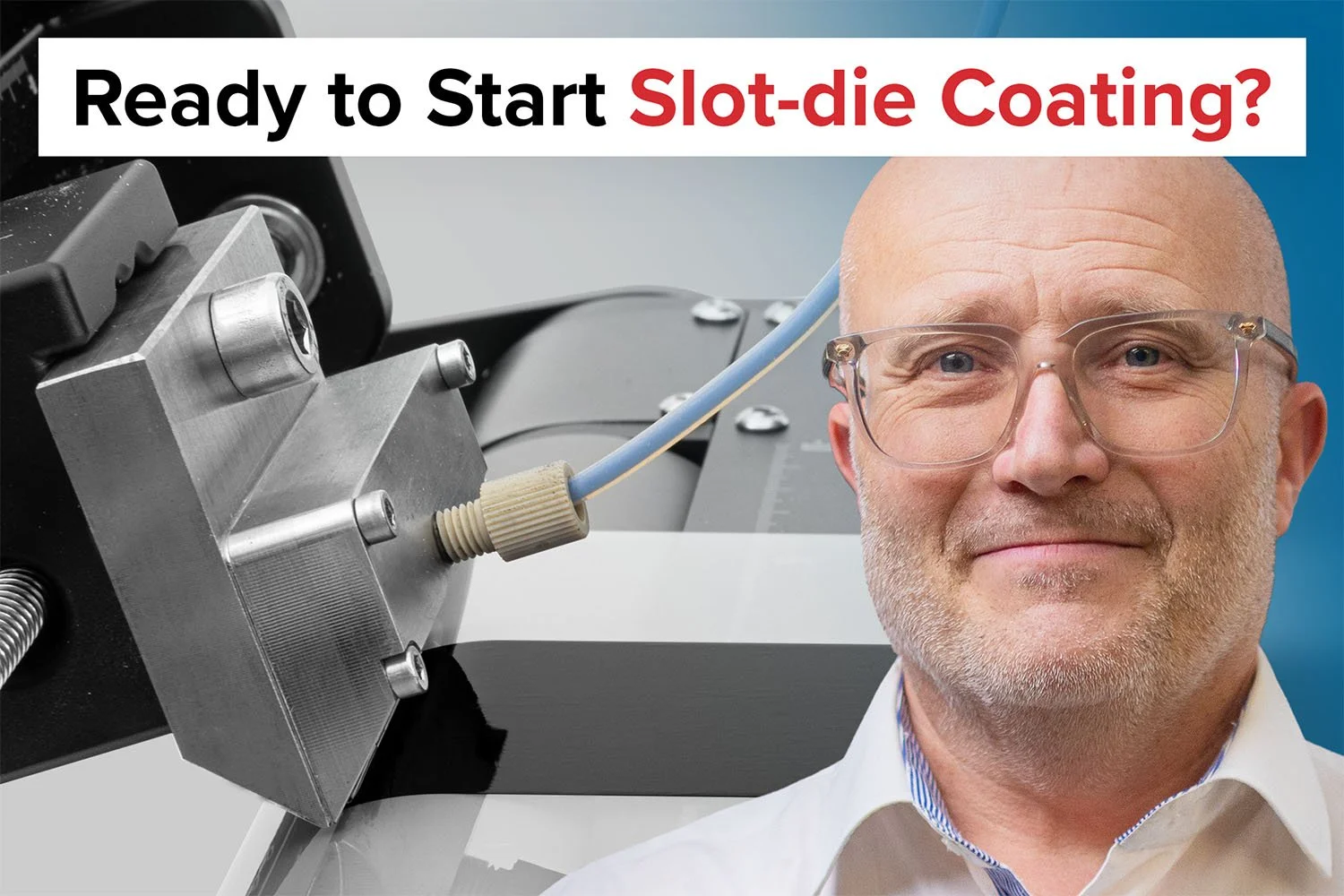
Is Slot-die Coating For You?
If you're currently using spin coating and wondering whether slot-die coating could benefit your research or development work, we're here to help. From evaluating material usage and process performance to considering future scale-up requirements, understanding the advantages and limitations of each technique is an important first step.
We can help you assess and explore slot-die coating through:
Expert Consultation: Talk with our specialists about your application, materials, and objectives to determine whether slot-die coating is the right fit for your workflow.
Visit Our Lab: Visit our facilities to see slot-die coating equipment in operation and gain a better understanding of the process and its possibilities..
Hands-On Workshops: Gain hands-on experience with slot-die coating, explore process parameters, and test concepts in a practical environment with support from our team.
Who Benefits From Slot-die Coating?
Thanks to its ability to produce highly controlled and uniform thin films, slot-die coating is used across numerous research fields and industrial sectors. The technology is valued for its efficient material usage, excellent process repeatability, and straightforward path from laboratory development to large-scale manufacturing.
Common application areas include:
Industries that rely on slot-die coating include:
Battery Manufacturing: Precision coating of electrode materials, solid-state electrolytes, separator layers, and other battery components.
Pharmaceuticals: Applying functional coatings to drug delivery systems, diagnostic devices, and healthcare products.
Membranes: Producing filtration, purification, and separation membranes with controlled thickness and performance.
Fuel Cells: Depositing functional layers used in electrochemical energy conversion systems.
Solar Cells: Coating active and functional layers for next-generation solar cell technologies.
Adhesives: Applying uniform adhesive layers for industrial assembly, lamination, and bonding applications.
Packaging: Adding barrier, protective, or functional coatings to flexible and rigid packaging products.
Sensors: Fabricating thin-film coatings for electronic, optical, environmental, and chemical sensing devices.
Electrochromics: Producing coatings for smart windows, dynamic glazing systems, and advanced display technologies.

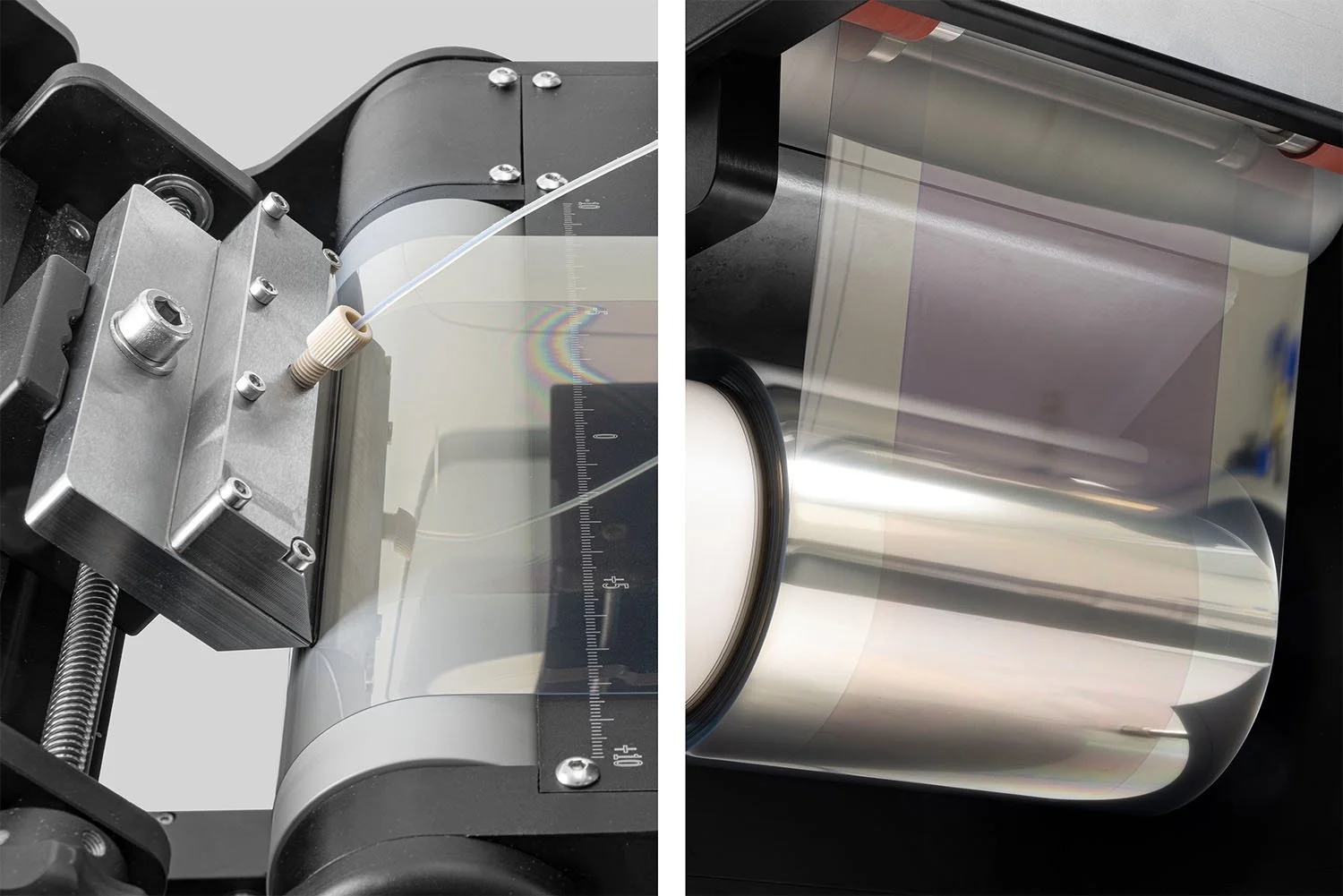
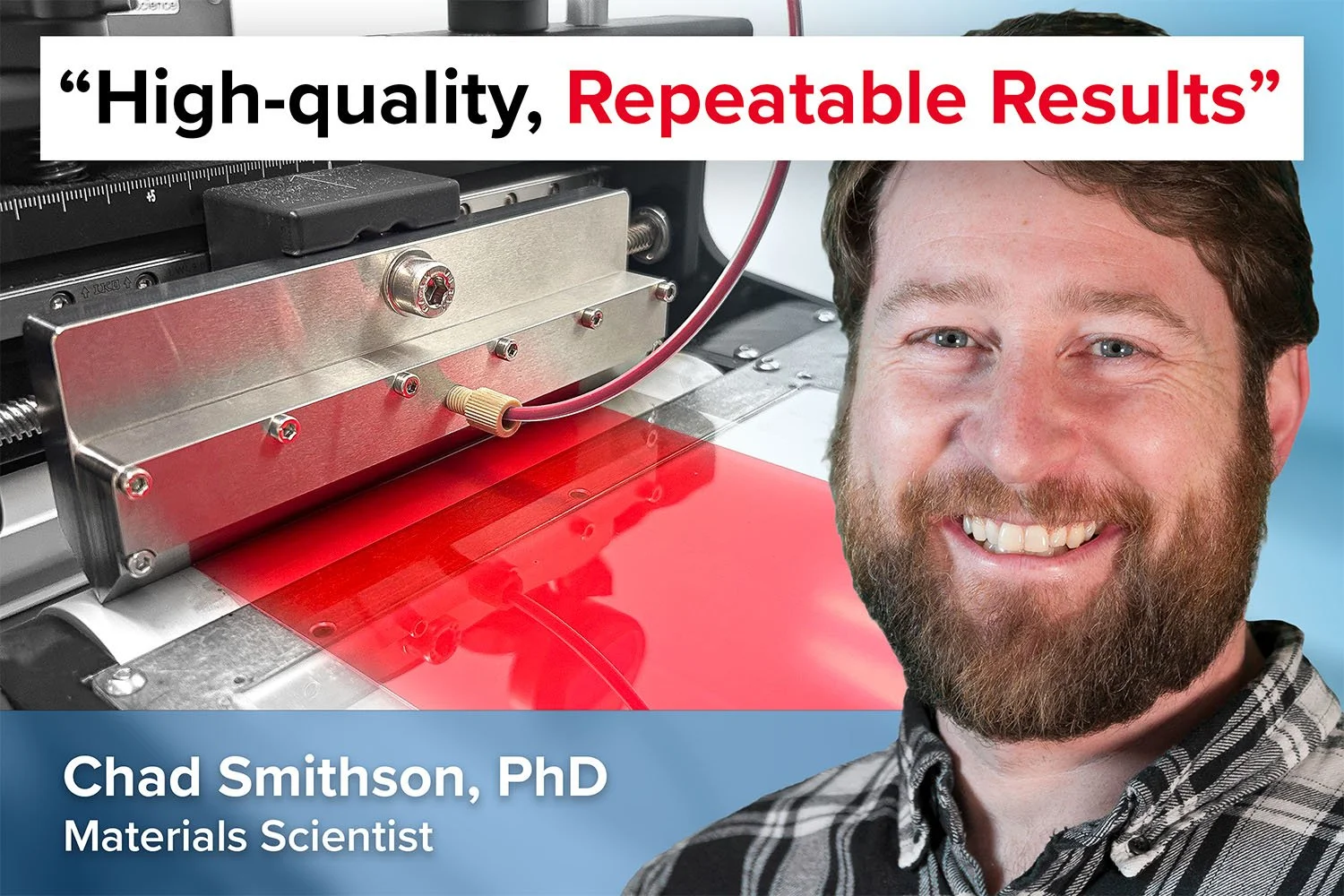
Slot-die Coating Delivers Consistent, High-Quality Coating for Trusscore
Chad Smithson, Materials Scientist at Trusscore, highlights the exceptional performance of the slot-die heads in their research on electrochromic coatings. The precision and reliability of the slot-die technology ensured uniform deposition of functional inks, which is critical for developing color-changing wall panels.
Unlock the Power of Roll-to-Roll: Lab-Scale Coatings to Industrial Manufacturing
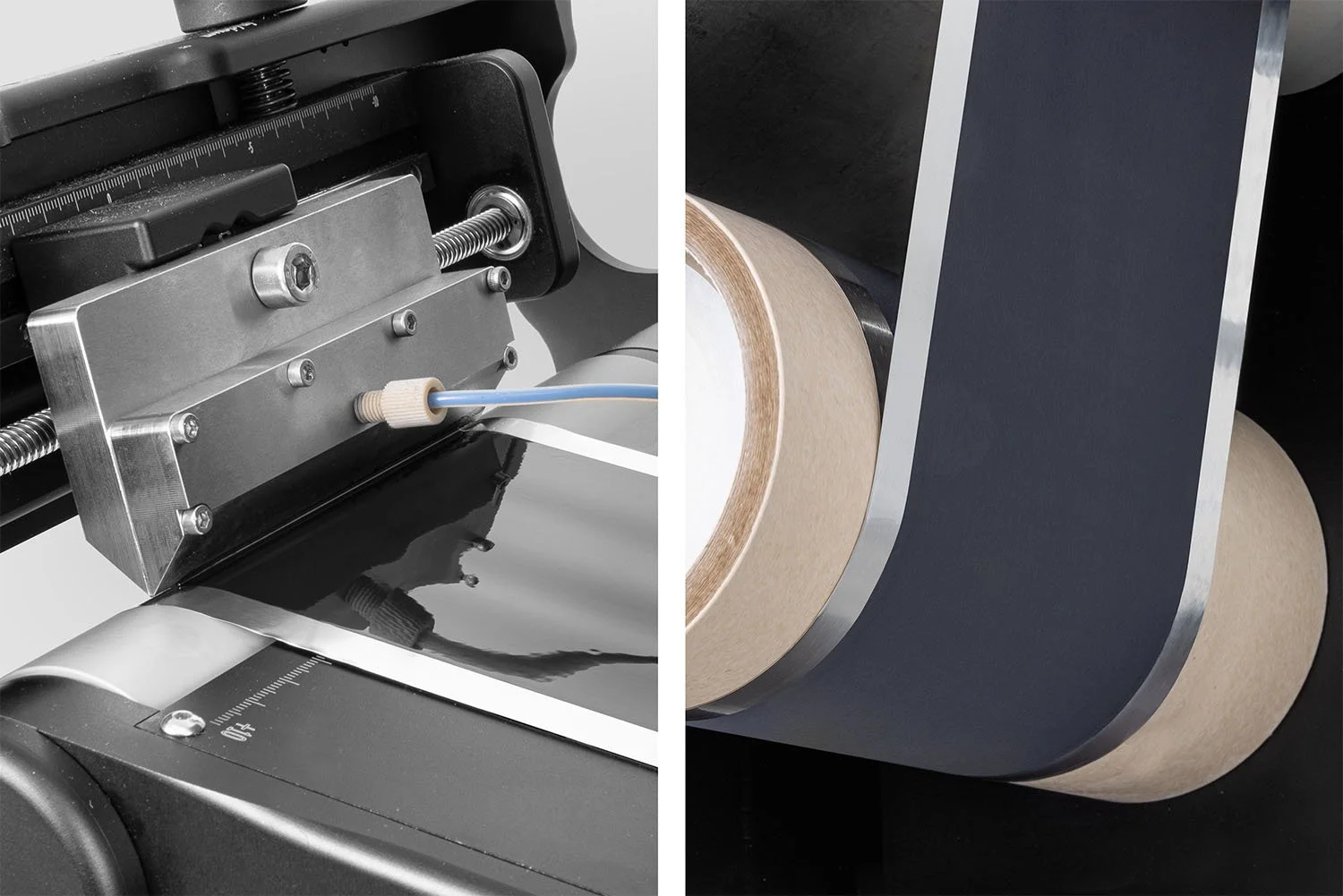
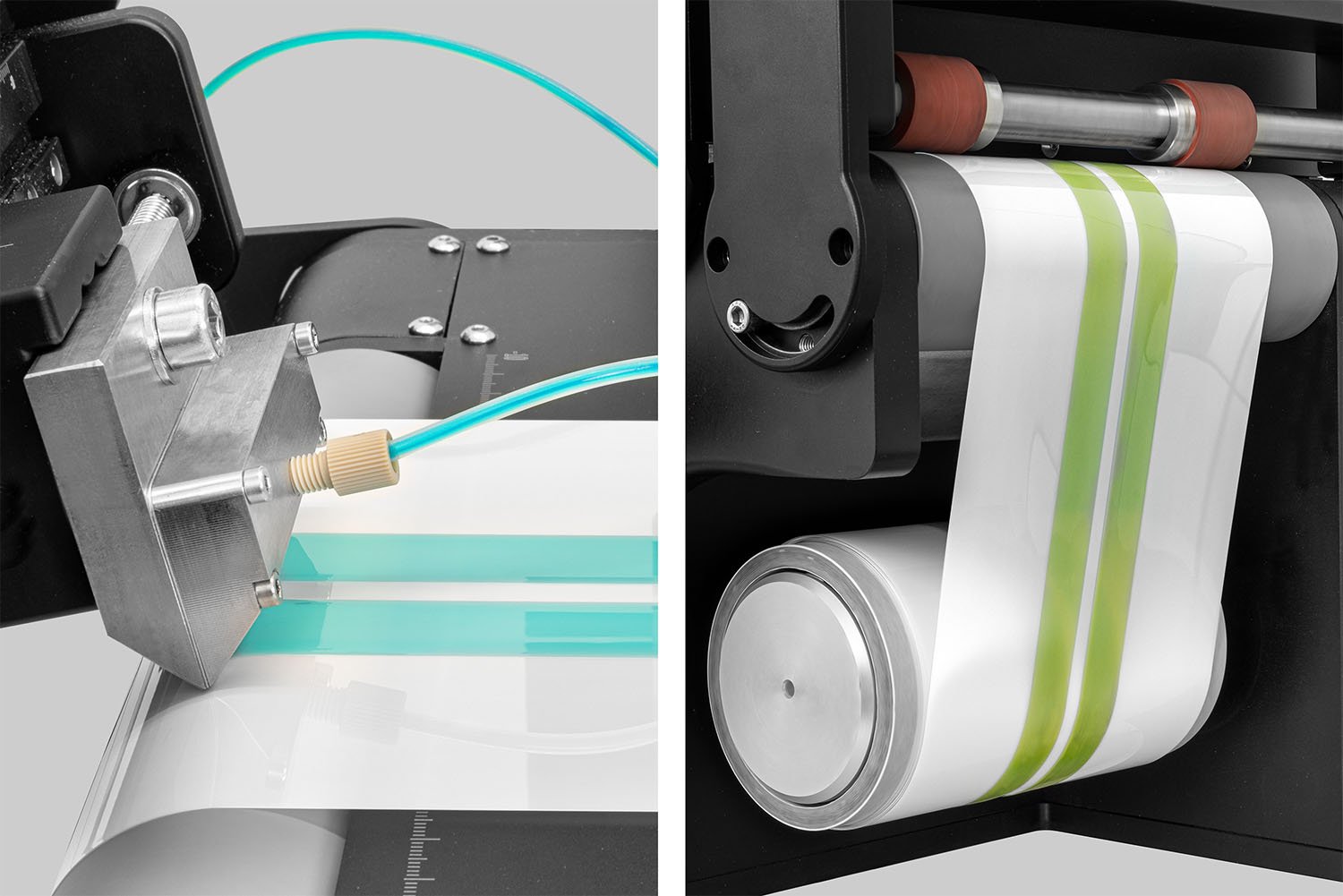
The true strength of slot-die coating lies not only in its ability to produce high-quality thin films, but also in its seamless transition from research and development to large-scale manufacturing. Unlike many laboratory coating methods, slot-die coating is inherently compatible with roll-to-roll production, making it one of the most widely adopted technologies for continuous thin-film manufacturing.
A Scalable Coating Technology: The same coating principle is used across laboratory, pilot-scale, and industrial systems. This means that process knowledge developed during R&D can often be transferred to larger production equipment with significantly less redevelopment than is typically required with spin coating.
Continuous, High-Throughput Production: Roll-to-Roll manufacturing enables continuous coating of flexible substrates, replacing batch-based processing with an efficient production flow capable of handling large volumes and large-area coatings.
Integrated Manufacturing Processes: Slot-die coating can be combined with inline drying, curing, printing, lamination, surface treatment, and quality control systems, creating a streamlined manufacturing environment from coating to finished product.
Lower Costs and Higher Material Efficiency: Precise control over material deposition minimizes waste while maintaining excellent coating uniformity, helping reduce production costs and improve overall process efficiency.
When manufacturing relevance becomes a priority, roll-to-roll slot-die coating is often the technology that transforms a promising laboratory process into a commercially viable production method.
We’re Here to Help You Find the Right System
Choosing the right next step after spin coating can be challenging. Whether your goal is to reduce material consumption, improve reproducibility, evaluate manufacturing-relevant processes, or prepare for scale-up, we're here to help you determine if slot-die coating is the right fit for your application.

Slot-die Coater
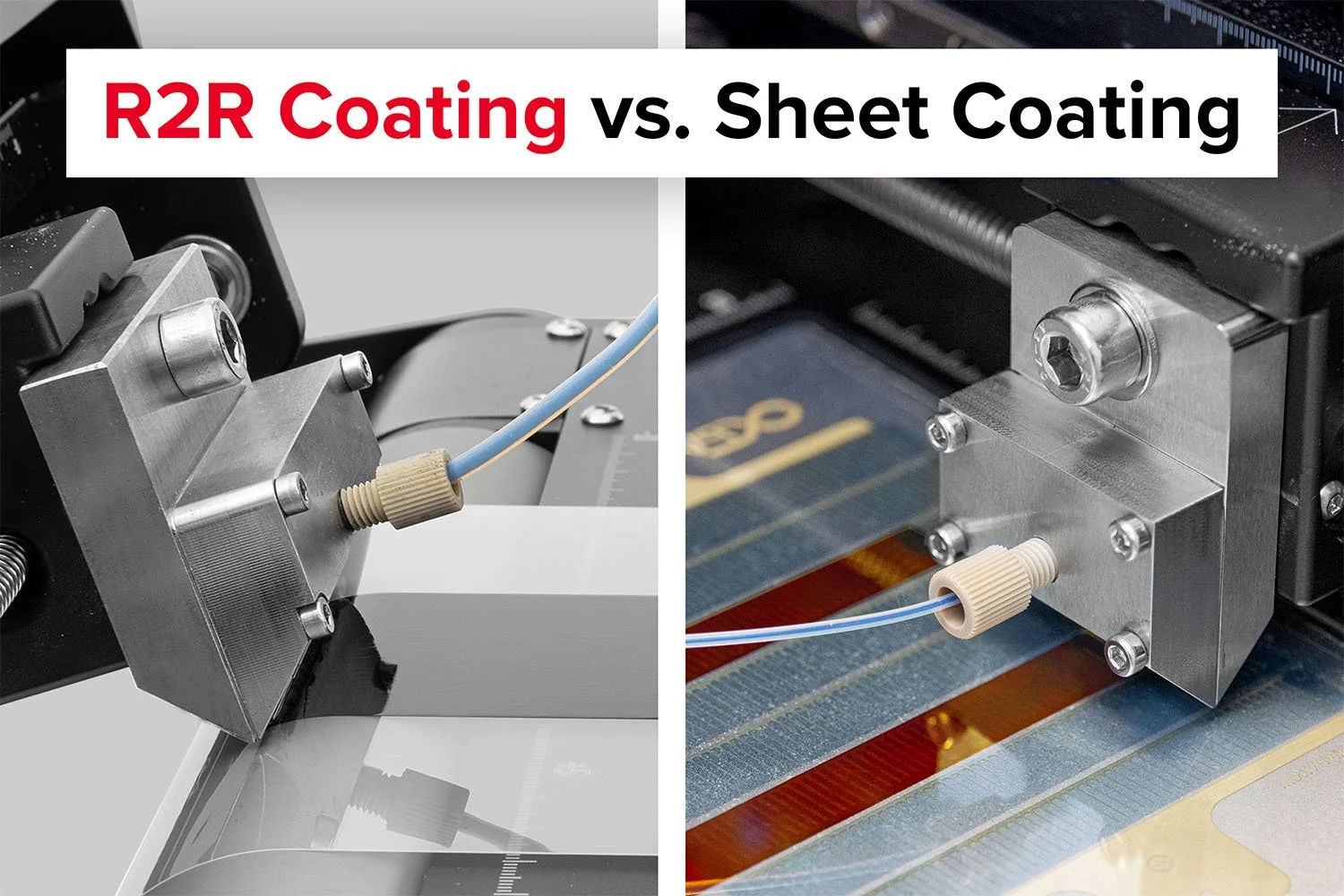
Ideal for lab research, prototyping, and small-batch production. Sheet-based processing allows flexible testing, parameter adjustments, and precise coatings in limited quantities.

Laboratory Roll-to-Roll Coater
Best for scaling lab results to continuous, high-throughput production. Ensures uniform, consistent coatings on long substrates and supports transition to larger-scale manufacturing.

R2R Hybrid Coater
Combines sheet-based precision with roll-to-roll efficiency. Offers maximum flexibility for lab-scale thin film processing—from early formulation work to pilot-scale production.
Surface Treatment for Improved Coating Performance
One of the key differences between spin coating and slot-die coating is that substrate surface properties often become more important as coating processes move closer to manufacturing conditions. In particular, surface energy can have a significant impact on coating quality, wetting behavior, and film uniformity.
To improve coating performance, corona and plasma treatments are commonly used to modify the surface of non-porous substrates before coating. These treatments increase surface energy, helping inks and functional materials spread more uniformly across the substrate while improving coating adhesion.
For researchers transitioning from spin coating to slot-die coating, surface treatment can often be an effective way to achieve defect-free coatings, reduce dewetting issues, and improve process robustness. The same approaches are widely used in industrial manufacturing, making them valuable tools when developing coating processes with future scale-up in mind.
Coating Sensitive Materials with Confidence
Many researchers initially assume that moving from spin coating to slot-die coating requires exposing sensitive materials to a less controlled environment. In reality, slot-die coating can be readily integrated into gloveboxes, fume hoods, and cleanroom facilities, allowing advanced materials to be processed under carefully controlled conditions.
Designed for Sensitive Materials
Many emerging materials used in batteries, photovoltaics, electronics, and advanced coatings are highly sensitive to moisture, oxygen, particles, or other contaminants. By performing slot-die coating inside controlled environments, these materials can be coated, dried, and handled without compromising performance or stability.
Supporting Reliable and Reproducible Results
Environmental control helps minimize contamination, reduce process variability, and improve coating consistency. This is particularly valuable when developing new materials, optimizing formulations, or generating data that must be reproduced across different experiments, operators, or facilities.
From Research to Manufacturing
Controlled environments are widely used throughout both research and industrial production. Developing slot-die coating processes under manufacturing-relevant conditions can help simplify technology transfer and reduce challenges during scale-up.
Finding the Right Setup
Whether you are working with moisture-sensitive battery materials, reactive inks, functional polymers, or advanced electronic coatings, we can help identify the most suitable coating environment for your application. From laboratory studies to pilot-scale development, we support researchers in establishing reliable and scalable slot-die coating workflows.

Learn More About Slot-die Coating