
Novo Nordisk and Technical University of Denmark Advance Buccal Delivery of GLP-1 Peptides Using Slot-die Coating
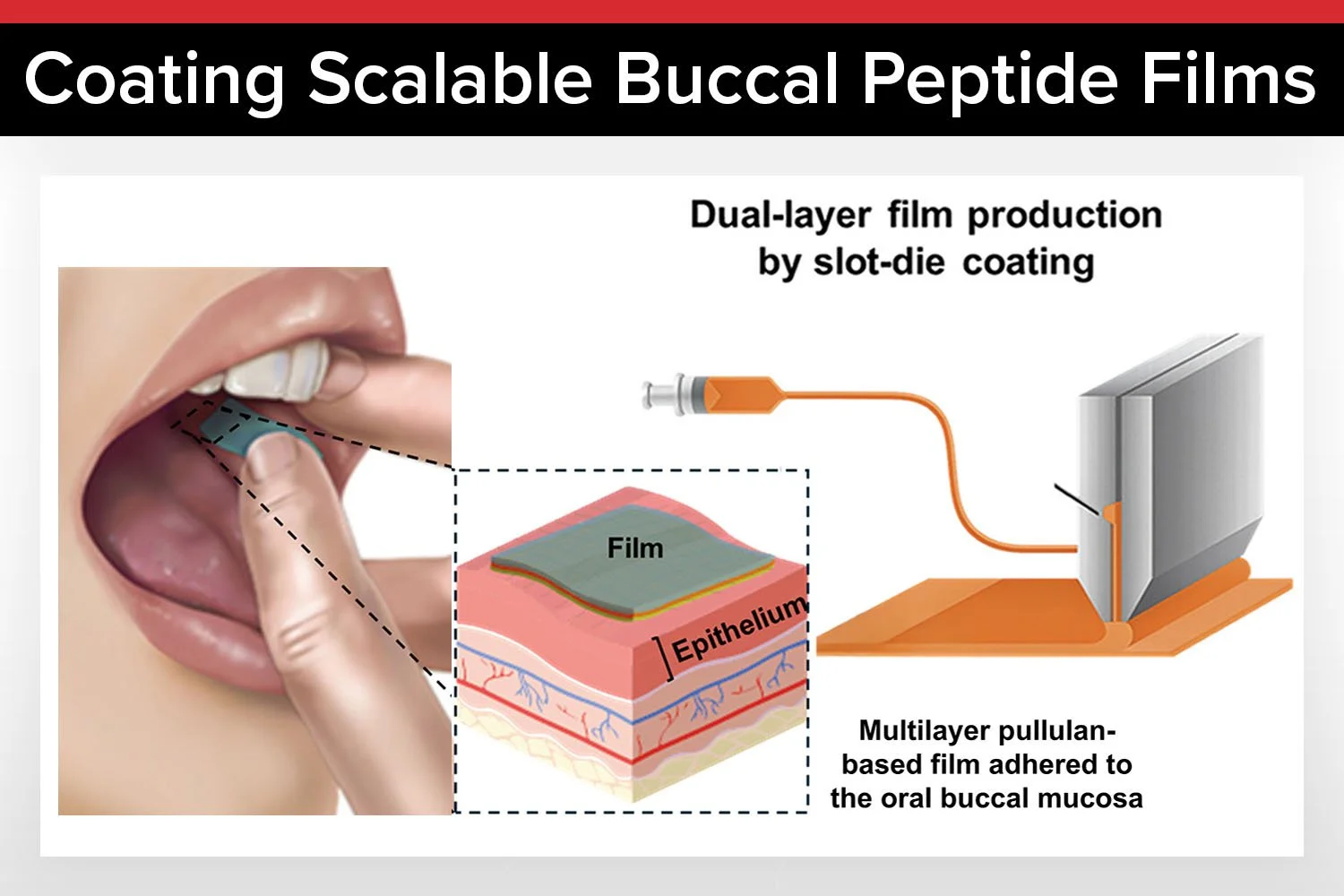
In a recent study, researchers from the Technical University of Denmark, in collaboration with the University of Aveiro, Novo Nordisk, and several international partners, used infinityPV's Research Laboratory Coater (the predecessor to the Slot-die Coater) to develop a bioinspired pullulan-based adhesive coacervate film for targeted buccal delivery of peptides. The work addresses one of the major challenges in peptide therapeutics: poor oral bioavailability caused by enzymatic degradation and limited permeability in the gastrointestinal tract. While injectable formulations are effective, they can reduce patient adherence due to their invasive nature.
To overcome these limitations, the researchers developed a dual-layer buccal film consisting of a mucoadhesive layer containing a GLP-1 receptor agonist (GLP-1-RA) and the permeation enhancer sodium glycodeoxycholate (GDC), supported by a cellulose-based backing layer. The films were fabricated using slot-die coating, a scalable manufacturing method that produced uniform films while maintaining the secondary structure of the peptide throughout the fabrication process. By varying the methacrylation degree of pullulan (PUL-MA), the researchers optimized key material properties including swelling, cohesion, and adhesion, achieving approximately a five-fold increase in adhesion compared to conventional buccal films.
Key Findings
The study demonstrated that the dual-layer films exhibited excellent mucoadhesive properties, with the 3% methacrylation degree (MD) formulation achieving the highest adhesion work of 102.6 ± 14.2 J/m². This formulation also provided the most sustained release of both GDC and GLP-1-RA, which may support prolonged residence at the buccal surface and controlled peptide delivery. Ex vivo studies further suggested that improved mucoadhesion increased tissue residence time and promoted transbuccal peptide permeation.
The researchers also confirmed that the peptide maintained its secondary structure following film fabrication and release, indicating that the manufacturing process did not compromise its structural integrity. In addition, the cellulose-based backing layer, composed of hydroxypropyl cellulose (HPC) and ethyl cellulose (EC), provided mechanical support while directing drug release toward the mucosal surface. The resulting films showed good thickness uniformity and a clearly defined dual-layer structure, supporting reproducible fabrication for subsequent characterization and biological evaluation.

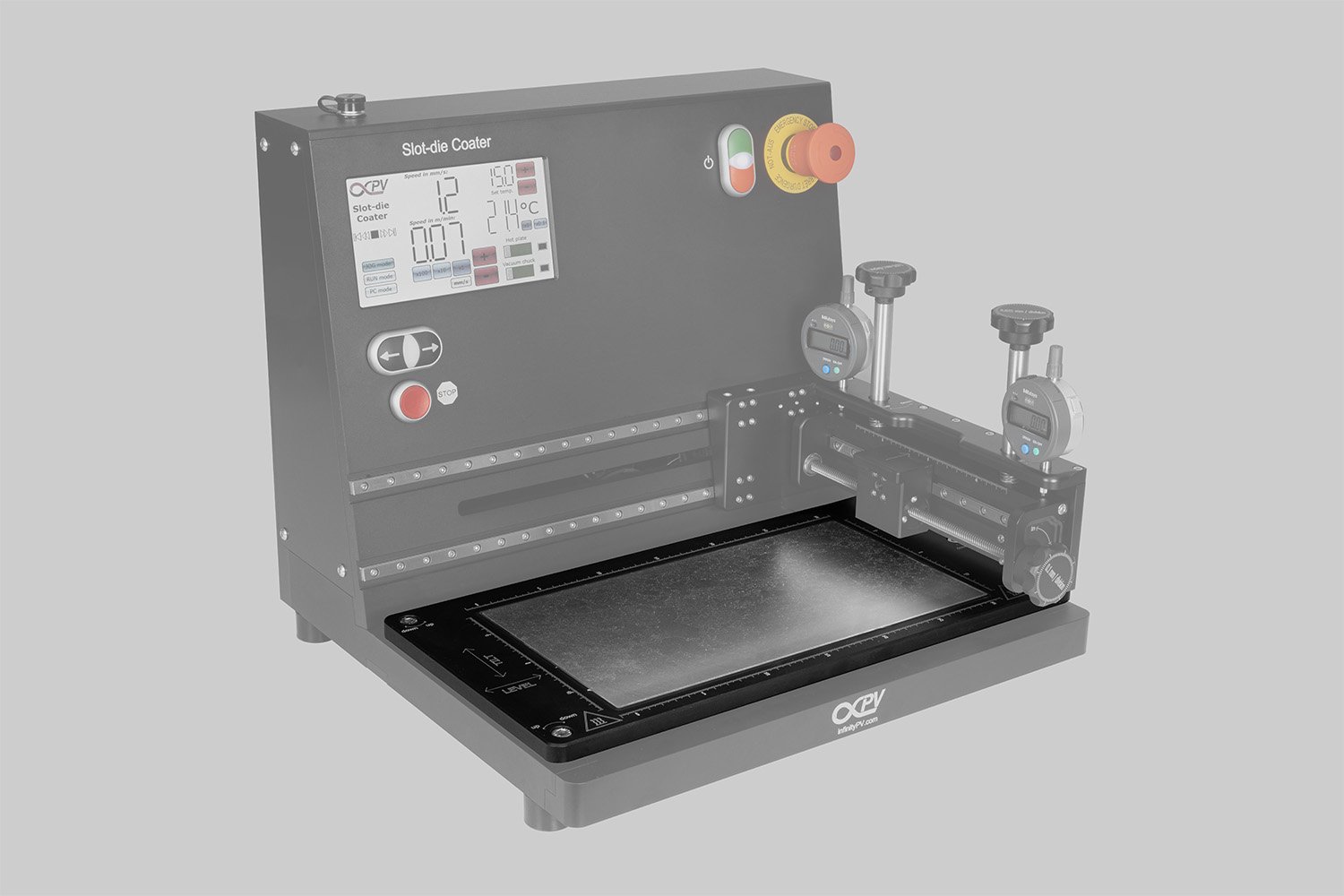
The Research Laboratory Coater used in the article has since evolved into the Slot-die Coater.
How the Slot-die Coater Was Used
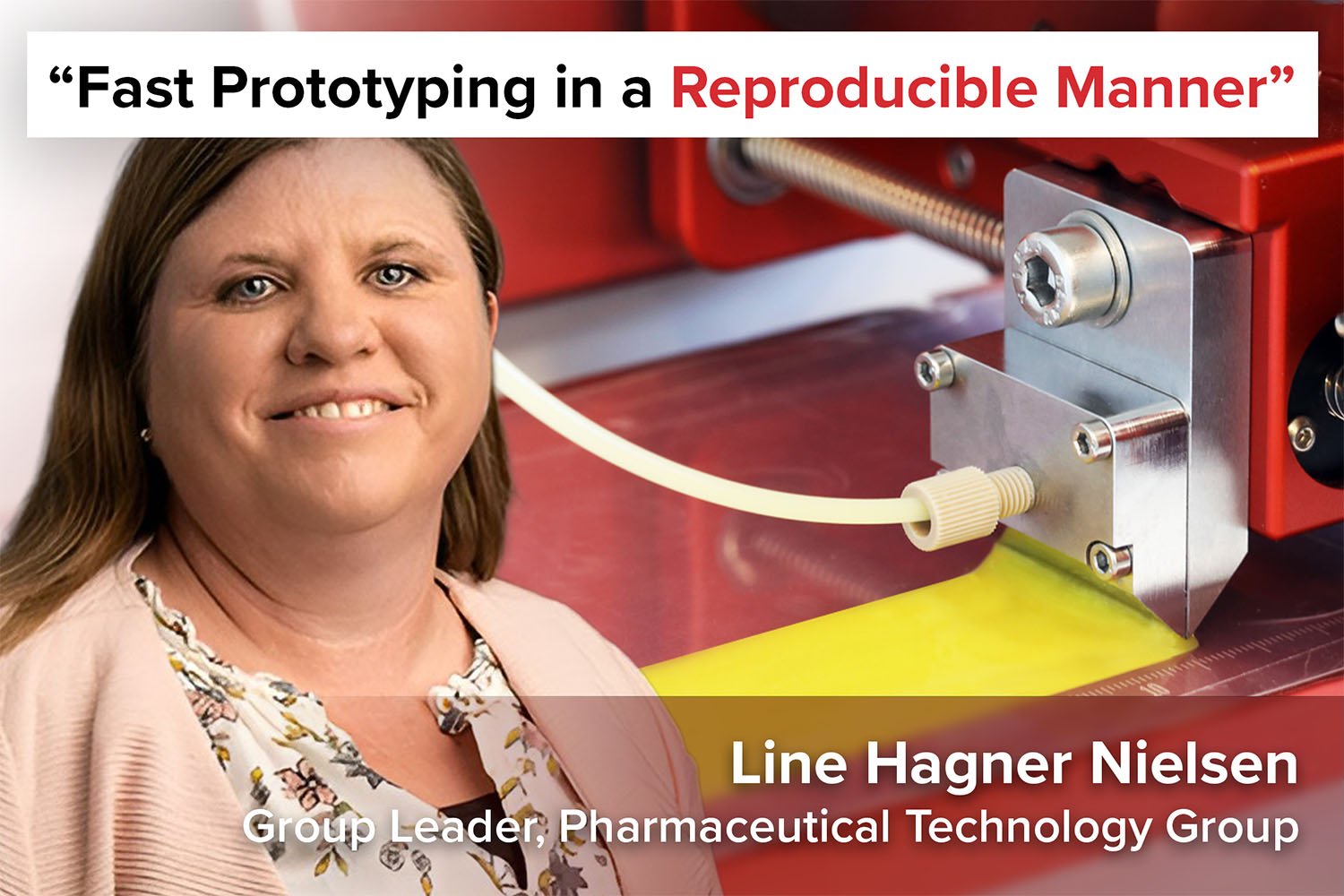
The dual-layer films were fabricated using infinityPV's Research Laboratory Coater, equipped with a knife coater slot-die head. The precursor solutions for the mucoadhesive layer, containing tannic acid (TA), PUL-MA adhesive coacervates with varying methacrylation degrees, GLP-1-RA, and GDC, were coated onto a PET liner. During coating, the gap between the substrate and the knife blade was adjusted to 30 µm, while the coating head moved at 1.2 mm/min to produce uniform films.
Following deposition of the mucoadhesive layer, the cellulose-based backing layer containing HPC and ethyl cellulose was coated directly on top. The films were dried under vacuum at 26°C and 300 mPa for two hours, followed by overnight drying under ambient conditions before being converted into individual dosage units. SEM analysis confirmed the formation of two distinct layers with uniform film morphology. The coating platform enabled reproducible fabrication of multilayer buccal films that were subsequently evaluated for mechanical properties, mucoadhesion, peptide release, and ex vivo permeation.
“For the coating of the precursor solutions, a slot-die coater (Research Laboratory Coater, infinityPV ApS, Jyllinge, Denmark) equipped with a knife coater slot-die head for precise coating was used. The slot-die head speed was set to 1.2 mm/min, and the gap between the substrate and the knife blade was adjusted to 30 μm using the micrometer screw on the knife coater for casting the mucoadhesive layers (ML). ”
What This Means for Your Research
This study demonstrates how slot-die coating can be applied to fabricate complex multilayer buccal films containing sensitive peptide therapeutics while maintaining film uniformity and peptide integrity. By combining scalable coating with bioinspired adhesive materials, the researchers developed a delivery platform that exhibited strong mucoadhesion, controlled release behaviour, and enhanced peptide permeation in ex vivo tissue models.
For researchers developing transmucosal drug delivery systems, this work illustrates how slot-die coating can be incorporated early in formulation development to produce reproducible multilayer films with controlled architecture. The ability to manufacture uniform films while supporting systematic optimisation of formulation parameters makes the approach well suited for research into peptide, protein, and other macromolecular drug delivery systems.
References
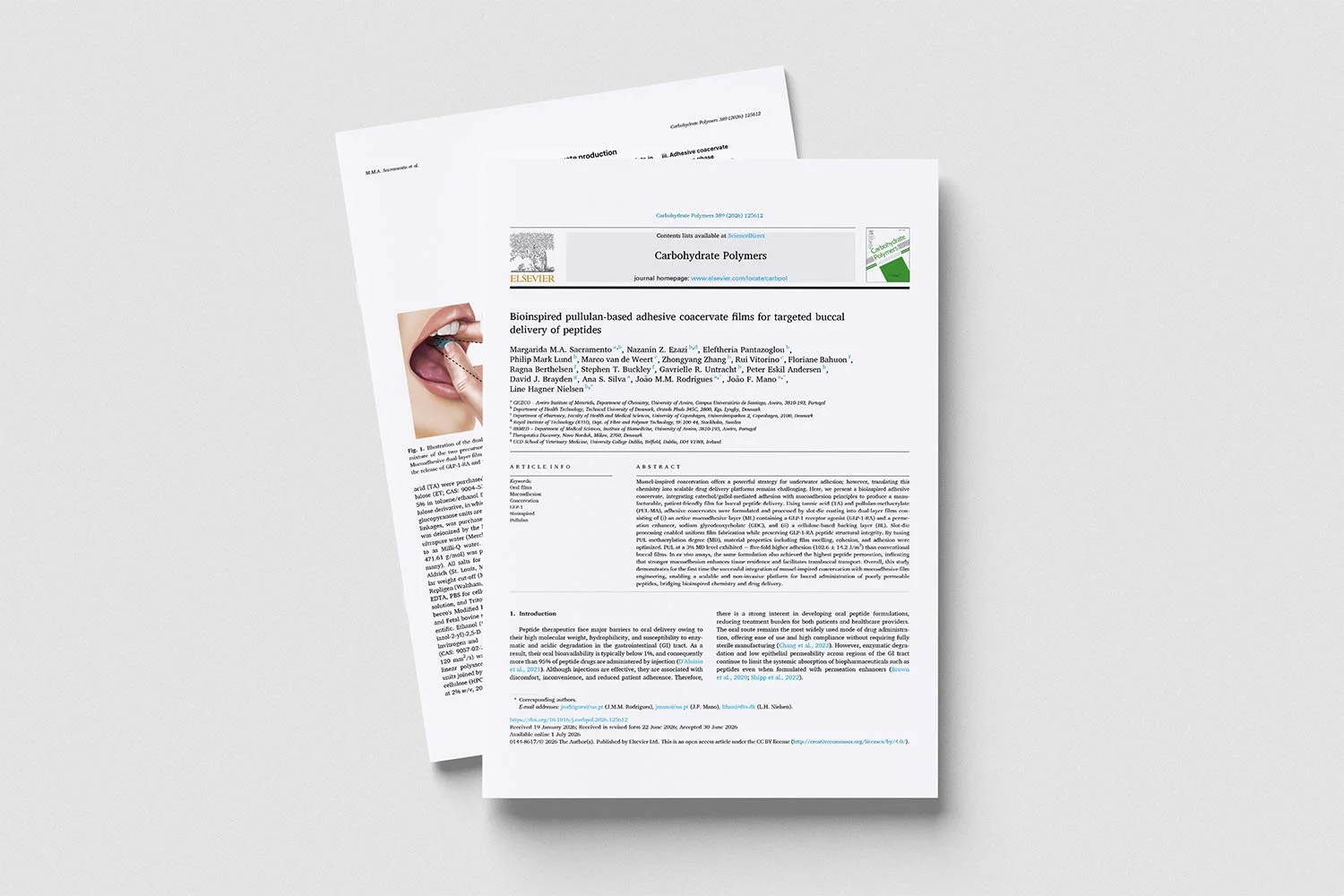
Sacramento, M.M.A., Ezazi, N.Z., Pantazoglou, E., Lund, P.M., van de Weert, M., Zhang, Z., Vitorino, R., Bahuon, F., Berthelsen, R., Buckley, S.T., Untracht, G.R., Andersen, P.E., Brayden, D.J., Silva, A.S., Rodrigues, J.M.M., Mano, J.F. and Nielsen, L.H. (2026) ‘Bioinspired pullulan-based adhesive coacervate films for targeted buccal delivery of peptides’, Carbohydrate Polymers, 389, p. 125612. doi: 10.1016/j.carbpol.2026.125612.
How Can We Help With Your Research?
Need help with slot-die coating or machines? Contact our experts for guidance and support.
We Are Trusted by Top Scientists Worldwide
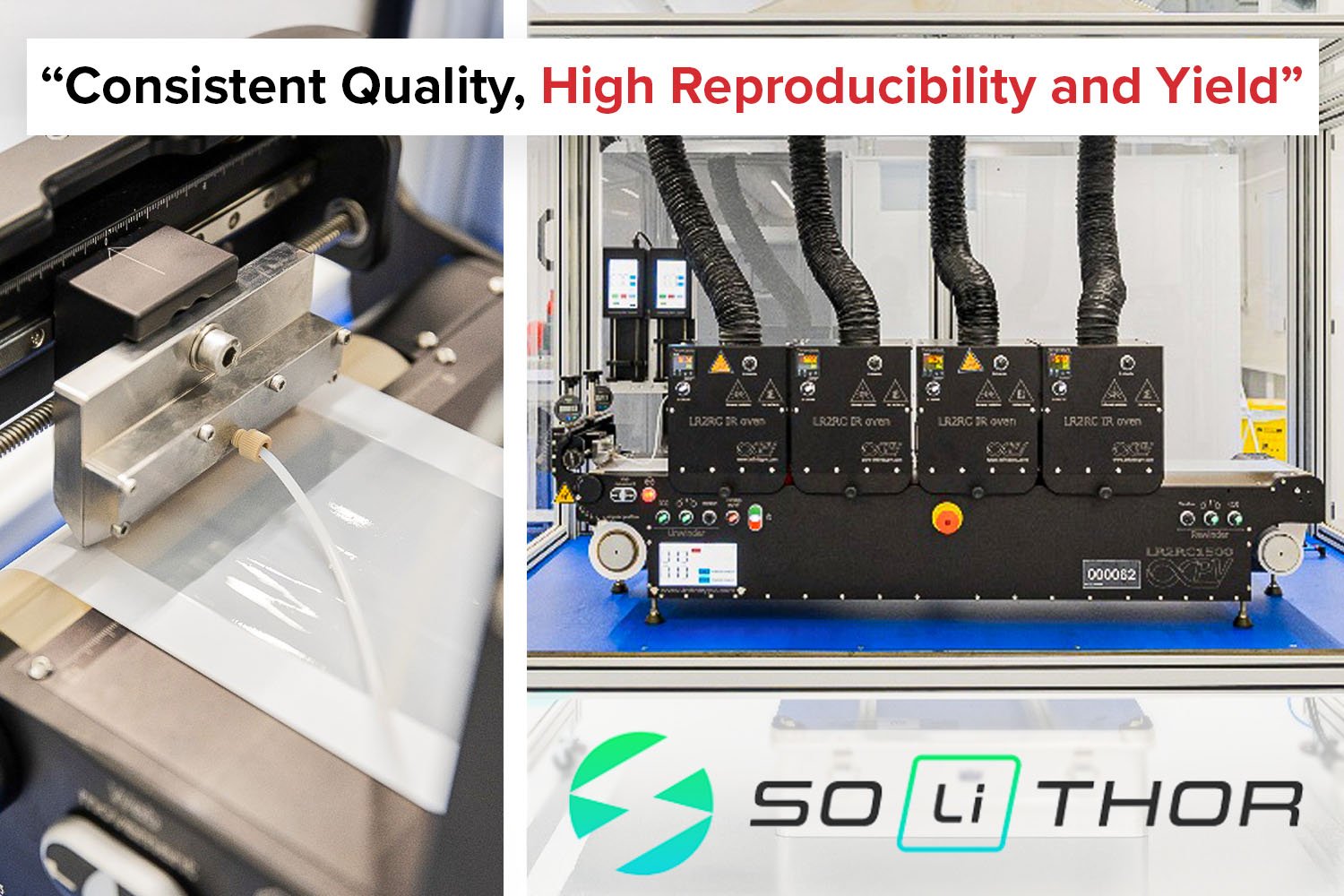





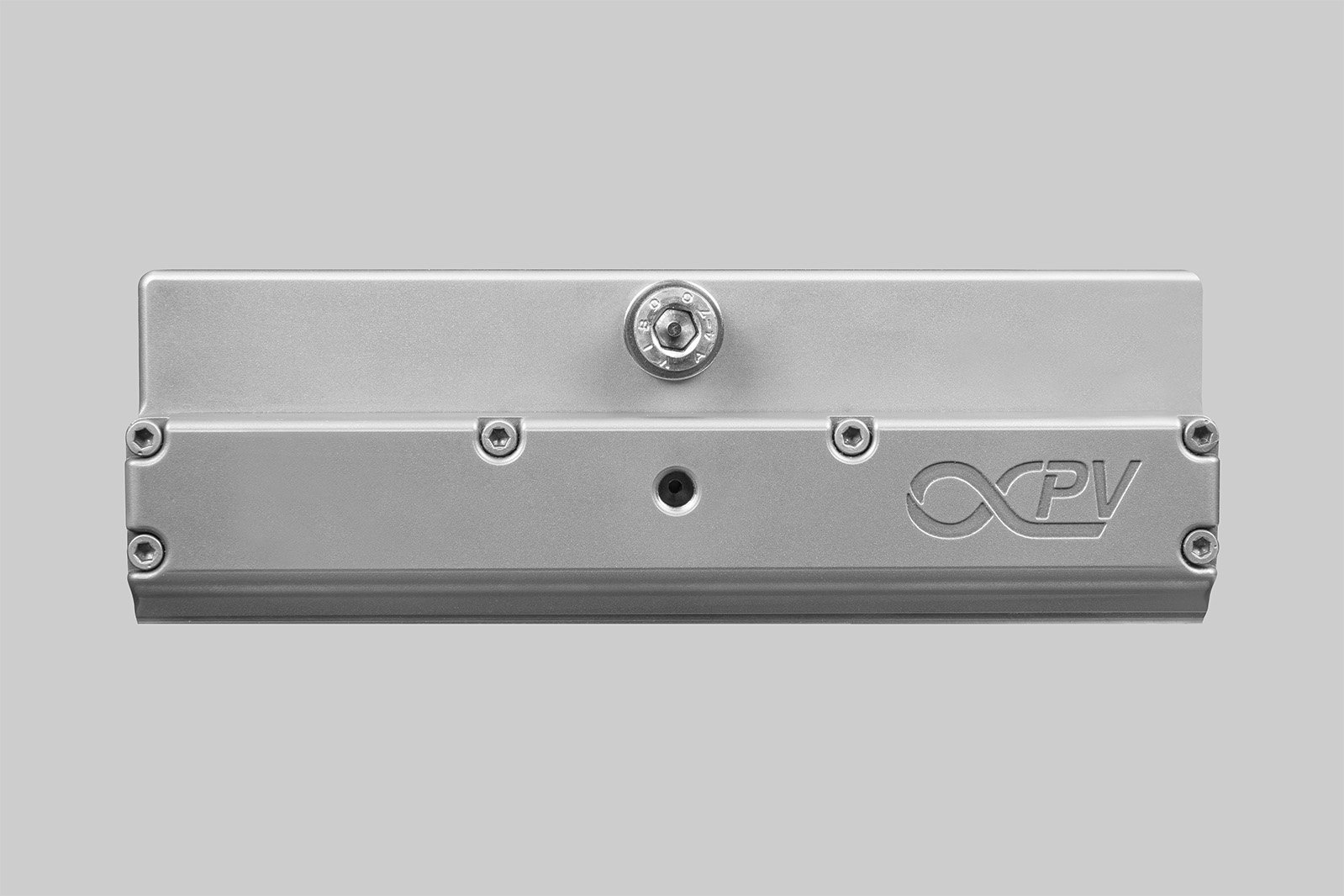
The infinityPV slot-die heads offer unparalleled performance across various materials and size. Available in PEEK, Stainless and Titanium in standard widths of 40 mm, 65 mm, 115 mm, 165 mm, 195 mm and 305 mm. View video.