
Nanoscale Junction Engineering Pushes Zn₃P₂/InP Solar Cells to 8% Efficiency
Researchers from École Polytechnique Fédérale de Lausanne (EPFL), AMOLF, and Hellenic Mediterranean University (HMU) investigated how nanoscale junction engineering could improve the performance of Zn₃P₂/InP solar cells, achieving a record power conversion efficiency of 8.0% under standard test conditions.
Zn₃P₂ is a promising earth-abundant photovoltaic material, but its performance has been limited by challenges including structural defects and limited carrier transport. In this study, the researchers used selective area epitaxy (SAE) with a nanoscale SiO₂ mask to control the Zn₃P₂/InP junction geometry and investigate how the pattern dimensions affected device performance.
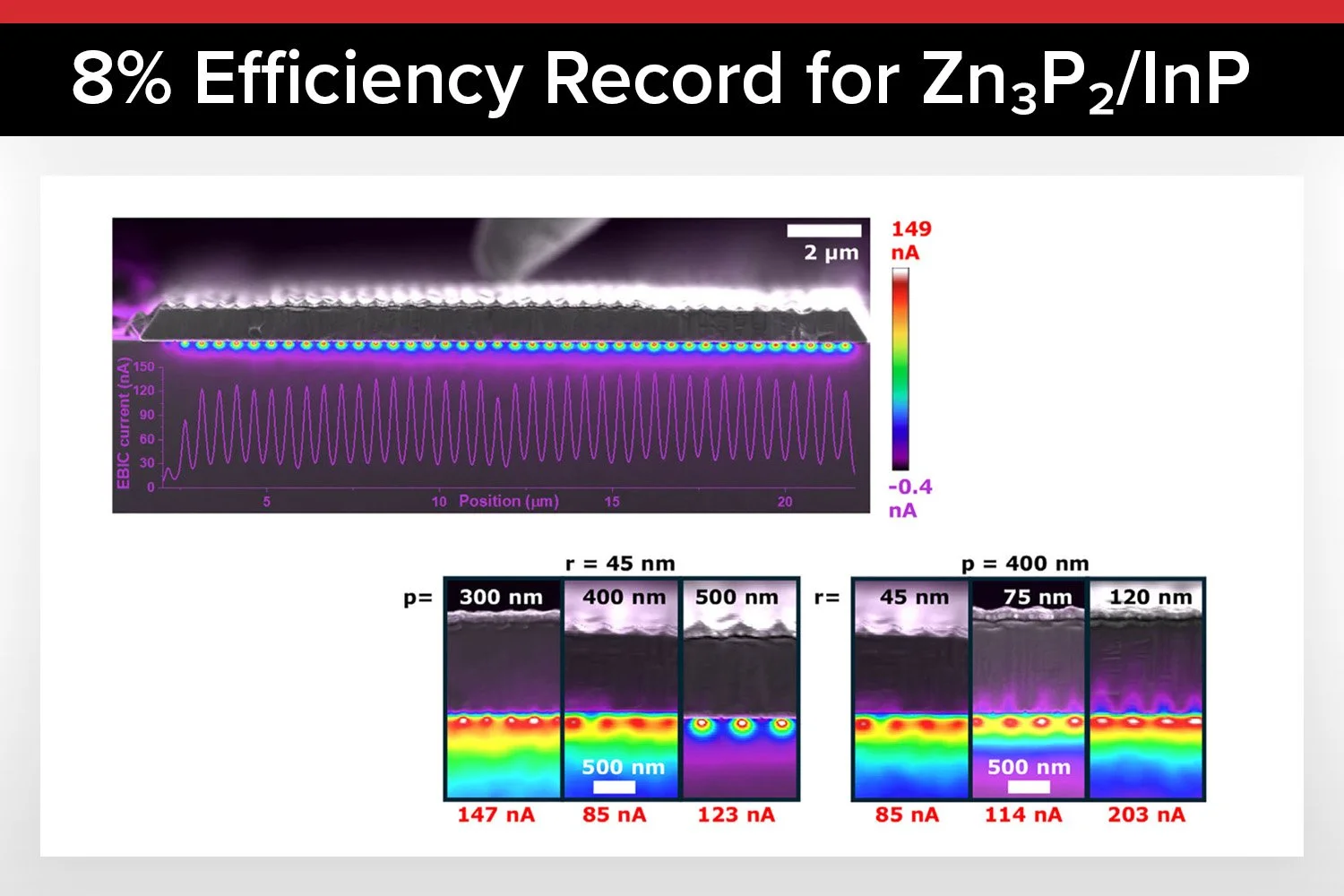
Electrical characterization played a central role in comparing the devices. The study combined current-voltage (J-V) measurements, external quantum efficiency (EQE), electron beam induced current (EBIC), and optical and electrical simulations to investigate the relationship between junction structure and solar cell performance.
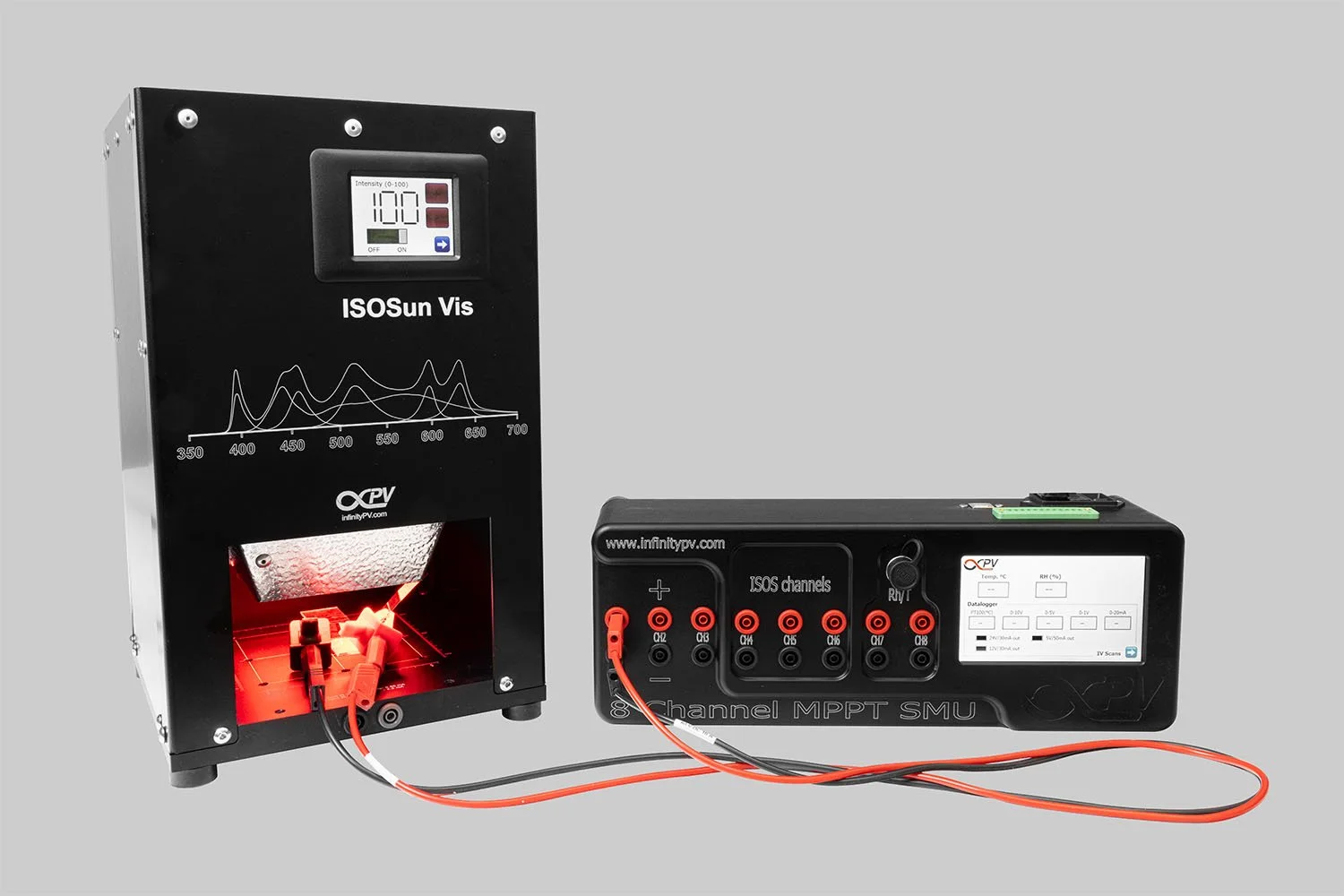
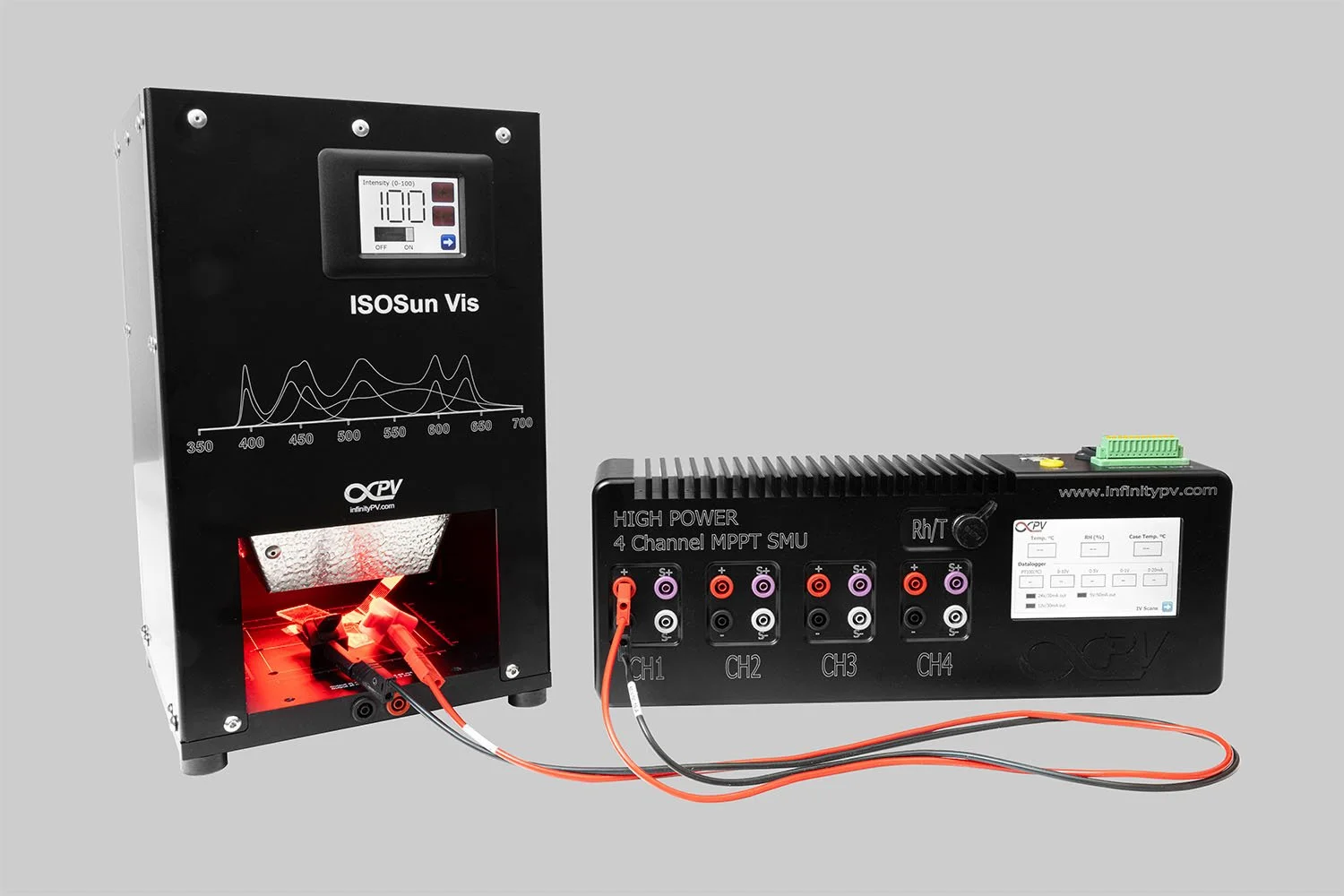
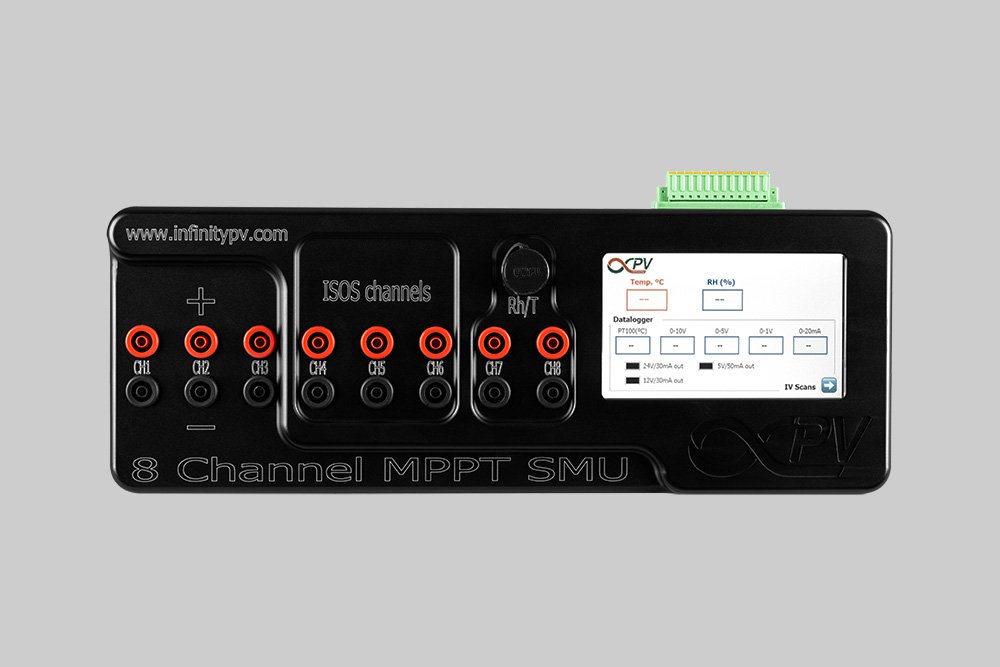
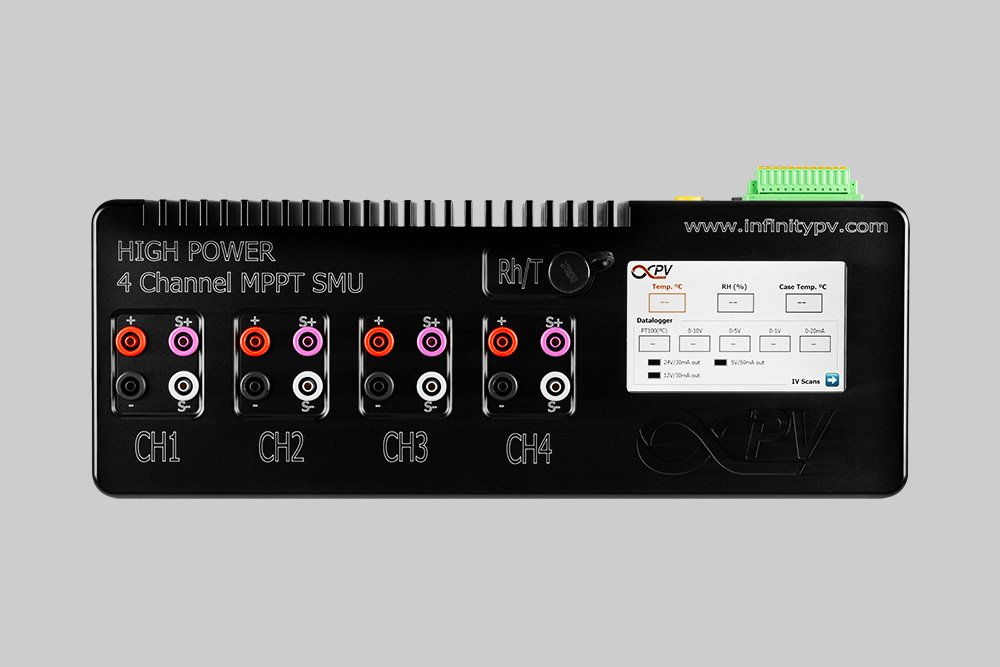
For the year-long outdoor evaluation, the researchers used the infinityPV Source Measure Unit for J-V electrical characterization.
Key Findings
Reducing the area fraction (AF) of the nanoscale pattern increased the open-circuit voltage (Vₒc) while reducing the short-circuit current density (Jₛc). The researchers associated the higher Vₒc at smaller openings with reduced surface recombination at the Zn₃P₂/InP interface. The reduction in Jₛc was linked to increased series resistance, reduced optical absorption in Zn₃P₂, and current-crowding effects.
Post-fabrication annealing at 300°C improved the power conversion efficiency across the tested devices. However, the effect on fill factor varied between devices, with increased series resistance affecting FF for several samples.
The champion device, fabricated from a 45/400 nm pattern, reached 8.2% efficiency in the initial measurement setup. When measured under standard test conditions, it achieved 8.0% efficiency, which the researchers use to define the record conversion efficiency. The device showed a Vₒc of 0.71 V and a Jₛc of 17.81 mA/cm².
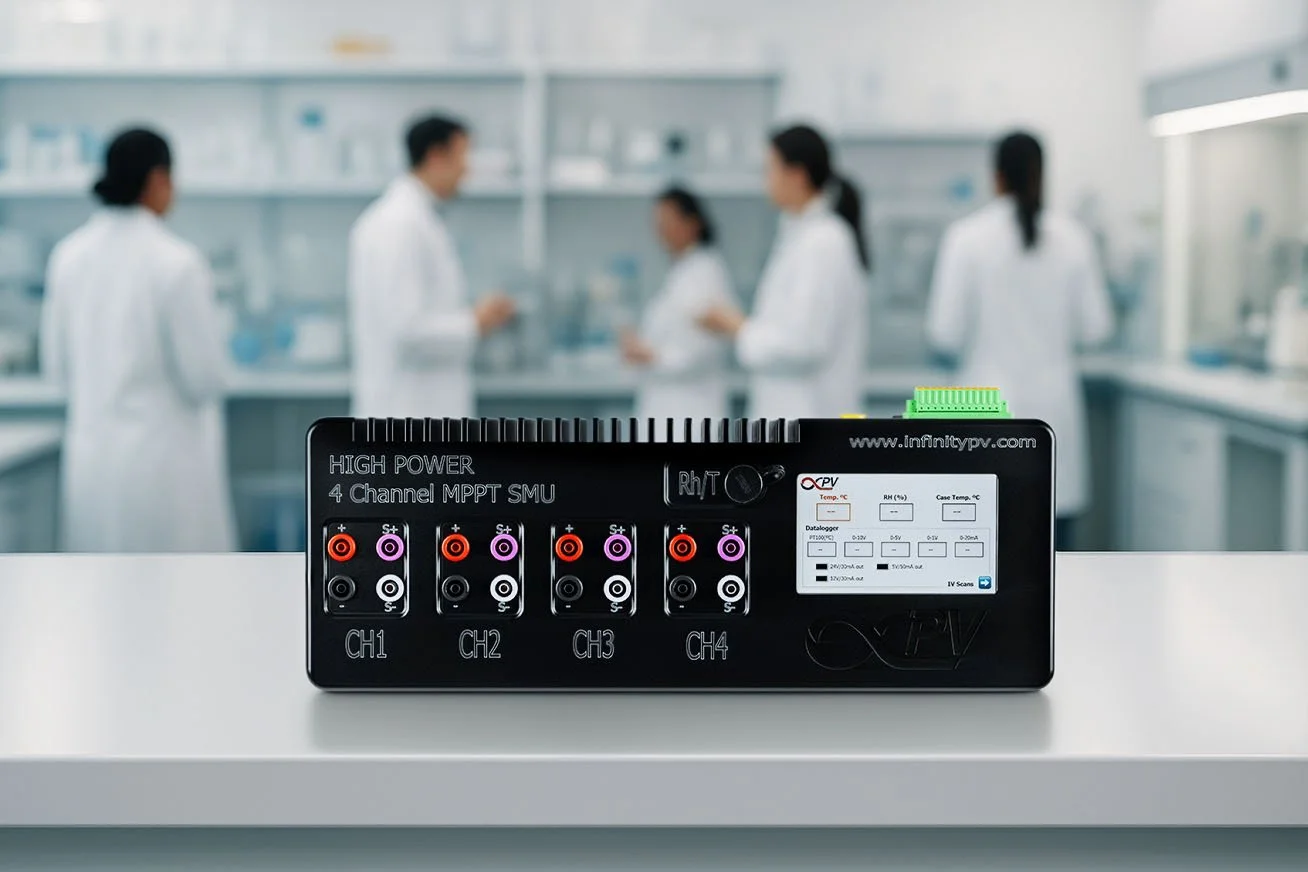
The Source Measure Unit was used for the year-long outdoor evaluation.
How the Source Measure Unit Was Used
The infinityPV Source Measure Unit was used for J-V electrical characterization during the researchers' long-term outdoor evaluation.
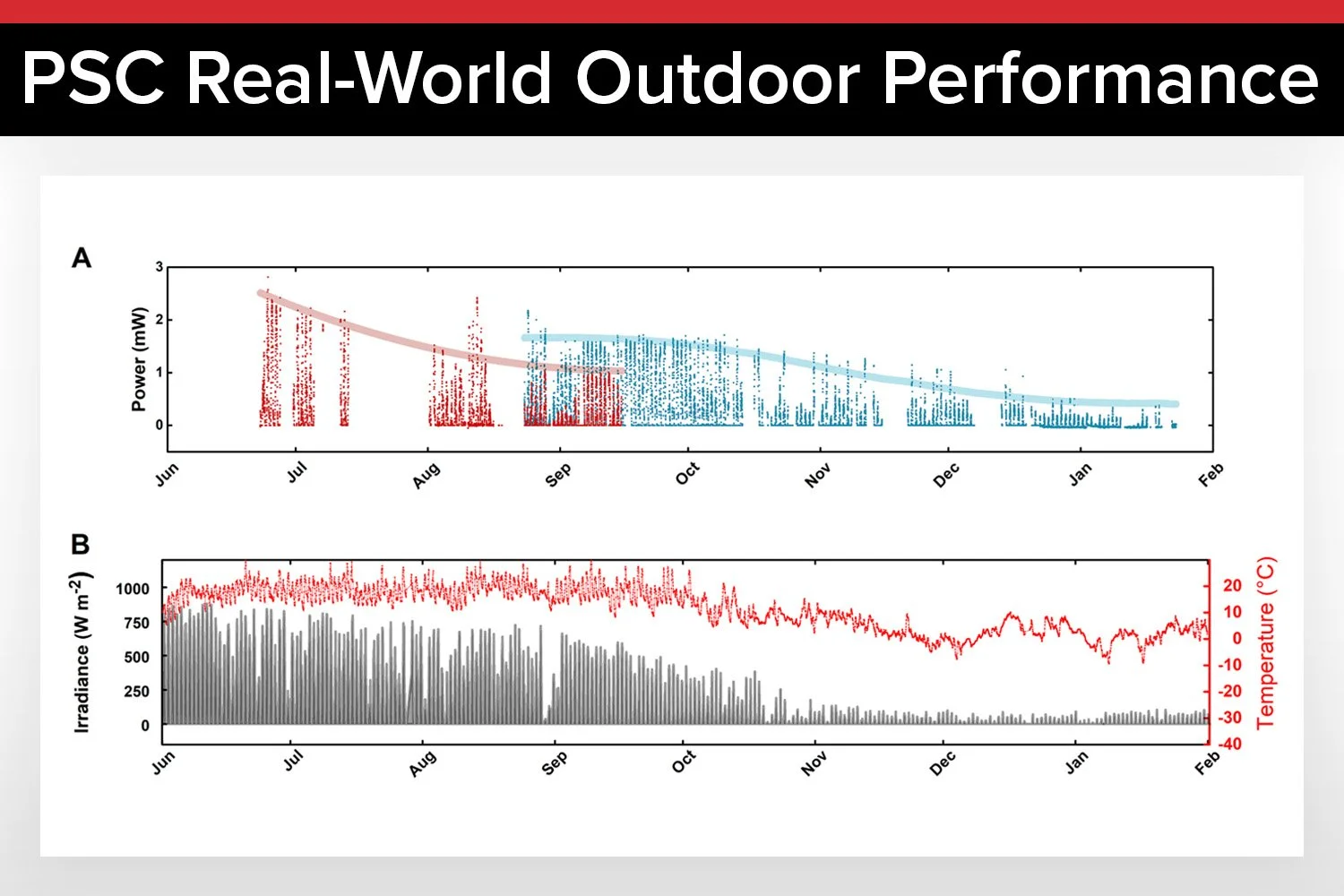
The solar cells were mounted outdoors at the Hellenic Mediterranean University Solar Farm, where measurements were performed from sunrise to sunset at one-minute intervals. For J-V characterization, the Source Measure Unit was used together with continuous measurements of solar irradiance and cell temperature.
The outdoor J-V measurements used voltage sweeps from open-circuit to short-circuit conditions with a 1 mV voltage step, providing electrical performance data alongside the environmental measurements.
The study also included dark and 1-sun J-V measurements for the champion device. These measurements provided the electrical parameters used to evaluate device performance, including Vₒc, Jₛc, fill factor and power conversion efficiency.
“We used a specific measurement protocol for all outdoor diurnal measurements. Specifically, each measurement was initiated at sunrise and ended at sunset witha one-minuteste pinterval. For the J–V electrical characterization, the SMUInfinityPV ISOS Testing Laboratory was used.”
One Year of Outdoor Testing
To evaluate long-term stability, the researchers exposed a Zn₃P₂/InP solar cell to outdoor conditions in Heraklion, Greece, for one year. J-V measurements were performed at least once per week alongside meteorological measurements.
The device maintained relatively stable performance throughout the year, with seasonal variations in efficiency that correlated strongly with the temperature of the PV cell. Higher temperatures during summer were associated with lower PCE, while the lower temperatures during winter resulted in higher efficiency.
Despite the known sensitivity of Zn₃P₂ to air and water, the researchers observed stable outdoor performance and deduced that the ITO layer acts as an effective protective layer for the Zn₃P₂-based solar cell.
With 20 independently tunable LED channels covering 385–1300 nm, the ISOSun Pro Solar Simulator accurately reproduces indoor, outdoor, and AM1.5G spectra across illuminated areas of up to 1000 cm².
Reference
Lemerle, R., Piazza, V., Filippo, A., Micali, M., Warzawa, L., Hagger, T., Wodzislawski, K., Hurni, J., Biselli, V., Kalogerakis, I., Rogdakis, K., Viskadouros, G., Kymakis, E., Alarcon-Llado, E. and Fontcuberta i Morral, A. (2026) ‘Boosting Conversion Efficiency in Zn₃P₂/InP Solar Cells Via Nanoscale Junction Engineering’, Advanced Functional Materials, 2026, e77727. DOI: 10.1002/adfm.77727
How Can We Help With Your Research?

Need help with slot-die coating or machines? Contact our experts for guidance and support.
Peer-Reviewed Studies Featuring infinityPV Equipment






Compact solar simulator covering 385–1300 nm with 20 selectable wavelengths over areas up to 1000 cm². Delivers up to 7 suns intensity with up to class A+A+A+ uniformity. Fully compatible with the infinityPV MPPT SMU series and a range of optional environmental accessories, including sample holders, Rh/T probes, photodiodes, and spectrometers.