
Hydrogel Film Fabrication with High Uniformity and Scalability
Create highly uniform hydrogel films and coatings with precise control over thickness, composition, and material usage. Ideal for wound dressings, tissue engineering scaffolds, bioelectronic interfaces, drug delivery systems, biosensors, and functional hydrogel coatings.

Develop Uniform, Scalable Hydrogel Formulations with Precise Coating Control
Hydrogels are water-rich polymer networks widely used in biomedical, pharmaceutical, and advanced materials applications. Their unique ability to retain large amounts of water while maintaining structural integrity makes them valuable for drug delivery systems, wound care products, tissue engineering scaffolds, biosensors, and regenerative medicine applications.
As hydrogel technologies continue to advance, researchers increasingly require manufacturing methods that provide precise control over coating thickness, material distribution, and multilayer structure formation. Consistent hydrogel deposition is often critical for achieving reliable mechanical properties, diffusion behavior, biological performance, and product reproducibility.
However, developing hydrogel-based products presents several manufacturing and scale-up challenges. Common development challenges include:
Uniform hydrogel thickness across the substrate
Consistent distribution of polymers, APIs, cells, nanoparticles, or bioactive compounds
Control of swelling behavior and material performance
Reproducible multilayer and gradient hydrogel structures
Efficient transition from laboratory development to pilot and commercial production
Many hydrogel development programs rely on casting, spreading, spraying, or other batch-based deposition techniques during early-stage research. While effective for initial formulation screening, these methods can make it difficult to achieve the consistency, process control, and scalability required for advanced product development.
Slot-die coating provides a precise and scalable alternative for hydrogel fabrication. By enabling controlled deposition of thin and thick hydrogel layers with excellent uniformity and material utilization, slot-die coating supports efficient formulation development, reproducible research results, and a direct pathway from laboratory-scale process optimization to continuous manufacturing of hydrogel-based products.
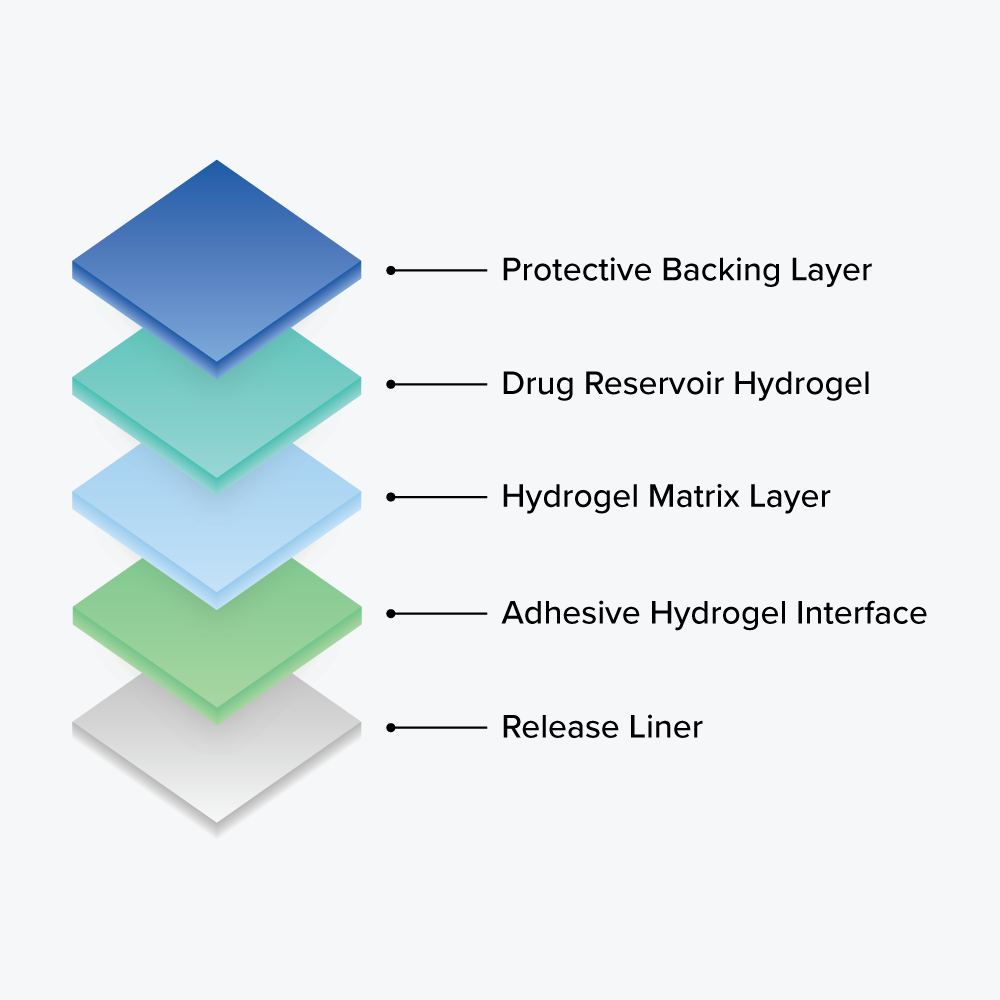
Example of hydrogel layer structures.
Which Hydrogel Layers to Slot-die Coat?
Modern hydrogel wound dressings often consist of multiple functional layers, each designed to provide a specific performance benefit. Precise deposition of these layers is critical for maintaining consistent hydration, mechanical properties, drug loading, and wound-contact performance.
Typical hydrogel layer structures include:
Protective Backing Layer — Provides mechanical support and protects the dressing from external contamination and moisture loss.
Drug Reservoir Hydrogel Layer — Contains active pharmaceutical ingredients (APIs), antimicrobials, growth factors, or other therapeutic compounds.
Hydrogel Matrix Layer — Maintains a moist wound environment while providing controlled fluid absorption and release characteristics.
Adhesive Hydrogel Interface — Enables gentle skin adhesion while minimizing trauma during removal.
Release Liner — Protects the product during storage and is removed before application.
Slot-die coating enables precise control of thickness, uniformity, and material distribution across each layer, supporting both formulation development and scalable manufacturing of advanced hydrogel systems.
Our experts are ready to help you get started slot-die coating.
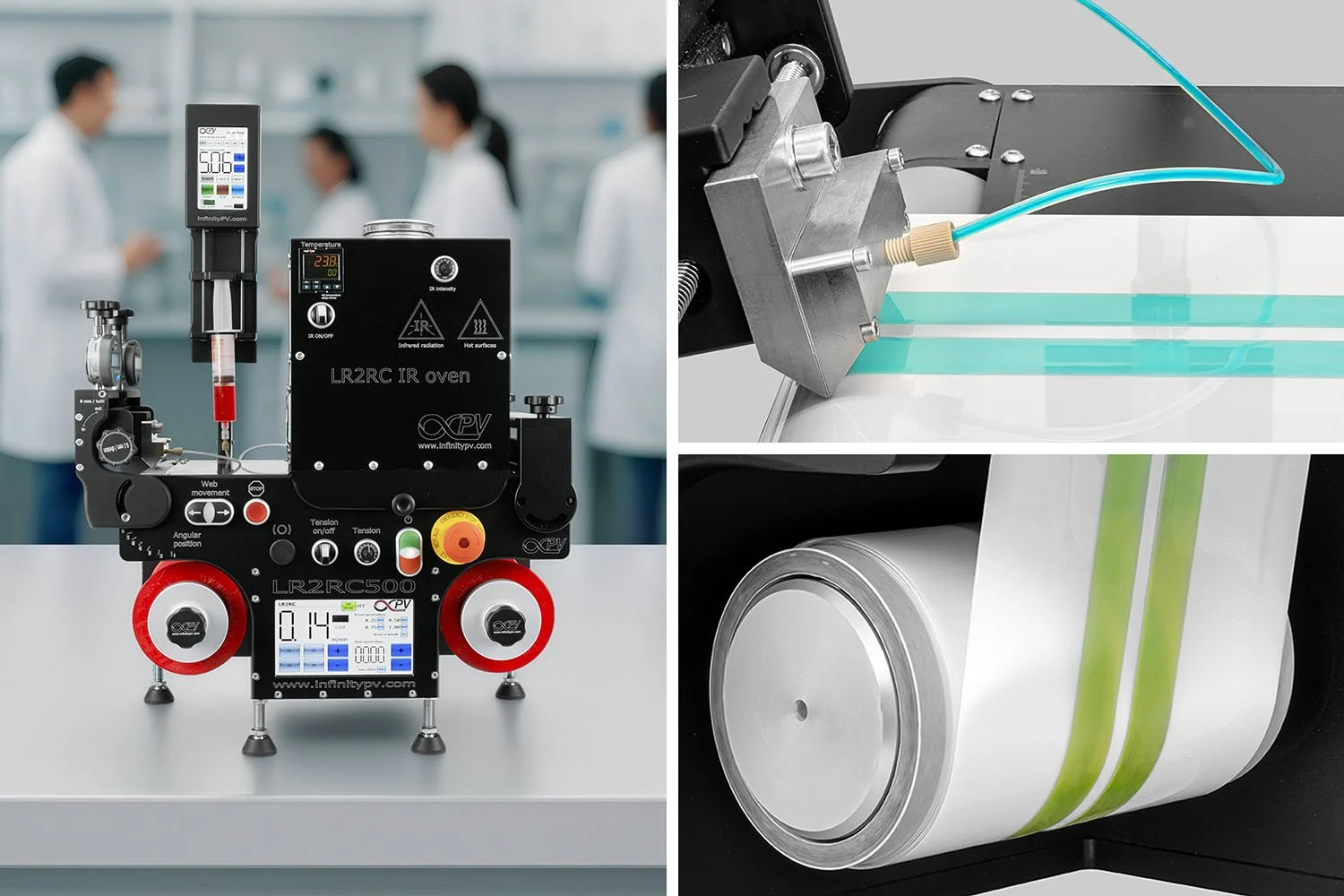
R2R manufacturing enables efficient production of hydrogel films.
Why Researchers Are Turning to Slot-Die Coating
Hydrogel performance is highly dependent on layer thickness, material distribution, and structural uniformity. Whether developing wound dressings, drug delivery systems, tissue engineering scaffolds, or functional biomaterials, researchers require deposition methods that provide precise control while remaining scalable for future manufacturing. Slot-die coating enables highly controlled deposition of hydrogel formulations and functional layers, making it increasingly valuable for hydrogel research, process development, and scale-up.
Key Benefits Include:
Uniform hydrogel thickness across the substrate
Consistent distribution of polymers, APIs, nanoparticles, and bioactive compounds
Improved sample-to-sample reproducibility
Efficient use of valuable formulation materials
Support for multilayer and gradient hydrogel architectures
Reduced process variability during development
Compatibility with continuous manufacturing approaches
A clear pathway from laboratory research to commercial production
Ready for Scale-Up and Continuous Manufacturing
Many hydrogel development projects begin with formulation screening and proof-of-concept studies at laboratory scale but ultimately require manufacturing processes capable of producing highly consistent materials at larger volumes.
Traditional casting and batch deposition methods often become difficult to scale while maintaining the same material properties and process consistency achieved during research. Slot-die coating offers a scalable alternative by providing precise, repeatable deposition using the same fundamental coating principles from laboratory development through pilot and commercial production.
By combining accurate layer control with continuous processing, roll-to-roll manufacturing enables efficient production of hydrogel films, wound dressings, drug-loaded hydrogels, tissue engineering materials, and other advanced biomaterial systems while reducing scale-up risks and accelerating technology transfer.
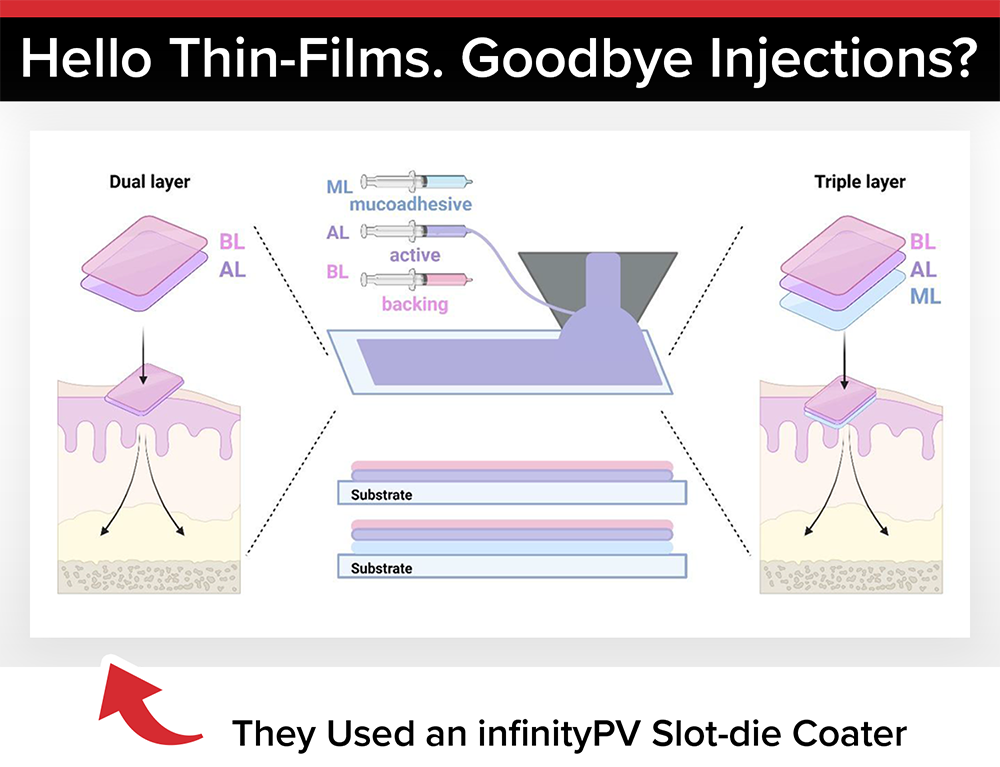
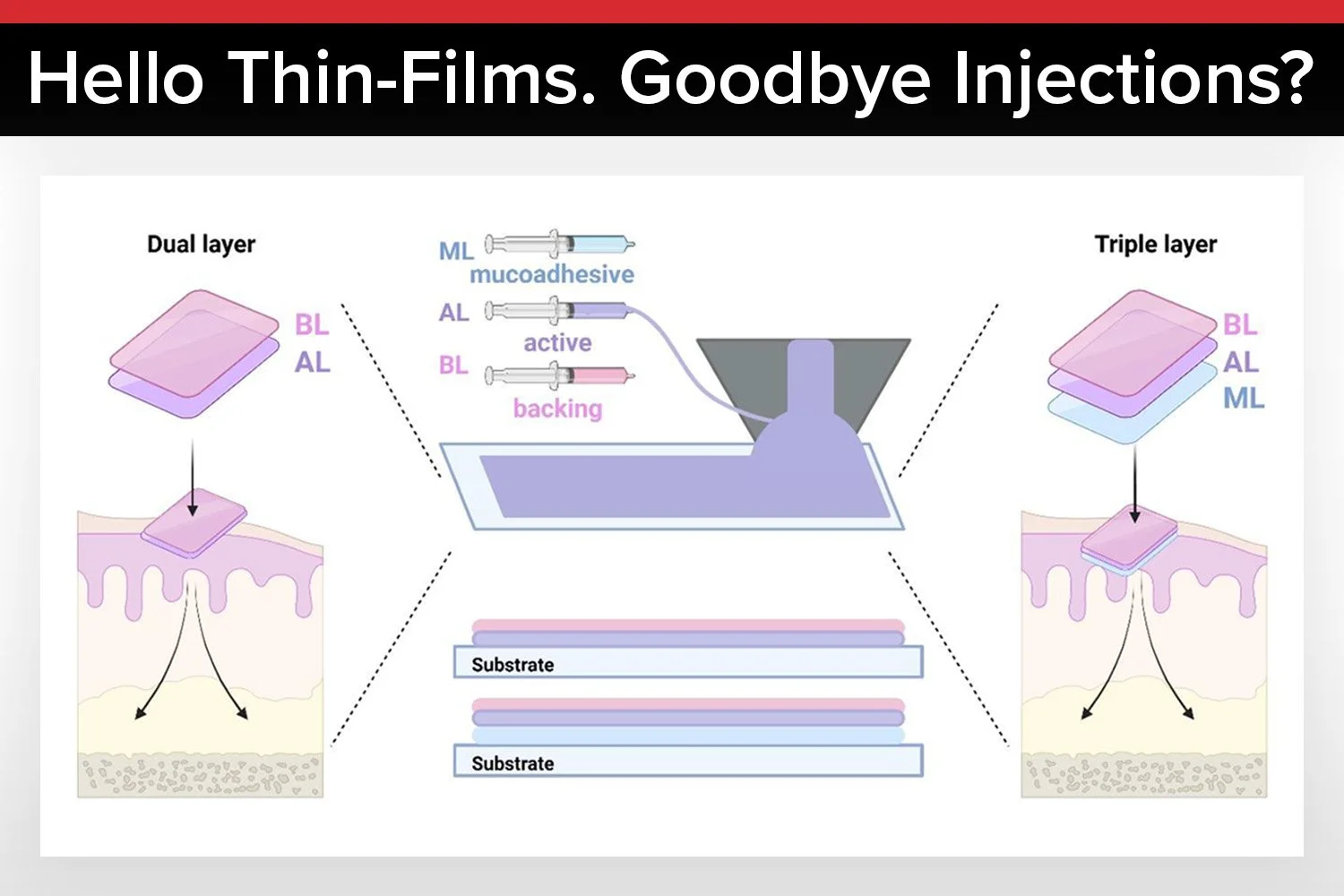
Novo Nordisk Uses Slot-die Coating for Next-Generation GLP-1 Drug Delivery
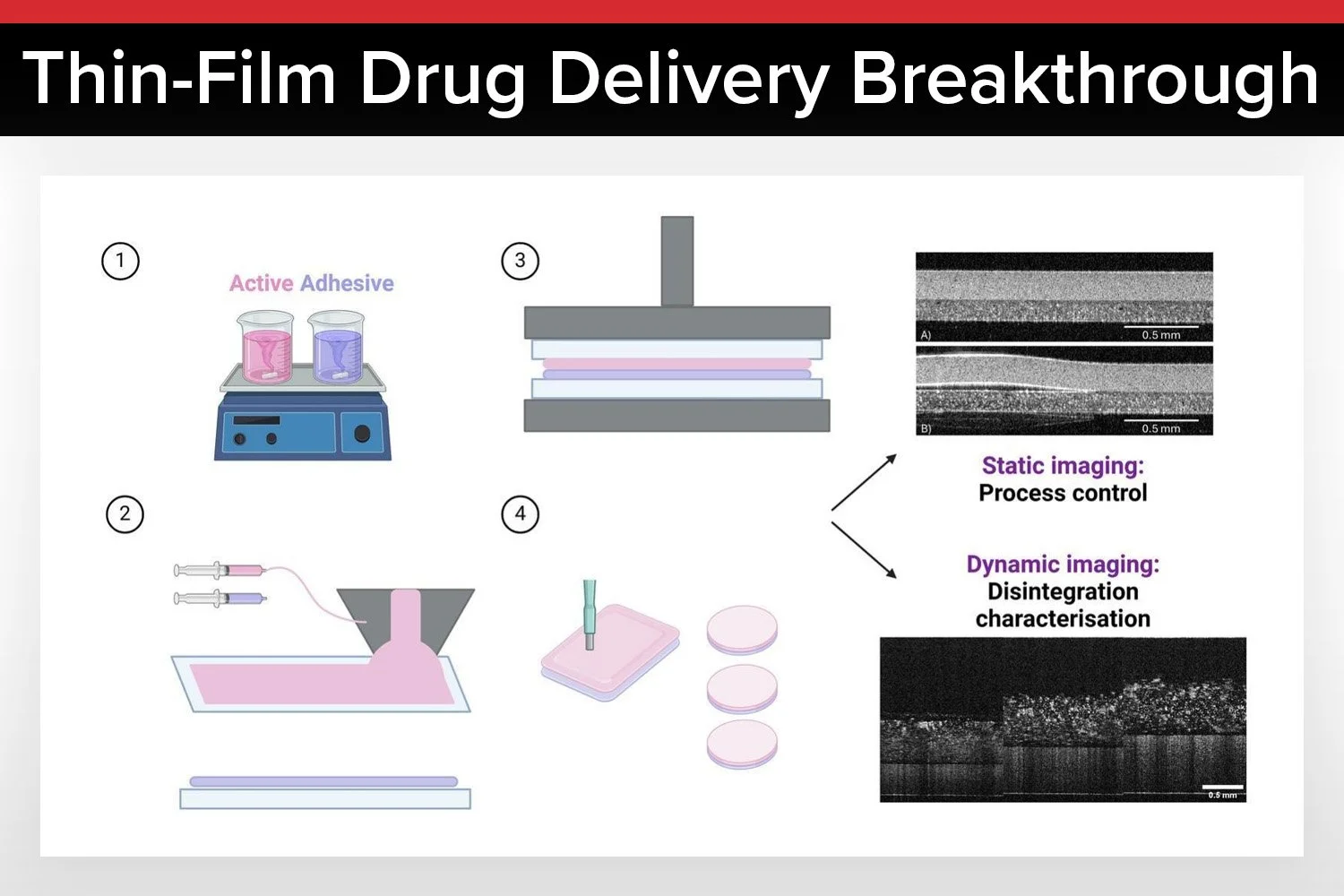
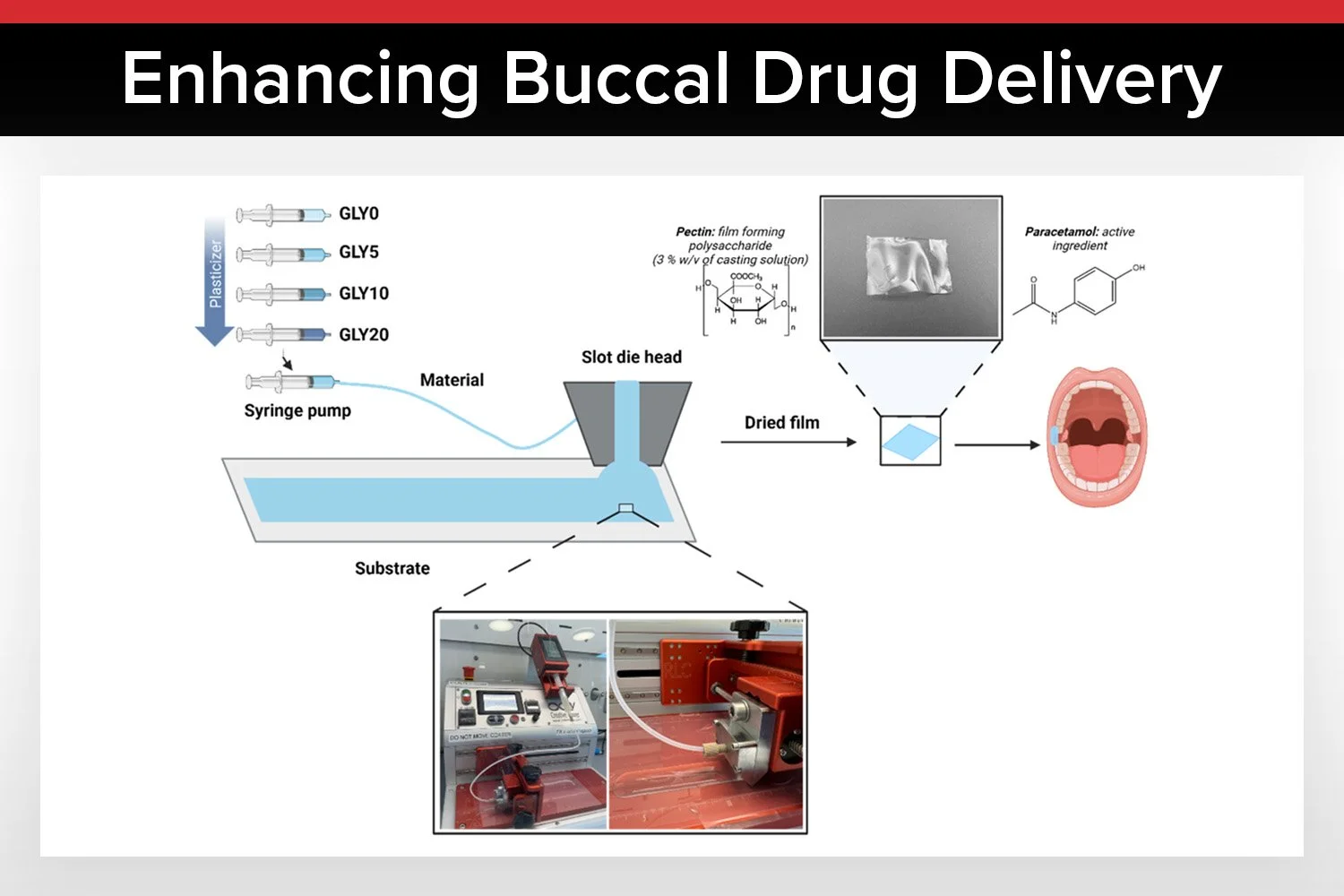
Researchers from Novo Nordisk and the Technical University of Denmark used an infinityPV Slot-die Coater to develop multilayer buccal films for needle-free GLP-1 delivery. The technology enabled precise coating of mucoadhesive, drug-loaded, and protective layers, supporting controlled drug release and scalable manufacturing of advanced oral film formulations.

Why Hydrogel Researchers Need Precise Fabrication
Hydrogel films must balance hydration, mechanical strength, and bioactivity, which heavily depends on the fabrication method. Micrometer-scale thicknesses (10–1000 µm) enable conformability to biological tissues like skin, cornea, or neural interfaces.
Their high water content (60–90%) mimics the extracellular matrix, supporting cell adhesion, nutrient diffusion, and controlled drug release. Mechanical compliance (Young’s modulus of 1–100 kPa) prevents tissue damage in wearable or implantable applications. However, traditional methods like solvent casting often produce non-uniform films, leading to inconsistent swelling, drug release, or adhesion.
Permeability and diffusion control are also critical, as pore size and crosslinking density dictate molecular transport of oxygen, drugs, or metabolites. Stimuli-responsive hydrogels (pH, temperature, or enzyme-triggered) require precise layering for on-demand release, but batch processes like spray coating struggle with reproducible porosity and gradient structures.
Modern hydrogel applications often require multi-layered architectures. For example, advanced wound dressings may include a protective backing layer for mechanical support, a drug reservoir hydrogel layer with APIs or antimicrobials, a hydrogel matrix layer for moisture retention, an adhesive hydrogel interface for skin contact, and a release liner for storage.
Slot-die coating enables precise control of thickness, uniformity, and material distribution across each layer, supporting both formulation development and scalable manufacturing.
We’re Here to Help You Find the Right System
Choosing the right slot-die or roll-to-roll coating system for your pharmaceutical application can feel complex. Whether it’s tablets, capsules, patch films, packaging, or medical devices, we’re ready to guide you — helping you select the machine that delivers precise, reproducible, and scalable results.

Slot-die Coater
Ideal for lab research, prototyping, and small-batch production. Sheet-based processing allows flexible testing, parameter adjustments, and precise coatings in limited quantities.

Laboratory Roll-to-Roll Coater
Best for scaling lab results to continuous, high-throughput production. Ensures uniform, consistent coatings on long substrates and supports transition to larger-scale manufacturing.

R2R Hybrid Coater
Combines sheet-based precision with roll-to-roll efficiency. Offers maximum flexibility for lab-scale thin film processing—from early formulation work to pilot-scale production.
Key Hydrogel Applications and Fabrication Needs
Wound Healing and Smart Dressings
Hydrogel films maintain a moist environment, deliver therapeutic agents, and support tissue regeneration in wound care. Moisture retention prevents scab formation and accelerates epithelialization, while antimicrobial and anti-inflammatory properties can be enhanced with silver nanoparticles, curcumin, or growth factors. Smart monitoring capabilities, such as pH-responsive or infection-detecting hydrogels, further expand functionality. However, non-uniform drug distribution in cast films can lead to hotspots or incomplete coverage, compromising treatment efficacy.
Slot-die coating addresses these challenges by enabling precise API loading (e.g., doxorubicin, ciprofloxacin, or exosomes) and embedding sensors like pH indicators or electrochemical electrodes. It also supports scalable production of bilayer or Janus hydrogels, such as adhesive combined with drug-releasing layers, ensuring consistent performance and reproducibility.
Drug Delivery Systems
Hydrogel films are used in transdermal patches, ocular films, and mucosal delivery systems. Transdermal patches deliver drugs like fentanyl, nicotine, or insulin through the skin, bypassing the gastrointestinal tract. Ocular films treat conditions such as glaucoma, dry eye, or post-surgical care, while mucosal systems target buccal, sublingual, or vaginal routes. A common challenge is burst release or inconsistent dosing due to uneven film thickness, leading to suboptimal therapeutic outcomes.
Slot-die coating provides controlled release kinetics through tunable hydrogel mesh size, enabling multilayer designs like barrier layers combined with fast or slow-release layers. This method maximizes drug loading efficiency, minimizing waste of expensive APIs and ensuring consistent performance.
Tissue Engineering and Cell Culture
In tissue engineering, hydrogel films serve as scaffolds for skin, cartilage, or bone regeneration, as well as substrates for 3D bioprinting. Materials like GelMA, alginate, or collagen create structures that support cell growth and tissue formation. Cell-laden hydrogels incorporating MSCs or exosomes are promising for regenerative medicine. However, manual casting often leads to poor cell viability in thick films due to nutrient diffusion limitations.
Ophthalmic Applications
Hydrogel films are used in contact lenses, corneal patches, and ocular drug delivery systems due to their biocompatibility, optical transparency, and moisture retention. pHEMA and silicone hydrogels are widely used in soft contact lenses for their hydrophilic nature and high water content, which enhance comfort and reduce friction. Innovative designs, such as microfluidic hydrogel-embedded contact lenses, enable pH-responsive drug release for on-demand therapeutic delivery. However, achieving optical clarity and thickness uniformity is critical but challenging with traditional casting methods.
Slot-die coating produces ultra-smooth, defect-free films essential for vision correction. It enables embedded drug depots, such as bilayer pHEMA/HA films, and maintains high transparency, ensuring no light scattering from thickness variations.
Implantable Biosensors and Bioelectronics
Hydrogel films are used in implantable biosensors and bioelectronics due to their biocompatibility, mechanical tunability, and functional versatility. They are employed in flexible electrodes, glucose or lactate sensors, and neural interfaces. PEDOT:PSS/PVA hydrogels are used for EMG sensing, while enzyme-embedded hydrogels enable high-specificity detection of analytes like glucose or lactate. Conductive hydrogels with nanocomposite fillers, such as carbon nanotubes or graphene, have enabled flexible, stretchable, and self-healing biosensors for electronic skin and prosthetics. However, achieving electrical conductivity and mechanical durability requires precise dispersion of nanomaterials, which is challenging with traditional methods.
We Recommend Slot-die Coating
Slot-die coating stands out as the only method that combines sub-micron to millimeter precision with continuous, roll-to-roll scalability, minimal material waste, and the ability to create multilayer and gradient structures in a single pass. This makes it an ideal choice for researchers and manufacturers looking to transition from lab-scale development to pilot or commercial production.
Common Hydrogel Fabrication Methods: Pros and Cons
Slot-die coating stands out as the only method that combines sub-micron to millimeter precision with continuous, roll-to-roll scalability, minimal material waste, and the ability to create multilayer and gradient structures in a single pass. This makes it an ideal choice for researchers and manufacturers looking to transition from lab-scale development to pilot or commercial production.
| Characteristics | Solvent Casting | Dip Coating | Spin Coating | Spray Coating | Blade Coating | Bar Coating | Slot-die Coating | Photolithography | 3D Printing |
|---|---|---|---|---|---|---|---|---|---|
| Relative Cost | Low | Low | Medium | High | Medium | Medium | High | High/very high | High |
| Scalability | Limited | No | Possible | Possible | Limited | Possible | Possible | No | |
| Complexity | Low | Low | Low | Medium | Medium | Low | Medium | Medium | High |
| Uniformity of Films | Good | High | High | Low | Medium | Medium | High | High | Medium/high |
| Minimum thickness possible | Ten of micrometer | Nanometers | Nanometers | From tens to hundreds of nanometers | Tens of micrometer | Ten of micrometer | Nanometers | From tens to hundreds of nanometers | Micrometers |
| Patterning In Situ | Possible | Possible | No | No | Posslbe | No | Limited | Possible | Possible |
| Coatable Surfaces | Many types of surfaces, they must be smooth and flat | Complex, rigid shapes | Small, flat substrates only | Flexible or rigid substrates, curved or flat surfaces | Flexible or rigid substrates | Flexible or rigid substrates | Flexible or rigid substrates | Glass, polymeric, inorganic; pretreatment is often necessary | Glass, polumeric, inorganic; pretreatment is often necessary |
| Solution wastage | High | High | High | Moderate | Moderate | Moderate | Low | High | Low |
| Drying Times | High | Slow | Fast | Fast | Slow | Slow | Slow | Slow | Medium |
| Coating Speeds | Slow | Slow | Very slow | Fast | Fast | Slow | Fast | Low/medium | Fast |
Slot-die Coating is Proven in Peer-Reviewed Pharmaceutical Studies
Bridging Pharmaceutical Research and Manufacturing
We help researchers and pharmaceutical innovators develop uniform, reproducible thin films through advanced slot-die coating and roll-to-roll processing technologies. Our laboratory equipment bridges the gap between formulation development and scalable manufacturing, enabling precise coating control for next-generation drug delivery systems.
Frequently Asked Questions
-
Slot-die coating is used to apply hydrogel formulations as highly uniform thin or multilayer films. It enables precise control over thickness, composition, and material distribution, which is critical for reproducible hydrogel performance in research and product development.
-
Yes. Slot-die coating is widely applicable to biomedical hydrogels, including wound dressings, drug delivery systems, tissue engineering scaffolds, and biofunctional coatings. It is particularly useful when consistent material structure and scalable processing are required.
-
Common structures include single-layer hydrogels, multilayer systems, gradient hydrogels, and drug-loaded hydrogel films. Slot-die coating supports both simple and complex architectures with high reproducibility.
-
Unlike batch methods such as casting or spreading, slot-die coating delivers a controlled and continuous flow of material, resulting in highly uniform coatings and reduced variability between samples.
-
Yes. Slot-die coating can be used from early formulation development through to pilot-scale and production-scale processes, allowing researchers to maintain consistent process parameters throughout development.
-
Yes. The process is gentle and highly controllable, making it suitable for formulations containing sensitive polymers, bioactive compounds, or encapsulated agents such as drugs, nanoparticles, or biological components.
-
Slot-die coating provides precise control over coating thickness, material usage, and layer uniformity. These advantages help researchers improve reproducibility, reduce material waste, and develop manufacturing processes that are more easily transferred to pilot and commercial production.
-
Yes. Slot-die coating is commonly used in roll-to-roll manufacturing environments and is well suited for continuous production processes. This makes it an attractive technology for organizations seeking a clear path from formulation development to large-scale manufacturing.