
Vellore Institute of Technology Enhance Flexible Electrodes Using the Slot-Die Coater for MXene Applications
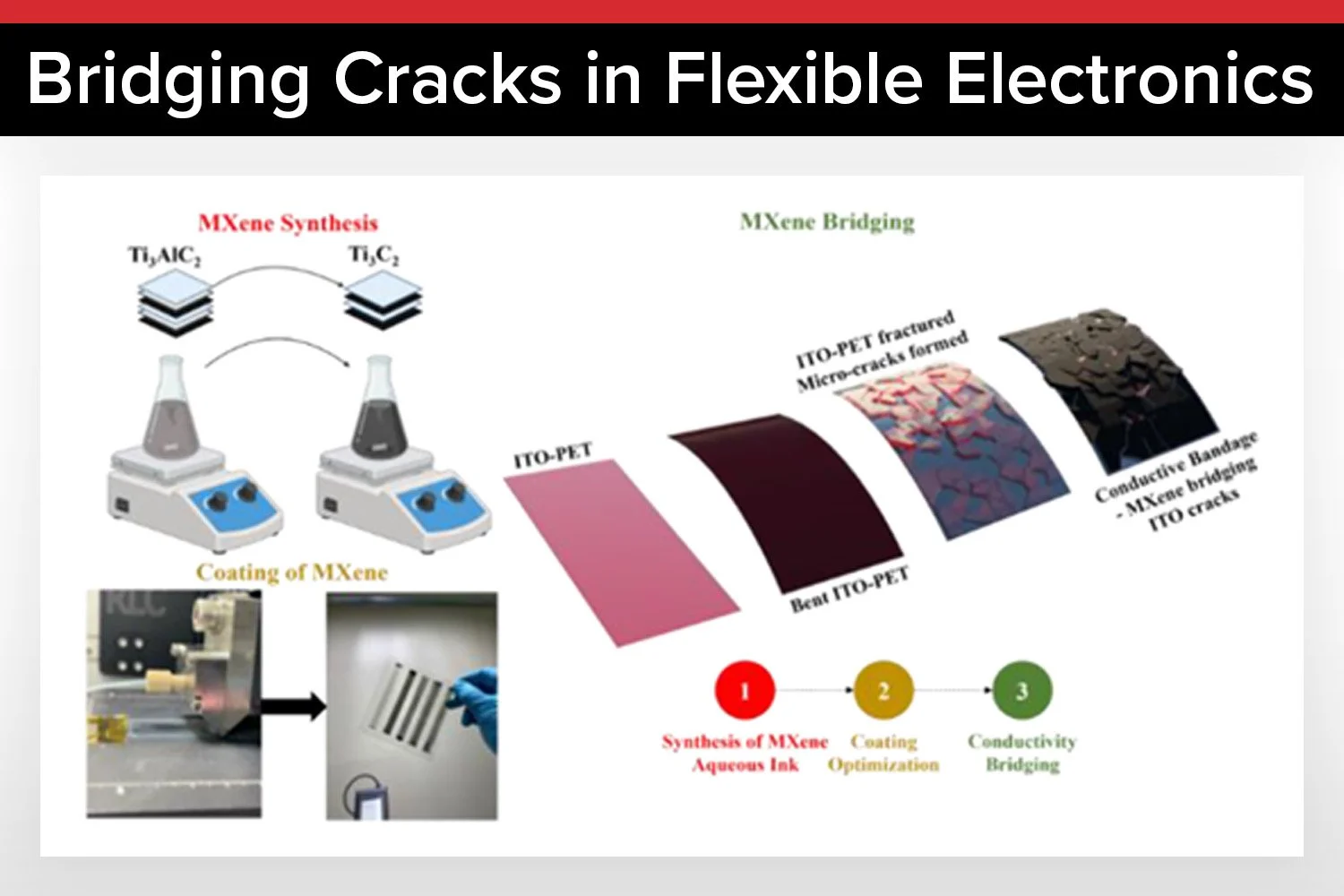
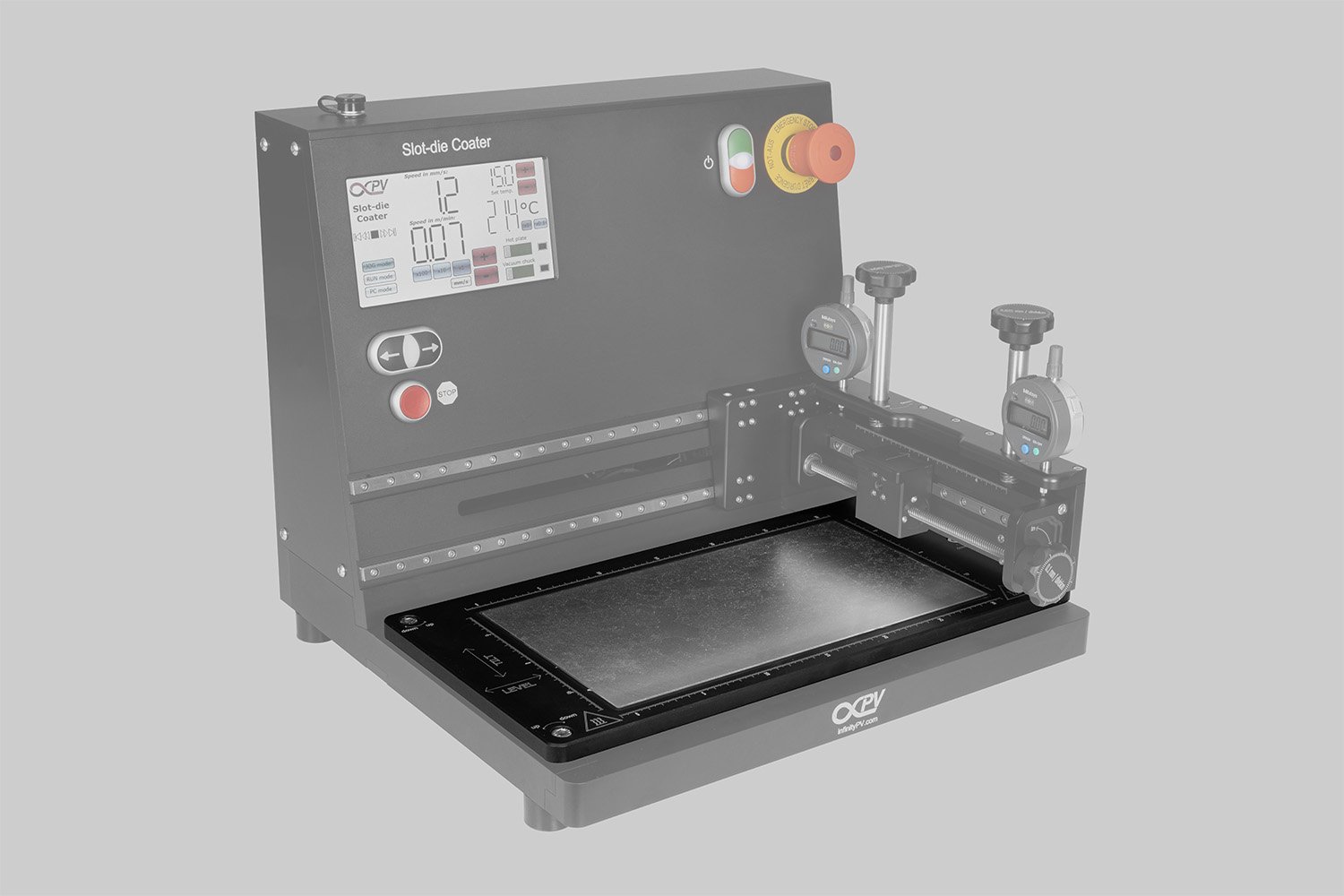
In a new study, researchers from the Centre for Nanotechnology Research at Vellore Institute of Technology used the Research Laboratory Coater by infinityPV (since evolved into the Slot-die Coater) to deposit Ti₃C₂Tₐ MXene thin films onto flexible substrates.
The goal was to address the mechanical fragility of traditional indium tin oxide (ITO) electrodes when used in flexible electronics. By leveraging the precision of the coater, the team successfully demonstrated how MXene coatings can enhance conductivity retention and mechanical robustness in flexible conductive electrodes, paving the way for next-generation wearable devices, sensors, and smart textiles.
Overcoming the Limitations of ITO in Flexible Electronics
Flexible electronics need materials that are both highly conductive and durable under repeated bending. Indium tin oxide (ITO), commonly used in touchscreens, is conductive and transparent but brittle—it cracks under strain, leading to a loss of conductivity. To solve this, researchers used Ti₃C₂Tₓ MXene, a flexible, conductive nanomaterial, to coat five flexible substrates (PET, PEN, ITO-PET, ITO-PEN, and PI) using the Slot-die Coater. They tested varying thicknesses (5–100 nm) and evaluated conductivity, transparency, and durability after 500 bending cycles.
The results showed that MXene coatings bridged cracks in ITO, maintaining conductivity even when bent. On bare polymer substrates, MXene formed a conductive network that remained functional under strain. A 100 nm MXene layer on ITO-PEN delivered the best balance of conductivity and transparency, making it a strong candidate for transparent flexible electrodes, while a 30 nm MXene coating on PET proved most durable for wearable sensors. The study identified approximately 30 nm as the optimal thickness for balancing conductivity and mechanical stability, while thicker 100 nm coatings provided the lowest sheet resistance. The MXene ink’s low viscosity and thermal conductivity further confirmed its suitability for scalable manufacturing.

The Research Laboratory Coater used in the article has since evolved into the Slot-die Coater.
How the Slot-die Coater Was Used
The Slot-die Coater played a pivotal role in achieving the study’s objectives. The team used the Slot-die Coater to deposit Ti₃C₂Tₓ MXene aqueous ink onto the flexible substrates via slot-die coating. The coating parameters were meticulously controlled: a die-head speed of 18 mm/s, an ink flow rate of 0.12 mL/min, and a substrate bed temperature of 60°C. These settings ensured uniform, ultrathin layers with each pass, allowing the researchers to systematically vary the coating thickness from 5.48 nm to 99.1 nm.
The controlled slot-die coating process enabled reproducible, uniform MXene films with minimal defects, which were critical for evaluating thickness-dependent properties. The ability to produce uniform coatings across multiple substrates allowed for a direct comparison of how substrate chemistry, surface preparation, and film thickness influenced performance.The results further demonstrate the suitability of slot-die coating as a scalable deposition method for MXene films.
“The thickness evolution of the Ti₃C₂Tₓ MXene films coated using the Research Laboratory Coater (RLC, manufactured by infinityPV, Denmark) shows a systematic and nearly monotonic increase from 5.48 nm (T1) to 99.1 nm (T5), as measured by surface profilometry (Figure 6). This gradual thickness buildup with successive coating cycles indicates that each pass deposits a relatively uniform, ultrathin layer, consistent with well-dispersed, fully delaminated MXene flakes rather than aggregated, thick particulates. The lowest coating (T1 ≈ 5.48 nm) falls within the regime expected for few-layer MXene films,13 suggesting that the ink predominantly contains single- and few-layer Ti₃C₂Tₓ sheets that form a continuous conductive network even at minimal thickness. As the number of coatings increases, the cumulative thickness (up to ≈99.1 nm at T5) supports the formation of a dense, stacked lamellar architecture that enhances interflake contact and promotes efficient in-plane charge transport, thereby providing good electrical conductivity suitable for flexible conductive electrode applications.”
What This Means for Your Research
This study demonstrates the Slot-die Coater’s capability to produce high-quality MXene coatings using a scalable slot-die coating process. For researchers working on wearable devices, sensors, or smart textiles, the Slot-die Coater offers a reliable method to deposit uniform, conductive thin films that can withstand mechanical strain without sacrificing performance.
The findings underscore the importance of substrate selection and coating thickness in optimizing mechanical stability and conductivity. Whether your focus is on high-transparency applications like touchscreens or durable, high-conductivity films for wearable sensors, the Slot-die Coater provides the precision and consistency needed to achieve reproducible results. By using the Slot-die Coater , you can explore the full potential of advanced materials like MXene, ensuring your research translates seamlessly from lab to real-world applications.
References
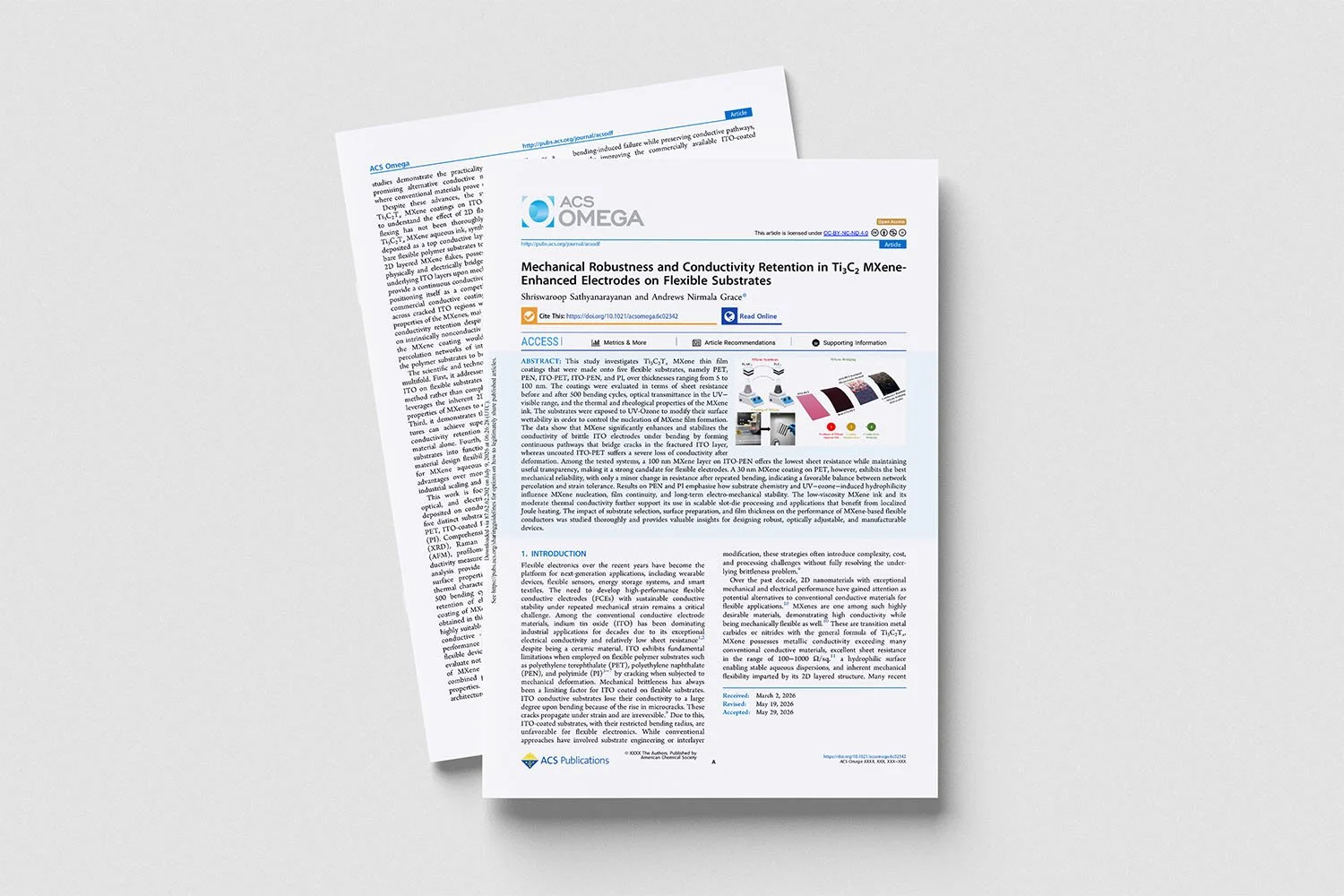
Sathyanarayanan, S. and Grace, A.N. (2026) Mechanical Robustness and Conductivity Retention in Ti₃C₂ MXene-Enhanced Electrodes on Flexible Substrates, ACS Omega. Available at: https://doi.org/10.1021/acsomega.6c02342 (Accessed: 30 July 2026).
How Can We Help With Your Research?

Need help with slot-die coating or machines? Contact our experts for guidance and support.
Peer-Reviewed Studies Featuring the Laboratory Roll-to-Roll Coater





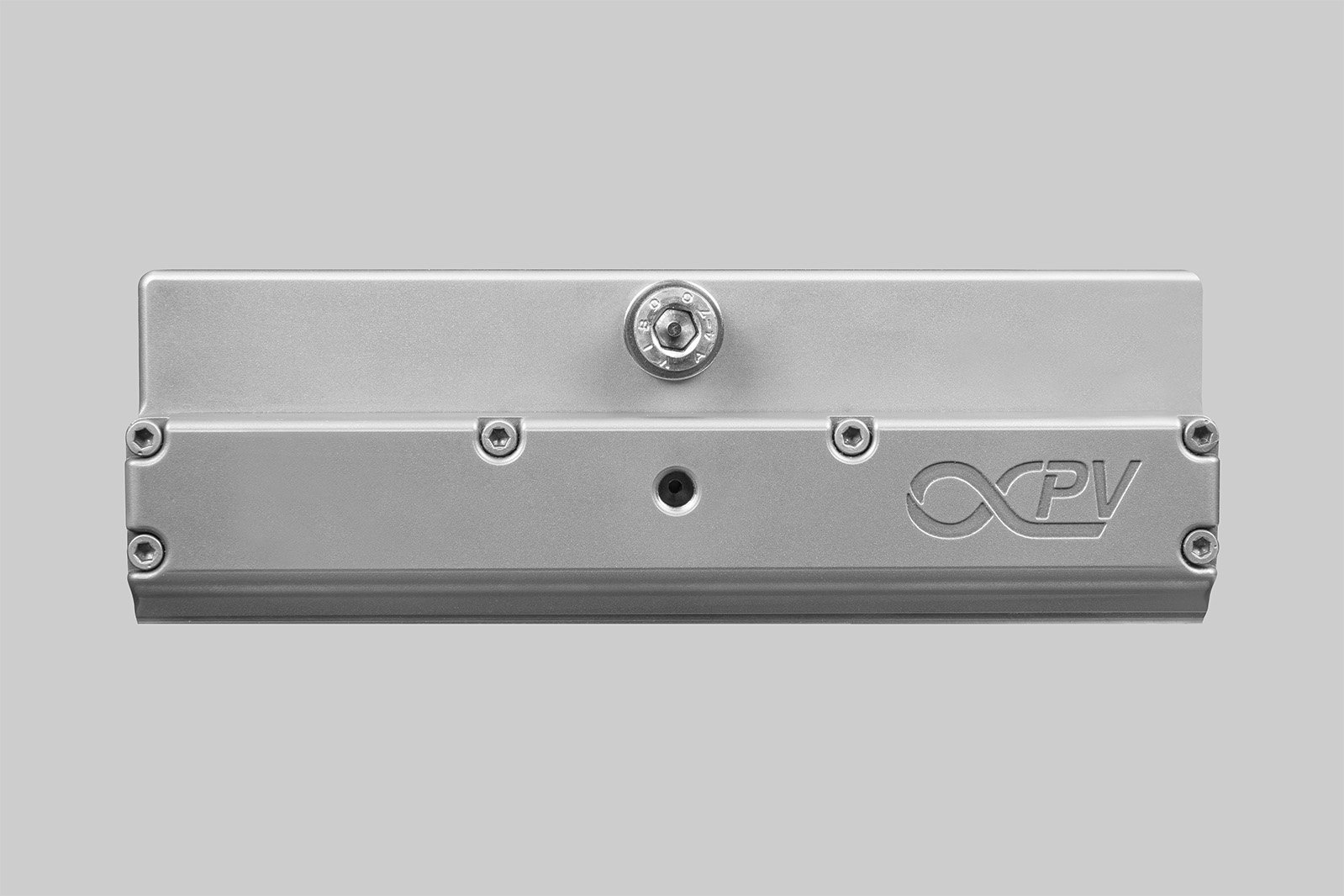
The infinityPV slot-die heads offer unparalleled performance across various materials and size. Available in PEEK, Stainless and Titanium in standard widths of 40 mm, 65 mm, 115 mm, 165 mm, 195 mm and 305 mm. View video.