
Dental Articulating Film Manufacturing with Precision, Uniformity, and Scalability
Produce high-performance dental articulating films with precise control over coating thickness, pigment distribution, and transfer characteristics. Ideal for occlusion indicator films, bite registration films, and other precision-coated dental diagnostic products.
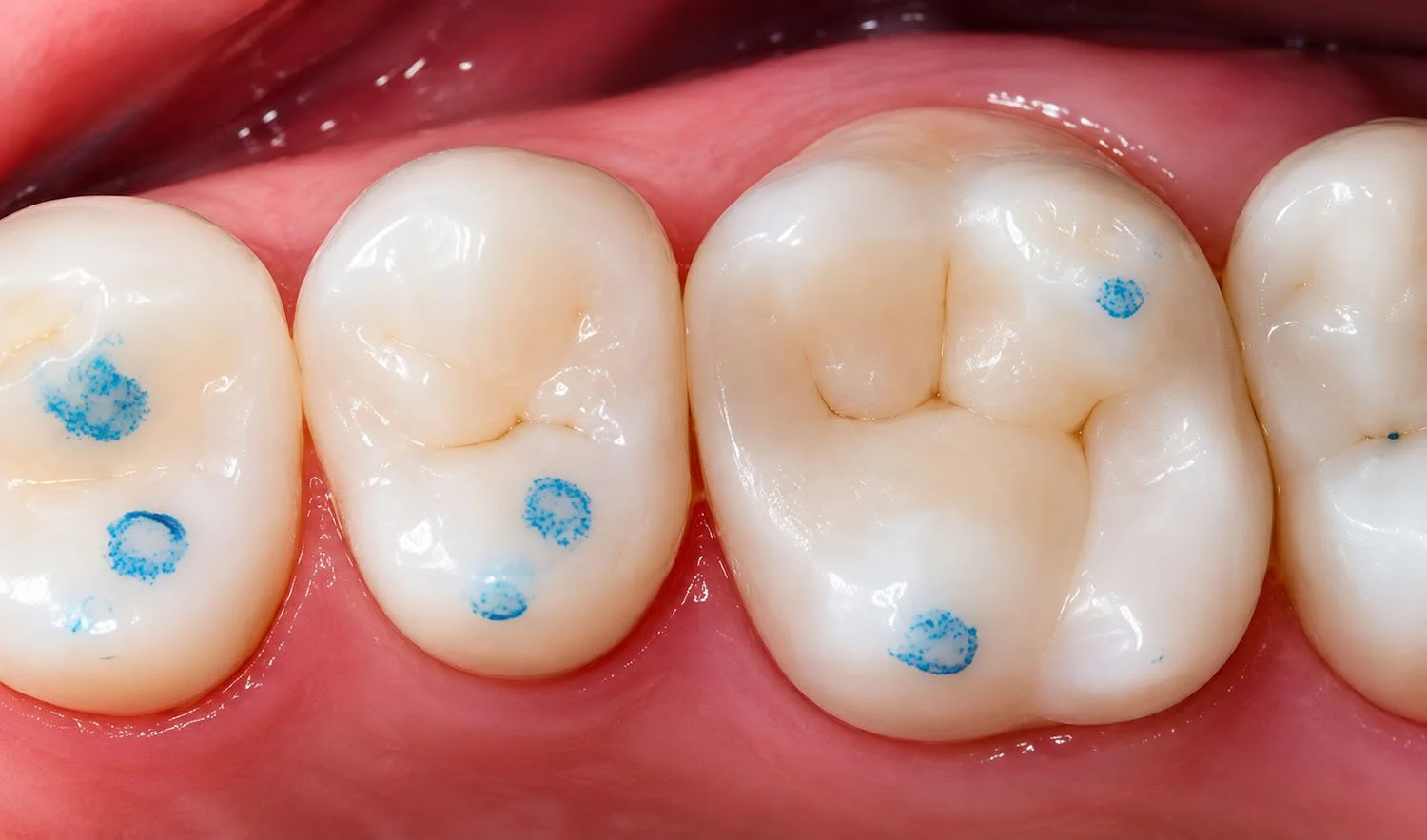
By understanding the principles and limitations of articulating paper, dentists can use this tool effectively to enhance patient care and achieve optimal occlusal balance.
Develop Uniform Dental Articulating Film Formulations with Precise Coating Control
Dental articulating films are widely used to identify occlusal contact points and high spots on teeth, crowns, bridges, and other dental restorations. To provide clear, accurate markings, manufacturers must achieve highly uniform coatings that consistently transfer pigments under controlled pressure. However, traditional coating methods can present challenges when developing thin, high-performance dental films with demanding quality requirements.
Common development challenges include:
Uniform coating thickness
Consistent pigment distribution
Reliable color transfer performance
Reproducible marking accuracy
A clear path to manufacturing scale-up
While many coating processes rely on conventional application techniques, maintaining consistency becomes increasingly important as product requirements evolve. Slot-die coating offers a precise and scalable solution, enabling uniform coating deposition, efficient material utilization, and reproducible results from laboratory development through commercial manufacturing.
What is slot-die coating? Read our full introductory guide here.
Why Manufacturers Are Turning to Slot-Die Coating
Dental articulating film performance depends heavily on coating uniformity, pigment distribution, and transfer consistency. Whether developing ultra-thin occlusion indicator films, double-sided constructions, or specialty diagnostic films, manufacturers require coating technologies that provide precise process control while supporting future scale-up.
Slot-die coating enables highly controlled deposition of wax, oil, pigment, and functional coating formulations, making it increasingly valuable for dental film development, process optimization, and manufacturing scale-up.
Key Benefits Include:
Uniform coating thickness across the substrate
Consistent distribution of pigments and functional materials
Improved product-to-product reproducibility
Efficient use of valuable coating formulations
Support for multilayer and specialty film constructions
Reduced process variability during development
Compatibility with continuous roll-to-roll manufacturing
A clear pathway from laboratory research to commercial production
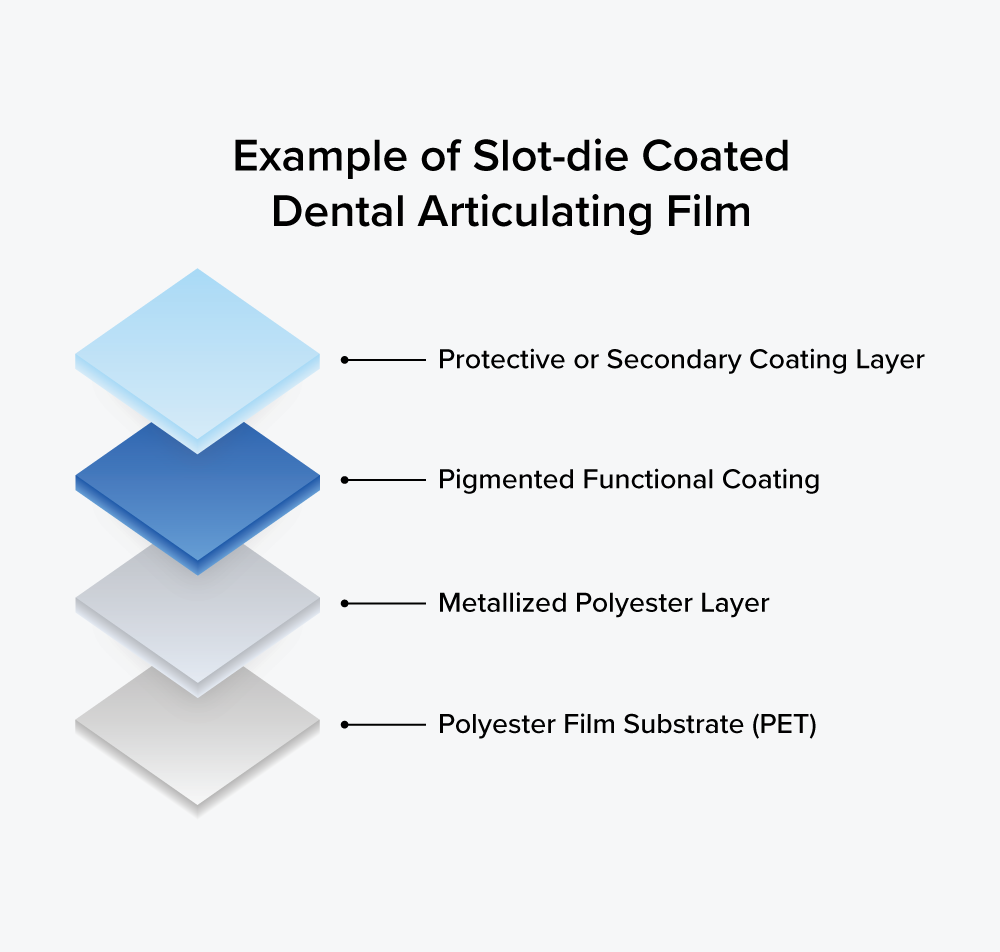
Example of dental articulating film layer structure.
Which Dental Articulating Film Layers To Slot-die Coat?
Modern dental articulating films often consist of multiple functional components designed to deliver precise marking performance, durability, and handling characteristics. Accurate deposition of these materials is critical for maintaining consistent color transfer, coating uniformity, and overall product quality.
Typical dental articulating film structures include:
Protective or Secondary Coating Layer: May be applied to optimize transfer characteristics, durability, or product handling.
Pigmented Functional Coating: Contains waxes, oils, pigments, and transfer materials that create visible occlusal markings.
Metallized Polyester Layer: Used in certain film constructions to enhance handling properties and product performance.
Polyester Film Substrate: Provides mechanical strength, flexibility, and dimensional stability during use.
Slot-die coating enables precise control of coating thickness, uniformity, and material distribution across functional layers, supporting both product development and scalable manufacturing of advanced dental articulating films.
Our experts are ready to help you get started slot-die coating.
Is Slot-die Coating for You?
Slot-die coating is a versatile method that can help researchers and manufacturers achieve precise, uniform, and reproducible thin films. Whether you are developing new materials or scaling up production, it’s important to understand how this technique can meet your specific needs.
We can support you in exploring slot-die coating through:
Expert Consultation: Discuss your application with our team and evaluate whether slot-die coating fits your project goals.
Visit Our Lab: See the process in action and understand its capabilities firsthand.
Hands-On Workshops: Participate in practical sessions to test ideas, learn techniques, and gain experience with slot-die coating.
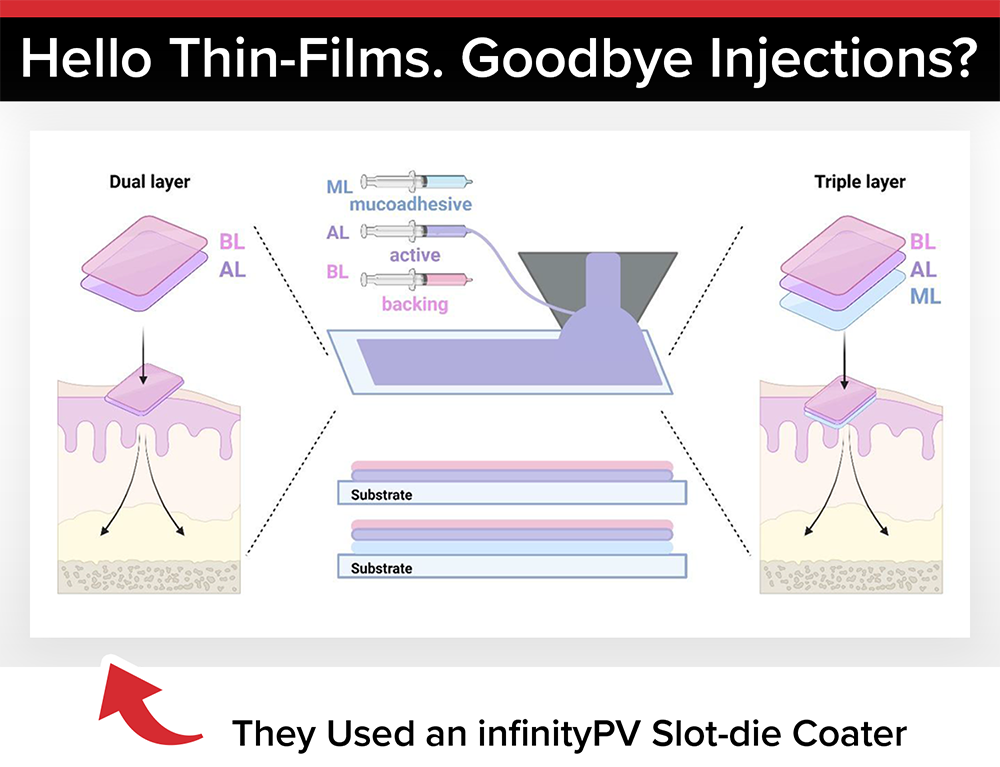
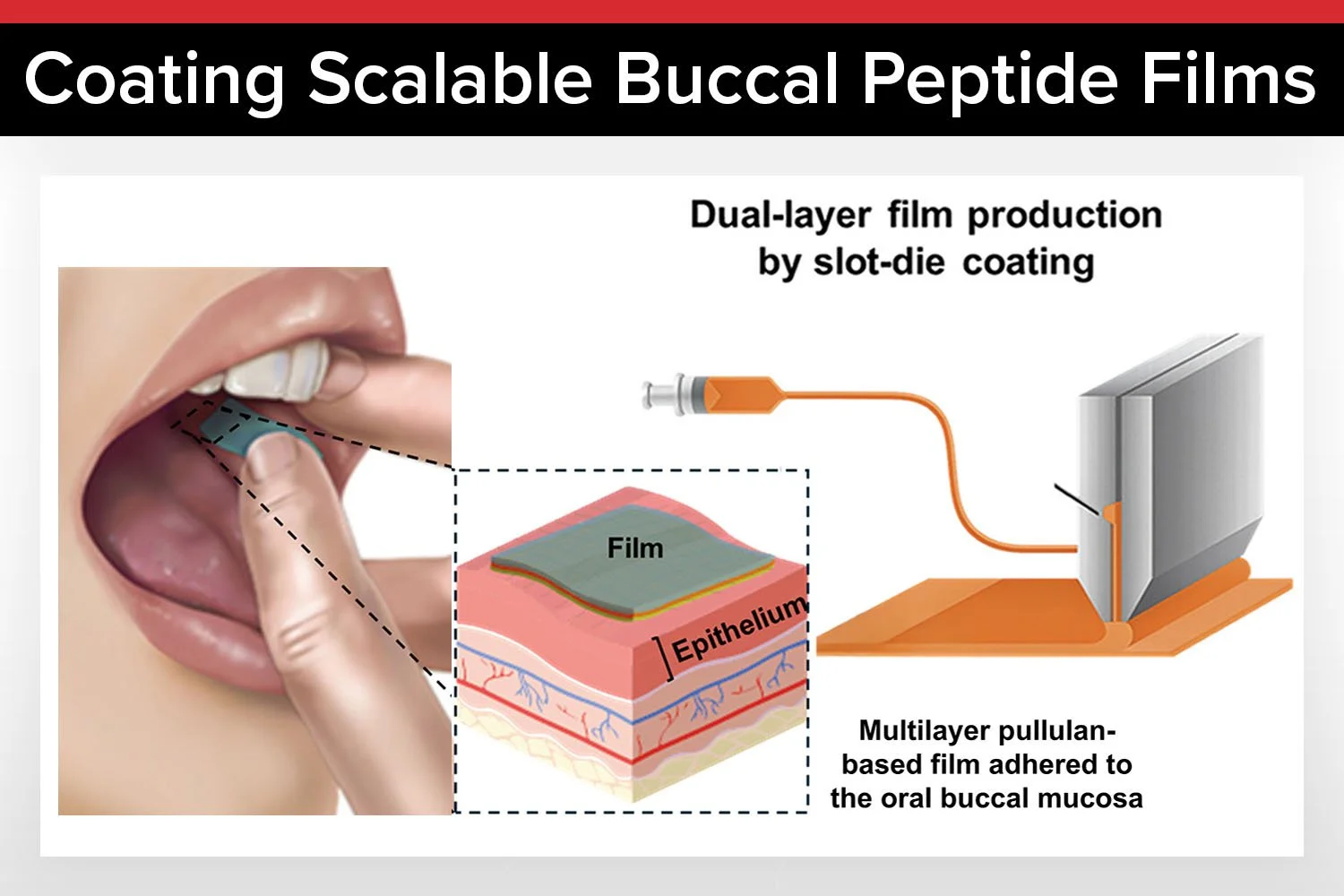
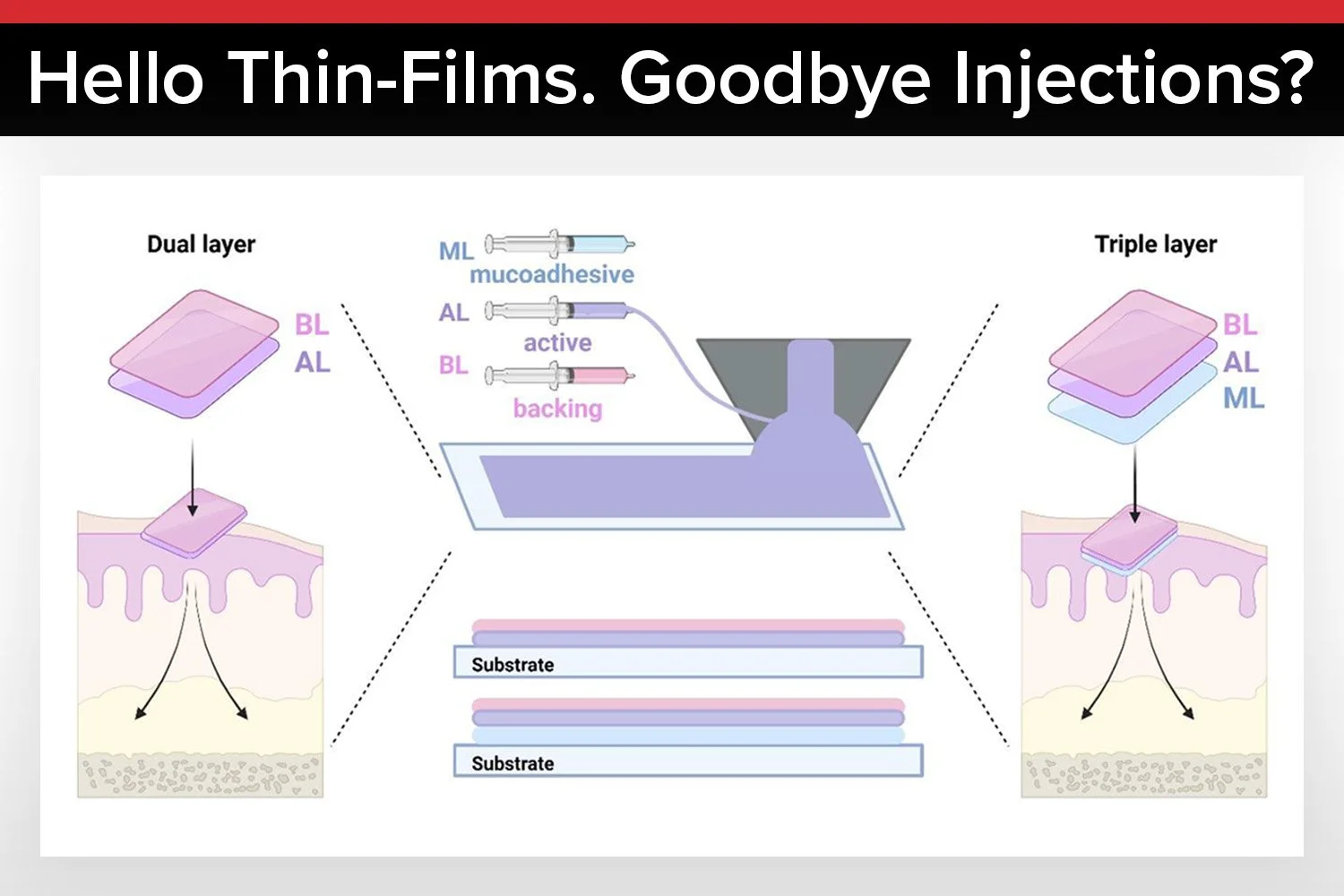
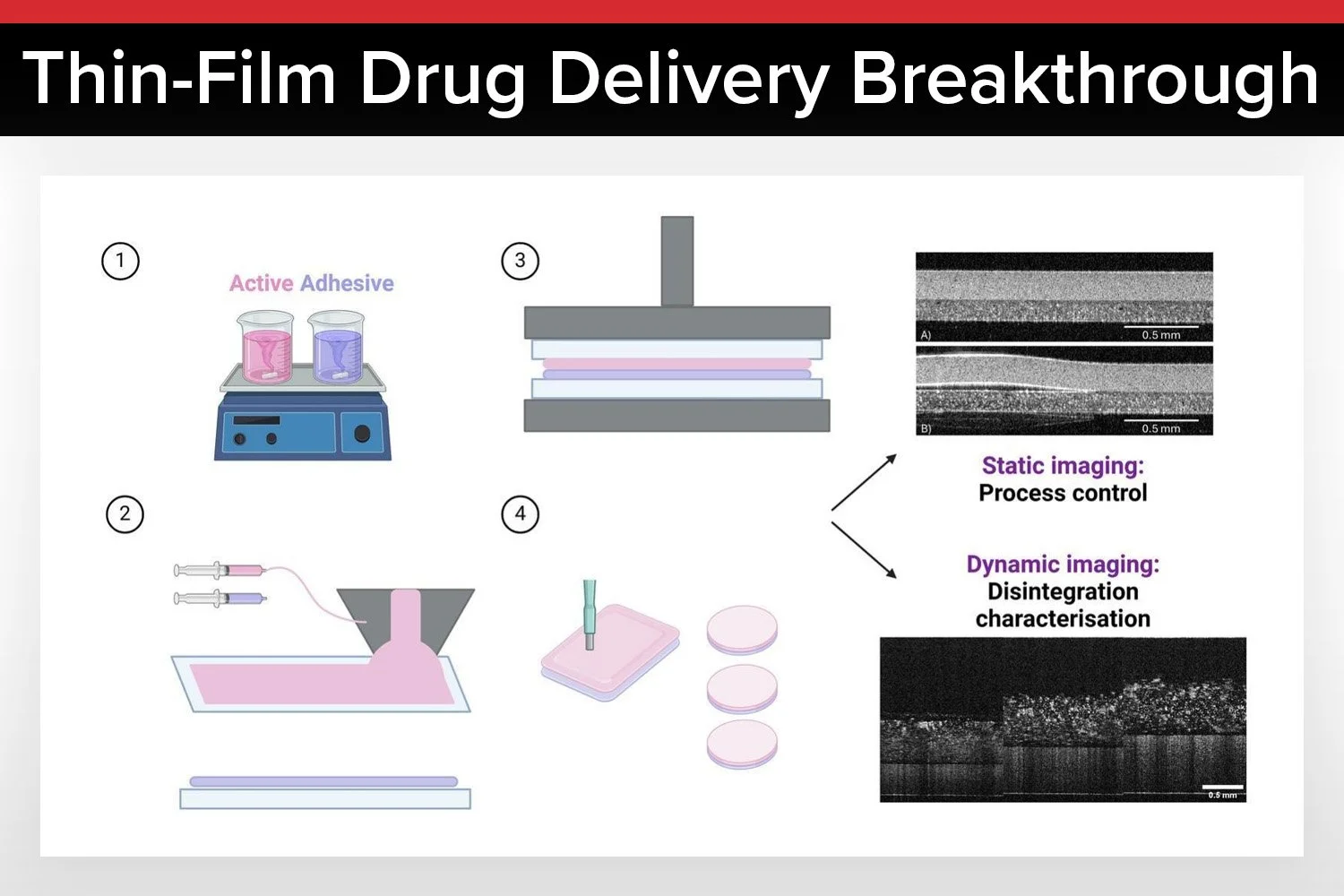
Novo Nordisk Uses Slot-die Coating for Next-Generation GLP-1 Drug Delivery
Researchers from Novo Nordisk and the Technical University of Denmark used an infinityPV Slot-die Coater to develop multilayer buccal films for needle-free GLP-1 delivery. The technology enabled precise coating of mucoadhesive, drug-loaded, and protective layers, supporting controlled drug release and scalable manufacturing of advanced oral film formulations.
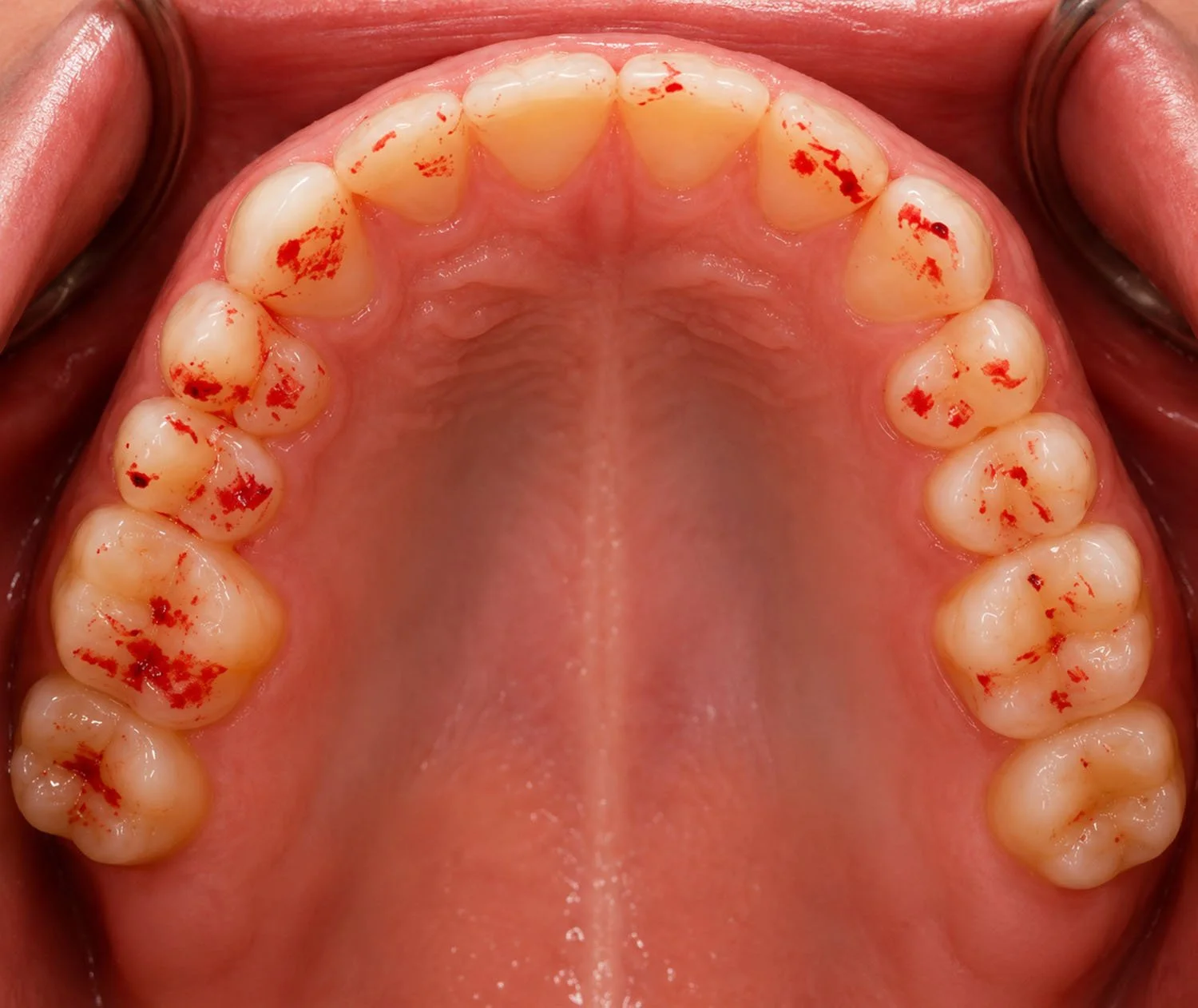
What Are Dental Articulating Films?
Dental articulating films are thin diagnostic films used by dentists and dental laboratories to identify occlusal contact points and high spots between opposing teeth. During examination, the film is positioned between the upper and lower dental arches, where it transfers colored markings that reveal bite force distribution and contact locations.
Compared to traditional articulating papers, modern dental articulating films offer improved precision due to their extremely low thickness and highly controlled transfer characteristics. These products are widely used during restorative dentistry, crown placement, implant procedures, bridge fitting, and occlusal adjustments.
The performance of dental articulating films depends heavily on coating quality, pigment transfer consistency, substrate properties, and overall film uniformity, making precision coating technologies an important consideration during product development and manufacturing.
Materials Used in Dental Articulating Film Manufacturing
Dental articulating films typically combine a flexible polymer substrate with one or more functional coating layers designed to transfer highly visible markings under pressure. The exact formulation varies depending on the desired sensitivity, transfer performance, and handling characteristics.
Common substrate materials include polyester films such as PET and metallized polyester films that provide dimensional stability and mechanical strength. Functional coatings often contain carefully formulated blends of waxes, oils, pigments, transfer agents, and specialty additives that influence color intensity, transfer efficiency, and durability.
Because coating performance directly affects the quality of occlusal markings, manufacturers often require precise control over coating weight, layer uniformity, and material distribution throughout development and scale-up.
Manufacturing Challenges for Dental Articulating Films
Producing high-performance dental articulating films requires more than simply applying a colored coating onto a film substrate. Small variations in coating thickness or formulation distribution can influence transfer sensitivity, marking accuracy, and overall product consistency.
Manufacturers frequently face challenges related to coating uniformity, pigment dispersion, transfer repeatability, substrate handling, and process reproducibility. As film thickness decreases and performance requirements increase, maintaining consistent coating characteristics across the entire web becomes increasingly important.
Development teams must also consider how laboratory-scale formulations can be translated into scalable manufacturing processes while preserving the transfer properties that determine final product performance.
We’re Here to Help You Find the Right System
Choosing the right slot-die or roll-to-roll coating system for your pharmaceutical application can feel complex. Whether it’s tablets, capsules, patch films, packaging, or medical devices, we’re ready to guide you — helping you select the machine that delivers precise, reproducible, and scalable results.

Slot-die Coater
Ideal for lab research, prototyping, and small-batch production. Sheet-based processing allows flexible testing, parameter adjustments, and precise coatings in limited quantities.

Laboratory Roll-to-Roll Coater
Best for scaling lab results to continuous, high-throughput production. Ensures uniform, consistent coatings on long substrates and supports transition to larger-scale manufacturing.

R2R Hybrid Coater
Combines sheet-based precision with roll-to-roll efficiency. Offers maximum flexibility for lab-scale thin film processing—from early formulation work to pilot-scale production.
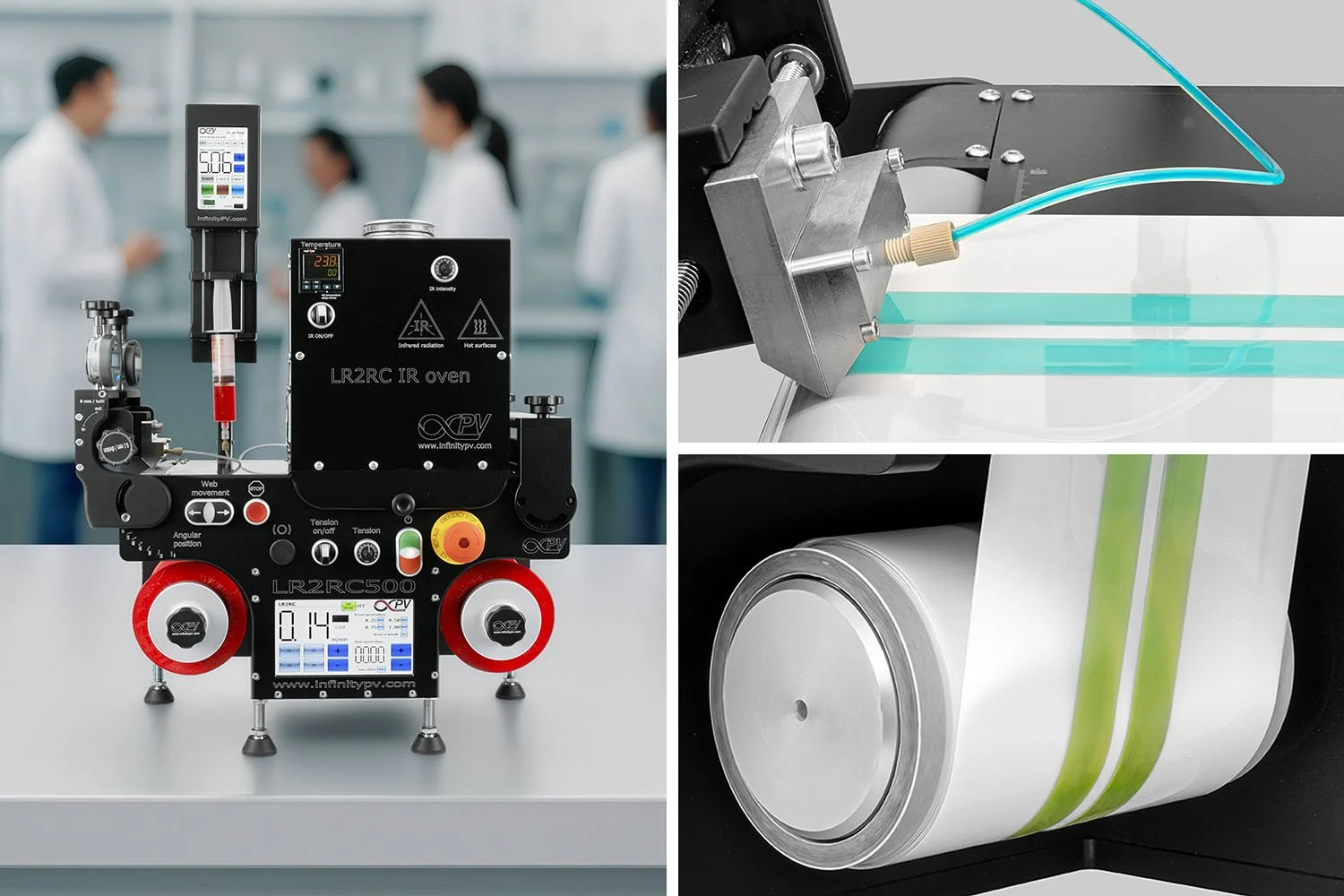
From Product Development to Manufacturing Scale-Up
Many coated film products begin with small-scale formulation development and proof-of-concept testing. As projects mature, manufacturers often seek process technologies that enable greater control, improved reproducibility, and a clear pathway toward commercial production.
Slot-die coating supports this transition by providing a scalable deposition method capable of delivering highly uniform coatings while maintaining precise process control. The same fundamental coating principles used during formulation screening can be applied during pilot-scale and manufacturing-scale development, helping reduce process changes throughout scale-up.
This approach can be particularly valuable for dental articulating film manufacturers seeking consistent coating quality, predictable product performance, and efficient material utilization across all stages of development.

Why Coating Uniformity Matters in Dental Articulating Films
The ability of a dental articulating film to generate accurate and repeatable bite markings is directly influenced by coating quality. Uniform coatings help ensure that pigments transfer consistently across the entire film surface, reducing variability between products and improving diagnostic reliability.
Variations in coating thickness can affect marking intensity, transfer sensitivity, and overall user experience. By improving coating uniformity and controlling material distribution, manufacturers can support the development of dental articulating films that deliver precise and reproducible performance in clinical applications.
For this reason, coating technologies capable of producing highly controlled thin films continue to attract interest throughout the dental consumables industry.
Thin-Film Fabrication Methods: Pros and Cons
Slot-die coating stands out as the only method that combines sub-micron to millimeter precision with continuous, roll-to-roll scalability, minimal material waste, and the ability to create multilayer and gradient structures in a single pass. This makes it an ideal choice for researchers and manufacturers looking to transition from lab-scale development to pilot or commercial production.
| Characteristics | Solvent Casting | Dip Coating | Spin Coating | Spray Coating | Blade Coating | Bar Coating | Slot-die Coating | Photolithography | 3D Printing |
|---|---|---|---|---|---|---|---|---|---|
| Relative Cost | Low | Low | Medium | High | Medium | Medium | High | High/very high | High |
| Scalability | Limited | No | Possible | Possible | Limited | Possible | Possible | No | |
| Complexity | Low | Low | Low | Medium | Medium | Low | Medium | Medium | High |
| Uniformity of Films | Good | High | High | Low | Medium | Medium | High | High | Medium/high |
| Minimum thickness possible | Ten of micrometer | Nanometers | Nanometers | From tens to hundreds of nanometers | Tens of micrometer | Ten of micrometer | Nanometers | From tens to hundreds of nanometers | Micrometers |
| Patterning In Situ | Possible | Possible | No | No | Posslbe | No | Limited | Possible | Possible |
| Coatable Surfaces | Many types of surfaces, they must be smooth and flat | Complex, rigid shapes | Small, flat substrates only | Flexible or rigid substrates, curved or flat surfaces | Flexible or rigid substrates | Flexible or rigid substrates | Flexible or rigid substrates | Glass, polymeric, inorganic; pretreatment is often necessary | Glass, polumeric, inorganic; pretreatment is often necessary |
| Solution wastage | High | High | High | Moderate | Moderate | Moderate | Low | High | Low |
| Drying Times | High | Slow | Fast | Fast | Slow | Slow | Slow | Slow | Medium |
| Coating Speeds | Slow | Slow | Very slow | Fast | Fast | Slow | Fast | Low/medium | Fast |
Slot-die Coating is Proven in Peer-Reviewed Pharma & MedTech Studies
Bridging Pharmaceutical Research and Manufacturing
We help researchers and pharmaceutical innovators develop uniform, reproducible thin films through advanced slot-die coating and roll-to-roll processing technologies. Our laboratory equipment bridges the gap between formulation development and scalable manufacturing, enabling precise coating control for next-generation drug delivery systems.
Frequently Asked Questions
-
Dental articulating films are thin diagnostic films used by dentists to identify occlusal contact points and high spots between teeth, crowns, bridges, and implants. When placed between opposing teeth, the film transfers colored markings that help clinicians evaluate bite alignment and make precise adjustments during restorative and prosthetic procedures.
-
Dental articulating films are typically manufactured by applying a functional coating containing waxes, oils, pigments, and transfer materials onto a polyester-based film substrate. The coating process must provide consistent thickness and material distribution to ensure accurate marking performance and product uniformity.
-
Most dental articulating films consist of a polyester (PET) or metallized polyester film combined with a pigmented coating formulation. These coatings commonly contain waxes, oils, color pigments, and specialty additives that enable clear, reproducible transfer of bite contact markings during dental examinations.
-
Coating uniformity directly affects marking accuracy, color transfer consistency, and overall product performance. Variations in coating thickness or pigment distribution can lead to inconsistent results, making precise coating control an important consideration during both product development and manufacturing.
-
Slot-die coating is well suited for applications that require highly uniform coatings on flexible film substrates. For dental articulating films, slot-die coating can provide precise control over coating thickness and material distribution while supporting efficient process development and future manufacturing scale-up.
-
Dental articulating films are typically manufactured with total thicknesses ranging from approximately 6 to 40 microns, depending on the product design and intended application. Ultra-thin constructions are often preferred because they allow dentists to identify occlusal contacts with greater accuracy and minimal interference during bite analysis.
-
Precision coating technologies help manufacturers achieve consistent coating weights, uniform pigment distribution, and reproducible product performance. This can improve marking quality, reduce process variability, and support the development of high-performance dental diagnostic films suitable for both laboratory development and commercial production.
-
Dental articulating films are generally thinner and more dimensionally stable than traditional articulating papers. Their reduced thickness allows for more precise detection of occlusal contact points, making them particularly valuable in applications involving crowns, implants, bridges, and other high-precision dental restorations.