
Solid Oxide Fuel Cells: Scalable Manufacturing Using Slot-die Coating Technology
The production of solid oxide fuel cells (SOFCs) is on the brink of a transformation.
A recent study by Oak Ridge National Laboratory demonstrates how roll-to-roll (R2R) manufacturing, specifically using slot-die coating, can dramatically increase the throughput of SOFC production while reducing costs.
The research highlights a tenfold increase in manufacturing speed for the anode support layer (ASL), a 30% reduction in production costs, and a significant decrease in material expenses, all without compromising performance. This advancement is critical as the world seeks more efficient and scalable energy solutions.
What You Need to Know:
The study focuses on developing a high-volume production capability for electrode electrolyte assemblies (EEAs), a core component of SOFCs. By leveraging slot-die coating, the researchers achieved a manufacturing speed exceeding 5 meters per minute for thick anode layers, a significant leap from traditional methods.
The research also explores the optimization of lamination processes to ensure high-quality interfaces between layers. This includes defining key parameters such as gap height, line speed, and temperature, which are essential for producing defect-free laminates.
One of the most compelling findings is the ability to fabricate over 10 feet of EEA laminate, proving the scalability of the process. This breakthrough addresses critical technical gaps, paving the way for commercial readiness of SOFC technology.
Achieve uniform fuel cell layers effortlessly with roll-to-roll slot-die coating.
The Study in Detail
Optimizing Lamination Parameters
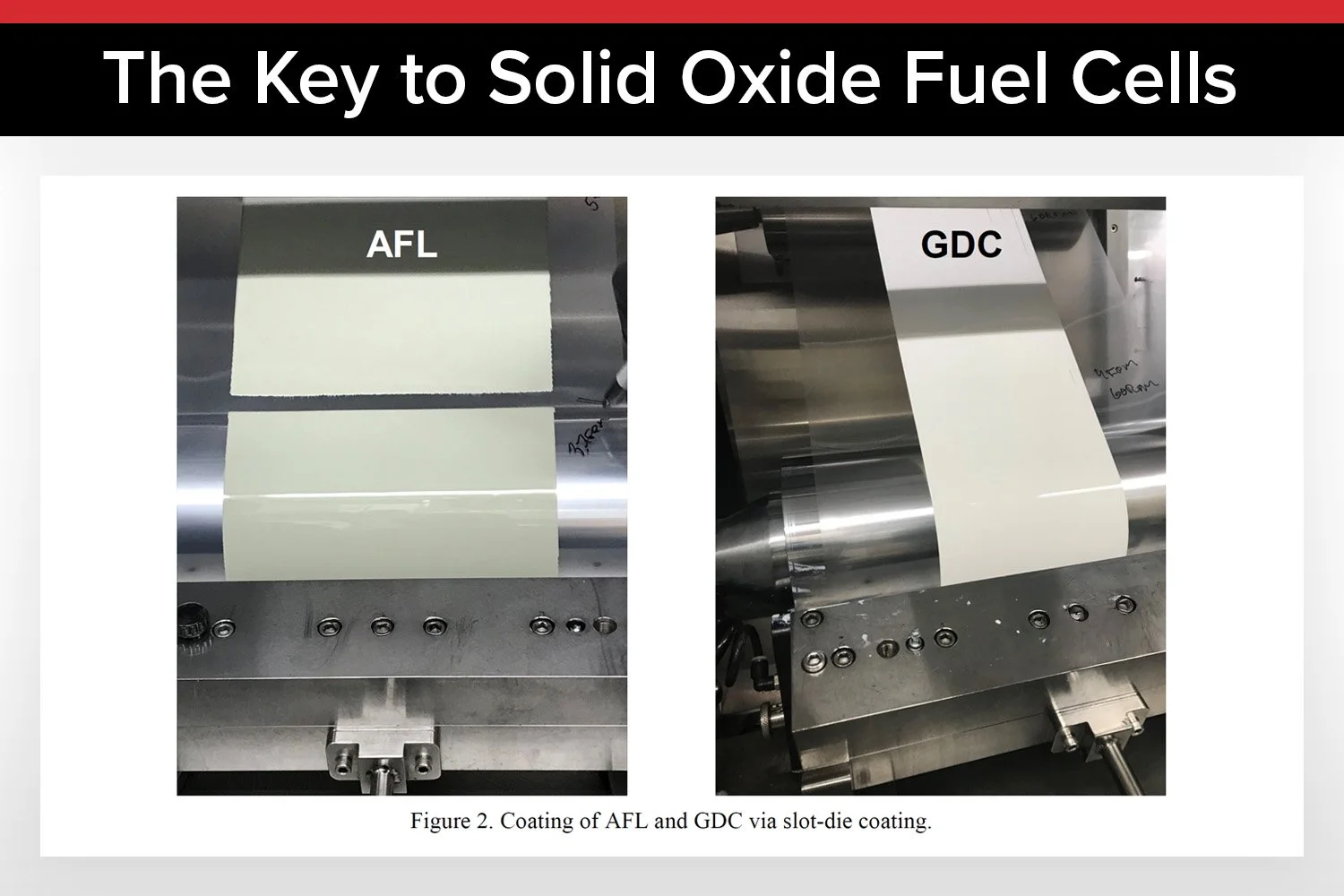
The study began by screening the lamination window for ASL-ASL laminates using a calender at the Department of Energy’s Battery Manufacturing Facility. The researchers found that elevated temperatures were crucial for achieving good interface quality in the laminates. This was demonstrated through successful lamination at both room temperature and intermediate temperatures up to 210°C. Slot-die coating was employed to coat AFL and GDC layers onto Mylar substrates. The process was optimized to achieve defect-free coatings at various speeds, with the quality of the coatings evaluated under different conditions. The study found that while higher coating speeds produced thinner layers, maintaining quality was paramount to avoid defects such as uncoated regions or edge line defects.
Rheology and Microscopy Studies
To further understand the coating process, rheological properties of ASL, AFL, and GDC slurries were investigated. The slurries exhibited shear-thinning behavior, which is ideal for slot-die coating as it allows for higher solids loading and faster coating rates. Microscopy was used to evaluate the quality of the dried coatings, identifying surface defects such as air entrapment and cracks, which were mitigated through process optimization.
Multi-Layer Coating Achievements
The study successfully demonstrated the fabrication of multi-layer coatings, including 2-layer ASL/ASL, AFL/ASL, and 3-layer AFL/ASL/ASL configurations. The researchers achieved controlled thicknesses between 100 and 600 µm for the ASL layers, with a minimal thickness of approximately 300 µm for the partial EEA. This was a significant step toward scaling up the production process.
Lamination Window for EEA
The lamination window for the EEA was established using the Fenn 4-High mill at room temperature and 100°C. The study found that processing conditions could be translated between different equipment setups, which is valuable for commercial scalability. The optimal manufacturing process involved layer-by-layer deposition via slot-die coating to form the ASL/ASL/AFL assembly, followed by lamination of the GDC electrolyte layer at elevated temperatures.
Performance Testing
The final phase of the study involved preparing over 40 feet of individual ASL, AFL, and GDC layers for lamination into a 10-foot EEA. A bench-top calender was used to prepare the EEA, and performance testing was initiated using a commercial button cell. The test station allowed control of temperature, gas composition, and flow rate, with the cell achieving reported performance metrics.
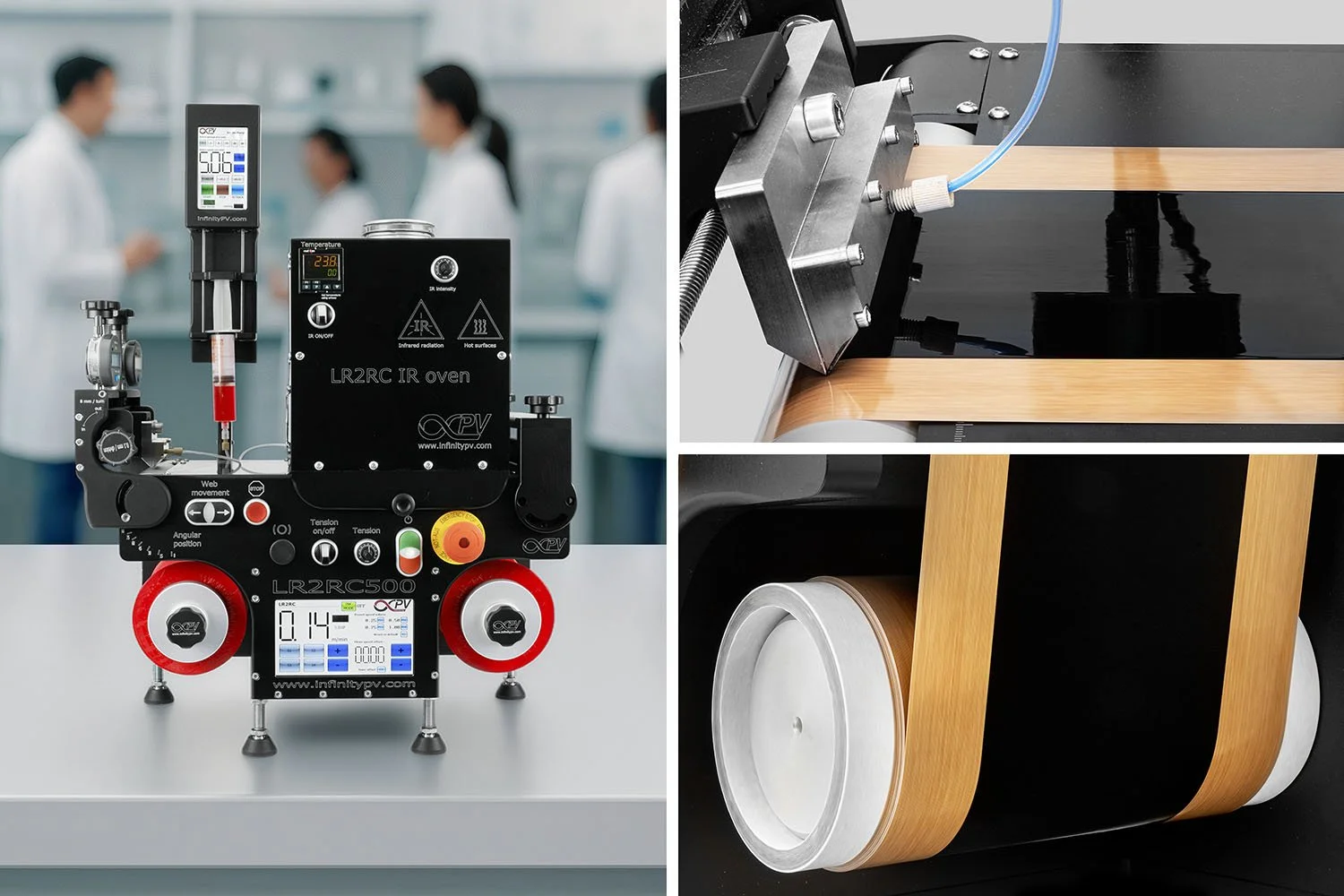
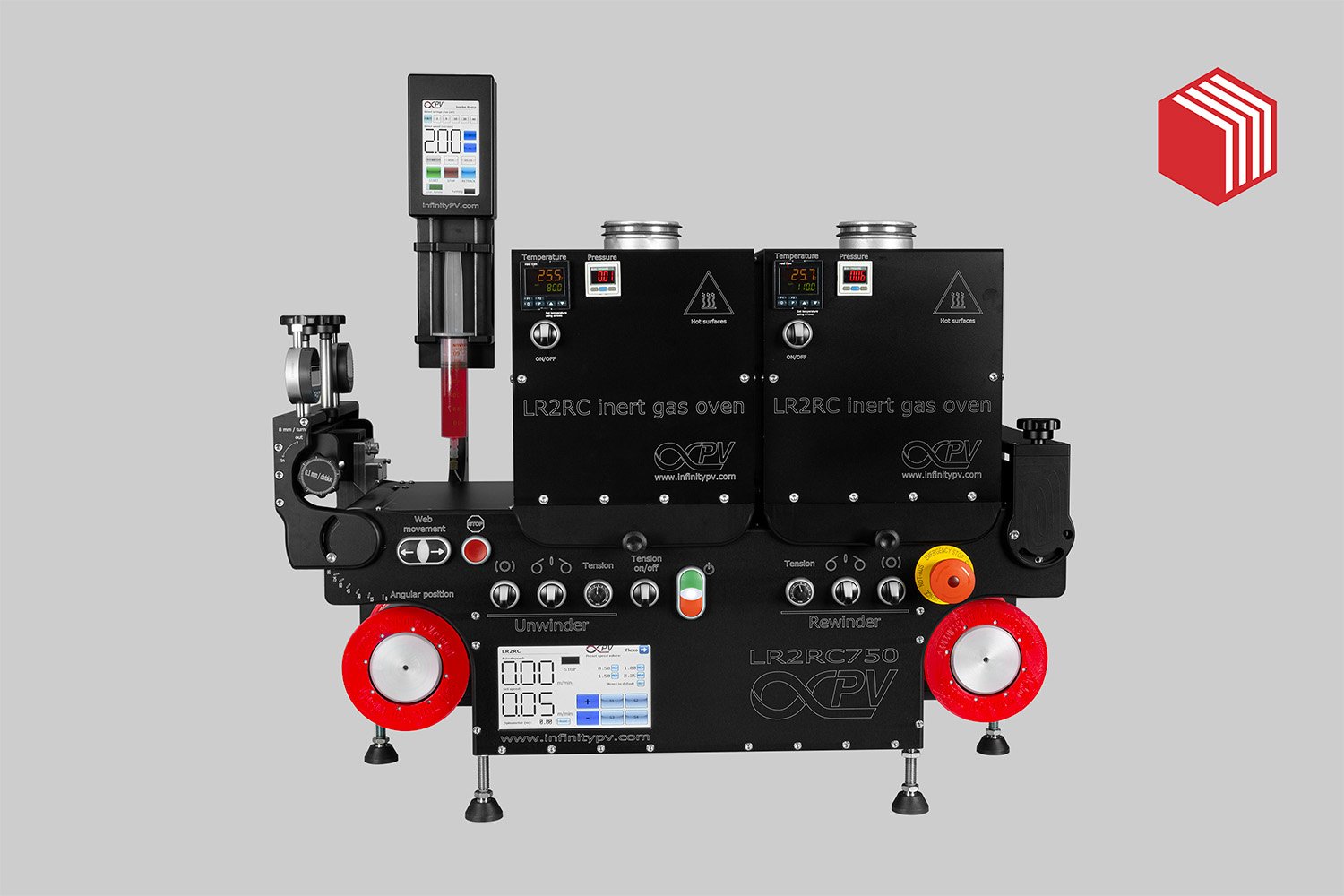
Scalable slot-die coating is easy and precise with the Laboratory Roll-to-Roll Coater.
The Benefits of Slot-Die Coating for SOFC Manufacturing:
Slot-die coating offers several advantages for the production of SOFCs. It enables high-speed, continuous coating of thin layers with precise control over thickness and uniformity. This precision is critical for producing high-quality EEAs, which are essential for the performance and efficiency of SOFCs.
Additionally, slot-die coating reduces material waste and lowers production costs, making it an economically viable option for large-scale manufacturing. The ability to coat multiple layers in sequence further enhances its appeal, as it streamlines the production process and reduces the need for additional handling steps.
Conclusion:
The study by Oak Ridge National Laboratory demonstrates that roll-to-roll manufacturing, particularly using slot-die coating, is a game-changer for the production of solid oxide fuel cells. By achieving high throughput, reducing costs, and maintaining performance, this method addresses key challenges in scaling up SOFC manufacturing. The findings underscore the potential of slot-die coating to revolutionize the production of clean energy technologies, making it a critical tool for the future of energy security.
References
Citation: Yang, J., & Sawicki, C. (2026). Roll-to-Roll Manufacturing of Solid Oxide Fuel Cells. Oak Ridge National Laboratory.
Get Professional Support for Your Coating Needs
Need help with slot-die coating or machines? Contact our experts for guidance and support.
Related News








Streamline your fuel cell research with an intuitive design, making development and optimization effortless. It helps researchers turn innovative ideas into market-ready solutions.