
Understanding Web Speed in Roll-to-Roll Slot-die Coating
Web speed may look like a simple machine setting, but it's one of the most influential parameters in roll-to-roll processing, affecting film thickness, coating stability, drying, residence time, and ultimately product quality.
In R2R processing, web speed determines how quickly the substrate moves through the line.
Because several processes often run continuously on the same web, changing the speed doesn't affect just one step. It can influence almost every stage.
Web Speed and Residence Time
One of the most direct effects of web speed is on residence time. Residence time is how long the substrate spends in a given section of the line: faster web speed means less time per section, while slower speed means more. This matters most when a process needs a set amount of time to occur.
In a drying oven, the web must stay in the heated zone long enough to remove the required solvent or moisture. In curing, the substrate may need a set exposure time to heat, light, or another treatment. In immersion or wet processing, web speed sets how long the substrate is exposed to the liquid. Web speed therefore directly influences parameters such as immersion time, reaction time, uptake, adsorption, and coagulation.
Web Speed and Coating Thickness
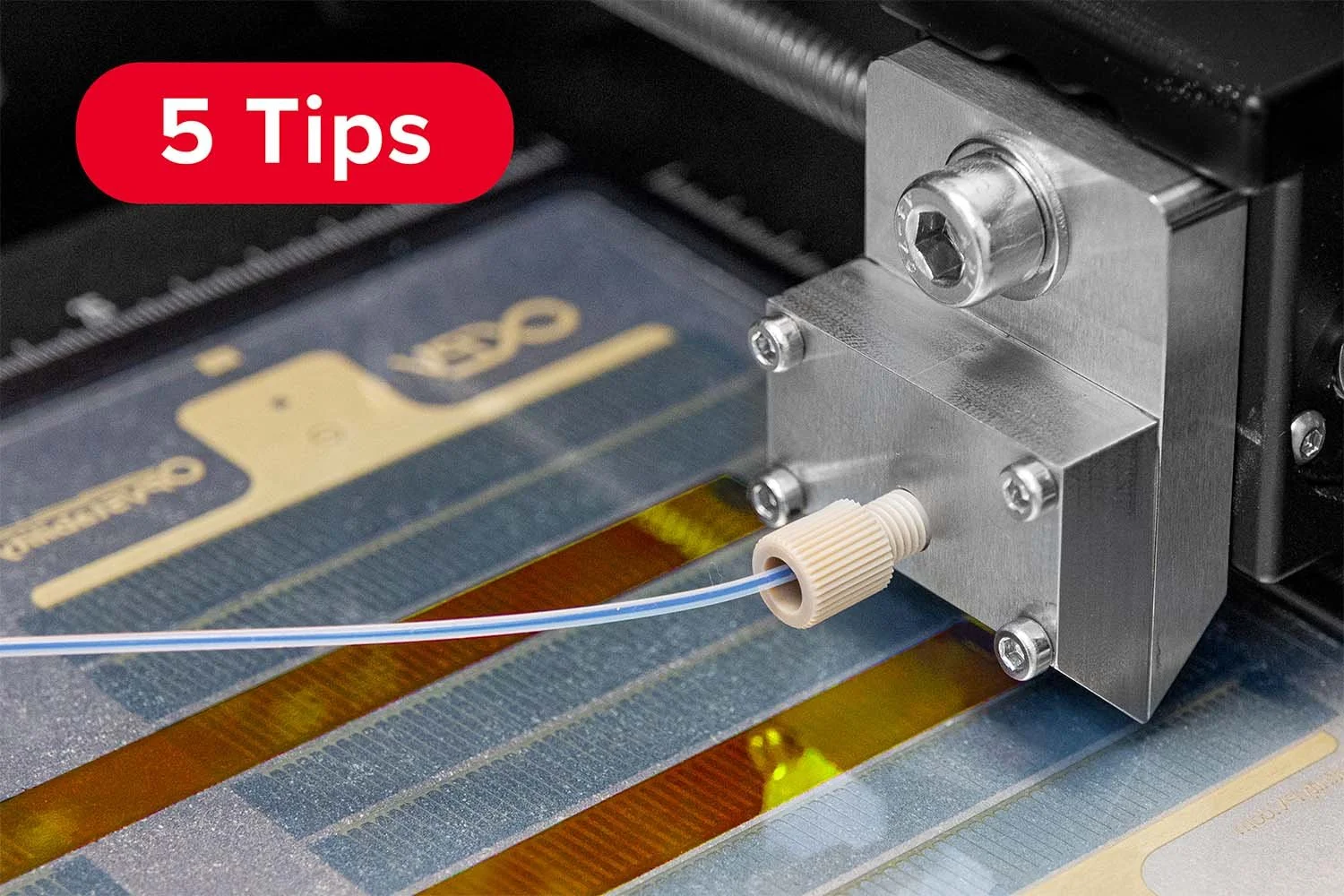
In slot-die coating, web speed is a fundamental parameter determining wet coating thickness. The relationship comes down to three parameters: pumping speed, coating width, and web speed. The pump sets the volumetric flow rate, the coating width determines how that volume spreads across the substrate, and web speed determines how quickly the substrate moves through the coating zone.
In simple terms, increasing flow rate tends to increase wet film thickness, while increasing web speed tends to decrease it. This is an advantage of slot-die coating: because it's pre-metered, the deposited amount is controlled through defined process parameters rather than relying mainly on the coating gap.
However, the relationship isn't fully independent of the rest of the process. Web speed also affects the coating through fluid dynamics, viscosity, surface energy, wetting, and coating-bead stability. At high or low enough speeds, the process can move outside its stable operating range even if the calculated thickness looks correct.
Roll-to-roll wet processing is a continuous web-based manufacturing method in which a flexible substrate, polymer film, metal or metal-oxide-coated foil, nonwoven, membrane, or textile, is transported through a sequence of liquid-phase treatment zones followed by dried or curing.
Web Speed and the Coating Window
A successful coating process is not defined by a single parameter. Instead, several conditions must work together: web speed, flow rate, viscosity, temperature, coating gap, surface properties, drying conditions, and web tension. The range in which these parameters coexist while still producing a stable, uniform coating is called the coating window.
Web speed is central to this window because changing it affects several other parameters at once. For example, increasing web speed requires a corresponding increase in flow rate to maintain the desired wet film thickness, and may also change how the liquid behaves at the coating head. Depending on formulation and substrate, higher speed can affect wetting and coating stability.
At the same time, a faster-moving web spends less time in the dryer, creating another constraint downstream. This is why optimizing web speed cannot always be done by looking at the coating head alone.
The Connection Between Coating and Drying
A common example is the relationship between coating speed and drying. Consider a substrate coated and then carried through a heated drying section. Increasing web speed boosts throughput, but it also reduces the time available for drying.
If the web moves too quickly, there may not be enough time to remove the required solvent, leaving the film with excess residual solvent or moisture that can affect its mechanical, electrical, optical, or chemical properties. Reducing web speed has the opposite effect: more time in the dryer for solvent removal. But slower isn't automatically better.
Excessive drying time or aggressive thermal exposure can introduce its own problems, such as surface skinning, cracking, excessive crystallization, shrinkage, thermal damage, or changes in film morphology, depending on the material system. Drying also affects residual stress and adhesion: as the wet film dries, it may shrink, change structure, or develop internal stresses that influence the coating's final mechanical and functional properties.
The optimum web speed is therefore a balance between coating, drying, throughput, and the requirements of the material.
Web Speed Across the Entire R2R Line
This challenge grows in a complete R2R process. In many systems, the web passes continuously through several operations. Coating may be followed by drying, curing, lamination, printing, immersion, or other treatments. The same web speed connects all of these operations.
Changing the speed for one process therefore creates a new condition for every process downstream. For example, increasing speed to improve throughput reduces residence time in the coating zone, the dryer, and any downstream sections. If coating and drying each require different conditions, the operating point must satisfy both.
This is one reason why R2R process development often involves finding a compromise between competing requirements. A speed that produces excellent coating may not allow enough drying time; a speed that gives excellent drying may cut throughput or disrupt the coating process. The final operating point needs to work for the complete process rather than just one individual step.
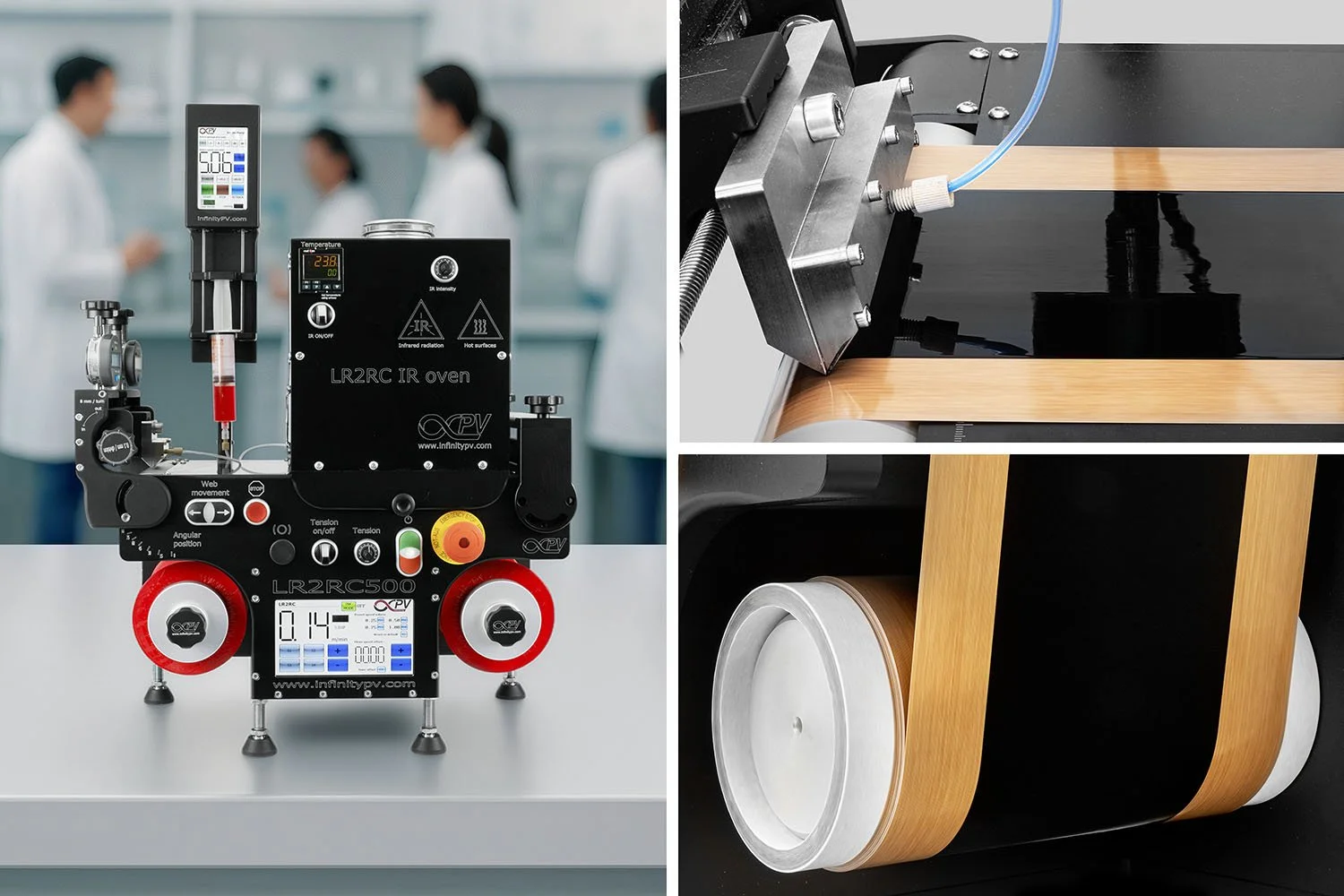
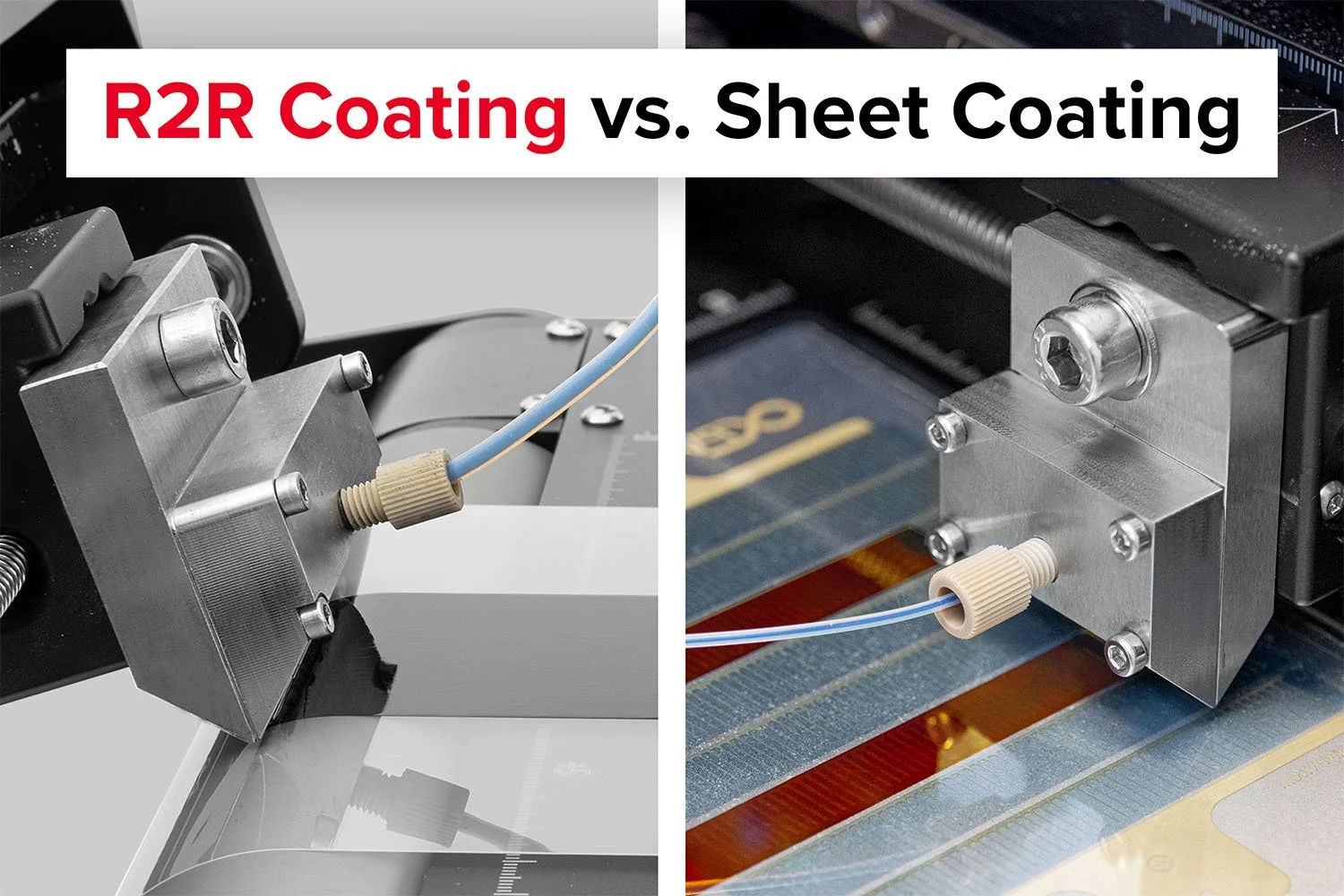
Roll-to-roll processing is easy using a Laboratory Roll-to-Roll Coater.
Finding the Right Process Conditions
In practice, finding the right web speed is usually an experimental process. Theoretical calculations offer a useful starting point, but real materials and machines introduce variables that are hard to fully predict. Formulation, substrate characteristics, environmental conditions, machine design, drying capacity, and surface interactions can all affect the outcome.
A systematic approach is therefore useful. Changing parameters, observing the results, and evaluating the consequences helps identify where the process stays stable and where problems begin. Over time, this helps map a practical operating window for the specific material, substrate, and setup.
Web speed is particularly important in this process because it connects so many of the individual operations. It affects how quickly material is deposited, how long the substrate stays in each section, how much time is available for drying or curing, and potentially how the coating behaves during deposition.
For this reason, web speed shouldn't be viewed simply as a machine setting or a measure of throughput. It's a process parameter that can influence the entire R2R manufacturing chain.
Understanding this relationship is essential when developing stable, repeatable coating processes and when moving from small-scale experiments toward continuous production.
If you are developing an R2R coating or wet-processing application, understanding how web speed interacts with the other process parameters can be an important step toward defining a reliable operating window.
Get Professional Support for Your Coating Needs

Need help with slot-die coating or machines? Contact our experts for guidance and support.
Customer Success Stories
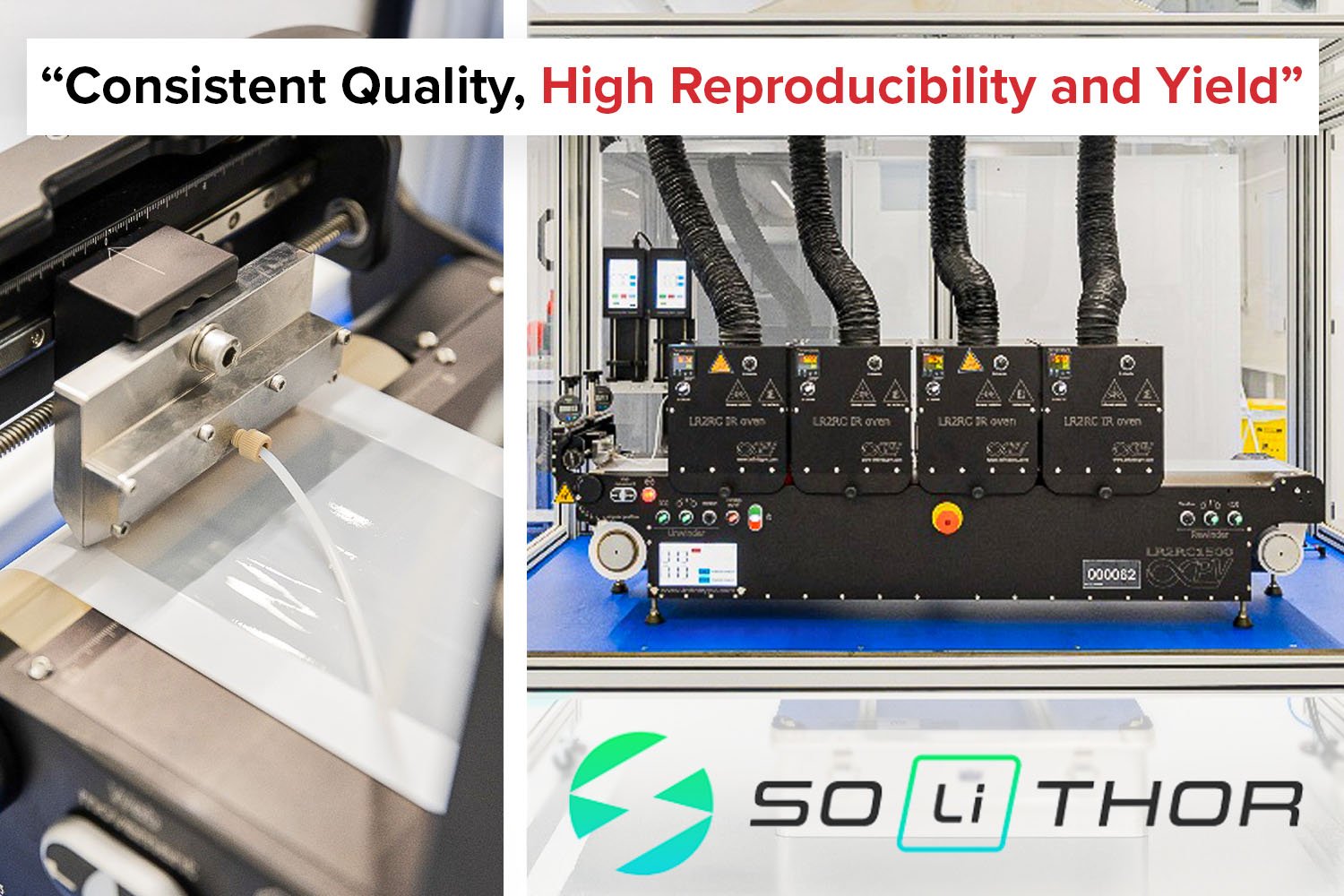


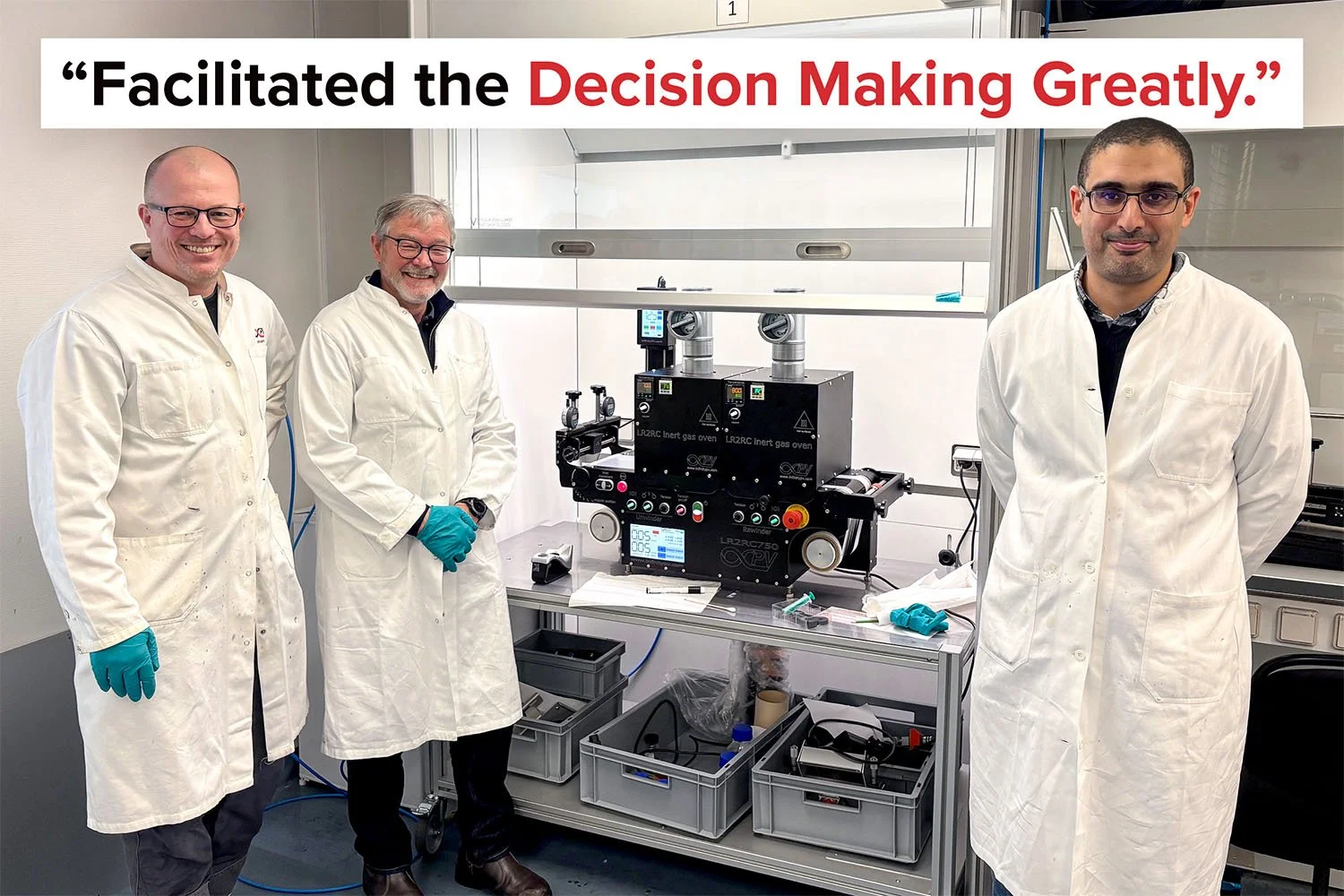






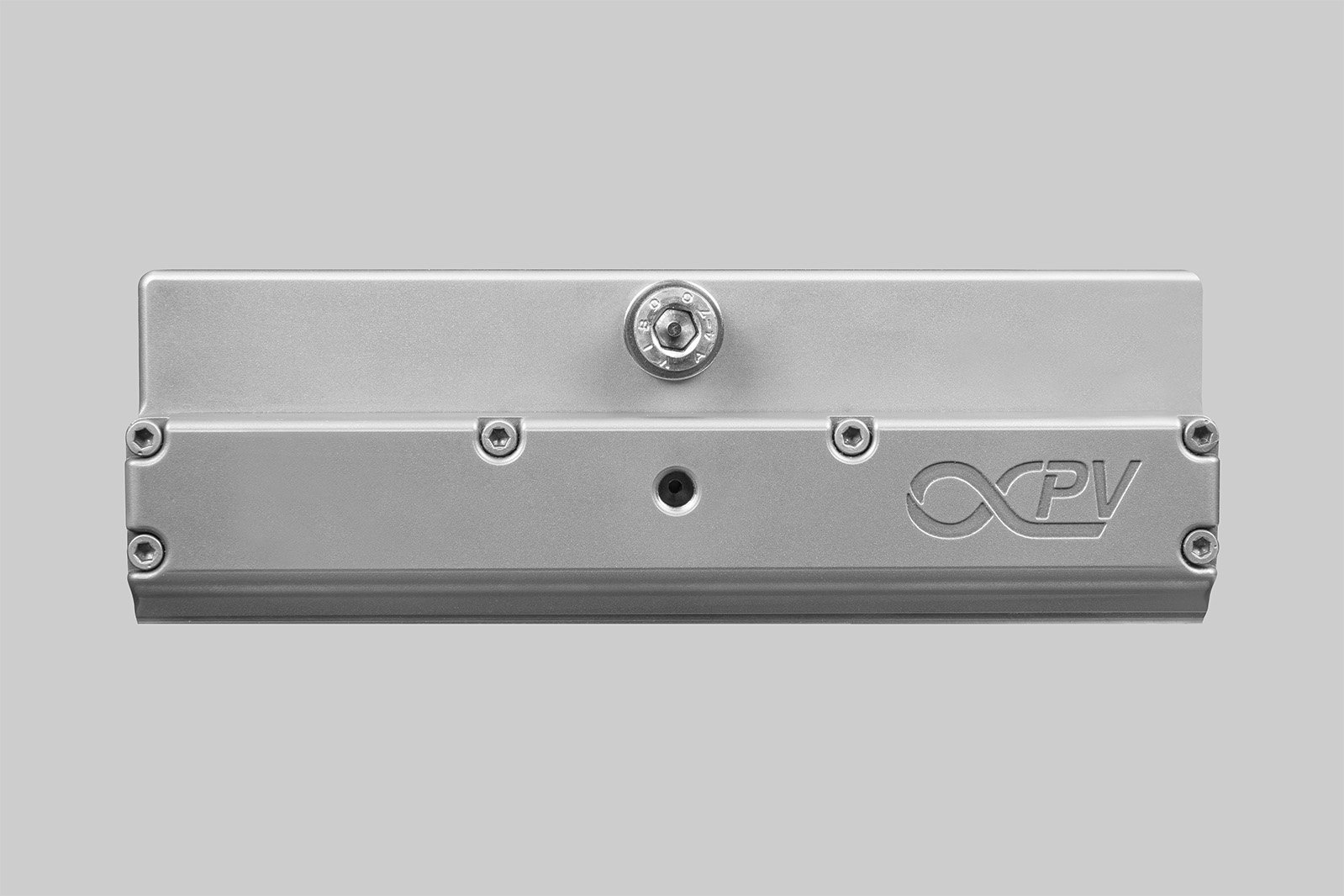



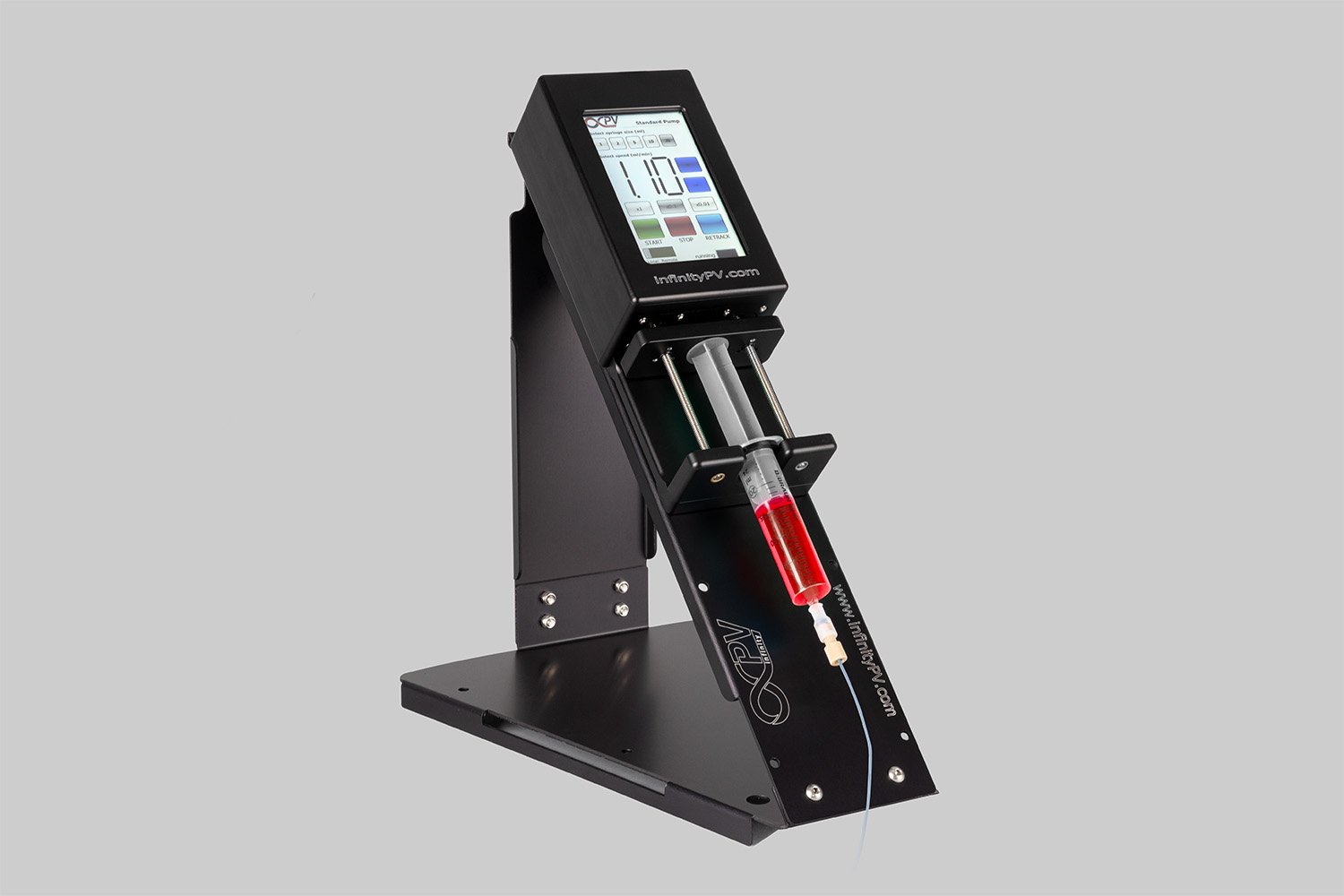
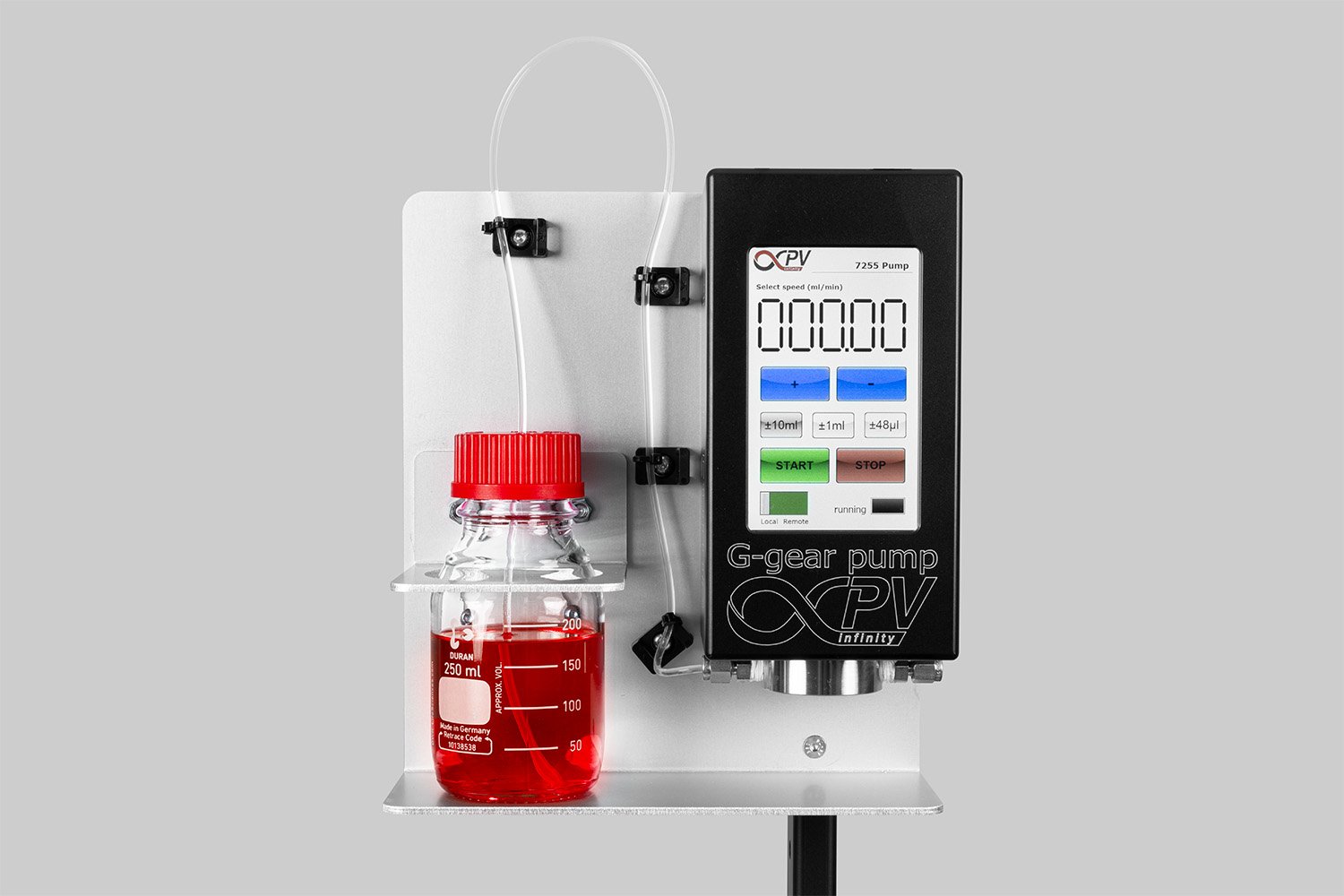
Probably the World’s Most Compact R2R Slot-die Coater: A compact, fully integrated roll-to-roll coating platform for laboratories, complete with a mounting system, anodized rollers, a syringe pump, a 65 mm stainless slot-die head and an infrared oven system—delivering unmatched precision and scalability.