
How AZO Thin Films Can Be Manufactured Using Slot-Die Coating
Transparent conductive films are essential components in modern technologies ranging from solar cells and displays to smart windows and optoelectronic devices. As demand grows, manufacturers are under increasing pressure to find production methods that deliver high-quality coatings while reducing costs and energy consumption.
A recent review article examining innovative coating technologies for corrosion protection and functional surfaces highlights an important development in this area: the use of slot-die coating to produce aluminum-doped zinc oxide (AZO) thin films.
AZO has attracted significant attention as a more affordable alternative to indium tin oxide (ITO), one of the most widely used transparent conductive materials. Traditional AZO manufacturing often relies on vacuum-based deposition techniques that require expensive equipment and energy-intensive processing. The review points to emerging research showing that slot-die coating can produce uniform AZO thin films under ambient conditions, offering a simpler and potentially more scalable manufacturing route.
What You Need to Know
A new review article highlights research comparing AZO thin films made by slot-die coating and conventional physical vapour deposition. The goal was to evaluate how the two manufacturing methods affect film performance.
The slot-die-coated films delivered uniform coverage and improved crystallinity after annealing, resulting in promising optical properties for transparent conductive applications.
Although the electrical conductivity still needs improvement, the results show that slot-die coating can produce functional AZO thin films using a much simpler and lower-cost process than vacuum-based deposition.
A Closer Look at AZO Thin Film Manufacturing
Transparent conductive oxides are critical materials in many electronic and energy-related applications because they combine two properties that rarely coexist: electrical conductivity and optical transparency. For years, indium tin oxide has dominated this field, but concerns about indium cost and supply have encouraged researchers to explore alternatives.
One of the most promising alternatives is aluminum-doped zinc oxide. AZO offers strong optical performance while relying on more abundant and lower-cost raw materials. The challenge has been finding manufacturing methods that can produce high-quality films without the complexity and expense associated with vacuum deposition technologies.
The review discusses research comparing physical vapour deposition with slot-die coating for AZO film fabrication. The slot-die-coated films demonstrated uniform surface coverage and a thickness of approximately 70 nanometers. After annealing, the films showed improved crystallinity and optical performance. Researchers also observed a wider optical band gap compared with the vacuum-deposited films.
Although the slot-die-coated films exhibited lower electrical conductivity than their vacuum-deposited counterparts, the authors note that this limitation is largely related to grain boundary defects and may be addressed through further process optimization. These findings suggest that slot-die coating is already capable of producing functional AZO films and that additional development could further improve performance.
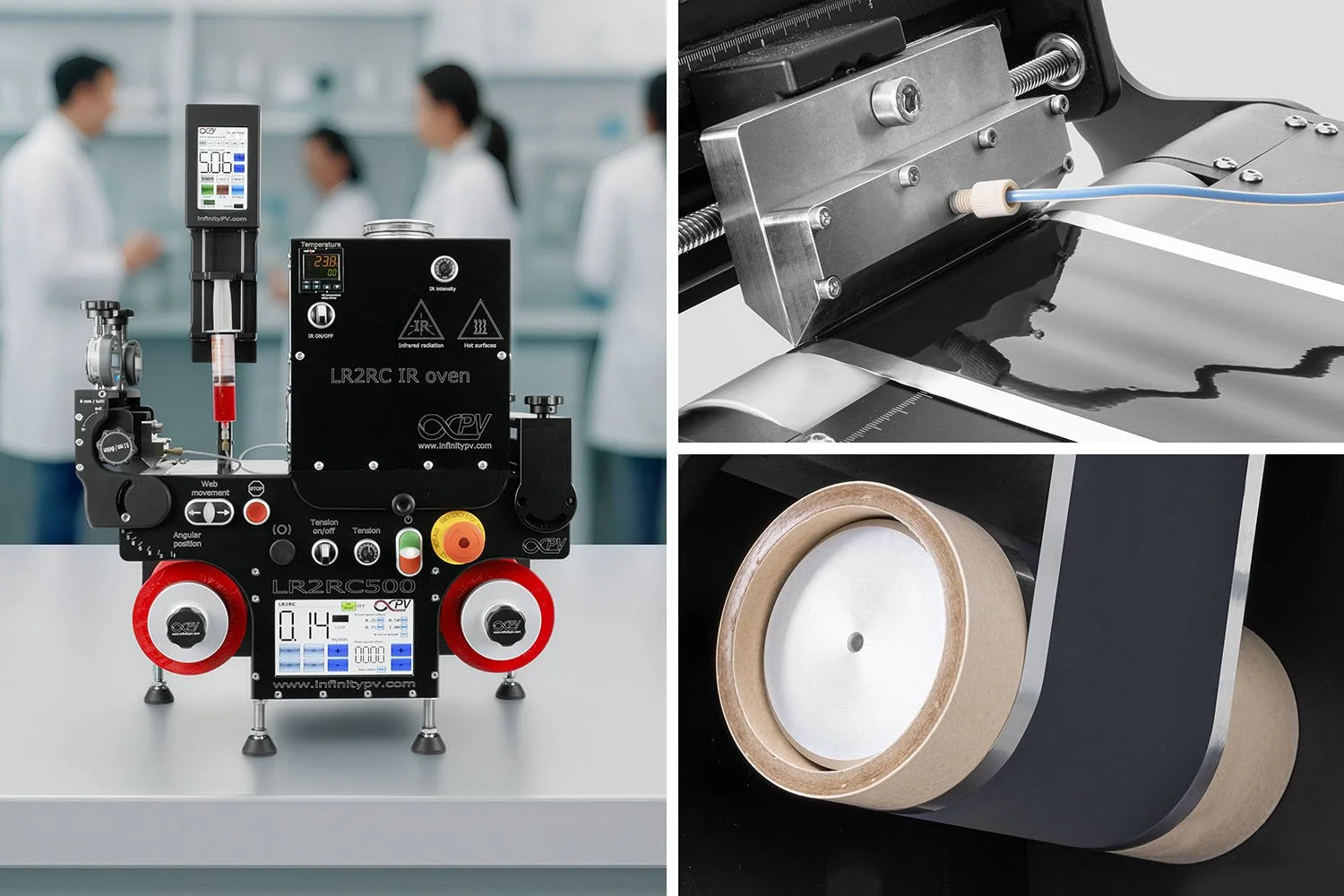
The Laboratory Roll-to-Roll Coater features modular customization, scalable efficiency for small-scale slot-die coating, and a user-friendly design.
Why Slot-Die Coating Matters for AZO Applications
The significance of this work extends beyond AZO itself. It highlights the growing role of slot-die coating as a manufacturing platform for advanced functional materials.
Unlike many traditional thin-film deposition techniques, slot-die coating operates under ambient conditions and can be integrated into continuous manufacturing processes. This reduces equipment complexity, lowers energy consumption, and provides a practical route toward scalable production.
The technology also offers excellent control over coating thickness and uniformity. These characteristics are particularly important when manufacturing transparent conductive films, where coating consistency directly influences optical and electrical performance.
For researchers and product developers working with conductive oxides, nanomaterials, photovoltaics, sensors, and optoelectronic devices, slot-die coating provides an attractive pathway for moving from laboratory-scale experiments to pilot-scale and commercial production.
The AZO example demonstrates a broader trend across advanced materials manufacturing. As industries seek cost-effective alternatives to vacuum processing, solution-based coating technologies are becoming increasingly important for producing next-generation functional coatings.
References
Matheson, E.D., Xu, X., Qu, Y., Zoppi, G., Barrioz, V., and Beattie, N.S. A Structural, Optical and Electrical Comparison Between Physical Vapour Deposition and Slot-Die Deposition of Al:ZnO (AZO). MRS Advances, 2023, Vol. 8, pp. 330-335. DOI: https://doi.org/10.1557/s43580-023-00554-w
Get Professional Support for Your Coating Needs
Need help with slot-die coating or machines? Contact our experts for guidance and support.
Related News




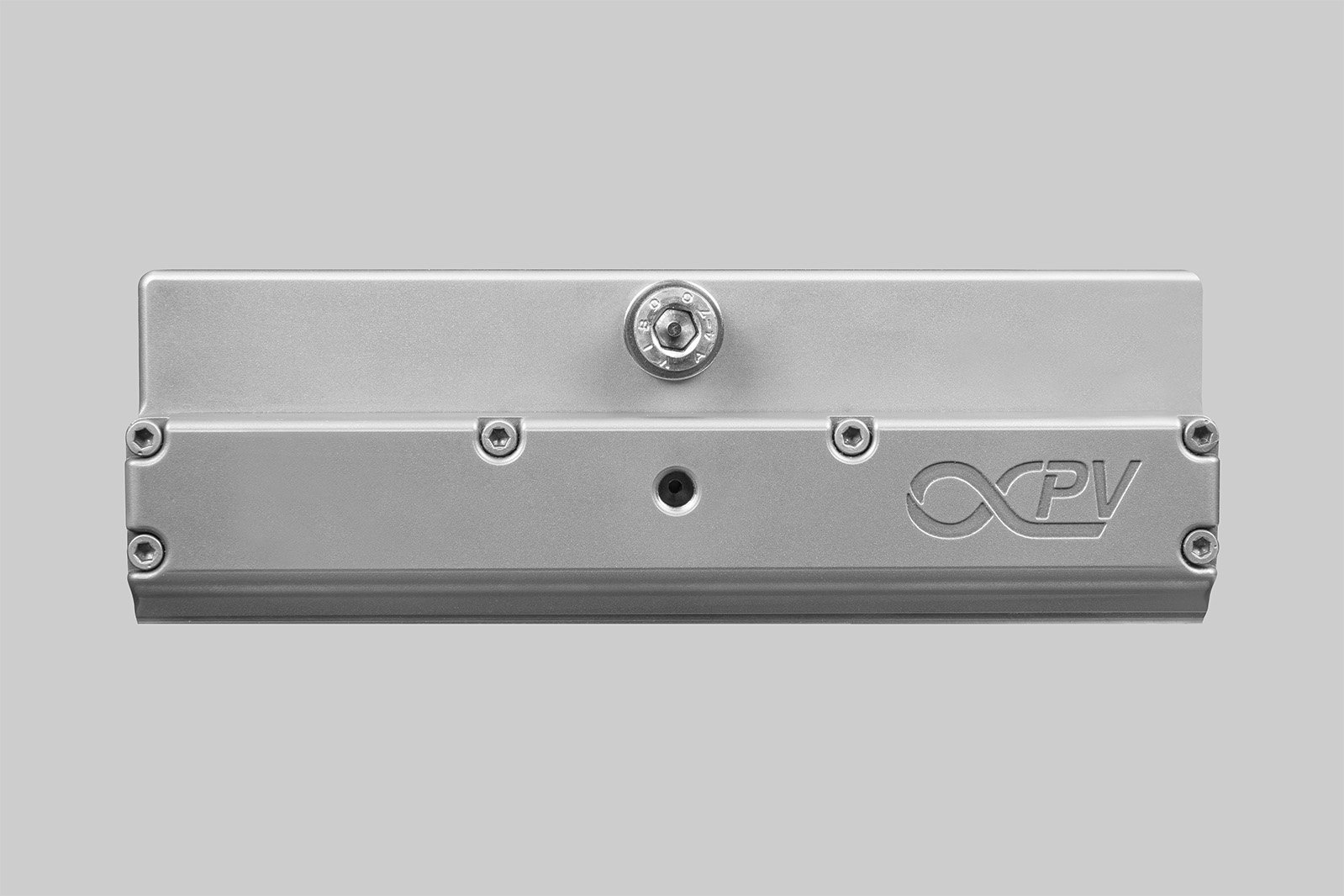

Probably the World’s Most Compact R2R Slot-die Coater: A compact, fully integrated roll-to-roll coating platform for laboratories, complete with a mounting system, anodized rollers, a syringe pump, a 65 mm stainless slot-die head and an infrared oven system—delivering unmatched precision and scalability.