
Improve Thin-Film Deposition Precision Using Automated Dual-View Analysis
Precise control of thin liquid film deposition is critical in industries such as organic light-emitting diode screens, lithium-ion battery electrodes, photovoltaic cells, and transdermal patches. The stability and internal flow of these films directly influence the dry film shape, functional properties, and efficiency in applications like drug delivery.
Until now, extracting geometric parameters from optical data has relied on manual methods, which are time-consuming and lack quantified uncertainty.
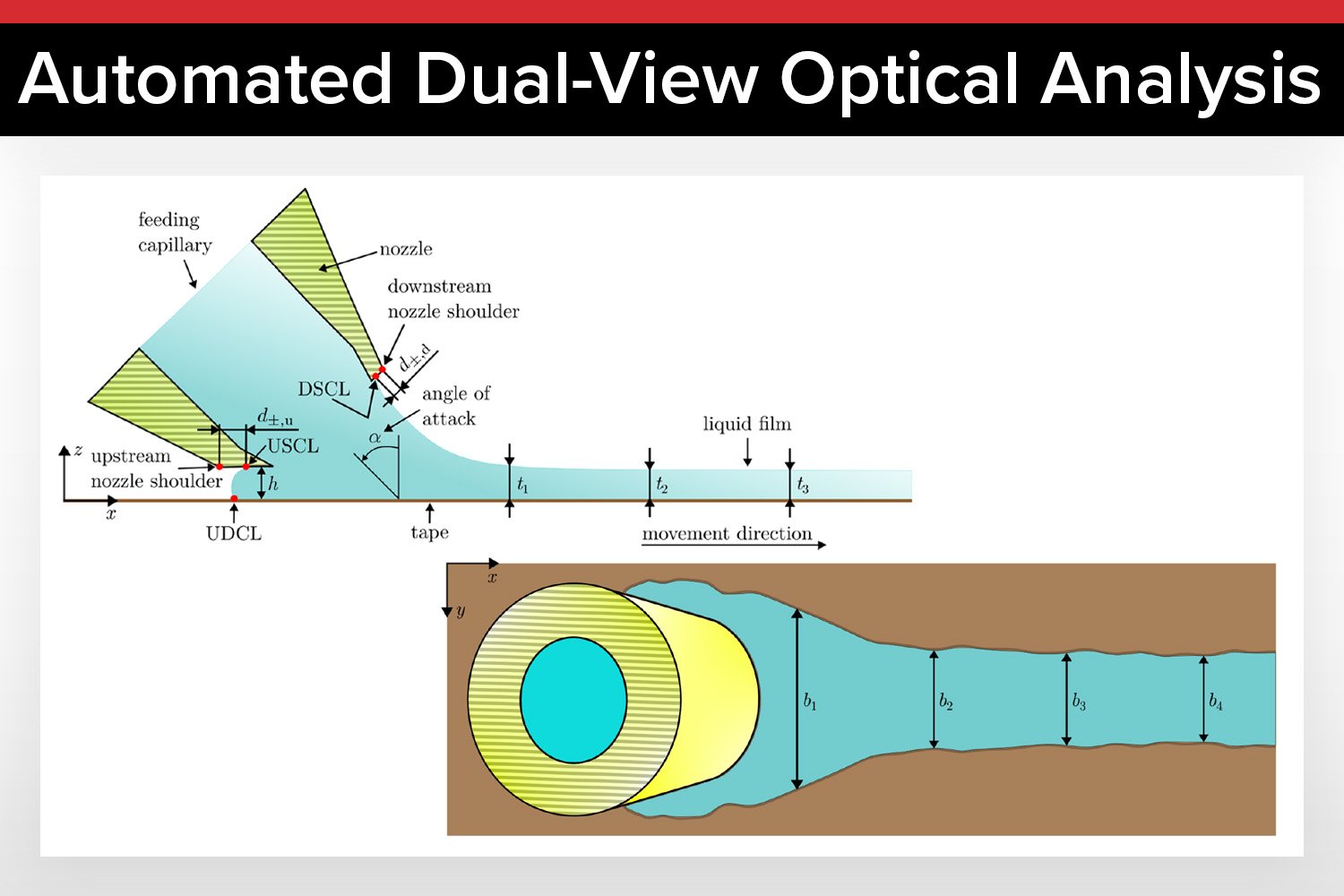
A recent study, Spatiotemporal Analysis of Transient Liquid Film Shape, presents a Python-based software that automates the extraction of time-resolved film thickness, width, and contact line positions using dual-view optical visualization.
This method provides high-resolution insights into liquid film dynamics and includes measurement uncertainty quantification, offering a reliable approach for analyzing and optimizing liquid film deposition processes.
What You Need to Know
The study introduces an automated method for analyzing liquid film geometry during deposition using dual-view imaging.
It eliminates manual measurements and quantifies uncertainty for the first time in this context.
The framework is compatible with continuous slot-die coating and demonstrates its effectiveness with a 30% glycerol solution on a flexible tape.
The Science Behind the Analysis
Dual-View Optical Visualization
The experimental setup uses two optical views—side and plan—to capture the film’s geometry in real time. A reflective mirror tilted at 45 degrees enables simultaneous imaging, while collimated LED light sources illuminate the film from both perspectives. This dual-view approach allows for comprehensive analysis of the film’s shape and behavior during deposition.
The software processes each frame of the recorded video, applying binarization, background subtraction, and image clipping to isolate the film’s edges and contact lines. Advanced algorithms detect the film’s boundaries and extract geometric parameters with high accuracy. The use of OpenCV, SciPy, and NumPy libraries ensures robustness and efficiency in data processing.
Quantifying Measurement Uncertainty
The study quantifies measurement uncertainty by incorporating Type A and Type B contributions, such as distortion, binarization, filtration, and resolution. This ensures that the data is precise and reliable for further analysis. The study found that static contact line oscillations remain within measurement uncertainty, while dynamic contact lines exhibit resolvable oscillations, providing insights into film stability.
Why Slot-Die Coating Stands Out
Slot-die coating is a versatile and efficient method for depositing thin, uniform liquid films onto substrates. Its ability to produce consistent layers with minimal waste makes it ideal for applications requiring high precision, such as battery electrodes, solar cells, and pharmaceutical films.
The automated dual-view analysis introduced in this study enhances the capabilities of slot-die coating by providing real-time, high-resolution insights into the deposition process.
For industries like battery manufacturing, where film uniformity directly impacts performance, this technology offers a competitive edge. It enables researchers to fine-tune coating parameters, ensuring optimal film quality and reducing the risk of defects. Similarly, in pharmaceutical applications, precise control over film geometry ensures accurate drug delivery and improved product efficacy.
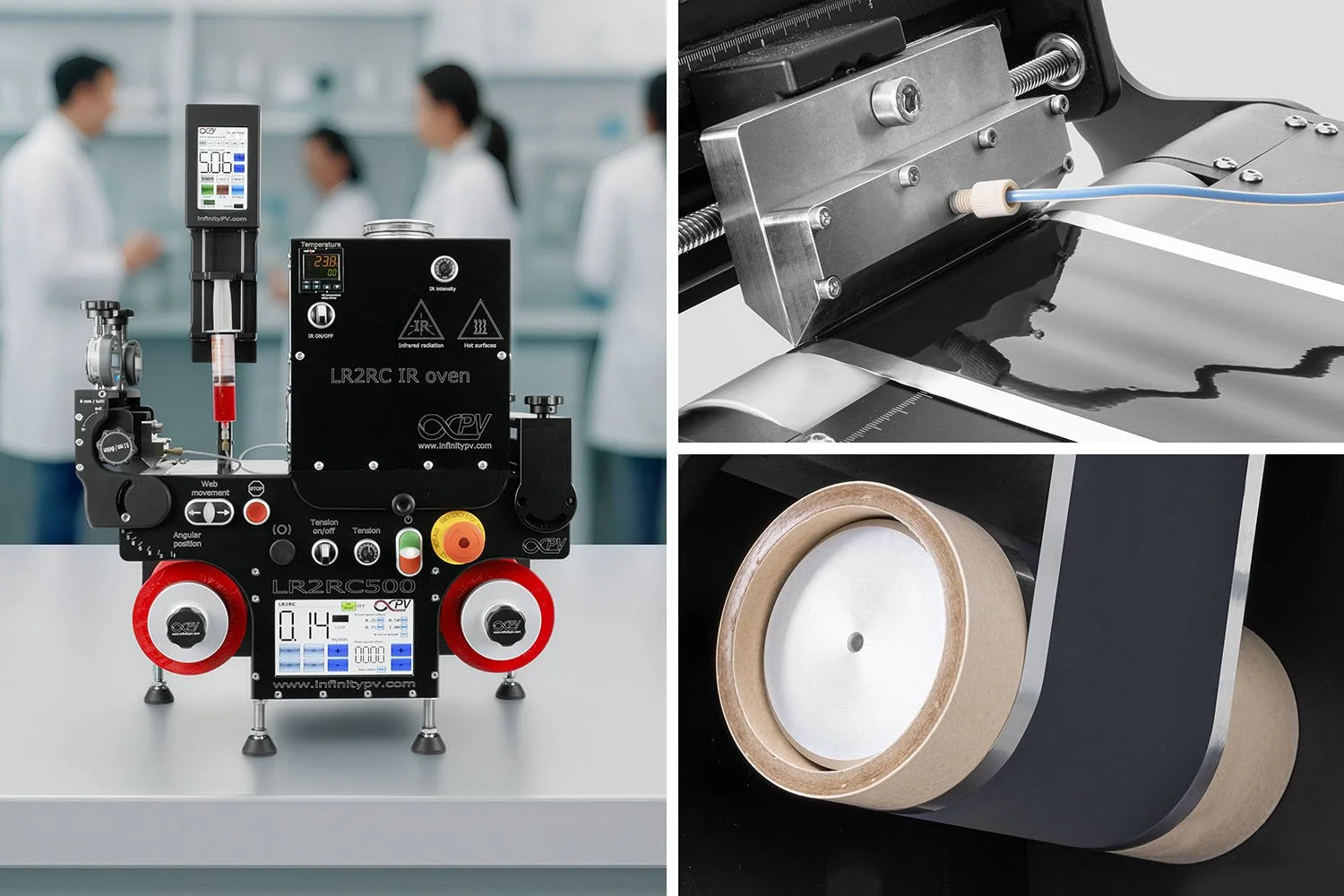
Scalable slot-die coating is easy and precise with the Laboratory Roll-to-Roll Coater.
Future Outlook
The study’s findings open opportunities for further advancements in liquid film deposition. Future developments may include additional post-processing features, such as analyzing upstream and downstream meniscus curvatures. These enhancements will provide deeper insights into film behavior, enabling researchers to improve slot-die coating processes.
Conclusion
This study demonstrates the value of automated dual-view analysis in liquid film deposition. By combining high-resolution imaging with advanced software, researchers can achieve precise control over film geometry, ensuring consistency in applications ranging from energy storage to pharmaceuticals.
The study highlights the importance of precise geometric parameter extraction and uncertainty quantification in optimizing slot-die coating processes. It underscores the potential of this technology to improve film stability, functional properties, and deposition efficiency, making it a valuable resource for researchers and industries.
Citation
Vidic, G.; Bajt, S.; Šarler, B. Spatiotemporal Analysis of Transient Liquid Film Shape. Fluids 2023, 11, 67. https://doi.org/10.3390/fluids11030067
Get Professional Support for Your Coating Needs

Need help with slot-die coating or machines? Contact our experts for guidance and support.
Related News

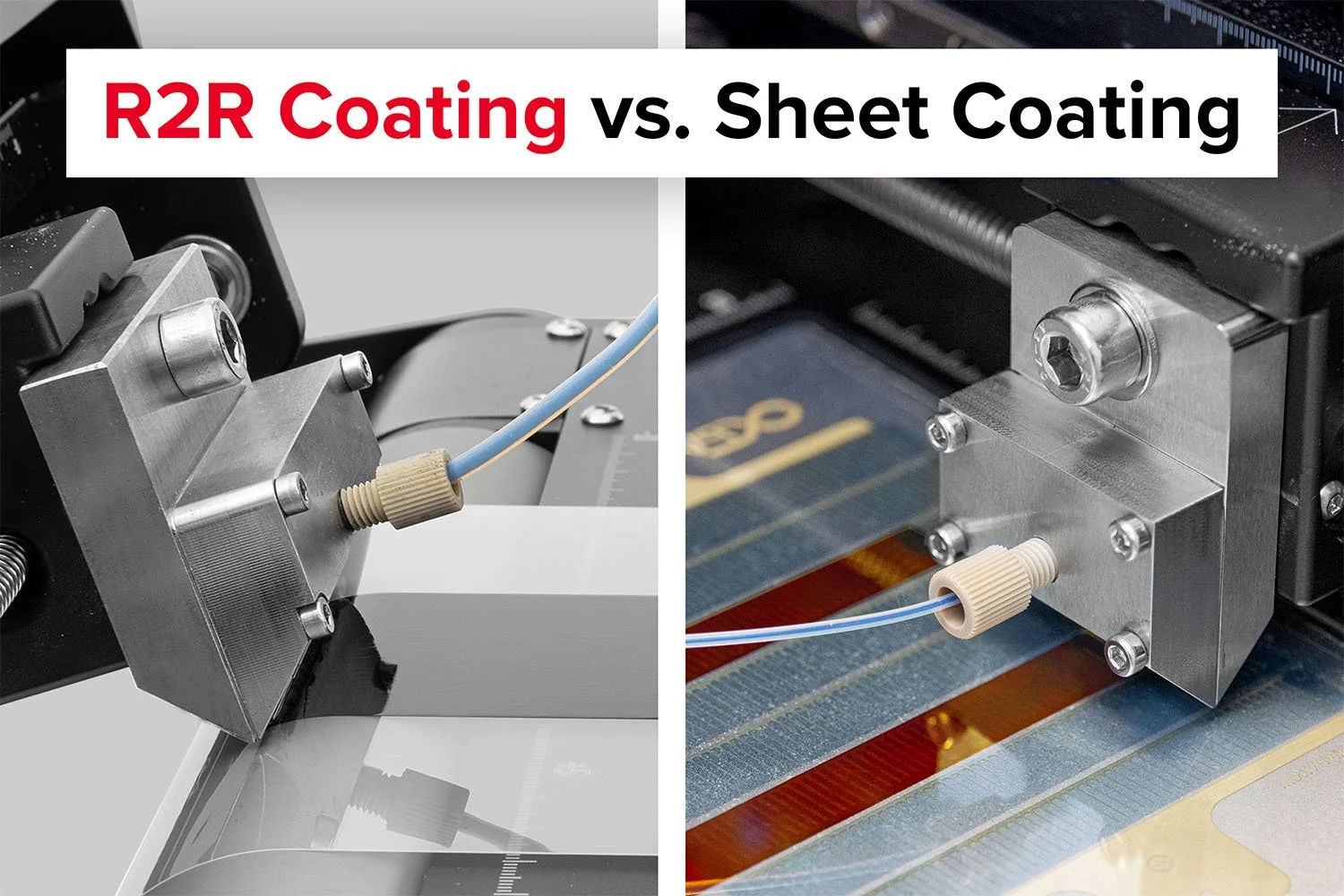


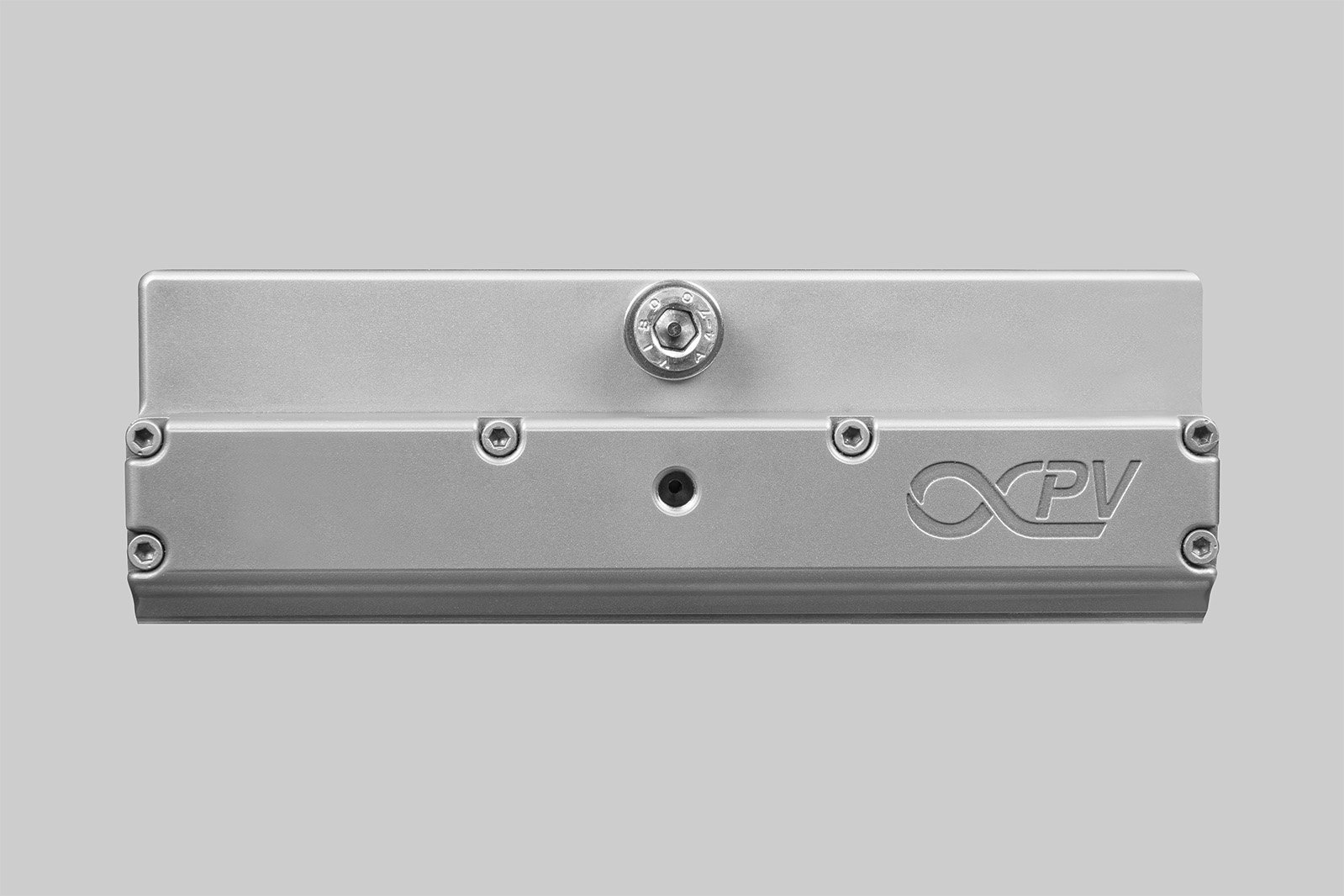

Probably the World’s Most Compact R2R Slot-die Coater: A compact, fully integrated roll-to-roll coating platform for laboratories, complete with a mounting system, anodized rollers, a syringe pump, a 65 mm stainless slot-die head and an infrared oven system—delivering unmatched precision and scalability.