
How Slot-die Coating Could Improve Glass Fiber Composites
Slot-die coating is increasingly being explored for applying functional materials to complex substrates.
A 2026 research article from Georgia Institute of Technology investigates how slot-die coating can be used to apply cellulose nanocrystal coatings to unidirectional glass fiber fabrics, with a particular focus on controlling fluid penetration, coating stability, and film thickness.
The work addresses an important challenge for scaling this type of process. Glass fiber fabric is not a flat, non-porous substrate. It contains a complex network of fibers and pores, meaning that coating fluid does not simply remain on the surface.
Instead, it can rapidly penetrate into the fabric. The researchers therefore developed a multiscale computational fluid dynamics model that combines the coating flow above the fabric with fluid movement inside its porous structure. The model was then compared with experimental coating results.
What You Need to Know
The researchers investigated slot-die coating of cellulose nanocrystals onto unidirectional glass fiber fabric as a potential scalable method for applying a functional fiber sizing before composite fabrication.
The multiscale model successfully predicted stable and unstable coating conditions in agreement with experimental results, demonstrating the importance of considering fluid penetration into the fabric rather than treating the substrate as a simple porous surface.
Vacuum assist was also shown to influence fluid movement after the glass fiber fabric became saturated, helping remove coating fluid and reduce the resulting wet film thickness.
Why Coat Glass Fiber With Cellulose Nanocrystals?
Cellulose nanocrystals, or CNCs, are cellulose-based nanoscale particles that can be produced from woody biomass. They have attracted interest as a renewable material for modifying polymer and composite systems.
In fiber-reinforced composites, one approach is to apply CNCs directly to the reinforcing fibers before the resin matrix is introduced. This creates a separate coating step rather than requiring the nanomaterial to be dispersed throughout the composite resin.
The research article builds on previous work showing that CNC coatings can be applied to glass fiber using slot-die coating. The motivation is particularly relevant for continuous processing, where glass fiber rovings or fabrics can move through a coating system and receive a controlled layer before subsequent composite manufacturing steps.
Why Is Coating Glass Fiber More Complicated?
For a conventional slot-die coating process, the relationship between coating flow rate, substrate speed and resulting film thickness can often be considered primarily in terms of the coating bead and the moving substrate.
Glass fiber fabric introduces another variable. The coating liquid can penetrate between and around the fibers through capillary forces and pressure differences. The researchers found that the rapid wetting of the glass fiber fabric means that simplified assumptions about porous flow can become inaccurate.
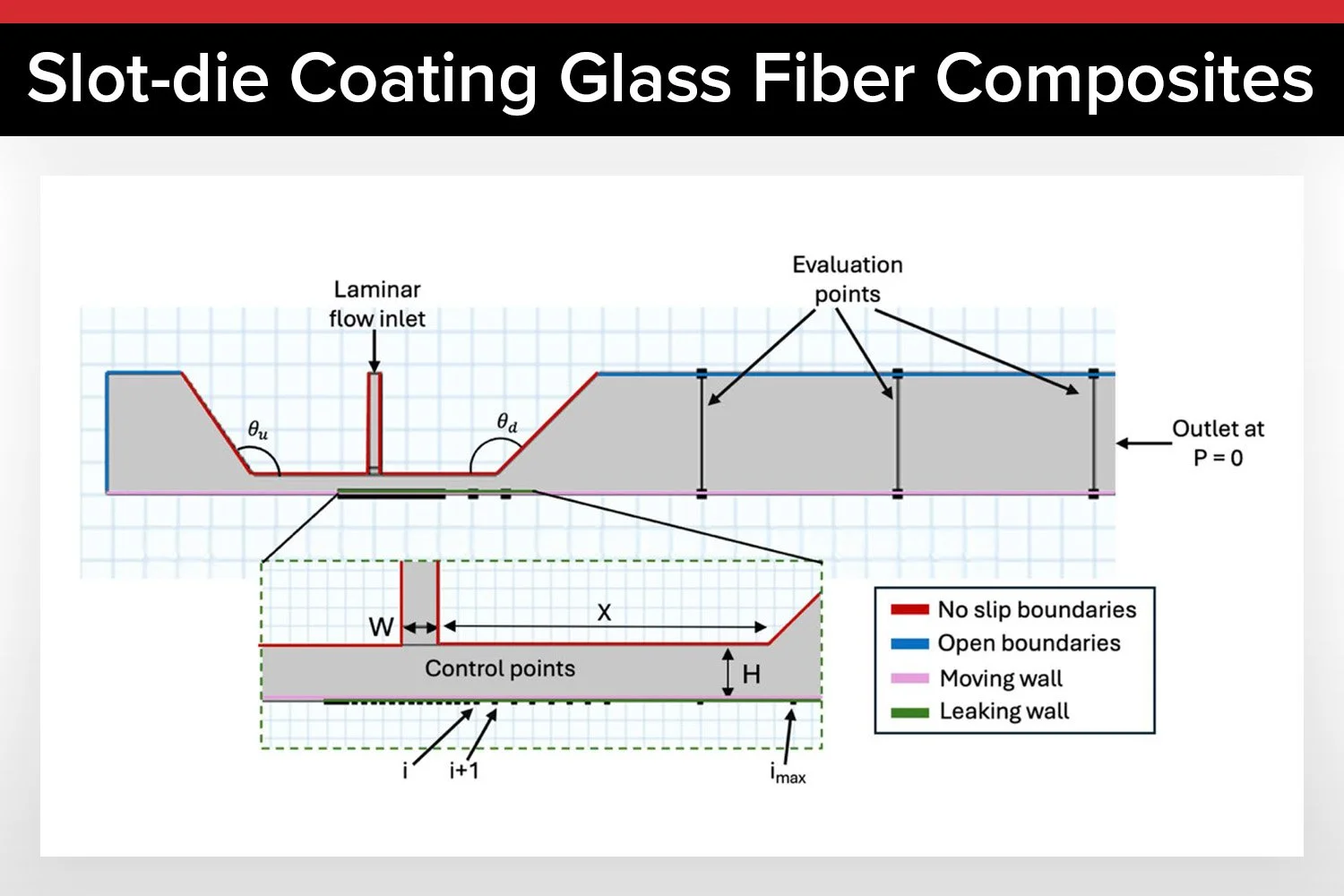
To address this, the researchers combined a macroscale model of the slot-die coating process with a microscale model representing the actual fiber structure. The microscale model was based on an image of the glass fiber fabric and was used to better represent its uneven porosity and fiber distribution. This information was then coupled back into the macroscale coating model.
This distinction is important because the coating outcome is not determined only by what happens between the slot-die head and the substrate surface. What happens inside the substrate can also influence coating stability and final coating thickness.

Roll-to-Roll Coater advances Trusscore’s research in electrochromic coatings. Read full case study.
Finding the Stable Coating Window
One of the clearest results from the research was the model's ability to identify stable and unstable coating conditions.
The researchers tested two combinations at a web velocity of 5 mm/s. At a coating flow rate of 3 mL/min, the multiscale model predicted an unstable coating bead. Experimental testing confirmed this prediction, producing an incomplete coating with break-line defects and uncoated areas.
Increasing the flow rate to 5 mL/min produced a stable coating according to the multiscale model, and the experimental trial also produced consistent coverage of the glass fiber fabric. This demonstrates how modeling can help identify the operating window in which a continuous coating process is likely to remain stable.
For researchers developing new coating processes, this type of information can be valuable because coating parameters often need to be optimized experimentally. Understanding how flow rate and web speed interact with substrate structure can reduce the amount of trial and error required to establish stable processing conditions.
What Does Vacuum Assist Change?
The study also examined the effect of vacuum assist on fluid movement through the glass fiber fabric.
After the fabric became saturated, applying vacuum continued to drive fluid through the substrate. In the model, this resulted in continued removal of coating fluid downstream from the coating bead. The researchers found that vacuum reduced the wet film thickness by approximately 12 μm over 8 seconds in the microscale model, although the rate of reduction decreased over time.
The effect was also visible when comparing the predicted coating thickness. For the stable coating condition, the multiscale model predicted a wet film thickness of 47 μm without vacuum and 32 μm with vacuum. The corresponding calculated dry thicknesses were 2.40 μm and 1.64 μm respectively. The experimental dry thicknesses were 1.49 ± 1.19 μm without vacuum and 0.84 ± 0.61 μm with vacuum.
The results also show the current limitations of modeling this type of process. While the multiscale model performed better than the macroscale-only approach, the researchers note that accurately predicting final film thickness remains challenging.
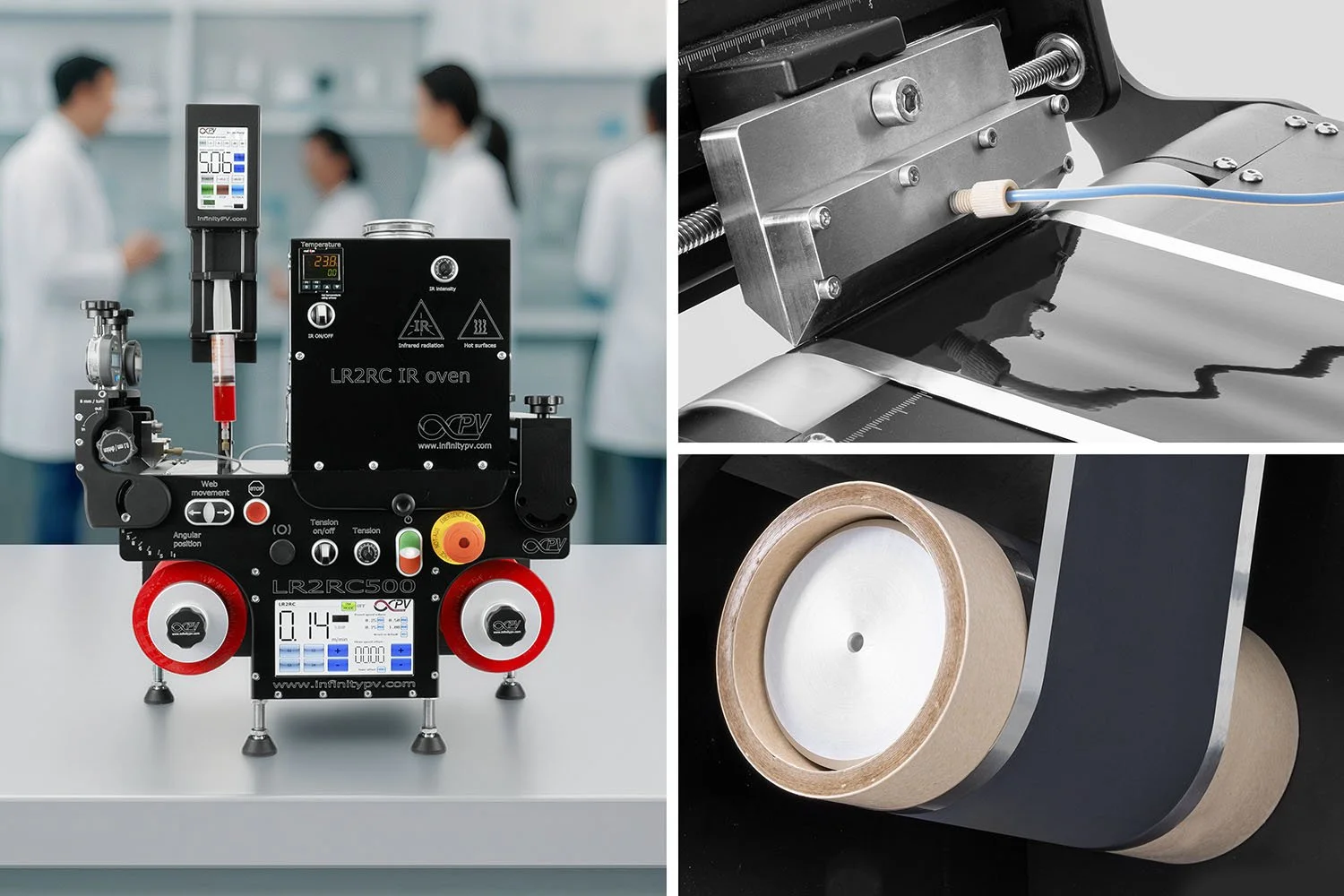
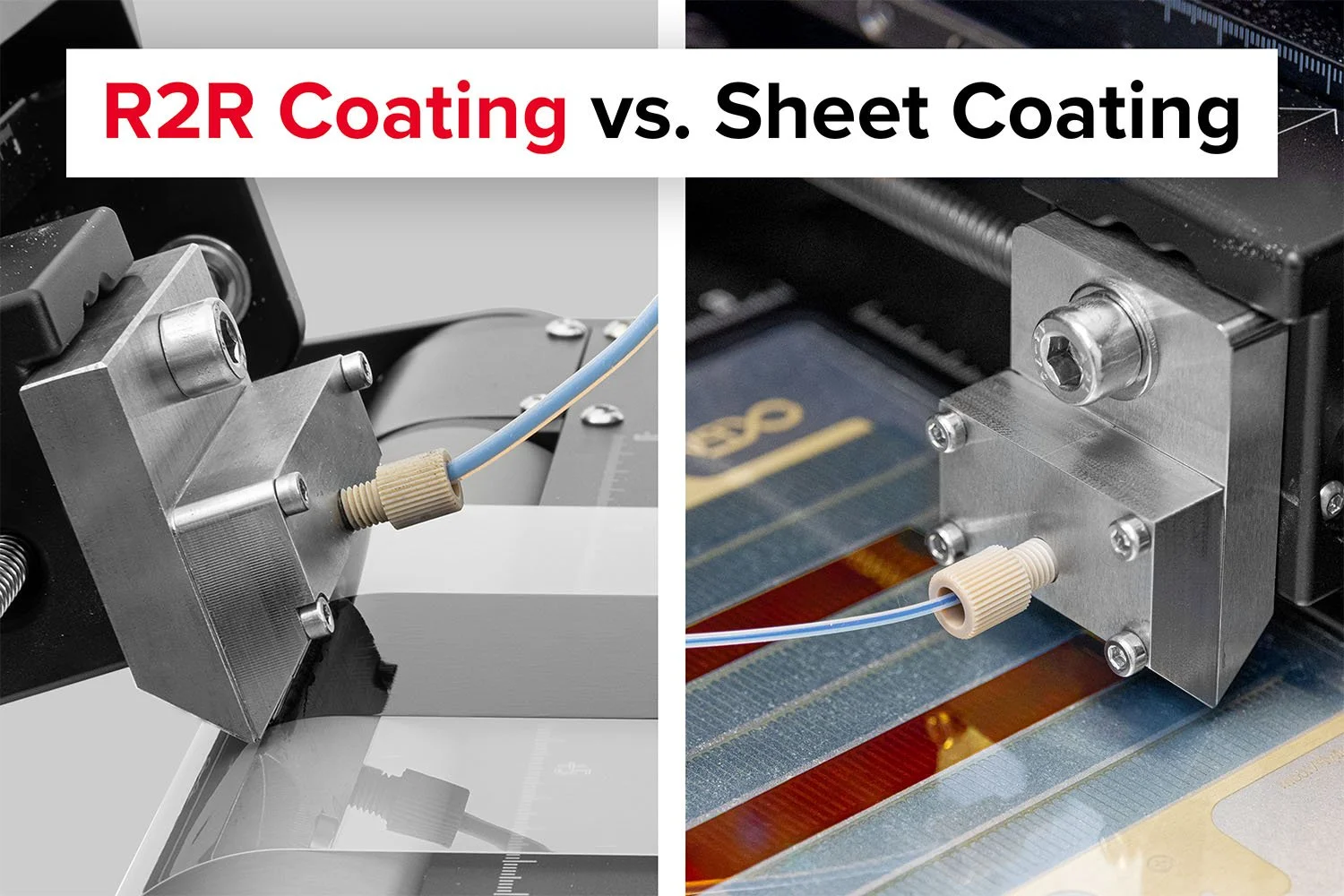
The Laboratory Roll-to-Roll Coater is a compact and modular roll-to-roll lab coater for functional thin films, advanced materials, and continuous manufacturing research.
Why Slot-Die Coating Is Relevant
The research highlights several characteristics that make slot-die coating interesting for functional coatings on fiber-based substrates.
Slot-die coating is a pre-metered coating technology, meaning that the coating flow is controlled before the liquid reaches the substrate. Combined with continuous web movement, this makes the technology suitable for controlled deposition in roll-to-roll processes.
For glass fiber fabrics, this provides a route toward continuous coating rather than relying exclusively on batch-based approaches. The study specifically describes vacuum-assisted slot-die coating as a scalable method for applying cellulose nanocrystal sizing to glass fiber fabrics.
The research also demonstrates why laboratory-scale coating equipment can be useful when developing these processes. Before scaling to larger production equipment, researchers can investigate coating fluids, substrate structures, flow rates, web speeds and coating stability on a smaller roll-to-roll platform. Experimental results can then be used to validate models and establish suitable processing windows.
Conclusion
The 2026 research article demonstrates how multiscale CFD modeling can improve the understanding of vacuum-assisted slot-die coating of cellulose nanocrystal dispersions onto unidirectional glass fiber fabric.
The model successfully predicted coating stability in agreement with experiments and provided a more realistic representation of fluid penetration than a conventional macroscale-only model. Vacuum assist was found to continue driving fluid removal after fabric saturation and to reduce wet film thickness.
The work also makes clear that accurate film-thickness prediction remains challenging. The researchers identify larger microscale and macroscale domains, improved wet-film measurements and three-dimensional dynamic CFD models as important areas for future development. Overall, the research supports further development of slot-die coating as a continuous and scalable method for functionalizing glass fiber fabrics for composite applications.
References
Pham, K.A., Moon, R.J., Kalaitzidou, K., Mundhe, A.R. and Harris, T.A.L. (2026) ‘Multiscale Modeling Approach of Slot Die Coating of Unidirectional Glass Fiber Fabric’, Journal of Applied Polymer Science, 143, e71412. Available at: https://doi.org/10.1002/app.71412.
Get Professional Support for Your Coating Needs

Need help with slot-die coating or machines? Contact our experts for guidance and support.
Related News








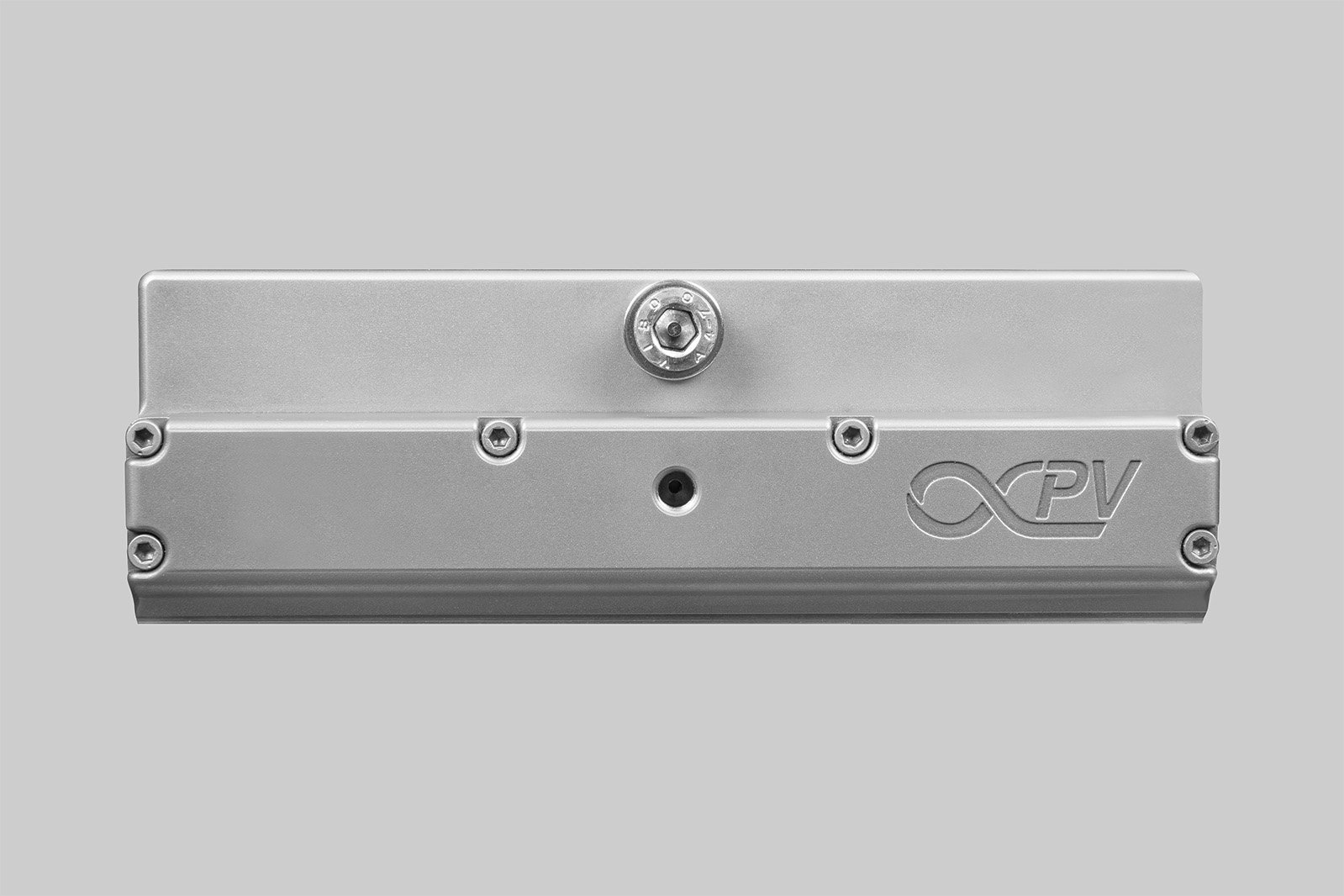





Probably the World’s Most Compact R2R Slot-die Coater: A compact, fully integrated roll-to-roll coating platform for laboratories, complete with a mounting system, anodized rollers, a syringe pump, a 65 mm stainless slot-die head and an infrared oven system—delivering unmatched precision and scalability.