
Scalable Coating Methods for Durable Electrolyzer Catalysts - Roll-to-Roll Slot-die and Gravure Coating
A new study published in Energy Advances examines roll-to-roll coating methods, including slot-die and gravure, for producing iridium oxide catalyst layers in proton exchange membrane water electrolyzers.
The research demonstrates that these methods can achieve uniform catalyst layers at loadings as low as 0.08–0.64 mg cm², which are critical for reducing material costs in hydrogen production. However, microstructural voids in ultra-low loadings (<0.2 mg cm²) lead to durability challenges under potential cycling.
This highlights the importance of refining manufacturing processes to balance performance, uniformity, and cost-efficiency in next-generation electrolyzers.
What You Need to Know
The study explores roll-to-roll coating techniques for iridium oxide catalyst layers to meet cost-reduction targets in proton exchange membrane water electrolyzers.
At moderate loadings around 0.4 mg cm², both slot-die and gravure coating produced continuous catalyst layers with performance comparable to spray-coated controls.
However, at ultra-low loadings (<0.2 mg cm²), discontinuities in the catalyst layer resulted in increased degradation during durability testing, suggesting the need for material or structural improvements.
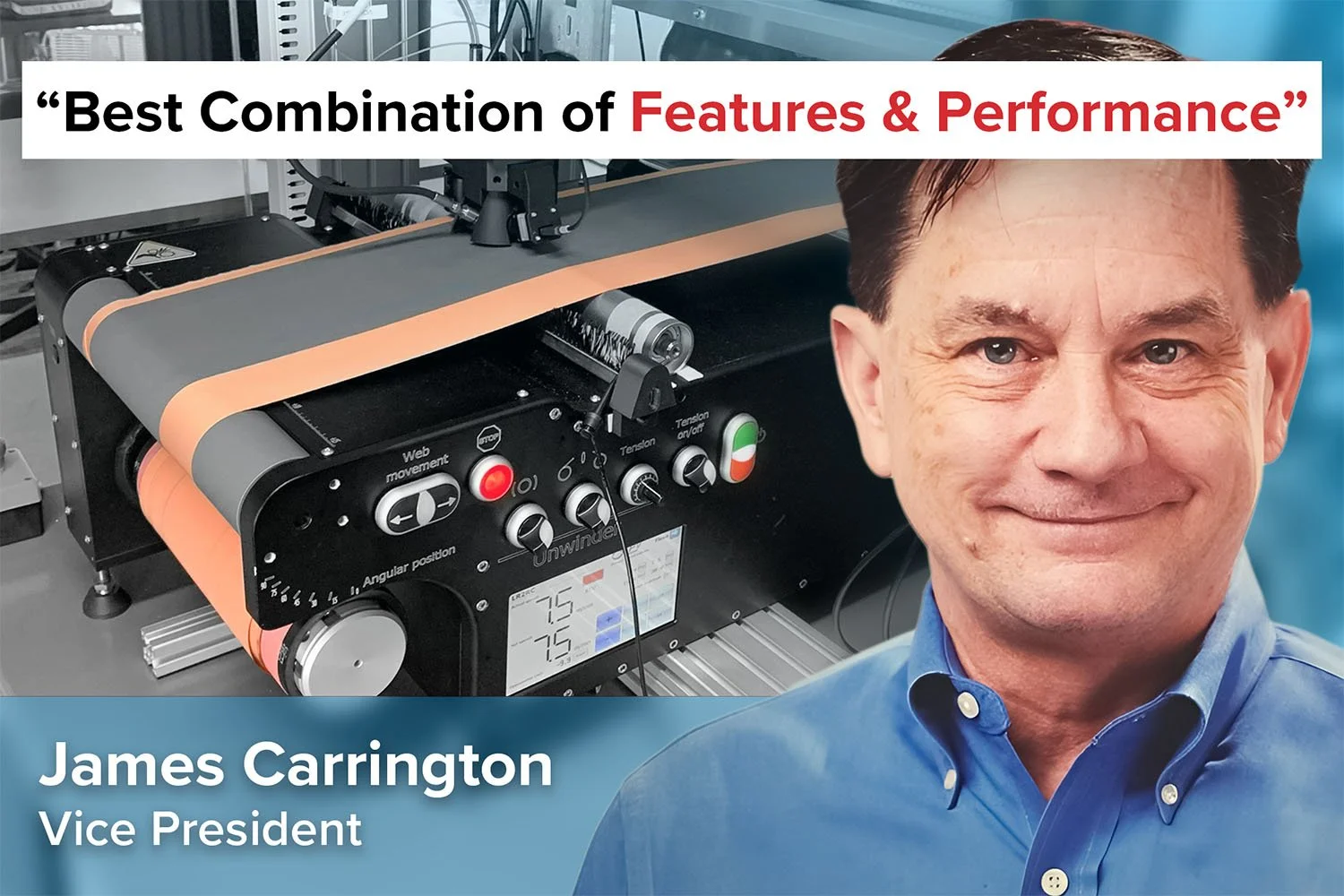
Example of a roll-to-roll coater.
The Need for Scalable Electrolyzer Manufacturing
Proton exchange membrane water electrolyzers (PEMWEs) are a key technology for green hydrogen production, but their widespread adoption depends on reducing costs. A significant portion of these costs comes from the iridium oxide catalyst layers used in the anode. Traditional spray coating methods, while effective, are not easily scalable for industrial production.
This study investigates roll-to-roll coating methods, specifically slot-die and gravure, as alternatives for producing iridium oxide catalyst layers. These methods are capable of high-speed, automated production, making them ideal for scaling up electrolyzer manufacturing. The goal was to assess whether these techniques could achieve the low catalyst loadings (0.08–0.64 mg cm²) required to reduce material costs while maintaining performance and durability.
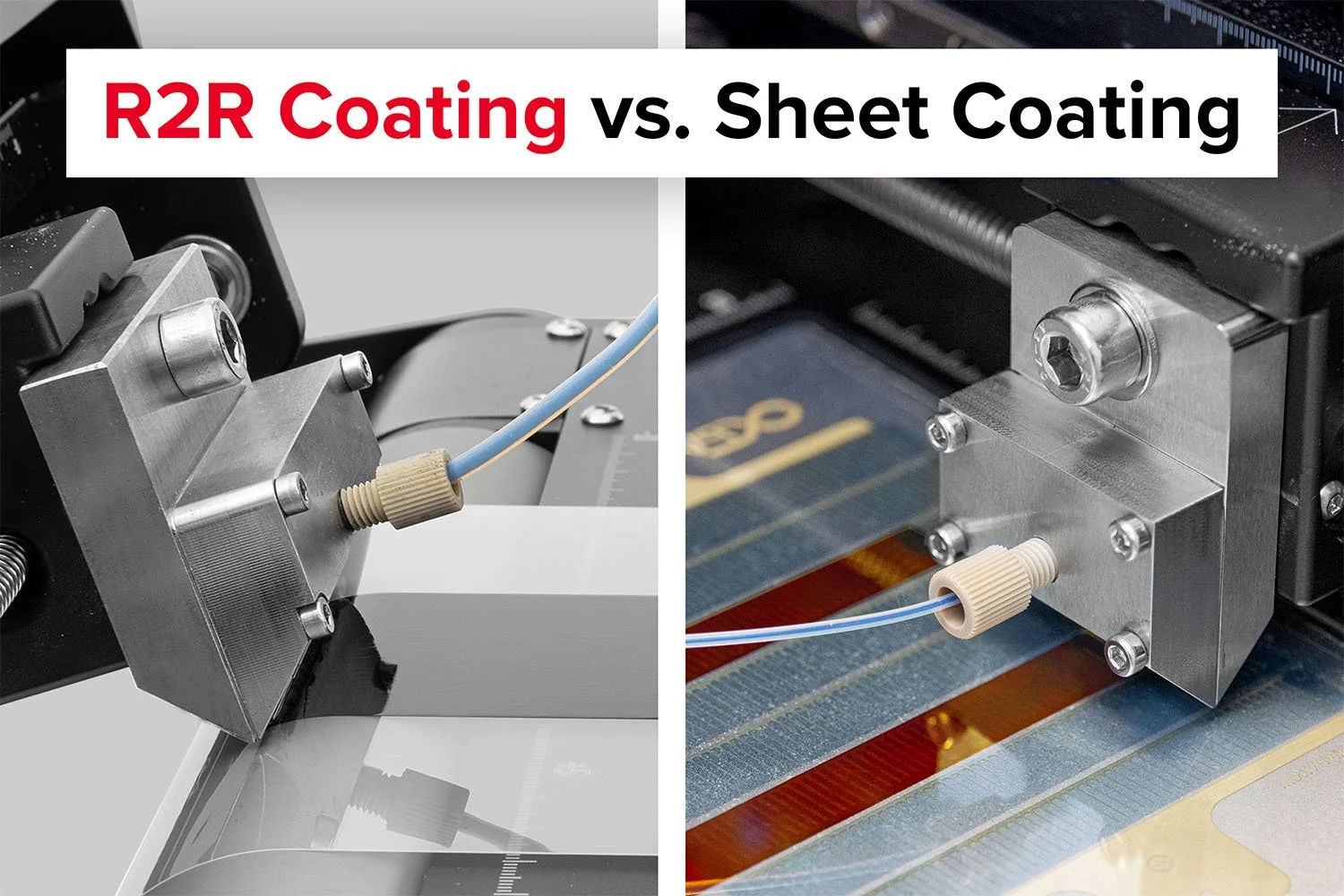
Roll-to-roll coating encompasses multiple techniques, including slot-die and gravure.
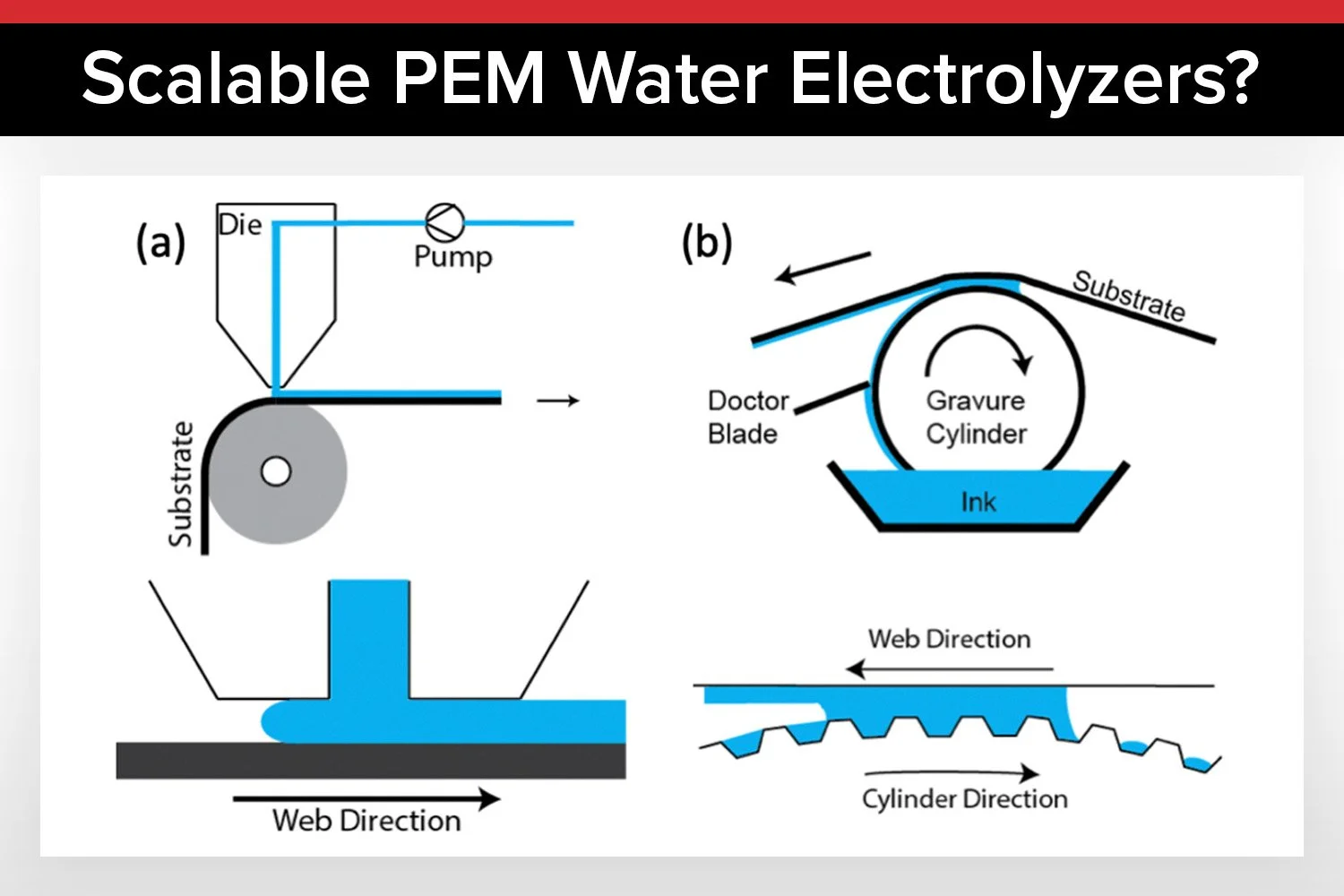
Slot-die coating is a pre-metered process where film thickness is controlled by the flow rate of the coating fluid and the speed of the substrate. Gravure coating, on the other hand, uses a rotating patterned cylinder to transfer fluid to the substrate, with thickness determined by the cylinder’s volume factor and fluid pickout efficiency.
The study prepared catalyst inks with varying iridium oxide concentrations (10–30 wt%) and coated them onto ethylene-tetrafluoroethylene substrates. Slot-die coating achieved loadings from 0.08 to 0.64 mg cm², but lower loadings suffered from poor cross-web uniformity due to ink spreading. Gravure coating produced thinner films with loadings as low as 0.06 mg cm², though with higher variation at the lowest loadings.
Electrochemical testing revealed that initial performance was similar across coating methods at moderate loadings. However, durability testing showed that ultra-low loadings (<0.2 mg cm²) resulted in discontinuous catalyst layers. This led to higher performance losses after potential cycling compared to spray-coated layers, due to poor connectivity and isolated catalyst regions.
Roll-to-roll wet processing is a continuous manufacturing technique in which flexible substrates are processed in roll form through a sequence of baths containing solutions and solvents.
Key Findings: Performance and Durability of Roll-to-Roll Coated Layers
The study found that roll-to-roll coating methods can produce catalyst layers with loadings as low as 0.08 mg cm². At moderate loadings (~0.4 mg cm²), both slot-die and gravure coating methods produced catalyst layers with performance comparable to spray-coated controls. This suggests that roll-to-roll methods are viable for producing high-quality catalyst layers at industrial scales.
However, at ultra-low loadings (<0.2 mg cm²), the catalyst layers became discontinuous, leading to increased performance losses during durability testing. This was due to poor connectivity and isolated catalyst regions.
Future Outlook
The study highlights that while roll-to-roll methods are promising for scaling up electrolyzer production, current iridium catalysts may not be suitable for ultra-low loadings (<0.2 mg cm²) due to discontinuities in the catalyst layer. To overcome this, the authors suggest exploring novel catalyst materials or structures that can improve layer homogeneity and durability.
As materials and catalyst layer structures evolve, further investigation into their manufacturability will be necessary to ensure that lab-scale advancements can be translated to industrial roll-to-roll processes.
Conclusion
This study demonstrates that roll-to-roll coating methods are viable for producing iridium oxide catalyst layers for proton exchange membrane water electrolyzer systems. These methods offer scalability and precision for industrial applications. While initial performance is strong at moderate loadings, durability challenges arise at ultra-low loadings due to discontinuities in the catalyst layer. Addressing these challenges through material and process improvements will be critical for achieving the cost and performance targets necessary for widespread adoption of electrolyzer technologies.
References
Mauger, S.A. et al. (2026) ‘Uniformity, performance, and durability of roll-to-roll-coated iridium oxide electrolyzer catalyst layers’, Energy Advances, 5, p. 394. doi: 10.1039/d5ya00309a.
Get Professional Support for Your Coating Needs
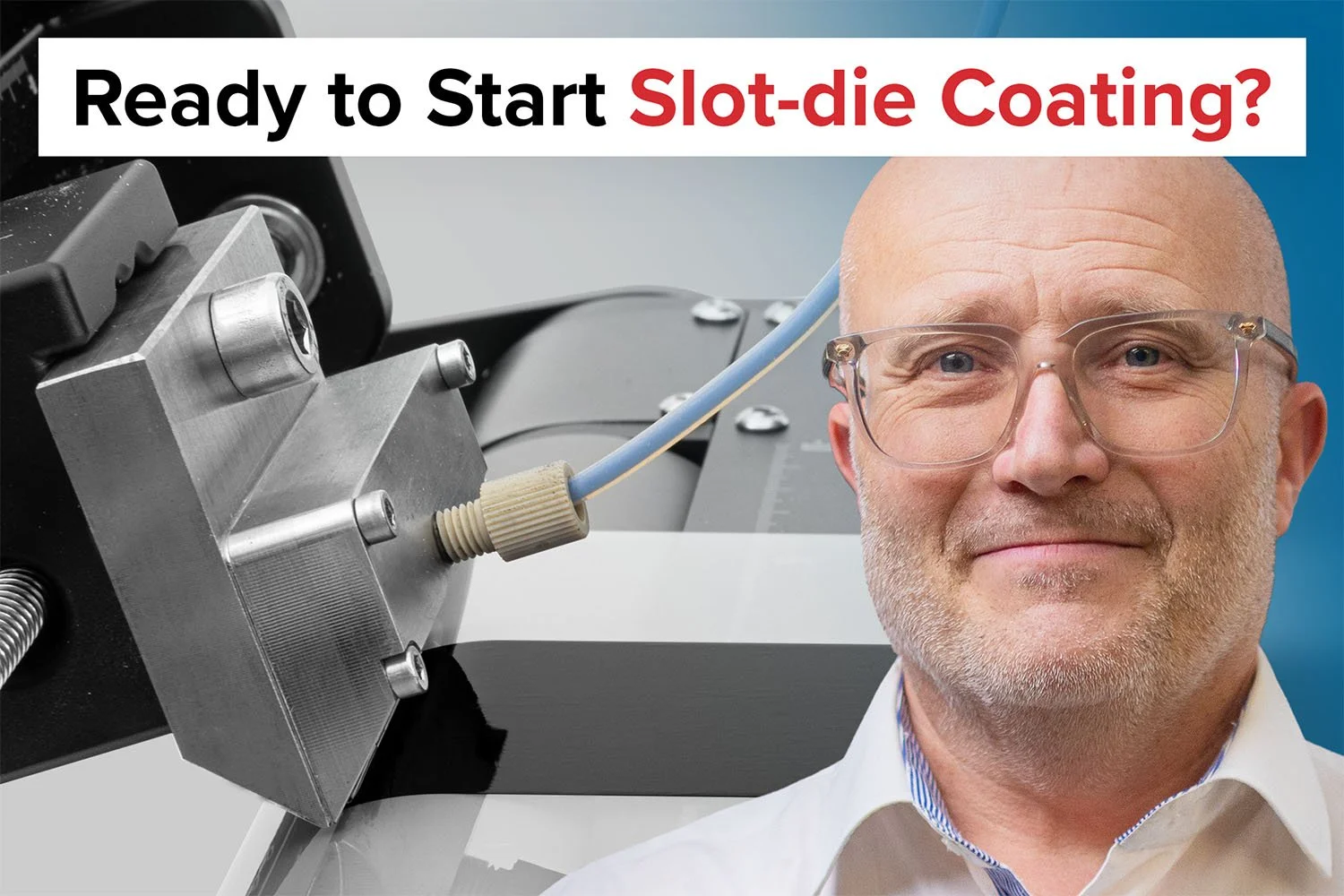
Need help with slot-die coating or machines? Contact our experts for guidance and support.
Related News





Probably the World’s Most Compact R2R Slot-die Coater: A compact, fully integrated roll-to-roll coating platform for laboratories, complete with a mounting system, anodized rollers, a syringe pump, a 65 mm stainless slot-die head and an infrared oven system—delivering unmatched precision and scalability.