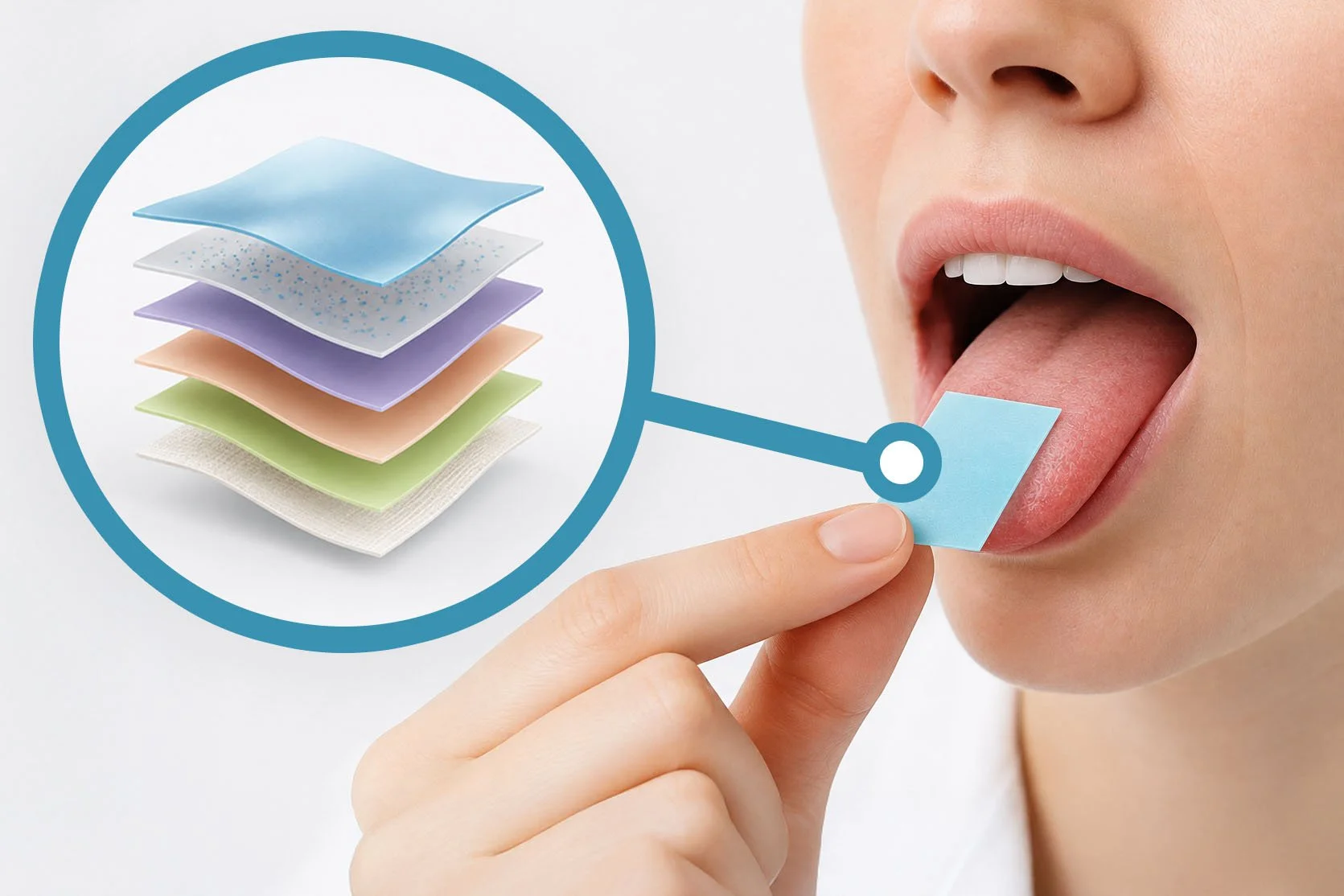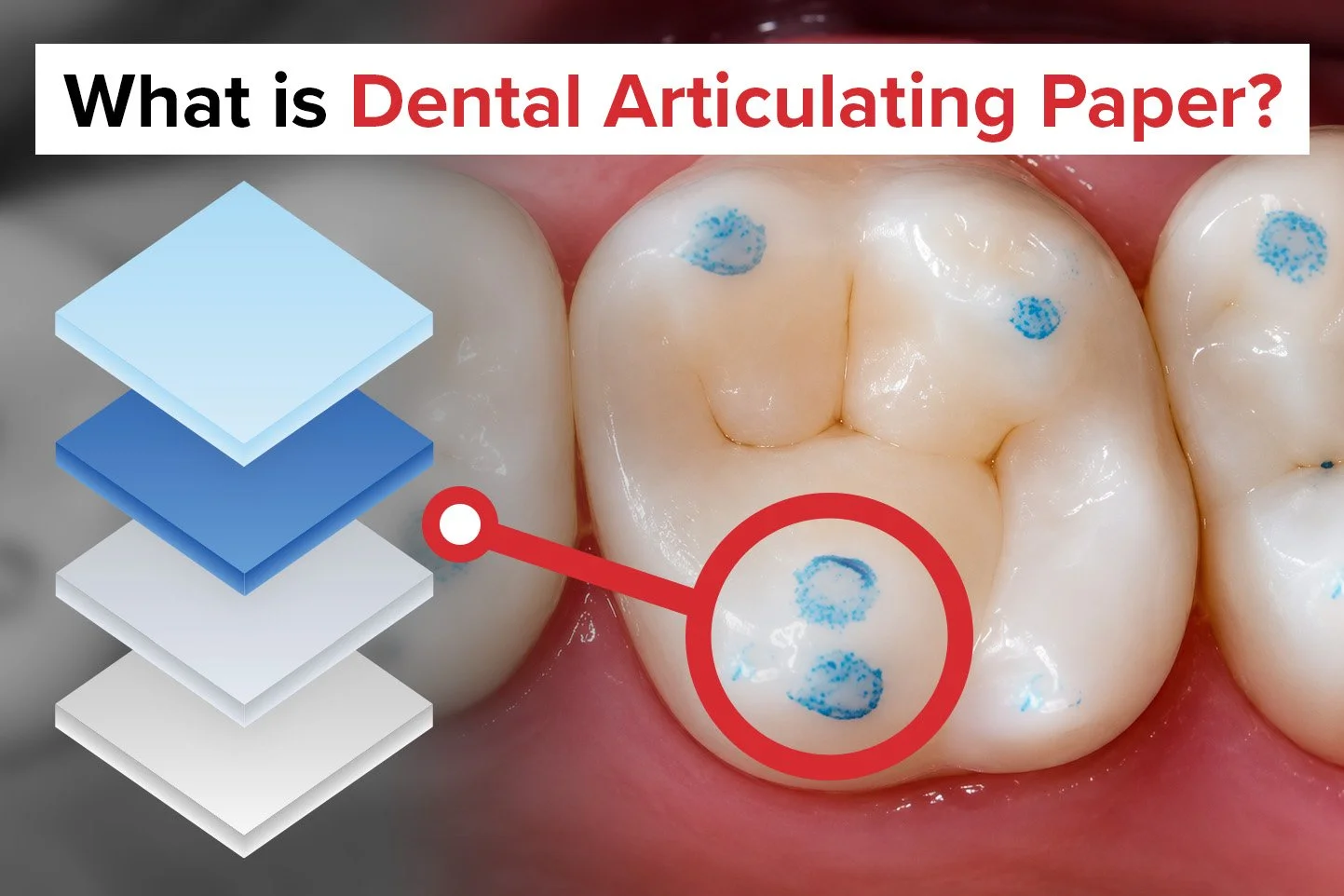
Accelerate Thin-Film Drug Delivery Research
Develop and manufacture highly uniform pharmaceutical thin films with precise control over thickness, drug loading, and multilayer architectures using lab-scale slot-die coating.
Why Use Slot-die Coating for Thin-Film Drug Delivery?
Thin-film drug delivery relies on consistent film quality to achieve reliable dosing, predictable drug release, and reproducible performance. Slot-die coating is a highly controlled deposition technique that enables researchers to produce pharmaceutical films with exceptional uniformity while minimizing material waste.
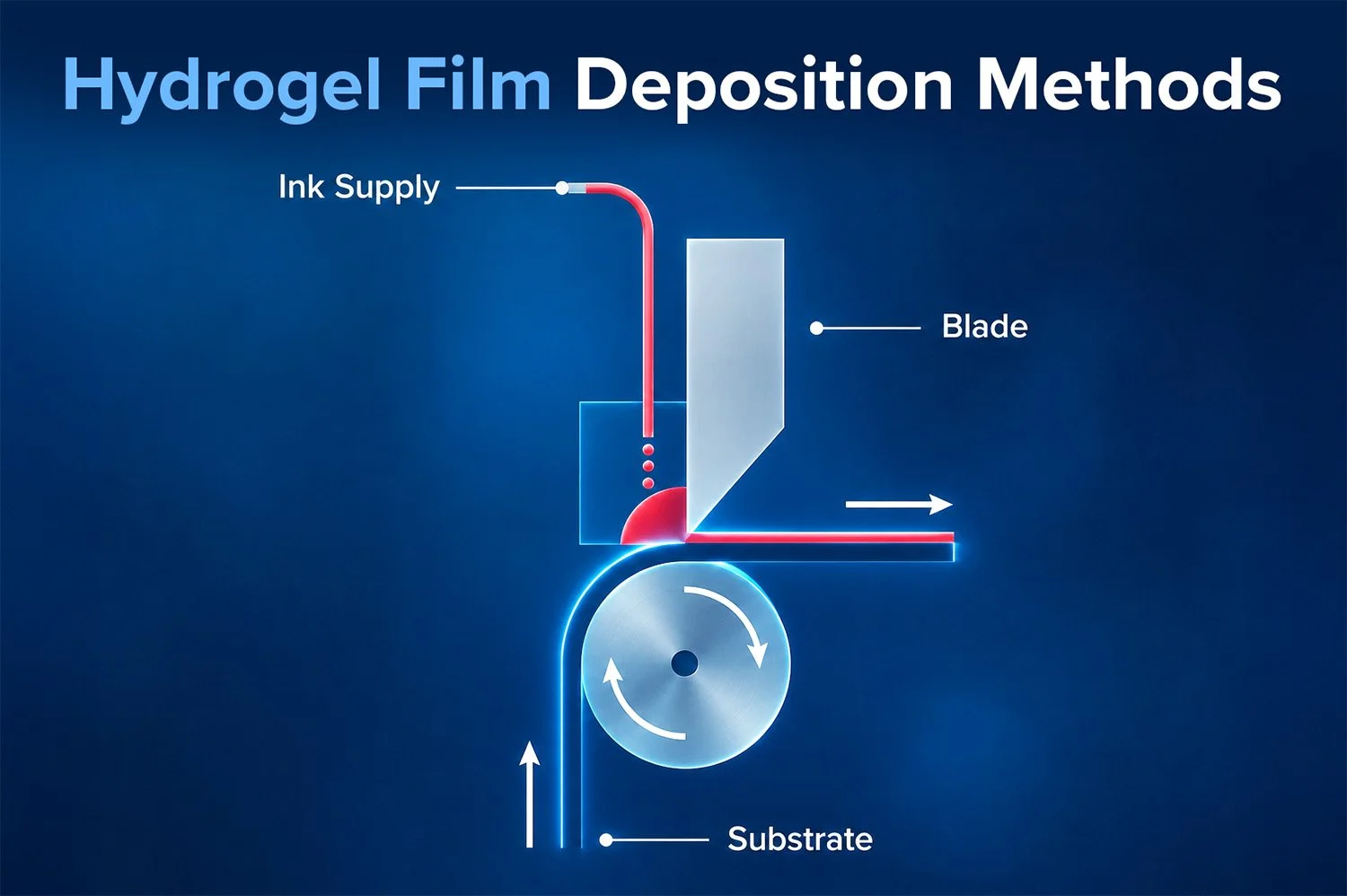
Unlike conventional coating methods, slot-die coating accurately meters the formulation directly onto the substrate, providing precise control over wet film thickness and coating uniformity. This enables reproducible research while offering a straightforward pathway from laboratory development to pilot and production-scale manufacturing.
Whether you are developing oral thin films, transdermal patches, buccal films, or multilayer drug delivery systems, slot-die coating provides a flexible platform for formulation development and process optimization.
Advantages of Slot-die Coating for Thin-Film Drug Delivery
Consistent Drug Loading
Uniform coating thickness is essential for achieving accurate and reproducible drug dosage. Slot-die coating enables highly controlled deposition of API-containing formulations, helping ensure consistent drug content throughout every film.
Reduce API Consumption
Active pharmaceutical ingredients are often among the most expensive components during formulation development. Because slot-die coating precisely meters the supplied formulation, significantly less material is wasted compared to many conventional coating techniques, making formulation screening more efficient and cost-effective.
Develop Advanced Multilayer Films
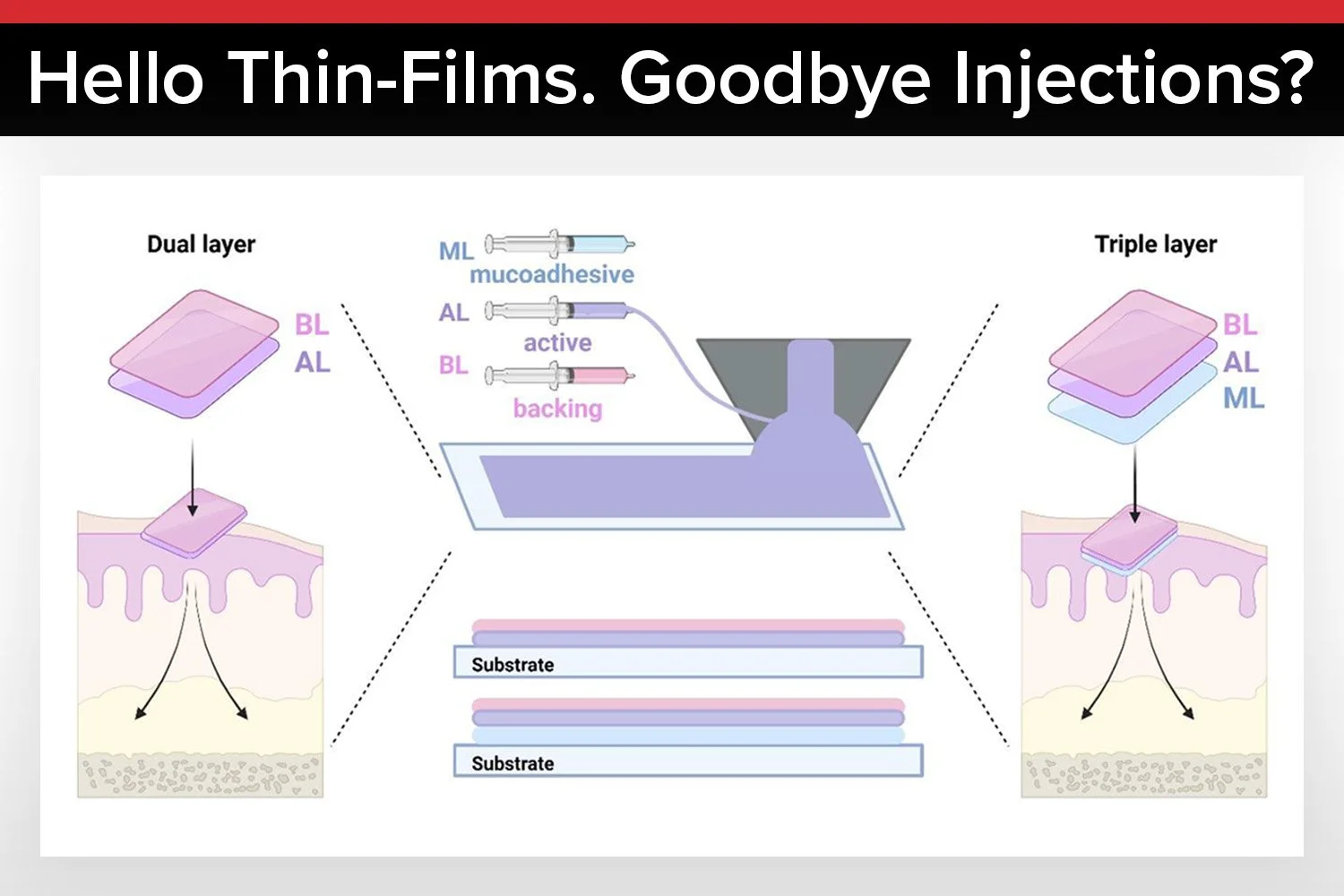
Many next-generation drug delivery systems rely on multiple functional layers. By integrating several slot-die coating stations, researchers can produce multilayer films that combine immediate and sustained drug release, barrier layers, mucoadhesive coatings, taste masking, or protective coatings within a continuous manufacturing process.
Research Today, Scale Tomorrow
One of the major advantages of slot-die coating is that the same coating principle is widely used in industrial roll-to-roll manufacturing. Process parameters developed at laboratory scale therefore provide a much stronger foundation for technology transfer and scale-up than many batch-based coating methods.
Compatible with Controlled Environments
Laboratory slot-die coating systems can operate inside gloveboxes, cleanrooms, or fume hoods, allowing researchers to process moisture-sensitive, oxygen-sensitive, or highly potent pharmaceutical formulations under controlled conditions.
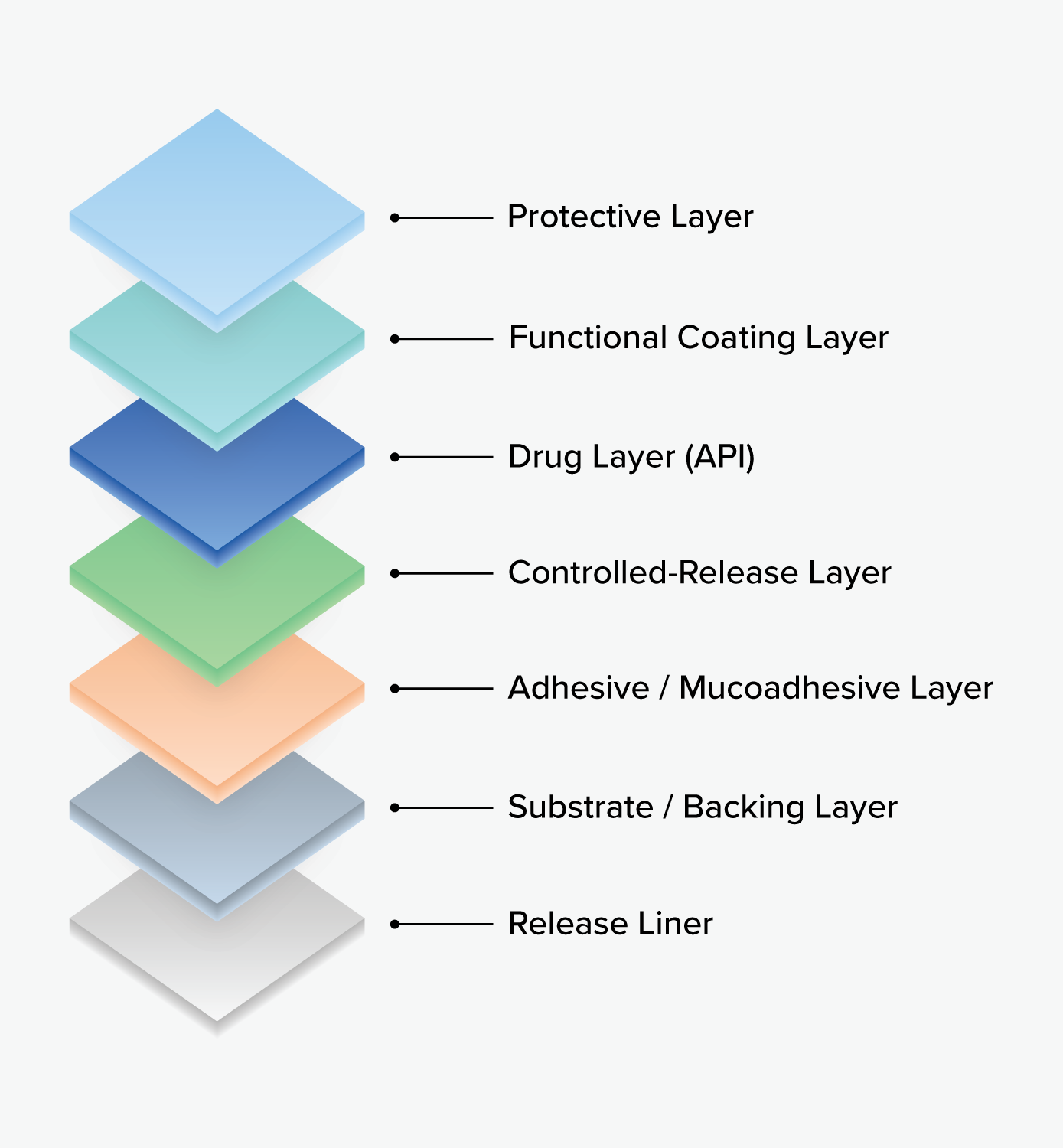
Example of a Pharmaceutical Thin Film Structure
Modern thin-film drug delivery systems often consist of multiple functional layers, each contributing to the overall performance of the final product. While the exact architecture depends on the application, a multilayer film may include:
Protective Layer: Provides a barrier against moisture, oxygen, handling, and environmental exposure to improve product stability and durability.
Functional Coating Layer: Adds specific performance characteristics such as taste masking, enhanced permeability, moisture protection, or controlled interaction with biological tissues.
Drug Layer (API): Contains the active pharmaceutical ingredient and delivers the intended therapeutic effect.
Controlled-Release Layer: Modulates the rate and timing of drug release to achieve the desired pharmacokinetic profile.
Adhesive or Mucoadhesive Layer: Promotes adhesion to the target application site, helping maintain contact and improve drug delivery efficiency where required.
Substrate or Backing Layer: Provides mechanical support, handling properties, or directional drug delivery, depending on the application.
Release Liner: A temporary carrier film used during manufacturing and processing that is removed before final product use.
Proven in Thin-Film Drug Delivery Research
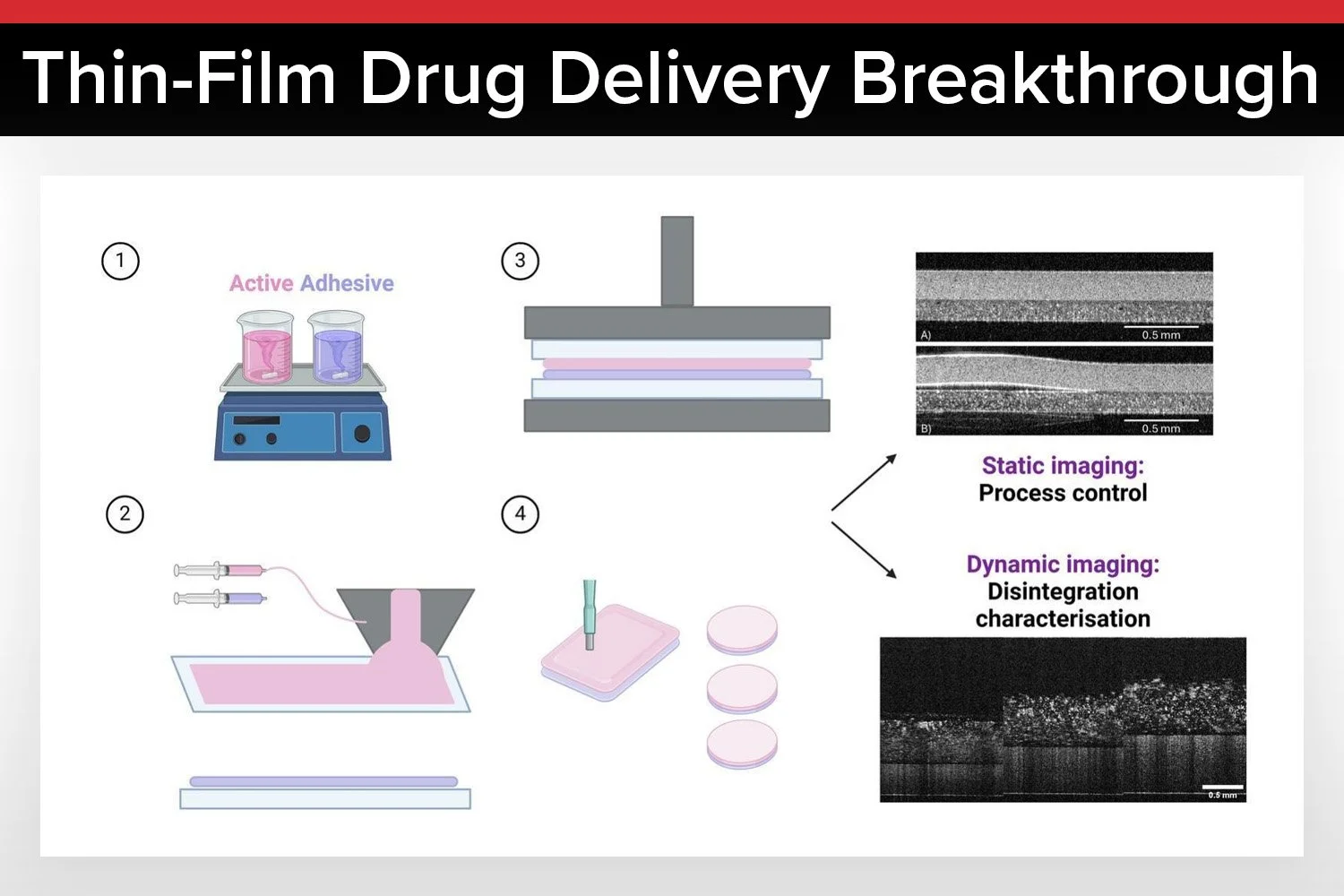
Slot-die coating has been demonstrated in numerous peer-reviewed studies on pharmaceutical thin-film drug delivery. Researchers have successfully used the technology to produce uniform drug-loaded films, controlled-release systems, and multilayer formulations with high reproducibility and efficient use of valuable APIs.
Its precise control over film thickness, coating uniformity, and material deposition has made slot-die coating an increasingly adopted technique for developing next-generation drug delivery systems. Just as importantly, the technology offers a direct route from laboratory research to scalable manufacturing, allowing process knowledge developed during formulation research to translate into future production.
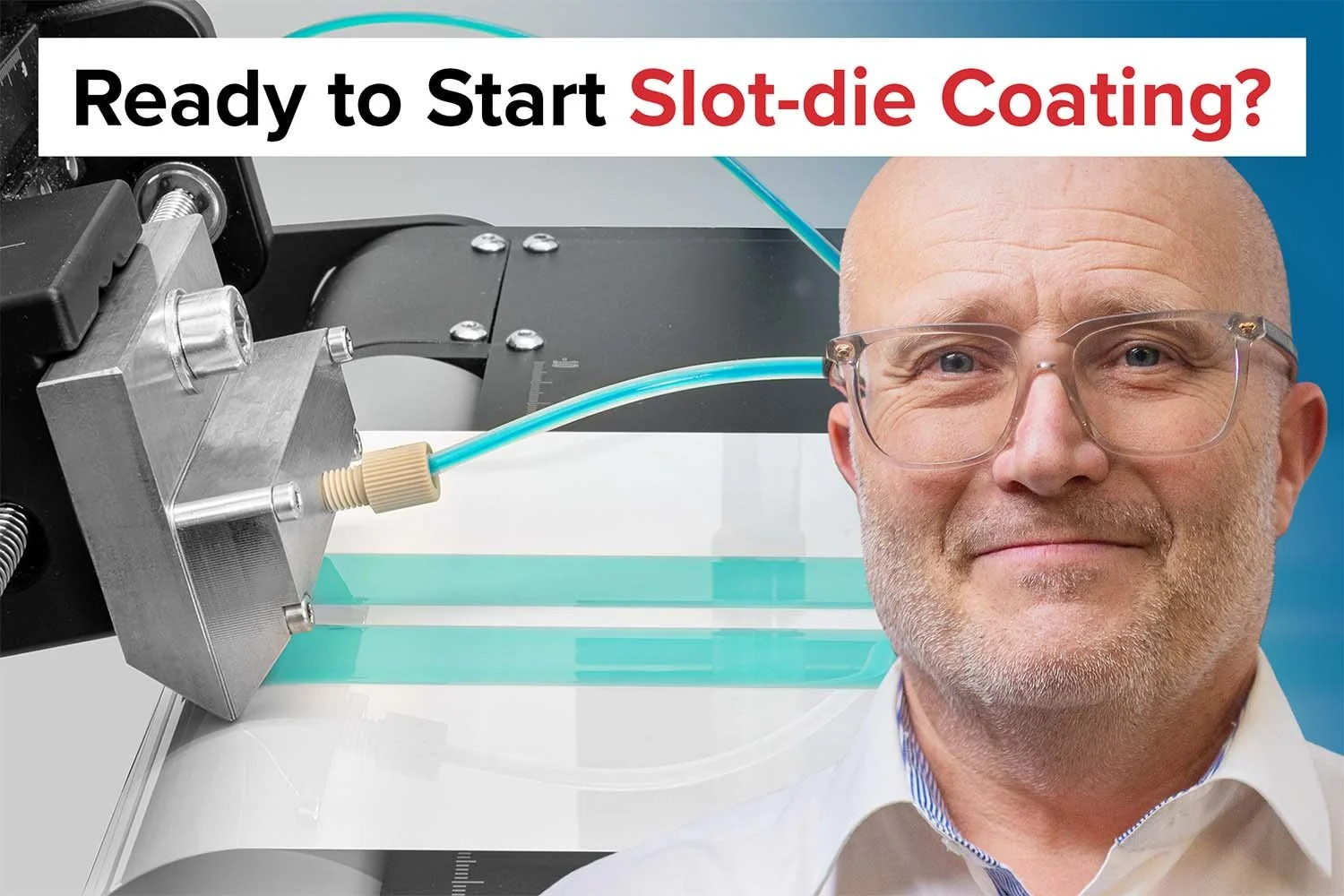
Supported Thin-Film Drug Delivery Applications
Slot-die coating is suitable for research and development of numerous pharmaceutical thin-film applications, including:
Sublingual films
Mucoadhesive drug delivery systems
Dissolvable films
Controlled-release films
Multilayer pharmaceutical films
Vaccine delivery films
Microneedle coating formulations
Finding the Right Coating Approach for Your Application
No two pharmaceutical applications are exactly the same, and choosing the right coating approach can feel overwhelming. We’re here to guide you through the options, helping you achieve uniform layers, reproducible results, and the best performance for your specific material, formulation, and goals.
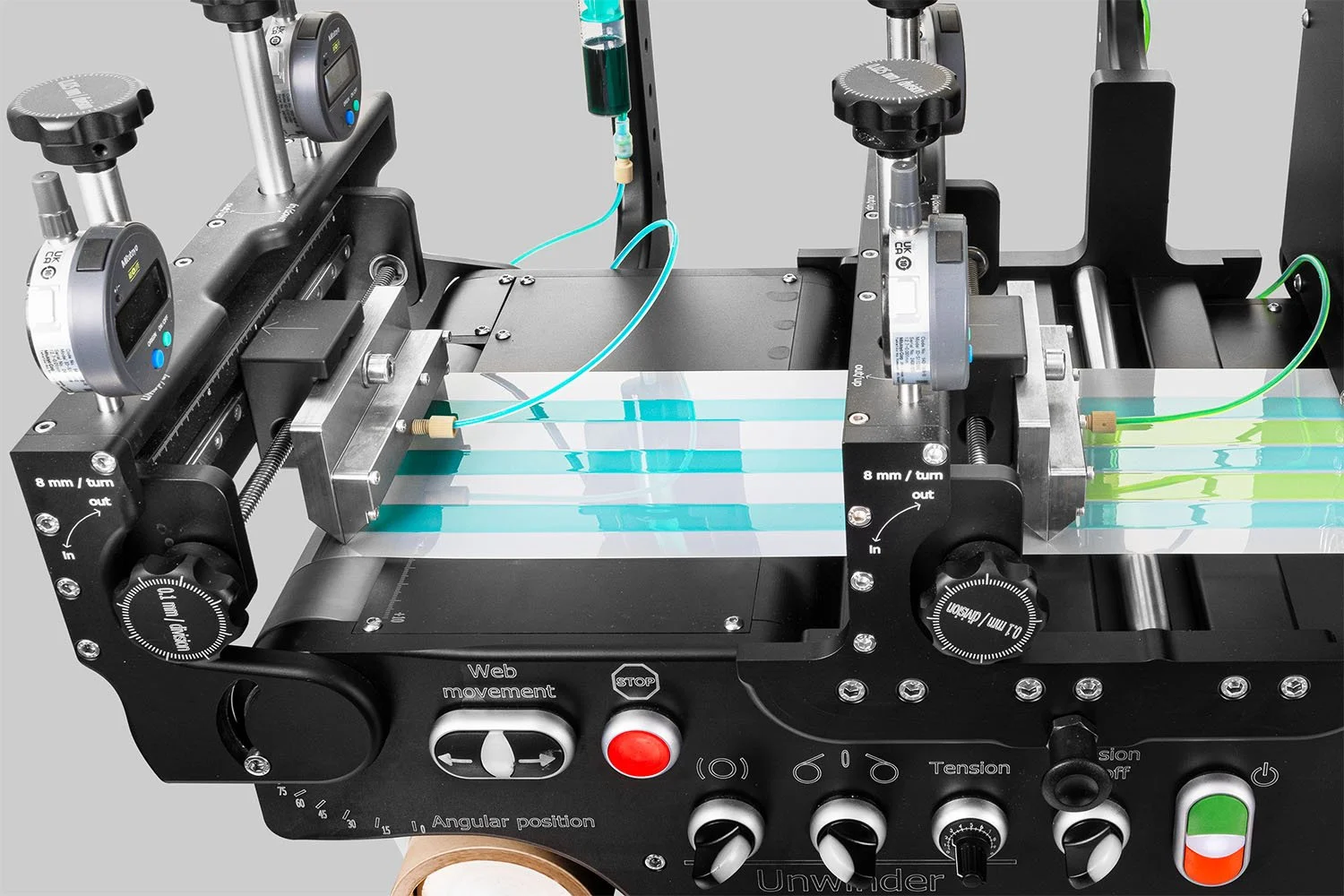
Inline Slot-die Coating
Flexible substrates move continuously through coating, drying, and laminating stations under precise tension. Ensures high throughput, uniform layers, and reproducible results.
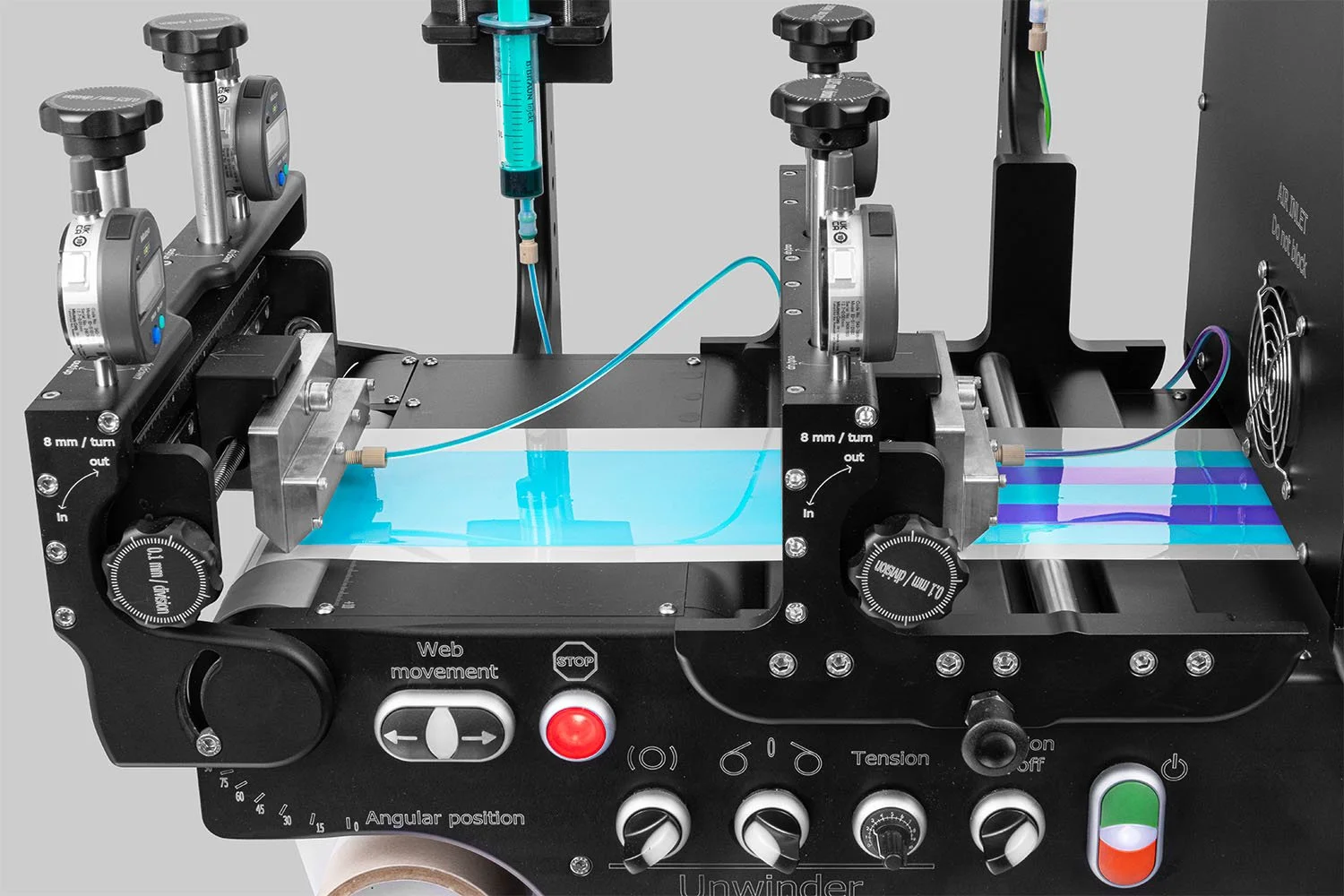
Wet-On-Wet Slot-die Coating
Two slot-dies apply wet layers consecutively without drying. Controlled spacing and speed create multilayer films with consistent thickness and adhesion.

Pristine Clean Surface Cleaning
Functional coatings are applied immediately after liner removal onto an untouched, contamination-free surface. This method improves adhesion, reduces defects, and enhances reproducibility—especially when combined with cleanroom environments for sensitive pharma films or biomedical devices.
Reduce Waste and Boost Consistency with R2R Wet Processing
Roll-to-Roll Wet Processing for Pharma
Roll-to-roll (R2R) wet processing allows flexible substrates—films, foils, or patches—to be treated continuously through cleaning, coating, or chemical steps. This ensures uniform, reproducible layers and supports advanced pharmaceutical films, multilayer drug delivery systems, and sensitive biomedical devices.
Integrated and Precise
R2R processing can be combined with slot-die coating or functionalization, integrating multiple steps into a single workflow. This gives precise control at every stage and enables consistent multilayer films or specialized surface treatments.
Applications and Benefits
It’s ideal for substrate cleaning, chemical or functional treatments, and patterning for transdermal patches, oral films, vaccine films, or controlled-release tablets. Continuous processing reduces variability, saves materials and APIs, and works in cleanrooms, gloveboxes, or fume hoods for sensitive formulations.
Guidance for Your Process
We can help you identify the best approach for your application, from lab-scale experiments to pilot or full-scale production, ensuring reproducible results and scalable solutions.

We’re Here to Help You Find the Right System
Choosing the right slot-die or roll-to-roll coating system for your pharmaceutical application can feel complex. Whether it’s tablets, capsules, patch films, packaging, or medical devices, we’re ready to guide you — helping you select the machine that delivers precise, reproducible, and scalable results.

Slot-die Coater
Ideal for lab research, prototyping, and small-batch production. Sheet-based processing allows flexible testing, parameter adjustments, and precise coatings in limited quantities.

Laboratory Roll-to-Roll Coater
Best for scaling lab results to continuous, high-throughput production. Ensures uniform, consistent coatings on long substrates and supports transition to larger-scale manufacturing.

R2R Hybrid Coater
Combines sheet-based precision with roll-to-roll efficiency. Offers maximum flexibility for lab-scale thin film processing—from early formulation work to pilot-scale production.
Controlled Environments for Reliable Pharmaceutical Processing
Need Controlled Environments for Sensitive Pharma Applications?
Working with potent, moisture-sensitive, or oxygen-sensitive formulations requires precise environmental control. Gloveboxes, fume hoods, and cleanrooms provide safe, reproducible conditions for coating, processing, and testing pharmaceutical materials.
Integrated and Safe
These controlled environments allow multiple operations—coating, drying, functionalization, or patterning—to be performed without contamination. They ensure reproducibility while protecting both the product and the operator, making them essential for advanced drug delivery systems and sensitive biomedical devices.
Applications and Benefits
Controlled environments are ideal for working with biologics, vaccines, thin films, multilayer patches, or potent APIs. They minimize defects, improve adhesion and coating quality, and support regulatory compliance. Using gloveboxes, fume hoods, or cleanrooms also reduces material waste and maintains consistent results from lab-scale experiments to pilot and full-scale production.
Guidance for Your Process
We can help determine which controlled environment setup is best for a specific formulation, coating process, or application. Our team provides practical advice to maintain safety, reproducibility, and high-quality outcomes for sensitive pharmaceutical manufacturing.

Peer-Reviewed Studies Within Pharma Featuring infinityPV Equipment
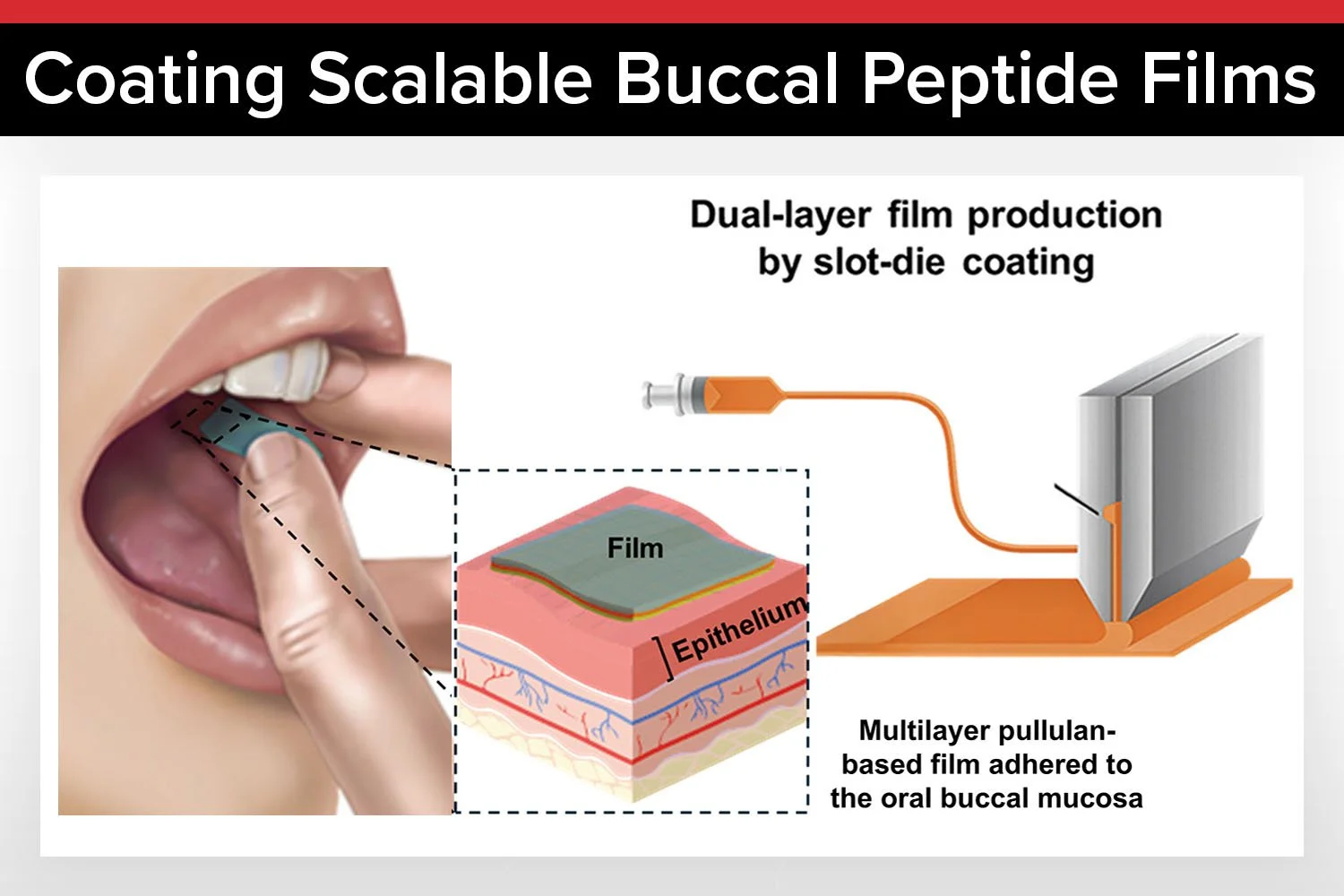
Learn More About Slot-die Coating in Pharma and MedTech